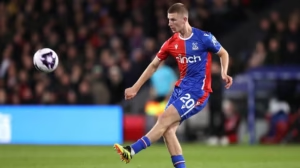
Redemption at Anfield: How Amorim’s Tactical Masterclass Ended Manchester United’s Drought Against Liverpool
Manchester United’s long wait for triumph at Anfield is over. In a tense, emotional night on Merseyside, Amorim’s Manchester United produced a disciplined, brilliant tactical performance to outwit Liverpool 2-1 — their first win at the iconic ground since 2016. Here’s how the Red Devils turned history around through clever tactics, unity, and relentless determination.
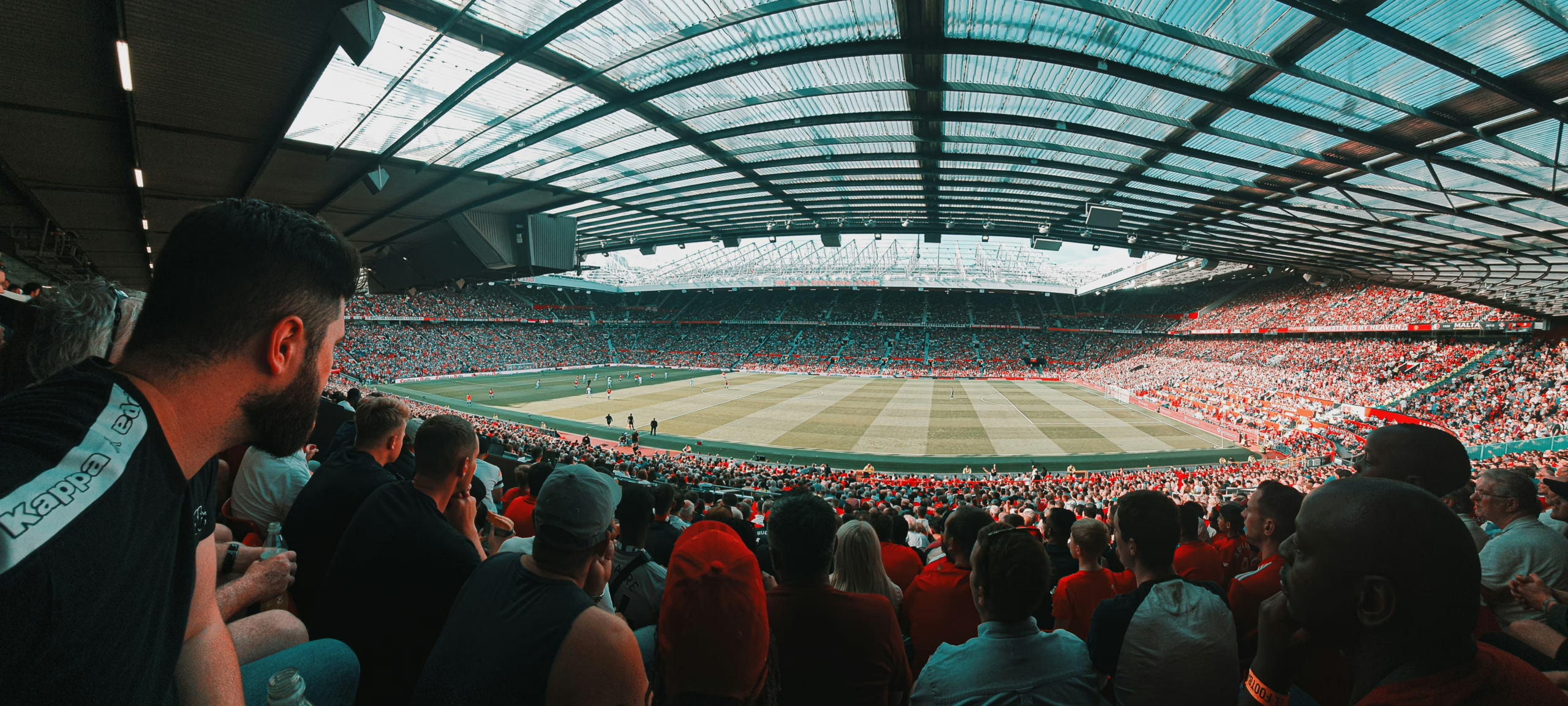
Manchester United fans
Redemption at Anfield, Manchester United, under Amorim, walked off the pitch at Anfield with arms aloft, disbelief and elation mingling in equal measure. For Manchester United, this was not just a victory — it was a breaking of a burden, a rewriting of a narrative, a moment of redemption in a place that has long felt like a crucible. On 19 October 2025, United prevailed 2-1 against Liverpool. The numbers tell part of the story — an early Bryan Mbeumo goal, Cody Gakpo’s equaliser, and a late Harry Maguire header to seal the win. But beneath the surface lies the engineering of a strategy, the psychology of belief, the drama of old hauntings, and the subtle genius of a coach willing to embrace the underdog script.
This article will dissect the match from front to back: the significance of the venue, the early strike, the tactical blueprint of manager Ruben Amorim, how United defended pressure, how Liverpool attempted to impose their style and failed, how the decisive moment came, and what it means for both clubs — and for fans who have been waiting for this night for nine long years.
The weight of history and the stage set
Anfield has loomed massive in United’s recent memory. Their last Premier League victory at this ground was in January 2016. In effect, every trip back after that felt burdened by expectation and failure. The crowd, the atmosphere, the historic ritual of “You’ll Never Walk Alone” — all combined into a theatre in which United too often felt cast as guests out of their depth. When teams speak of “getaway” games, trips to Anfield were often centre-stage in that conversation.
That context matters. Because when United trailed possessions, when they sat deep, when novelty or audacity was required, this backdrop shaped player expectations, nerves and narrative. For Ruben Amorim’s side, arriving at Anfield carried extra psychological freight: the chance not just for three points, but for catharsis. Pre-match commentary (for example, the AnythingLiverpool preview) warned how this fixture “feels like a must-win game” for Liverpool, but equally flagged how United, as underdogs, could force unpredictability. Anything Liverpool
So when United raced into a lead inside the first couple of minutes, they didn’t simply score a goal — they stormed into a frame of mind. What followed was not only a tactical contest but a test of will, of memory, and of belief.
1 minute, 3 seconds: the opening salvo
The moment comes fast in football. In this case, in just over a minute into the game. Bryan Mbeumo picked up a flick by Amad Diallo, raced into the box and finished calmly — United 1, Liverpool 0. The speed of it shocked the Anfield crowd, startled the hosts, and handed United a kind of licence: they could now defend differently, they could sit back, they could absorb, safe in the knowledge they already had their lead.
There was, however, controversy: Liverpool’s Alexis Mac Allister had gone down after a collision, and some felt play should have been paused. Aftonbladet+2This Is Anfield+2 But the referee allowed play to continue and the moment stood. That psychological moment matters — whether one believes in “right call” or “wrong call,” the fact is United scored, Liverpool were unsettled, and the match began with United controlling the scoreboard.
It allowed Amorim to implement the tactical plan with the initiative rather than chasing. That early strike made all the difference.
Amorim’s blueprint: structure, roles and strategy
The match might on first glance look like United came, sat deep, counter-punched, and held on — and in large part that is correct. But the nuance is deeper: Amorim chose a shape and plan that accepted the strengths of Liverpool and forced their weaknesses to matter.
Formation & structure
United lined up in a 3-4-2-1. That in itself was significant: three at the back, two wing-backs who could push, two attacking midfielders behind a lone forward. It allowed United to have width, but also solidity. Liverpool pressed through their front three and sought to overload the middle. By playing with three central defenders and two holding midfielders (in effect), United aimed to plug the central channels and force Liverpool wide.
The Premier League post-match summary pointed out: “Maguire header seals United’s first Anfield victory in ten years.” Premier League The Guardian noted United “were happy to play long” and “there was a confidence about their work on the ball” rather than purely hide. The Guardian So Amorim’s plan wasn’t passive. It was controlled. It asked United to accept lesser possession, channel the game into acceptable corridors, and strike when they could.
Defensive compactness
Central to the plan was denying Liverpool space between the lines. Because Liverpool’s preferred method involves progressive passing, interchange of width, half-spaces and vertical half-turn passes, United chose to compress the lines. The midfield and defence shared tight vertical distance so that when Liverpool attempted to play through the middle, they found bodies, traffic, and little room. Occasionally, Liverpool played wide and tried to deliver crosses; United’s 3 + wing-backs allowed the wide spaces to be guarded.
As the ESPN report recorded: “… United had to weather a storm of Liverpool pressure before emerging with a 2-1 win.” SI+1 The statistical summary adds that Liverpool had c.63% possession, United only 36.5% according to ESPN. ESPN.com+1 Thus United anticipated less control and more direct reaction.
Counter-attack / transitions / set-piece awareness
Knowing they would not dominate the ball, United built a plan around transitional moments and set pieces. That early goal came in transition. In the later phases, United worked for corners and crosses — the match-winner came from such a scenario. The analyst site noted that “the first-time volleyed cross by Fernandes” was headed home by Maguire. Opta Analyst+1 Amorim emphasised in his post-match remarks the importance of the team spirit and mental readiness. TalkSport
So the blueprint: concede control, defend smart, force the opponent to play where you want, hit when you can, and make set pieces count. Simple in phrase, complex in execution.
First half: United’s early advance and Liverpool’s scramble
Immediately United looked alive. That early goal unsettled Liverpool and forced them into reframing their plan. After the 2-1 lead, United didn’t sit purely passive. They maintained compactness but also had attacking intent — the Sky Sports report observes that after the initial strike United had “nice interchanges” in possession and were not purely under siege. The Guardian
Liverpool, meanwhile, had to chase. In the 20-30 minute period, they pressed hard. Chances came: Gakpo hit the post early, and United goalkeeper Senne Lammens had to show composure. The Live Blog from Outlook India noted by the 11th minute “it has been a really physical contest, with a number of crunching tackles” and a near-penalty situation when De Ligt pressured Kerkez. Outlook India
But crucially, Liverpool did not break United’s defensive compactness. Their passes grew longer, fewer chances opened up. United even threatened again: a long ball found Amad on the right, he set up Fernandes who missed a decent chance. So United were not static; they mixed defence and attack cleverly.
As half-time approached, Liverpool had more of the ball, but United seemed comfortable to let them have it, provided the opponent couldn’t penetrate critical spaces. The Guardian noted that despite Liverpool “having two-thirds of the ball […] they are not being able to break down the United backline.” The Guardian
Thus by half-time United had more than survived — they had built a platform. That in itself is credit to the plan and mentality.
Second half: Liverpool pressure, United resilience
The second period felt more dominant for Liverpool. They came out chasing the equaliser and at times looked dangerous. Gakpo in particular had several near-misses: he hit the post three times according to multiple reports. Outlook India+1 United’s goalkeeper and defenders had to be alert. The BBC/Analyst summary noted Liverpool had 19 shots to United’s 12. ESPN.com
What matters is how United coped with the pressure. Their midfield did not collapse; their shape held. Amorim’s men had to remain disciplined in tracking runs, managing wide overloads, and conceding only low-probability chances. United also made timely substitutions and shifted into deeper blocks at intervals — not desperately, but intentionally. The statistics of sets and crosses suggest United began to prepare for a potential late scenario.
In the 78th minute Liverpool finally broke through: Fidel Chiesa’s cross found Gakpo, who tapped in the equaliser. The pressure had told. But crucially United did not panic. Amorim’s instruction and his players’ understanding meant that rather than crumble, they maintained their mindset: compact, alert, ready.
Six minutes later, Bruno Fernandes whipped a first-time volleyed cross from a corner, and Maguire rose to head United back in front. That one moment summarised the match: despite being out-performed in possession, being under sustained pressure, United produced the decisive moment in transition from a set piece. The Premier League’s own summary: “Maguire header seals United’s first Anfield victory in ten years.” Premier League
Tactics in microcosm: what changed challenges for Liverpool
From a tactical perspective, Liverpool’s usual strengths were blunted. Their tendency to play through midfield was stymied by United’s compact structure. Their width and crossing plan produced volume but not the decisive verticality or penetration they wanted. Several analytical points emerge:
- Reduced penetration through the central channels: United’s midfield sat close to the back three; passes into half-spaces were contested.
- Wingback overloads less effective: United’s wing-backs tucked or delayed overlapping until safely structured; Liverpool found fewer clean passages.
- Set piece vulnerability: While Liverpool produced crosses, United defended several but also capitalised on their own. Liverpool’s failure to clean up the corner leading to Maguire’s goal indicated a lapse in concentration and structure. TheAnalyst noted Liverpool have conceded 2+ goals more frequently than any other side since May. Opta Analyst
- Psychological dislocation: The early goal forced Liverpool to chase; chasing often invites error and fatigue. The burden changed. Instead of dictating the tempo, Liverpool found themselves reacting to United’s threat. That shift is crucial in high-level matches.
From United’s perspective, dealing with high pressure means being comfortable without the ball. Amorim’s message seemed to resolve that: not all matches require you to dominate; some require you to be excellent in what you choose to do. Post-match, Amorim said the team-spirit was the “most important thing”. TalkSport
The emotional narrative: nine years, one moment
Let’s pause and reflect on the human side. For United fans, this was not simply a good away win. It was a flat-out release of years of anxiety, frustration and bitterness. Nine years is a long horizon in football. Young fans now grew up with Anfield as a rite of passage — often a disheartening one. The chants, the dominance of Liverpool, the legacy of past results — all stacked against United.
And yet on this afternoon, United walked out of Anfield victorious. That brings belonging. That offers hope. That is why the goal early on means more than three points. It means rewriting baggage. It means saying: we can do this again. And when Maguire rises at the back post to head home and the away section erupts — it is cathartic.
Maguire said after the match: “They’ve had the better of us over the last few years … It’s been a long time coming, coming to this ground and picking up three points. It’s for the fans.” Reuters
In that moment you see the emotional anatomy of football: the roar, the relief, the sharing of belief between club and supporters. The manager, the players, the fans all in a loop. The history weighed heavy — but now a crack appeared, and victory slipped in.
Implications for both clubs
For United
This win offers momentum. It provides a coach, Ruben Amorim, with a signature victory. It gives the squad a belief that they can win on the big stage and away from home. It shows that the chosen tactics work under pressure. It also gives breathing room: three points at Anfield count for more than just three.
Of course, the journey continues. United will want to become less reactive and more proactive; they will want to dominate possession more consistently, not just win through statistics of suppression. The blueprint is in place, but long-term results will require adaptation and evolution.
For Liverpool
This result compounds a worrying trend. A fourth consecutive defeat across competitions for Liverpool; their title credentials start looking fragile. The goals conceded, the missed chances (Gakpo hitting the post thrice before he scored, Salah with a glaring miss) all add to the sense of missed opportunity. Outlook India+1
From a tactical standpoint, the plan that served them well recently appears to have met a side ready for it. Their possession counts counted less. Their vulnerability from set pieces again emerged. The psychological burden of chasing a game when you’re expected to dominate was heavy.
Key lessons for coaches, tacticians and students of the game
- Possession is not supremacy: What matters is quality of chances, control of vertical spaces and the ability to limit the opponent in key zones.
- Compactness and disciplined distances work: Allowing too much space between defence and midfield invites danger. Amorim’s United managed vertical distances so Liverpool had fewer line-breaking options.
- Plan for less but execute when it comes: United conceded territory but not high-probability chances; they struck when the moment came.
- Set pieces as decisive margins: Maguire’s goal came from a corner routine. Practice in special situations pays dividends.
- Psychology and context matter: The early goal shifted mental states. Managing that over 90 minutes requires build-up, belief and structure.
- Adaptability under pressure: United remained calm when the tide turned against them. Their substitutions, their shape shifts and their mindset were robust.
What remains to be asked
While the victory is huge, questions remain. Do United now have the consistency to replicate this kind of result across the season? Will their possession deficits be addressed and will they become less reliant on fortuitous goals? Will Liverpool recover their identity and continue to challenge on all fronts, or has this defeat exposed deeper cracks?
For United, delivering this one match is remarkable. But the measure of progress will be how they perform away from home in multiple fixtures, how they build leads rather than chase, and how they navigate games where the goals don’t come early. For Liverpool, the measure will be how quickly they regroup, fix set-piece vulnerabilities, prevent fire-drills and finish chances when they dominate.
Final word
In the end, this was not simply Manchester United winning away. It was Manchester United claiming a night long overdue. It was a manager trusting his blueprint, players trusting each other, a squad willing to accept less glamour for more discipline, and a fan-base rewarded for its patience.
The early goal, the rigid defensive platform, the late set-piece strike — all threads in a tapestry of tactical courage and emotional release. At times the game felt like United holding on. At times it felt like Liverpool should have broken through. But football is less about what you expect and more about what you make of the moment. United made theirs.
And as Harry Maguire’s header dipped into the bottom corner, the waiting ended. The weight lifted. The noise that followed told you everything you needed to know. For United — this was more than three points. It was a message. For Liverpool — a warning. For the game itself — a reminder that structure, spirit and timing can topple even the most dominant side.
In the months ahead, this result will be referenced in boardrooms, by pundits, by players and fans. It will be part of the “turning point” narrative that every season craves. And for United supporters, the night will live long in memory: crossing the road back to the station, singing in the rain or in the bar, the echoes of “Glory Glory” unfettered by fear of what has been.
Because sometimes, a single victory means everything.
About The Author