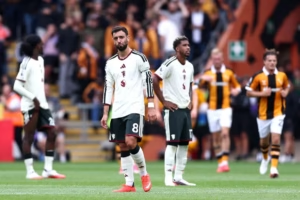
Manchester United 4–2 Brighton — Old Trafford thriller that answered questions and raised new ones
Manchester United’s thrilling 4–2 win over Brighton at Old Trafford was more than just another Premier League victory — it was a statement of intent and a reality check rolled into one. Ruben Amorim’s men dazzled in attack, with Matheus Cunha, Casemiro, and Bryan Mbeumo leading a ruthless offensive display that delighted the home fans. Yet, behind the euphoria, familiar defensive flaws resurfaced — shaky set-piece defending, slow transitions, and a midfield that still struggles to shield the backline. This deep-dive unpacks how United outscored Brighton, what the win means for their top-four ambitions, and the tactical fixes needed if they’re to turn exciting football into sustained success.
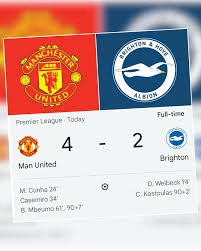
Manchester United’s 4–2 win over Brighton & Hove Albion on Saturday was one of those matches that feels bigger than three points. It gave Ruben Amorim’s side breathing room, a dose of momentum and a reminder that this team can entertain and win in equal measure — while also exposing clear structural weaknesses that must be fixed if United are to stay competitive across a long season. This deep-dive breaks down how the game unfolded, what the victory means for United’s season, tactical lessons and the urgent areas that need improvement. (Match facts: 4–2 to United; goals from Matheus Cunha, Casemiro and a Bryan Mbeumo brace; game played 25 October 2025 at Old Trafford.) Premier League+1
Quick match snapshot (the essential facts)
- Final score: Manchester United 4 — Brighton & Hove Albion 2. Premier League
- Goals: Matheus Cunha opened the scoring (his first for the club), Casemiro added a second, and Bryan Mbeumo netted twice to seal the win. Manchester United+1
- Context: The win marked United’s third straight Premier League victory and lifted them temporarily into the top four — a valuable burst of momentum. Premier League
These basics matter for the story: United scored four, showed attacking verve and transition danger, but conceding two — including a late Brighton response — underlines defensive fragility that persists.
First half: fast starts, clinical moments
United began with energy and intent. The opening goal — Matheus Cunha’s first for the club — arrived after a well-worked move that showed United’s increasing comfort in playing vertical, direct passes into half-spaces. That early strike set the tone: United were willing to press forward, invite Brighton’s structural shifts, and exploit transitional channels.
Two characteristics stood out in the first 45 minutes:
- Decision-making in the final third: United looked sharper; combinations between wide men and central forwards produced overloads and created high-quality chances.
- Set-piece vulnerability in the build-up: Brighton kept probing with diagonal switches and overloaded United’s weaker flank at times, a prelude to second-half complications.
United’s attacking play combined individual finishing with collective movement. Cunha’s goal was an immediate payoff; Casemiro’s goal later (a second-half contribution that extended the lead) was evidence that United’s set-up also generated opportunities from deeper positions. Manchester United
Tactical analysis: what worked
1. High-transition threat
United were lethal when they turned defence into attack. Quick, accurate vertical passes — especially from the defensive third into Cunha and the wingers — created chances before Brighton could settle. That transition speed is a key asset in Amorim’s system and showed why United can outscore opponents even on days when defensive structure is imperfect.
2. Wide overloads
Using width to stretch Brighton’s backline created pockets for Cunha and the wide forwards. When the full-backs stayed high and midfield runners peeled into channels, United produced overloads that often ended in high-quality crosses or cutbacks. Brighton struggled at times to pick up the second runner.
3. Set-piece potency
Unlike the common narrative that set-pieces only expose United, this game showed their offensive side: Casemiro ghosting into box positions and finishing after a scramble underlined the team’s ability to create danger from dead-ball routines. That said, set-pieces remain a double-edged sword (see the weaknesses section). Manchester United
What didn’t work — and why it matters
1. Defensive organisation on transitions
Brighton’s two goals — and the late tense moments — came from transitional breaks where United were caught out of position. That suggests a systemic problem, not a one-off lapse: when United commit players forward, the recovery shape is often porous. Teams that play quick vertical passes (like Brighton) punish that. This is especially worrying against elite opponents who convert half-chances.
2. Midfield shielding and balance
The defensive midfield had moments of control, especially when Casemiro dropped between lines. But there were chunks of the match when the midfield neither pressed cohesively nor provided a reliable screen in front of the back three. That lack of balance allowed Brighton to progress the ball centrally and exploit the spaces between lines — exactly the problem United must fix if they want sustained success. Sky Sports
3. Set-piece defending
United’s defending from set pieces and crosses remains an area for improvement. While they scored from a set-piece scramble, their organisation during corners and free-kicks left gaps that Brighton nearly exploited more than once. Against higher-quality finishers, these lapses will cost points.
Player focus: who made the difference (and who worried)
- Matheus Cunha — A statement goal and constant threat. Cunha’s movement and willingness to take on defenders paid off; his finishing gave United an early platform. This was an important confidence boost for him at the club. Manchester United
- Bryan Mbeumo — A brace that underlined his clinical edge. Mbeumo’s movement in behind and efficiency in finishing make him a match-winner when United create space for him. His brace effectively killed the tie. Premier League
- Casemiro — Scored and added the steel in midfield when required; his presence still solves several structural problems for United, especially in moments where a composed head and an instinct for positioning are needed. Manchester United
Worryingly, certain defenders and the midfield unit were intermittently exposed — not disastrous this game, but a pattern that’s reappeared across fixtures.
Substitution and bench impact
Amorim’s substitutions were geared to protect the lead and exploit Brighton’s commitment forward. The bench impact was positive: fresh legs preserved intensity, and pragmatic changes helped close out windows of Brighton pressure. The ability to bring in players who can both defend space and retain the ball at tempo will be invaluable in the run-in.
Advanced metrics & context (what the numbers say)
While raw goal numbers tell one story, deeper stats confirm the narrative: United created several high-quality chances on transitions and from wide overloads, while Brighton’s expected-goals (xG) came chiefly from open-play counters and set-piece opportunities. The balance of xG reflected a game in which United were slightly more efficient in finishing but still vulnerable under quick transitional counters. (Detailed xG and shot maps were reported in post-match analytics.) WhoScored+1
What this win means for Manchester United
- Momentum and belief: Three consecutive league wins is more than points — it builds belief and creates positive atmosphere in training and among the fanbase. United temporarily moved into the top four, which has psychological and practical importance (fixture confidence, pressure on rivals). Premier League
- Managerial breathing space: Wins like this reduce short-term scrutiny and give Amorim time to embed ideas. That’s crucial for tactical evolution.
- Transfer implications: The match reinforced long-held transfer priorities — specifically, the need for a defensive midfielder who can shield transitions and a centre-back pairing with better recovery speed. Clubs and the board will take note; performances like Cunha’s and Mbeumo’s also raise expectations for attacking recruitment balance.
Clear priorities for improvement (actionable and immediate)
- Reinforce defensive midfield: United needs a midfielder who combines press-resistance with recovery speed. Casemiro is invaluable, but depth and a complementary profile are required to maintain shape when Casemiro is absent or pushed forward.
- Recovery speed from full-backs/wing-backs: When United commit wing-backs high, their recovery and lateral coverage must improve. Tactical drills emphasizing 6–8 second transition recovery could reduce exposure to counters.
- Set-piece defence: Assignments must be tightened; clear marking responsibilities and zonal/near-post hybrid strategies could reduce the chance of scrambles that invite danger.
- Game-management late in matches: Brighton’s late pressure exposed concentration lapses. Substitution timings and shaping the midfield to keep possession and slow tempo could help close games more comfortably.
Managerial takeaway: what Amorim must ponder
Ruben Amorim’s system brings energy and attacking fluidity. But his challenge is to reconcile that attacking intent with defensive stability. The next few weeks — including domestic fixtures and possible cup duties — will test squad depth. Tactical tweaks (such as a rotation that preserves midfield balance while keeping attacking threat) are essential.
Fan takeaways: how supporters should read this result
Be optimistic but realistic. The team can score, play exciting football and win meaningful matches; yet the defensive issues are not overnight fixes. Supporters should celebrate the attacking development and hope the club addresses structural defensive weaknesses in training or via the window.
Final verdict — a balanced, forward-looking read
This 4–2 win is both a statement and a reminder. United can outscore good teams, create moments of real attacking magic, and generate momentum that lifts both table position and morale. But the defensive and structural issues that allowed Brighton’s replies remain pressing concerns. If the club addresses midfield shielding, recovery speed and set-piece organisation in training or the market, this side can blend flair with resilience.
For now: enjoy the goals, celebrate the momentum — but don’t lose sight of the work that still needs doing. That balance between joy and realism is precisely what will define United’s season.
About The Author