Manchester United New Stadium: Inside the £2 Billion Mega Plan That Will Transform Old Trafford Forever
Manchester United’s new stadium plans mark the dawn of a new era. With billion-pound backing and bold ambitions, the club is set to transform its home into a world-class football destination — redefining the legacy of Old Trafford for generations to come.
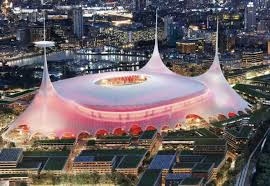
Manchester United new stadium plans have shaken the football world — a bold £2 billion project that could redefine not only the club’s future but the skyline of Manchester itself. Unveiled in early 2025, this stunning 100,000-seat “New Trafford” vision aims to replace the historic Old Trafford with a world-class arena designed for the next century. But behind the breathtaking renders lie critical questions: who’s paying for it, how will it affect Manchester United’s already complex finances, and how far has the project really progressed?
Let’s break down everything we know so far — from design and funding to debt, politics, and progress — based on the most accurate, up-to-date information available as of October 2025.
A Bold New Era for Old Trafford
In March 2025, Manchester United unveiled its grand plan for a 100,000-capacity stadium designed by world-renowned architects Foster + Partners. The design is futuristic yet rooted in the club’s history — a sweeping roofline, integrated LED façade, and a full “stadium district” around the site.
This ambitious project doesn’t simply replace Old Trafford; it reimagines it as the centerpiece of a new urban hub including retail, hotels, apartments, offices, and green public spaces. The club envisions a football-led regeneration of Greater Manchester, echoing Tottenham’s North London model but on a much grander scale.
If all approvals are granted, early construction could start by 2027, targeting an opening for the 2030–31 season. However, land disputes and financing hurdles mean the final timeline remains fluid.
The Eye-Watering Price Tag: What Will It Cost?
The Manchester United new stadium itself is expected to cost around £2 billion, according to multiple financial reports and the club’s own estimates. That figure covers the core bowl, roof structure, seating, and hospitality.
Beyond the stadium, the Old Trafford District regeneration plan could involve £5–7 billion of total investment when including surrounding real-estate development and transport infrastructure. The club will not pay all of that; it expects a mix of public funding (for roads, rail, and utilities) and private developers for housing and retail components.
The sheer size makes it one of the most expensive football stadium projects in history — rivaling Real Madrid’s Bernabéu renovation and topping Tottenham Hotspur’s £1.2 billion stadium build.
The Masterminds Behind the Vision
The design partner, Foster + Partners, brings a global track record of stadium and mega-project success — from Wembley’s rebuild to Apple’s futuristic headquarters. Their vision emphasizes:
- Sustainability: solar panels, rainwater harvesting, and low-carbon materials
- Accessibility: wider concourses, step-free access, and digital ticketing throughout
- Flexibility: modular design to host concerts, finals, and major non-football events
- Iconic presence: a glowing canopy that changes color for matchday and events
Manchester United executives, led by Sir Jim Ratcliffe and the INEOS sports division, have championed this design as the cornerstone of a “northern powerhouse” regeneration, symbolizing the club’s return to global dominance on and off the pitch.
Who’s Paying? The Power Players and Financiers
Financing is the heart of the Manchester United new stadium debate. A £2 billion build demands a sophisticated blend of funding sources. Here’s how the likely capital stack shapes up:
1️⃣ Club Equity and Ownership Funding
Sir Jim Ratcliffe’s INEOS stake has already reshaped Manchester United’s decision-making. While Ratcliffe has hinted at contributing significant funds, the Glazer family remains the controlling shareholder group, and their willingness to inject equity is unclear.
2️⃣ Private Debt and Bank Loans
Top banks and infrastructure lenders have reportedly been approached about £1 – 1.5 billion in potential long-term project financing. The final structure — corporate or ring-fenced — will determine whether this debt sits directly on Manchester United plc’s balance sheet.
3️⃣ Naming-Rights and Sponsorships
Analysts predict that a stadium naming-rights deal could fetch £500 – £600 million over 20 years, rivaling the world’s biggest sports sponsorships. That deal alone could offset a major portion of construction costs.
4️⃣ Premium-Seat Pre-Sales and Hospitality Licenses
Selling long-term VIP hospitality packages and seat licenses provides immediate capital. Tottenham and Real Madrid raised hundreds of millions this way, and United’s global fanbase makes this strategy even more lucrative.
5️⃣ Public Infrastructure Support
Trafford Council and the Greater Manchester Combined Authority are in discussions over co-funding transport upgrades, including Metrolink extensions and local road improvements. While taxpayers won’t fund the stadium itself, government participation is likely for enabling works.
The Debt Dilemma: Will This Deepen United’s Financial Burden?
Debt is a sensitive topic for Manchester United fans, still scarred from the Glazer leveraged buyout of 2005. As of mid-2025, the club reported £165 million in outstanding borrowings — down from pandemic peaks but still a significant burden.
If the stadium is financed through corporate debt, total liabilities could exceed £1.5 billion, potentially re-igniting fan protests. To mitigate this, the club is exploring a project-finance model, in which borrowing sits within a separate stadium entity and is repaid from future stadium revenues.
The trade-off? United would share a portion of matchday and hospitality income with investors but shield the core club from heavy debt. Financially, it’s the smarter long-term play — if managed well.
How Will the New Stadium Pay for Itself?
A key question: how can a £2 billion investment make financial sense? Here’s the business logic that investors and lenders are betting on:
- More Seats, More Revenue: Expanding from 75,000 to 100,000 seats adds roughly 25,000 tickets per match — about £35 million in extra annual matchday revenue.
- Premium Hospitality: With over 10,000 VIP and corporate seats, United can double high-margin hospitality income.
- Naming Rights Windfall: A long-term partnership could bring hundreds of millions in guaranteed revenue.
- Concerts & Global Events: The design supports large concerts, NFL games, and international finals, creating new revenue streams.
- Real-Estate Development: Leasing space in the stadium district could yield recurring rental income and joint-venture profits.
In short, the Manchester United new stadium isn’t just a sporting venue — it’s a multi-purpose entertainment hub designed to generate cash 365 days a year.
Community Impact and Political Stakes
Manchester United’s leadership has framed the project as a “once-in-a-century opportunity” to rejuvenate Old Trafford and its surroundings. The club claims it will:
- Create over 20,000 construction jobs and thousands of long-term roles
- Deliver affordable housing and community facilities
- Improve transport, lighting, and local infrastructure
- Increase tourism and economic output across Greater Manchester
Supporters of the plan see it as an economic catalyst. Yet, critics question the use of public funds for infrastructure, worry about gentrification, and lament the loss of Old Trafford’s historic identity.
Fan groups like MUST (Manchester United Supporters’ Trust) insist that ticket affordability and fan consultation must be written into any redevelopment deal. The balance between progress and tradition remains one of the project’s defining tensions.
Land Battles and Legal Delays
One major obstacle surfaced in mid-2025: a land-price dispute with owners of a freight terminal site essential to the stadium district. Negotiations with multiple private landholders have stalled, delaying the planning process.
Without that land, key access routes and parts of the proposed mixed-use development cannot proceed. Local reports suggest talks are ongoing, but until resolved, construction cannot begin.
This challenge underscores the scale of coordination required for a project of this magnitude — dozens of stakeholders, multiple authorities, and billions in moving parts.
Manchester United’s Financial Health (2025 Snapshot)
According to the club’s FY 2025 filings:
- Total revenue: approximately £648 million (up 8 % year-on-year)
- Operating profit: ~£110 million
- Commercial revenue: up 9 % thanks to Adidas and Qualcomm deals
- Net borrowings: £165.1 million, down slightly year-on-year
These numbers show a club regaining financial stability post-COVID and post-European absence. However, adding even £1 billion of stadium-related debt would fundamentally change leverage ratios — hence the careful push for joint-venture or project-finance structures instead of traditional corporate borrowing.
What the New Stadium Means for Manchester United’s Future
If delivered successfully, the new stadium could:
- Reclaim matchday dominance: overtaking Real Madrid and Barcelona in capacity and matchday revenue
- Boost brand power: positioning United as a modern global venue for sport, entertainment, and events
- Enhance recruitment: elite players are drawn to elite facilities
- Increase local pride: transforming the Old Trafford area into a symbol of renewal
But if mishandled, it could also saddle the club with unmanageable debt, erode fan goodwill, and delay on-field investment.
As always with Manchester United, success and controversy will likely arrive together.
The Latest Project Status
As of late October 2025:
- Design phase complete: Foster + Partners’ concept is finalized and submitted for review.
- Financing discussions ongoing: Several banks and investors are in active negotiations; no deal signed yet.
- Land acquisition unresolved: The freight terminal dispute remains the key bottleneck.
- Political discussions: The Greater Manchester Combined Authority is reviewing transport and infrastructure funding proposals.
- Timeline: Earliest construction start in 2027, with a potential opening around 2030–31.
Fans can expect a formal planning application by mid-2026, followed by public consultation and a likely phased demolition and construction process to minimize matchday disruption.
Risks to Watch
- Rising construction costs: inflation could push the price above £2 billion.
- Financing uncertainty: high global interest rates make borrowing costlier.
- Political opposition: public funding optics could trigger local resistance.
- Fan backlash: ticket pricing and the emotional loss of Old Trafford heritage.
- Land issues: unresolved ownership disputes remain the single biggest near-term risk.
Every major stadium build encounters delays — the question is whether Manchester United can manage them without derailing momentum or investor confidence.
A Glimpse of the Future
Imagine walking down Sir Matt Busby Way in 2031: a shimmering red-lit arena stands where Old Trafford once did, crowds filling cafes and plazas in the new stadium district, and United’s first home game in the New Trafford Stadium marking the dawn of a new era.
That’s the dream driving this £2 billion venture — one combining football heritage, urban renewal, and global ambition.
But dreams on this scale demand flawless execution. Financing, politics, and planning must align perfectly. The next two years — 2026 and 2027 — will decide whether Manchester United builds the future it promises or remains stuck in the blueprint stage.
Final Thoughts
The Manchester United new stadium is more than a construction project — it’s a statement of intent. A reassertion that the club aims to match Real Madrid, Bayern Munich, and Manchester City not only on the pitch but in infrastructure and vision.
With a bold design, billion-pound financing, and global scrutiny, Manchester United stands on the brink of a transformation that could define the next 50 years. Whether this dream becomes a modern masterpiece or a financial marathon will depend on the next critical decisions.
For fans, investors, and residents alike, one thing is certain: football history is about to be rewritten in Manchester — brick by brick, seat by seat, and pound by pound.
About The Author