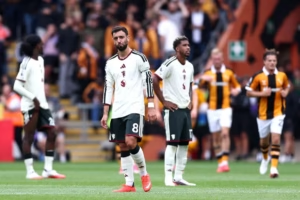
Inside Manchester United’s Midfield Rebuild: Six January Targets That Could Transform the Squad
Under Ruben Amorim, Manchester United eyes a dramatic midfield overhaul this January. Explore tactical gaps in stars like Casemiro and Bruno Fernandes, plus six explosive targets—including Conor Gallagher and Javi Guerra—that could inject energy, creativity, and steel to redefine the Red Devils’ season.
As Manchester United navigate a transitional season under Ruben Amorim, the spotlight has intensified on the club’s midfield rebuild. With the January transfer window approaching, fans are eager for reinforcements that could address persistent tactical issues and propel the Red Devils back into contention. This in-depth analysis explores why Amorim is prioritizing a Manchester United midfield rebuild, highlights current weaknesses, and evaluates six promising January targets. Drawing from reliable sources like tactical breakdowns and player statistics, we’ll examine each target’s style, fit, feasibility, and potential impact—backed by data to ensure factual accuracy.
Why Amorim is Pushing for a Manchester United Midfield Revamp
Ruben Amorim’s arrival at Manchester United in late 2024 marked a shift toward a high-intensity, structured 3-4-2-1 system, emphasizing quick transitions and pressing. However, the current midfield has struggled to adapt, prompting calls for a revamp. According to tactical analyses, Amorim seeks greater energy, balance, and depth to support his philosophy, which relies on midfielders who can control possession, resist presses, and contribute defensively. The manager has openly discussed January activity, especially after injuries like Benjamin Sesko’s, signaling a need for fresh legs to sustain performance amid fixture congestion.
Moreover, the squad’s midfield instability stems from aging profiles and inconsistent form. Casemiro, at 33, is expected to depart when his contract expires at season’s end, while Bruno Fernandes has attracted interest from Saudi and European clubs. Young talents like Kobbie Mainoo are reportedly unhappy with limited minutes at Manchester United, and Manuel Ugarte has yet to fully settle since his 2024 arrival. Amorim’s vision is to inject athleticism and tactical intelligence, aiming for at least one or two signings in 2026 to build a unit capable of competing in the Premier League’s top four. This rebuild isn’t just reactive—it’s essential for long-term success, as evidenced by United’s seventh-place standing with 18 points from 11 games.
Tactical Weaknesses in the Current Lineup: Focus on Casemiro and Bruno Fernandes
Despite flashes of brilliance, Manchester United’s midfield exposes structural flaws in Amorim’s setup. Manchester United ranks eighth in possession at 52.9%, often relying on long balls (Fernandes: 61, Casemiro: 26) that lead to turnovers and counters. Key weaknesses include a lack of defensive solidity, with United conceding three counter-attacking goals—the league’s highest—due to poor transitions. The 3-4-2-1 formation creates a 2v3 overload in midfield, making it rigid and vulnerable to aggressive opponents.
Casemiro, the anchor, provides discipline with 82.94% pass accuracy and strong positioning, but his declining mobility (age-related) limits recovery. In 11 appearances, he has contributed defensively but struggles under pressure, contributing to the team’s third-ranked xG conceded (10.1). Bruno Fernandes, the creative hub, leads the league with 19 chances created but underperforms offensively (2 goals, -2.22 goals below expected) and defensively, being dribbled past 13 times—second only to Joao Gomes. His 81.09% pass accuracy and 27 attempted tackles highlight inefficiency, pulling him out of position.
Lapses are particularly evident when Casemiro is substituted. Without his pivot role, the rest-defense crumbles, exposing tiny spaces between lines and increasing xG conceded. For instance, in matches against top sides, substitutions have led to conceded goals from set-pieces and breaks, underscoring the need for reliable backups. Overall, the midfield’s weaknesses—poor possession retention, individual errors, and counter-defense—demand urgent upgrades.
Conor Gallagher: The Dynamic Presser to Ignite United’s Engine
Conor Gallagher, 25, from Atletico Madrid, embodies the high-energy profile Amorim craves. An English international, Gallagher’s style is industrious and versatile, capable of playing centrally or on flanks with strong pressing and tempo control. In the 2025/26 La Liga season, he has 1 goal and 0 assists in 12 appearances (2 starts, 10 subs), with 339 minutes played and an xG of 0.50. His aggression (top metrics in tackles and interceptions from prior seasons) fits Amorim’s system, complementing Ugarte’s holding role and allowing Fernandes more freedom.
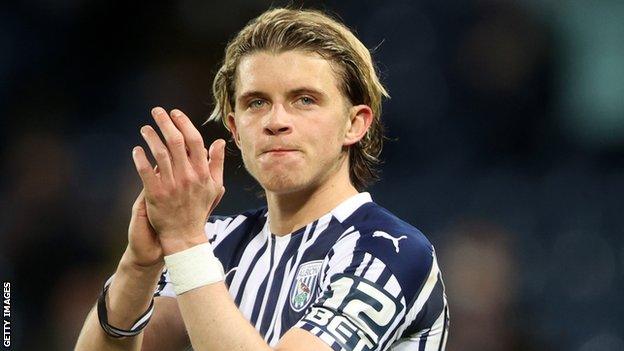
Gallagher’s value lies in his Premier League pedigree, having shone at Crystal Palace with tactical intelligence and dynamic runs. He could address United’s transition vulnerabilities, boosting midfield intensity. Market value: €40m, with a contract until June 30, 2029. Transfer feasibility is high; United inquired in summer, and Gallagher is open to returning to England amid limited starts at Atletico. Price: Around £50m, with competition from clubs like Tottenham, but United’s need aligns well. However, sales of players like Anthony may be required to fund it.
Angelo Stiller: The Ball-Progressing Maestro for Depth and Control
At 24, Stuttgart’s Angelo Stiller offers technical prowess as a deep-lying midfielder, ideal for progressing play from defense— a key gap in United’s setup. His style focuses on reading the game, with high pass accuracy and forward drives, as seen in his 1 goal, 1.62 xG, and 776 minutes in Bundesliga 2025/26. Stiller ranks highly in assists (15 career at Stuttgart) and ratings (7.49 this season).
In Amorim’s 3-4-2-1, Stiller could anchor like Casemiro or advance like Fernandes, providing balance and press resistance. Market value: €43m, contract until June 30, 2028, with a €36.5m release clause. Feasibility: United monitored him for years, but January moves are unlikely as Stuttgart resists mid-season sales. Price: €50-60m, with Real Madrid as competition, making summer 2026 more probable.
Javi Guerra: The Box-to-Box Talent Bringing Physicality and Creativity
Valencia’s 22-year-old Javi Guerra is a rising star with box-to-box energy, excelling in ball-carrying (74th percentile) and forward passes (41st percentile). In 2025/26, he has high rankings in shots per 90 (1.53, 80th percentile) and assists (0.16 per 90, 78th percentile), showcasing creativity.
Guerra’s athleticism fits Amorim’s high-press system, adding physicality to counter overloads. Market value: €25m, contract until June 30, 2029, but with a €100m release clause potentially negotiable to €50m due to player disillusionment. Feasibility: High for January, as Valencia is open to deals; United see him adapting quickly to the Premier League. No major competition noted, though price could rise.
Adam Wharton: The Press-Resistant Anchor for Long-Term Stability
Crystal Palace’s 21-year-old Adam Wharton is a defensive midfielder with composure, boasting 0.3 xG and 2.2 xAG in 9 Premier League appearances (695 minutes). His style emphasizes ball regains and progressive passes, with a 6.96 rating this season.
Wharton would provide depth behind Casemiro, fitting Amorim’s need for midfield control. Market value: €60m, contract until June 30, 2029. Feasibility: Challenging, as Palace values him at £100m; January unlikely without big sales. Competition from Liverpool, but United’s scouting prioritizes him.
Carlos Baleba: The Athletic Powerhouse to Bolster Transitions
Brighton’s 21-year-old Carlos Baleba brings raw power, with 3 goals and 1 assist in his Premier League career, plus 650 minutes, 12 tackles, and 37 duels won this season. His defensive mid style includes press resistance and progression, addressing United’s counter vulnerabilities.
Baleba fits as a versatile option in Amorim’s system. Market value: €40-60m, contract until 2028. Feasibility: Possible, but Brighton’s £80-120m ask could deter January bids; Lille’s sell-on clause complicates. Competition from Real Madrid.
Elliot Anderson: The Versatile Domestic Option for Immediate Impact
Nottingham Forest’s 23-year-old Elliot Anderson offers versatility, with 1 goal, 1 assist, and 1.6 xG in 11 appearances (990 minutes). His central/left mid style includes shot-creating actions and progressive carries.
Anderson could rotate with Fernandes, adding creativity. Market value: €45m, contract until June 30, 2029. Feasibility: United preparing a bid, but Forest demands £100-120m; January viable if affordable. Limited competition.
Transfer Feasibility: Contracts, Prices, and Competition
Across these targets, contracts run until 2028-2029, with prices ranging from €25m (Guerra) to €60m+ (Wharton, Baleba). Feasibility hinges on United’s sales (e.g.,Sancho, Rashford, Antony) to comply with financial rules. January moves are tricky for Bundesliga players like Stiller, but La Liga and Premier League targets (Gallagher, Guerra, Anderson) are more attainable. Competition from Real Madrid (Stiller, Baleba) and others adds urgency.
Predictions: Who is Most Likely to Join Manchester United?
Based on reports, Conor Gallagher tops the list—his PL experience and Atletico’s openness make him a realistic January addition, potentially transforming transitions. Javi Guerra follows, offering value at €50m amid Valencia’s flexibility. Elliot Anderson could be a bargain if negotiated down. Stiller and Baleba seem summer-bound due to high fees, while Wharton’s price tag makes him least likely. Expect one signing to kickstart the rebuild.
In conclusion, Manchester United’s midfield rebuild is crucial for Amorim’s vision, with these January targets offering the tools to fix tactical flaws and boost performance. By securing dynamic players like Gallagher or Guerra, United could transform their squad and climb the table—stay tuned as the window unfolds.
About The Author