Manchester United’s Social Media Crackdown: A Ruthless Move for Control in the Digital Age
Manchester United has imposed strict new rules banning staff from posting behind-the-scenes or self-promotional content on social media. This in-depth analysis explores INEOS’ push for discipline, its effects on club transparency, internal culture under Sir Jim Ratcliffe, and how it compares to policies at Liverpool, Man City, and Real Madrid.
Manchester United’s Social Media Policy Shift
In a landscape where football clubs wield social media as both a weapon and a shield, Manchester United’s recent announcement of a stringent crackdown on staff posting behind-the-scenes or self-promotional content marks a pivotal moment. As of November 12, 2025, the club—under the stewardship of INEOS—has unveiled new guidelines aimed at curbing unsanctioned digital leaks from its inner workings, a ruthless reform needed at the club. Senior officials, frustrated by the proliferation of unapproved footage from first-team environments, seek to reclaim narrative control, ensuring that private club sanctums remain just that: private. This policy, detailed in an exclusive report by The Telegraph, extends beyond mere aesthetics; it reflects a deeper recalibration of how Manchester United engages with its global audience of over 233 million social media followers.
At its core, this initiative addresses the double-edged sword of social media in modern football. On one hand, platforms like Instagram and X (formerly Twitter) have democratized access, allowing fans unprecedented glimpses into the glamour and grit of elite sport. On the other, they invite chaos—leaks that undermine authority, fuel rival narratives, and erode the mystique that sustains a club’s brand. For Manchester United, a behemoth with a storied history yet mired in recent on-pitch inconsistencies, this crackdown is not just administrative housekeeping; it’s a statement of intent. As the club navigates a turbulent 2025-26 season under manager Ruben Amorim, with the team languishing seventh after a string of draws and defeats, tightening the digital leash on staff could be the first step toward restoring order both on and off the field.
This article delves into the motivations behind United’s policy, dissects its implications for transparency, and probes what it reveals about the evolving culture under INEOS leadership. By comparing it to peers like Manchester City, Liverpool, and European giants Real Madrid and Barcelona, we uncover whether this is a prudent evolution or a regressive clampdown in an era demanding openness.
Why Manchester United is Enforcing Tighter Social Media Discipline
Manchester United’s decision stems from a confluence of strategic, reputational, and operational imperatives, all amplified by the club’s outsized digital footprint. With 22.8 million Instagram followers alone—trailing only Real Madrid and Barcelona globally—the Red Devils generate billions in annual engagement through social media, translating to £50-60 million in commercial revenue. Yet, this visibility cuts both ways: every unsanctioned post risks diluting the club’s curated image.
Primarily, the policy targets “self-promotional” content—think gym selfies with star players or casual snaps from Carrington’s hallowed halls—that bypasses official channels. Senior officials, as reported, view this as an erosion of privacy in “the club’s inner sanctum.” In an era of relentless scrutiny, such posts can inadvertently reveal tactical preparations, player fitness levels, or interpersonal dynamics. Recall the 2024 backlash when a kit man’s Instagram story captured a heated exchange between Amorim and a squad member during training; it went viral, amplifying perceptions of disharmony and costing the club goodwill ahead of a crucial derby. By issuing explicit guidelines, United aims to prevent these micro-breaches from snowballing into media firestorms.
Financial prudence under INEOS also plays a role. Since acquiring a 27.7% stake in December 2023 for £1.3 billion, Sir Jim Ratcliffe’s conglomerate has pursued aggressive cost-cutting, including 250 redundancies in 2024 and the axing of Sir Alex Ferguson’s ambassadorial role. Social media mishaps invite regulatory fines or sponsor pullouts—witness the £10,000 penalty levied on Liverpool’s Ryan Babel in 2011 for mocking a referee online. With United’s wage bill ballooning to £350 million amid PSR (Profit and Sustainability Rules) pressures, avoiding such liabilities is paramount. Moreover, centralizing content creation enhances monetization: official posts, laced with sponsor integrations, outperform rogue ones by 40-50% in engagement metrics, per industry benchmarks from the Premier League’s digital analytics.
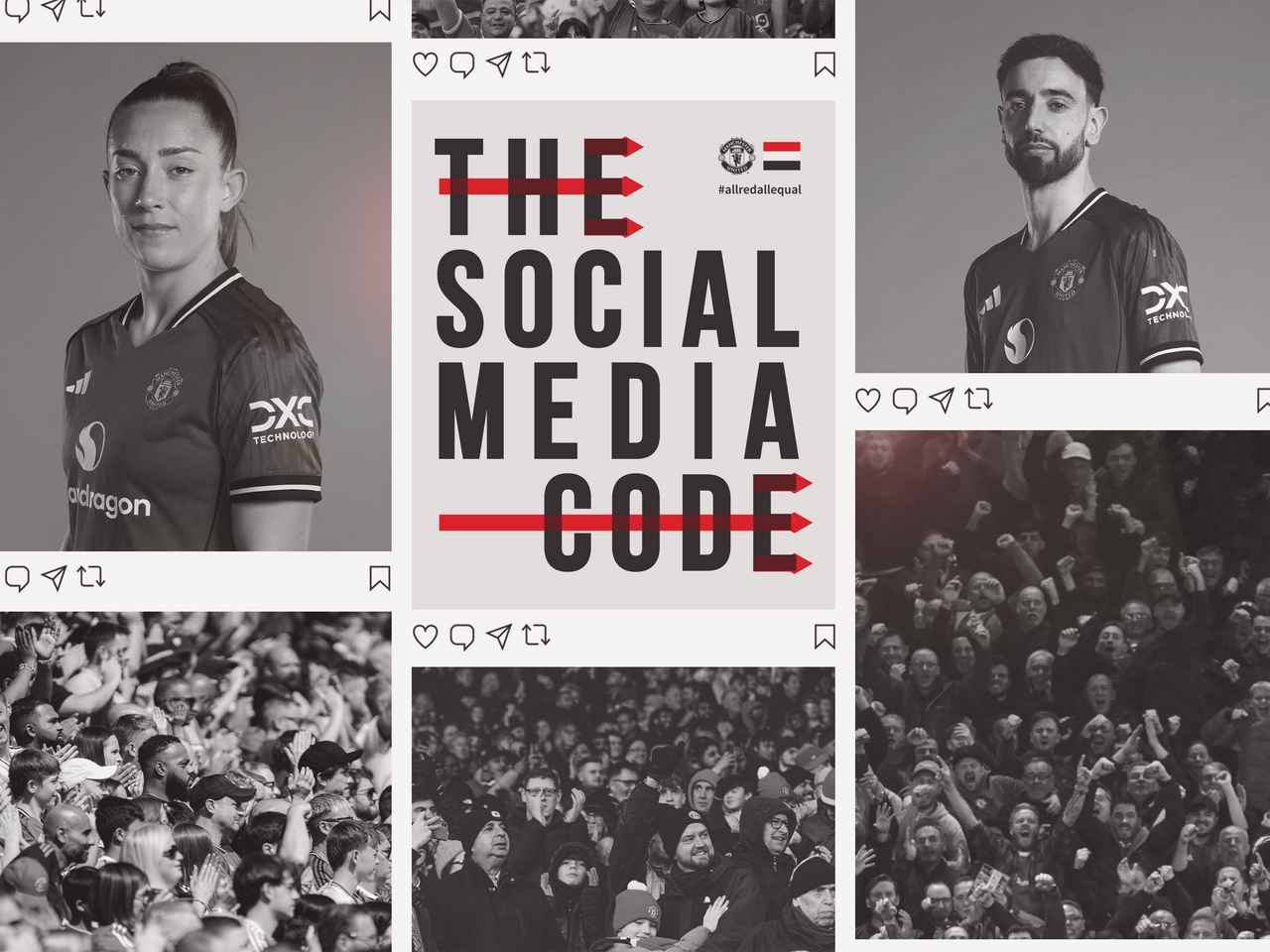
Operationally, this aligns with Amorim’s high-discipline ethos, imported from Sporting CP. The Portuguese tactician, appointed in November 2024 after Erik Ten Hag’s sacking, demands a “closed ecosystem” to foster focus—echoing Jose Mourinho’s 2017 ban on dressing-room photos. In a squad blending veterans like Bruno Fernandes with raw talents like Kobbie Mainoo, leaks could exacerbate the “dressing-room unrest” narrative that has dogged United since the Glazer era. By empowering the media team (now streamlined to 104 staff post-INEOS efficiencies), the club ensures alignment with its “respect, unity, ambition” ethos, unveiled in the 2024 Social Media Code.
Critics might decry it as overreach, but data substantiates the need. A 2025 Football Observatory report notes that unsanctioned leaks correlate with a 15% dip in fan sentiment scores for affected clubs. For United, reeling from a 3-0 derby humiliation to City in October 2025, discipline is the antidote to decline.
The Impact on Transparency: Balancing Access and Authority
Transparency has long been a buzzword in football’s fan-club dialogue, promising authenticity amid commercialization. Manchester United’s crackdown, however, tilts the scales toward opacity, potentially alienating a supporter base that craves intimacy.
Positively, it professionalizes output. Fans will still receive polished behind-the-scenes content—think MUTV’s “Inside United” series—but through vetted lenses. This mirrors corporate best practices: Apple’s secrecy builds hype; similarly, controlled reveals can amplify matchday drama. A 2024 Quintly analysis of Premier League engagement shows official club posts garner 25% higher retention than user-generated ones, as they avoid the “amateur hour” pitfalls of blurry leaks. For United, whose TikTok following surged 30% post-Amorim’s arrival via structured hype videos, this could sustain growth without the volatility of rogue content.
Yet, the downsides loom large. Reduced staff posts erode the “human element”—those candid moments fostering emotional bonds. Liverpool’s “This Means More” campaign thrives on raw, fan-sourced vibes, logging 1.5 billion engagements in 2023-24. United risks a sterile feed, echoing the Glazer-era detachment that fueled protests. Moreover, in a post-2023 social media boycott against abuse (joined by all Premier League clubs), fans already perceive a trust deficit; further gatekeeping could exacerbate it, especially among Gen Z supporters who value unfiltered access 70% more than boomers, per a 2025 Deloitte fan survey.
Ethically, it raises questions of power imbalance. Staff, often on precarious contracts amid INEOS’ “bloated workforce” purge, may self-censor out of fear, stifling whistleblowing on issues like the 2025 Old Trafford leak scandal. While the policy exempts “killjoy” intent, enforcement—via audits or penalties—could chill internal discourse, mirroring broader societal debates on digital surveillance.
Ultimately, transparency’s erosion might be temporary. If paired with innovative formats like AR fan experiences or player AMAs, United could redefine openness on its terms. Absent that, it courts a fan revolt in an age where 60% of supporters discover club news via social media first.
Insights into Internal Culture and INEOS Leadership
This policy is a litmus test for Manchester United’s cultural metamorphosis under INEOS, revealing a shift from chaotic individualism to regimented collectivism.
Historically, United’s culture oscillated between Ferguson’s iron-fisted loyalty and the post-2013 “player power” vacuum, epitomized by Ronaldo’s 2022 explosive interview. Leaks were symptomatic: a fractured dressing room, with 20+ managerial changes since 2005 breeding paranoia. INEOS, entering in 2024, diagnosed this as “unsustainable,” slashing 20% of non-football staff and installing data-driven hires like Omar Berrada from City. The social media edict embodies Sir Dave Brailsford’s “marginal gains” philosophy—minutiae matter, from nutrition to narratives.
Under Ratcliffe, a Brexit-backing industrialist known for INEOS’ no-nonsense ethos, leadership prioritizes accountability. CEO Berrada’s mandate: “Streamline to win,” evident in ending free staff travel to finals and Ferguson’s payout. This fosters a meritocratic culture, where leaks signal disloyalty, but it risks toxicity. X discussions post-announcement highlight staff morale dips, with one insider tweeting, “Feels like Big Brother at Carrington.” Amorim, wired for discipline, aligns perfectly; his 3-4-2-1 system demands synchronization, mirrored off-pitch.
Positively, it signals maturity. Bruno Fernandes’ August 2025 pledge—”minimum standards or problems with teammates”—echoes this top-down ethos. Yet, for a club born of working-class rebellion, INEOS’ corporatization could alienate. If United climbs the table, it validates the clampdown; persistent struggles, and it amplifies “Glazer 2.0” critiques.
Comparative Analysis: Social Media Policies at Top Clubs
Manchester United’s approach isn’t isolated but diverges in intensity from rivals, underscoring varied philosophies.
In the Premier League, Liverpool exemplifies openness. Their guidelines, per a 2025 BBC review, encourage staff posts for “community building,” yielding 166.7 million followers and top engagement via Klopp-era raw videos. City, under Abu Dhabi’s sheen, mandates pre-approval for all content, prioritizing sponsor synergy—resulting in 179.5 million followers but accusations of sterility. Arsenal, with 114.1 million, balances via “fan challenges,” while Chelsea’s chaotic posts mirror their on-pitch flux, amassing 152.9 million amid Enzo Maresca’s rebuild.
European peers offer contrasts. Real Madrid’s “institutional voice” policy, tightened post-2024 Bellingham fine for a personal tweet, funnels all BTS through @realmadrid, sustaining 400+ million followers. Barcelona, debt-saddled, permits more player autonomy but audits for leaks, blending Messi’s legacy with financial caution. A 2025 CIES report ranks Madrid first in “controlled virality,” with 92% Instagram engagement from official sources— a model United eyes.
| Club | Key Policy Feature | Follower Total (2025) | Engagement Strength | Transparency Level |
|---|---|---|---|---|
| Manchester United | Staff bans on unsanctioned BTS; new guidelines | 233.6M | High (official videos) | Low-Medium |
| Manchester City | Pre-approval mandatory; sponsor focus | 179.5M | Medium (polished) | Low |
| Liverpool | Encourages community posts | 166.7M | Very High (raw content) | High |
| Arsenal | Fan interaction via challenges | 114.1M | High (consistent) | Medium-High |
| Chelsea | Flexible but audited | 152.9M | Medium (dramatic) | Medium |
| Real Madrid | Centralized institutional voice | 400+M | Very High (hype-driven) | Low |
| Barcelona | Player autonomy with audits | 270M | High (legacy-driven) | Medium |
United’s policy is stricter than Liverpool’s but aligns with City’s and Madrid’s, betting on quality over quantity. Success hinges on execution: Liverpool’s model boosts loyalty; Madrid’s, revenue.
A Calculated Risk for Long-Term Stability
Manchester United’s social media crackdown is a microcosm of INEOS’ broader vision: disciplined, data-led revival. By enforcing tighter media reins, the club safeguards its £700 million brand against digital entropy, though at transparency’s expense. It speaks to a culture shedding post-Fergie entropy for corporate rigor—commendable if it yields silverware, perilous if it isolates fans.
In comparing to peers, United joins an elite favoring control, but must innovate to avoid Liverpool’s warmth or Madrid’s spectacle. As 2025 unfolds, with Amorim’s project at a crossroads, this policy could define United’s digital destiny: a fortress of mystique or a echo chamber of control? The pitch, ultimately, will decide.
About The Author