Manchester United’s Personal Seat Licence Dream Faces a Nightmare: How New Anti-Touting Laws Could Derail the £2bn Old Trafford Regeneration
The United PSL, In the space of a single day, Manchester United’s ambitious plans for a glittering new 100,000-seat stadium – hailed as the “Wembley of the North” – have been plunged into uncertainty. On the very morning that the UK government signalled its intent to outlaw the resale of event tickets above face value, reports emerged that United’s proposed Personal Seat Licence (PSL) scheme, a key pillar in funding the £2 billion project, relies heavily on a feature about to become illegal: the ability for PSL holders to resell their associated season tickets at a profit.
This collision between club commercial strategy and impending legislation is not merely a logistical hiccup. It strikes at the heart of how elite football finances mega-projects in an era of fan backlash, soaring debt, and political scrutiny over ticket pricing. Drawing on economic principles of asset valuation, secondary markets, and investor behaviour, this piece dissects why the PSL model is suddenly threatened, the cascading risks to the broader redevelopment, and what historical parallels teach us about the perils of Americanising European football’s soul.
What Are Personal Seat Licences, and Why Was United Banking on Them?
Personal Seat Licences originated in American sports as a clever financing tool. A PSL is not a ticket; it is a one-time, upfront payment for the perpetual right to purchase season tickets for a specific seat. The holder pays separately each year for the actual tickets, but the licence itself can often be resold on a secondary market – sometimes at massive profits if demand surges or the team succeeds.
In the US, PSLs have funded billions in stadium builds. The Dallas Cowboys raised over $1 billion through PSLs for AT&T Stadium; the San Francisco 49ers extracted $600 million for Levi’s Stadium. The economic rationale is straightforward: clubs capture future revenue streams today by securitising seat rights, turning fans into involuntary bondholders who front-load capital in exchange for priority access and a tradable asset.
Manchester United, consulting fans via CSL International (a US firm specialising in such models), floated PSLs primarily for premium seating in the new stadium. Early leaks suggested fees up to £4,000–£6,000 per seat, potentially generating hundreds of millions upfront. Crucially, United’s proposed model allowed PSL holders to resell their season tickets (or the effective benefit of the licence) at market rates – a feature that dramatically boosts perceived value. Without profitable resale, a PSL becomes little more than an expensive loyalty bond: you pay thousands for seat security, but if life circumstances change, you cannot recoup investment through open-market transfer.
The Anti-Touting Hammer: Why the New Law Changes Everything
The UK’s forthcoming legislation – expected in the 2026 King’s Speech – bans resale of tickets for profit across music, theatre, and sport. Sellers cannot exceed original purchase price (face value), though platforms may add capped fees. This stems from years of outrage over bots, inflated prices (Oasis tickets resold for 10x face value), and industrial-scale touting costing fans £100m+ annually.
Football tickets fall squarely within scope. While clubs like United already prohibit unauthorised resale under club terms (and the 1994 Criminal Justice Act criminalises touting near grounds), enforcement has been patchy. The new law closes loopholes by making above-face-value resale outright illegal nationwide, with platforms liable and enforcement via the Competition & Markets Authority.
For PSLs, the killer detail is transferability of the ticket rights. If a PSL holder wishes to exit, they traditionally sell the licence (and bundled season ticket rights) on a secondary market. United’s model explicitly contemplated profit-driven resale of match/season tickets tied to the licence. Under the ban, any transfer above the original PSL fee (or tied ticket face value) becomes illegal. This transforms PSLs from liquid, appreciating assets into illiquid, non-transferable ones – akin to buying a timeshare you cannot sell without losing money.
Economically, this evaporates much of the value proposition. In finance terms, PSLs are options contracts on future attendance. Their net present value derives from:
- Priority seat access (utility value).
- Potential capital gains via resale (speculative value).
Strip away #2, and demand collapses. Why pay £5,000 upfront when you could simply renew a standard season ticket annually? Behavioural economics shows fans overweight liquidity and upside potential; remove profit motive, and willingness-to-pay plummets. United may need to slash PSL prices 30–50% to achieve uptake, gutting projected revenue.
United PSL Deep Economic Risks to the £2bn Project
The new stadium – designed by Foster + Partners, prefabricated for rapid build – was pegged at £2 billion, privately funded by United. But with club debt already ~£1 billion (Glazer-era leverage plus transfers), cash reserves dwindling, and no appetite from the Glazers for fresh equity, funding gaps loomed large.
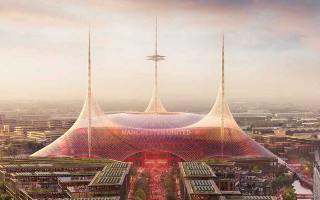
PSLs were not the sole source but a critical upfront bridge – potentially £300–500m from 10,000–15,000 premium seats. Without them at full yield:
- Delayed or scaled-down project: Borrowing £2bn at current rates (5–7%) adds £100–140m annual interest – unsustainable against ~£650m revenue. Refurbishing Old Trafford (cheaper at £1–1.2bn) suddenly looks viable again, despite Ratcliffe’s preference for new-build.
- Investor appetite evaporates: Sovereign funds, private equity, and infrastructure investors eyed the project for stable yields. A weakened PSL stream signals lower commercial viability, raising cost of capital. Naming rights (rumoured £500m+) and hospitality become overburdened.
- Fan trust implosion: United’s fanbase – scarred by Glazer debt, price hikes, and relocations – already erupted over PSL leaks. Forcing a model perceived as “Americanisation” without the upside (profitable exit) risks boycotts, protests (see The 1958 group), and eroded matchday atmosphere – the intangible asset no spreadsheet captures.
- Commercial strategy unravels: United’s revenue model hinges on premiumisation (hospitality now ~25% of matchday income). PSLs were the gateway drug to lock in high-net-worth fans. Alternatives – higher season ticket prices, more corporate seats – accelerate the shift from working-class roots to elite enclave, alienating the core support that sustains global brand value.
Historical Parallels: When Seat Rights Backfired
This is not uncharted territory. Tottenham Hotspur’s new stadium (2019) introduced “premium” seats with one-off fees, but without full PSL transferability profits – uptake was tepid, forcing price cuts and reliance on debt (£1bn+). Arsenal’s Emirates move (2006) saw season-ticket waiting lists collapse amid relocations and costs, contributing to fan discontent that lingers today.
In the US, PSL backlash is legendary: Carolina Panthers fans sued over non-transferable licences; Las Vegas Raiders faced lawsuits when resale values tanked post-Covid. When St. Louis Rams relocated to LA, PSL holders lost everything in a class-action settlement.
Closer to home, Wimbledon’s debentures (similar to PSLs) work because resale is unrestricted and profits allowed – precisely what the new law prohibits.
Critical Insight: This Is Symptom, Not Cause
The real threat is not the law itself – which protects ordinary fans – but United’s reliance on a model that treats supporters as speculative investors rather than community stakeholders. In an age where football’s social contract frays (rising prices, TV-driven kick-offs), PSLs exemplify the commodification Ratcliffe promised to reverse. Yet Ineos’s commercial team, steeped in US sport, imported the playbook without adapting to European sensibilities.
The Glazers’ legacy – leveraged buyout, dividend extraction (£1.75bn+ pocketed) – left United cash-poor despite £650m revenues. Ratcliffe’s £1.3bn for 27% bought football control but not financial freedom. Begging for public infrastructure funds while floating PSLs reeks of hypocrisy: privatise profits, socialise risks.
Solutions: Pivot or Perish
United has options, none painless:
- Club-controlled resale platform: Mirror Twickets/Ticketmaster Fan-to-Fan – transfers at face value + capped fee. Preserves some liquidity without profits, but value drops sharply.
- Refundable or inheritable licences: Allow return to club for pro-rata refund, or family transfer. Reduces speculation but maintains appeal for long-term holders.
- Tiered model: PSLs only for ultra-premium (hospitality boxes), standard seats remain traditional. Limits revenue but preserves fan trust.
- Equity injection: Ratcliffe (net worth £15bn+) funds more himself via new shares, diluting Glazers. Politically brave, financially rational.
- Hybrid financing: Naming rights (£20–30m/year), increased debt against future revenues, government-backed bonds for regeneration (not stadium).
Ultimately, the new law forces a reckoning: football cannot indefinitely extract from fans while claiming cultural exemption. United’s regeneration dream – 92,000 jobs, £7.3bn annual boost – is laudable, but only if built on trust, not tout-enabling loopholes.
As one seasoned observer noted: “The PSL was always a Trojan horse for American ownership models. The government just burned the horse.” For Manchester United to emerge stronger, it must now build a stadium that belongs to the fans – not one that prices them out forever.
About The Author