Manchester United’s Fire Sale: Selling Bruno Fernandes and 10 Others – Rebuild or Reckless Ruin?
Selling Bruno Fernandes isn’t a rebuild — it’s ripping the soul out of Manchester United while the club drowns in confusion and PSR panic.
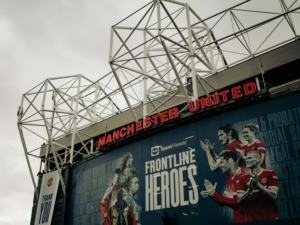
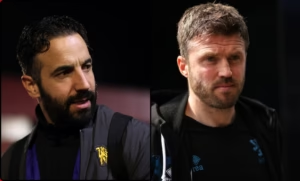
In the shadow of Old Trafford’s creaking stands, Manchester United finds itself at another precipice. Reports emerging this week, corroborated by sources like ESPN and The Sun, paint a picture of unprecedented upheaval: the club is poised to offload up to 11 players in the summer of 2026, including talismanic captain Bruno Fernandes. This isn’t mere transfer window tinkering; it’s a potential gutting of the squad under new manager Rúben Amorim, who arrived amid the rubble of a dismal 2025-26 campaign that saw United flirt with relegation and exit Europe early.
The list reads like a roll call of regrets and relics: Fernandes, Harry Maguire, Casemiro, Manuel Ugarte, Joshua Zirkzee, Tyrell Malacia, Altay Bayındır, plus loanees like Rasmus Højlund, Marcus Rashford, and Jadon Sancho eyed for permanent exits. Kobbie Mainoo, the 20-year-old prodigy, is even on the table amid “uncertainty.” This comes after a summer splurge on Benjamin Šeško, Bryan Mbeumo, Matheus Cunha, Senne Lammens, and Diego León, yet United languish, their possession-based ideals clashing with a squad ill-suited to Amorim’s 3-4-3 demands.
As a club that once defined football’s zenith under Sir Alex Ferguson, United’s trajectory since 2013 has been a masterclass in mismanagement: eight managers, £1.5 billion in net spend, and a solitary trophy in 11 years. Is this overhaul a surgical strike toward sustainability, or the latest spasm in a cycle of chaos? Drawing on financial filings, tactical breakdowns, and INEOS’s corporate playbook, this analysis dissects the logic – or lack thereof – behind United’s reported purge. We’ll probe the dollars driving decisions, the politics poisoning the pitch, and whether offloading Fernandes signals genius or self-sabotage. Spoiler: the verdict isn’t pretty.
Drastic Overhaul or Desperate Flailing? Decoding United’s Squad Purge
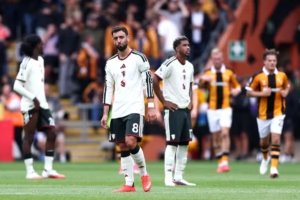
At first glance, selling 11 players – nearly half the first-team roster – screams panic. United’s 2025-26 season has been a tactical trainwreck: 10th in the Premier League by late November, with a zero goal difference and just three wins in their last eight games. Amorim’s high-line, wing-back-heavy system exposes frailties – Maguire’s lumbering recoveries, Malacia’s injury proneness and fitness issues, and Casemiro’s glacial pivots turning transitions into treasure hunts for opponents.
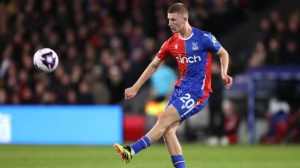
Yet, logic lurks beneath the desperation. Historically, United’s squads have bloated with mismatched parts: the post-Ferguson era’s “project players” like Marouane Fellaini or the Ten Hag folly of overpaying for Antony (£86m) and Hojlund (£72m). This purge targets the deadwood – high-wage, low-output contracts like Casemiro’s £350k/week albatross – to fund targeted reinforcements. Reports from FootballTransfers.com highlight midfield as priority: Elliot Anderson (Nottingham Forest), Adam Wharton (Crystal Palace), and Carlos Baleba (Brighton) are on scouting lists, young athletes who fit Amorim’s relentless pressing model.
Tactically, it’s defensible. In Amorim’s Sporting CP tenure, success hinged on a compact 3-4-3 where midfielders covered 12km per game, blending box-to-box energy with progressive passing. United’s current engine room – Fernandes’ vision paired with Casemiro/Ugarte’s tenacity – lacks stamina; Fernandes, at 31, averages 10.2km per match, dipping below his 2020 peak. Selling him could net £50-£60m (per his gentleman’s agreement), bankrolling two £30m prospects without inflating the wage bill.
But panic’s shadow looms large. United’s history is littered with reactive resets: post-Moyes fire sales, Van Gaal’s philosophical overhauls, Mourinho’s ego clashes. This feels like Amorim’s third managerial casualty in two years – after Ten Hag’s sacking – with INEOS wielding the axe. If it’s overhaul, why include Mainoo, whose 91% pass accuracy and 2.1 tackles per game scream “future captain”? Sources like Sky Sports note “uncertainty” stems from contract talks, not performance. Logical? Perhaps, in a youth pivot. Panic? Absolutely, if it erodes the one thread of continuity in a dressing room already fractured by loans and egos.
The brutality: United aren’t rebuilding; they’re redecorating a sinking ship. Without a clear playing identity – Amorim’s system won Sporting the 2020-21 Primeira Liga but faltered against Premier League athleticism – this purge risks amplifying the isolation felt by survivors like Amad Diallo.
The Triple Threat: Financial Crunch, Squad Squabbles, and Structural Shifts
Behind the glamour of transfer rumors lies a grim ledger. United’s Q1 2025 financials, per club statements, show compliance with PSR (Premier League’s £105m three-year loss cap) and UEFA FFP, but it’s a tightrope. Cumulative losses hit £373m since 2018-19, exacerbated by the Glazers’ debt servicing (£1bn+ interest) and INEOS’s £1.3bn minority stake infusion now earmarked for Old Trafford renovations. No European revenue this season – after a tepid Europa League final loss to Tottenham – slashes income by £50-£60m, per Deloitte estimates.
Financially, the motives are mercenary math. PSR demands sales for sustainability: offloading Fernandes (£57m clause) and Maguire (£20m) could yield £80m profit, offsetting summer outlays and dodging points deductions like Everton’s 8-point saga. INEOS’s “right-sizing” – 450 redundancies, slashed perks – saved £40m annually, but on-pitch, it’s wage arbitrage. Casemiro’s deal alone devours 15% of the £300m+ payroll; dumping it funds three £100k/week prospects. Swiss Ramble’s analysis pegs United’s squad cost at 57% of revenue – under the 85% Premier League cap – but future cycles (2024-27) loom as “tight,” per CEO Omar Berrada.
Squad politics add venom. Fernandes, United’s assists king (58 since 2020), is the glue amid Rashford’s exile and Sancho’s toxicity. Reports from The Athletic suggest dressing-room divides: veterans like Maguire resent youth pushes, while loans signal distrust. Selling 11 disrupts hierarchies, potentially empowering Amorim but risking mutiny. Imagine Mainoo, 20, anchoring a post-Fernandes midfield – leadership vacuum? Check. Power balance tilts to survivors, but if sales fetch low fees (Zirkzee’s £36m flop), resentment festers.
Structurally, INEOS’s fingerprints are everywhere. Ratcliffe’s regime – Berrada (ex-City), Dan Ashworth (briefly), Jason Wilcox – imported data-driven recruitment from F1 and cycling. The Athletic details a revamped analytics unit, poaching Mercedes’ Michael Sansoni, emphasizing “market opportunities” like Baleba. Yet, structure falters: Ashworth’s exit for “not being ruthless enough” on cuts, per insiders, echoes corporate purges over football nuance. Ticket hikes (up 5% mid-season) alienated fans, while £21m managerial turnover costs (Ten Hag to Amorim) bleed resources. This purge aligns with INEOS’s “no more dumb shit” mantra – but is it strategy or austerity theater?
The honest calculus: finances force the hand, politics exploit the chaos, structure promises efficiency. Yet, without revenue growth (projected £660-670m for 2025), it’s a band-aid on a hemorrhage.
INEOS’s Grand Design: Does This Purge Fit the Blueprint?
Sir Jim Ratcliffe’s INEOS arrived in 2024 as saviors, pledging a “football-first” ethos after Glazer-era commercial bloat. By 2025, the blueprint crystallizes: youth infusion, data dominance, infrastructure revival. ESPN’s grading of INEOS’s first year? A C+ – progress in hierarchy (Berrada’s smarts), but F’s in squad cohesion and fan relations.
This 11-player exodus slots into the vision like a cog in Ratcliffe’s petrochemical machine. Long-term strategy, per Medium analyses and OneFootball reports, targets “profile-suited, physical players” – think Sporting’s 2021 title winners: athletic, adaptable, under-25. Summer 2025 signings (Šeško’s aerial dominance, Cunha’s pressing) previewed it; now, midfield targets like Wharton (91% duel win rate) embody the shift from Fernandes’ flair to Baleba’s bite. INEOS’s F1-inspired data unit – tracking 12km runs and progressive carries – deems the current squad 20% below benchmarks.
Alignment shines in sales: £250m spree floated by CaughtOffside, funded by “three in, three out.” Ratcliffe’s disdain for “dumb shit” – overpaid relics like Sancho – drives the cull, echoing Nice’s ruthless rebuilds. Infrastructure ties in: £2bn Old Trafford overhaul demands PSR headroom, per The Athletic, with sales offsetting depreciation allowances.
But cracks emerge. INEOS’s corporate ruthlessness – 200 more redundancies planned – clashes with football’s intangibles. Brailsford’s “marginal gains” from cycling ignore squad morale; post-purge, who rallies a shell-shocked group? Historical context bites: post-Bale Tottenham’s 2013 splurge yielded mediocrity, not glory. United’s 2025 summer netted promise but no points; another overhaul risks “chaos stages,” as ESPN warns.
Brutally, it fits – if INEOS views United as a turnaround project, not a legacy. Ratcliffe’s empire thrives on efficiency; here, it’s football’s lab rat.
The Bruno Bombshell: Leadership Void, Creativity Crisis, and Power Plays
Selling Bruno Fernandes isn’t just business; it’s betrayal. The Portuguese maestro, United’s heartbeat since 2020, embodies the club’s fractured soul. His 68 goals and 58 assists mask deeper value: 7.2 key passes per game, a pressing intensity that drags teammates forward. In Amorim’s 3-4-3, Fernandes as No. 10 – drifting between lines, per Ten Hag’s tweaks – generated 0.42 xG+xA per 90, per Opta. Yet, at 31, his 8.1km sprint distance lags; Amorim’s “annoyance” stems from positional flux, not output.
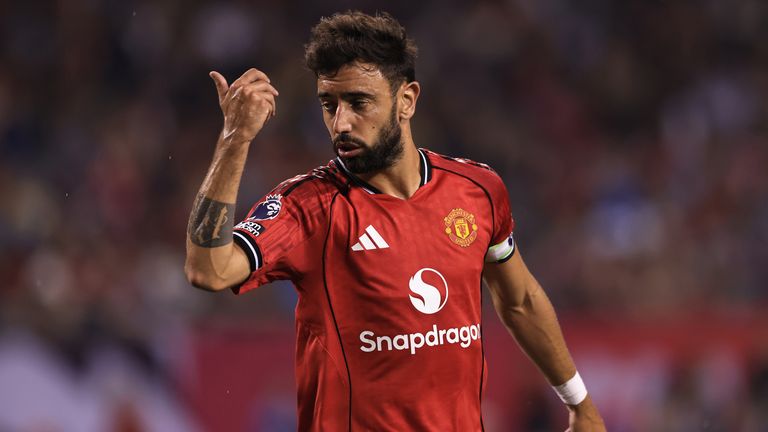
Leadership? Catastrophic loss. Fernandes’ armband, post-Maguire, symbolizes resilience – post-match huddles, public defenses of Amorim amid fan fury. Without him, Mainoo (if unsold) inherits a captaincy too soon; dressing-room power shifts to egoless prospects like Ugarte, but whispers of Rashford’s return (post-loan) could reignite cliques. The Athletic’s debate rages: sell for £100m Saudi windfall (per CaughtOffside), or keep the “prepared” leader who knows the assignment?
Creativity craters. Fernandes’ through-balls (2.1 per game) unlock low blocks; successors like Anderson offer industry, not invention. Tactically, Amorim’s system demands a pivot – Baleba’s 85% pass completion – but Fernandes’ vision (3.4 progressive passes) is irreplaceable short-term. Power balance? It democratizes: Amad thrives sans spotlight, but veterans like Dalot (if spared) gain sway, potentially stalling youth integration.
The gut punch: Fernandes stayed last summer despite Saudi lures, loyal to a sinking ship. Selling him echoes Ronaldo’s 2009 exit – profitable, but scarring a generation. United risks becoming a talent treadmill, not a destination.
False Dawn or Phoenix Rising? The Rebuild’s Reckoning
United’s rebuilds are a graveyard of hype: Van Gaal’s “philosophy” yielded one cup; Ole’s “DNA” masked decline; Ten Hag’s press crumbled under injuries. This 2026 purge, post-Europa flop, smells like déjà vu – £200m summer spend, no Europe, same cycle.
Optimists see turning point: INEOS’s data edge, Amorim’s pedigree (two Primeira titles), youth core (Mainoo, Obi Martins, Shea Lacey, Fredriksson). Sales fund a leaner squad – 22 players, not 30 – tailored to 3-4-3: Baleba-Anderson pivot, Šeško spearhead. Historical precedent? Leicester’s 2015 purge of mediocrity birthed miracles.
Pessimists – this scribe included – spy false dawn. No Champions League allure hampers recruitment; PSR’s squad cost ratio (70% cap by 2026) caps ambition. X chatter decries “limping along,” with fans fearing a post-Fernandes void. United’s 51-year winless streak nadir? This could extend it.
Deeply, it’s neither phoenix nor farce – but a gamble on INEOS’s unproven football acumen. Ratcliffe’s billions bought control; execution demands genius.
Verdict: Confusion Reigns – United’s Stumbling Toward Oblivion
Manchester United isn’t moving forward; it’s collapsing under confusion. This 11-player fire sale, while financially astute, reeks of reactive despair – PSR panic masquerading as strategy, INEOS’s corporate blade slicing football’s heart. Selling Fernandes guts the soul, creativity, and leadership without guaranteed balm. Historically, United thrived on stability amid stars; now, it’s a conveyor belt of half-measures.
The path out? Ruthless recruitment, tactical fidelity, fan buy-in. Absent that, 2026 dawns as another false dawn. Old Trafford weeps – not for players sold, but a club lost in its own myth.
About The Author