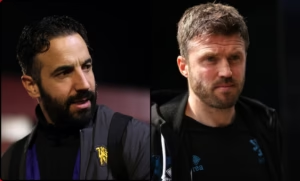
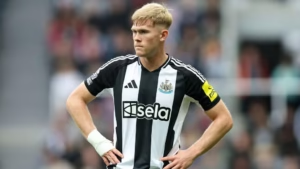
Manchester United’s Open-Heart Surgery: Ignored Warnings, Ownership Rot, and the Path to Redemption
Rangnick warned of open-heart surgery; ignored, United’s rot festers under Glazers and INEOS, dooming Amorim’s tenure without radical change.
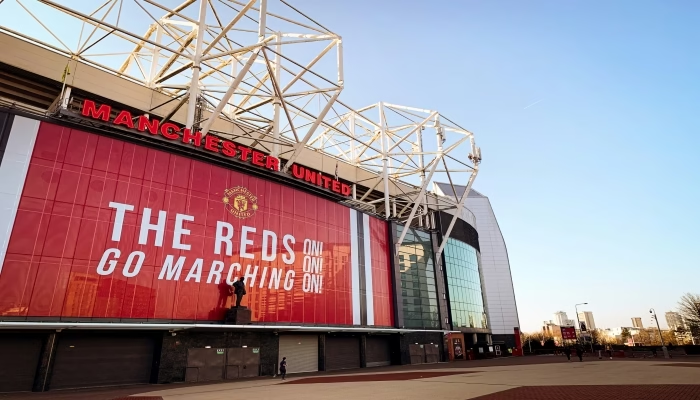
In the winter of 2022, Ralf Rangnick, Manchester United’s interim manager, delivered a stark diagnosis: the club needed “open-heart surgery,” not mere cosmetic tweaks. Three years later, as we approach the end of 2025, that warning echoes louder than ever. United sit in mid-table obscurity, Ruben Amorim’s ambitious project stutters amid tactical rigidity and squad inadequacies, and the fanbase fractures between calls for patience and outright despair. The Glazers’ partial sale to INEOS in 2023 promised renewal, but instead, it exposed deeper fissures: lingering ownership influence, financial constraints, and a roster unfit for elite competition. This blog dissects the club’s malaise with brutal honesty, drawing on recent performances, transfer missteps, and fan sentiments to assess the way forward. Is it Amorim out? A full sale? Or acceptance that the glory days are gone? Let’s cut to the heart of the matter.
Rangnick’s Unheeded Prophecy: The Call for Radical Change
Ralf Rangnick didn’t mince words. In April 2022, after a humiliating 4-0 defeat to Liverpool, he declared: “It’s not enough to do minor amendments… This is an open-heart operation.” Rangnick, a pioneer of gegenpressing and architect of Red Bull’s football empire, identified systemic rot: outdated structures, deadwood players, and a lack of strategic vision. He advocated a full overhaul—selling the club to football-savvy investors, clearing out underperformers, establishing a clear hierarchy, and urging patience from all stakeholders.
Yet, United’s response was tepid. Erik Ten Hag’s tenure brought fleeting highs, like the 2023 Carabao Cup, but masked underlying issues. Rangnick’s interim role ended without his consultancy being utilized, and his warnings were dismissed as overly pessimistic. By 2024, Rio Ferdinand admitted Rangnick was “spot on,” as United languished in 15th place. In 2025, with Amorim at the helm, the prophecy feels prophetic. The squad, riddled with players who’ve survived multiple managers, lacks the intensity Rangnick prescribed. Deadwoods persist, the structure remains muddled, and patience wears thin. Ignoring Rangnick wasn’t just a mistake—it was malpractice that prolonged the club’s suffering.
Manchester United Ownership Quagmire: Glazers’ Grip and INEOS’ Limitations
At the root of United’s woes lies ownership. The Glazers’ 2005 leveraged buyout saddled the club with debt, extracting over £1 billion in dividends while infrastructure decayed. Rangnick’s call for a “full sale to football-oriented and financially capable investors” went unheeded. Instead, in December 2023, they sold a 25% stake to Sir Jim Ratcliffe’s INEOS for £1.3 billion, granting him control of football operations while retaining majority ownership.
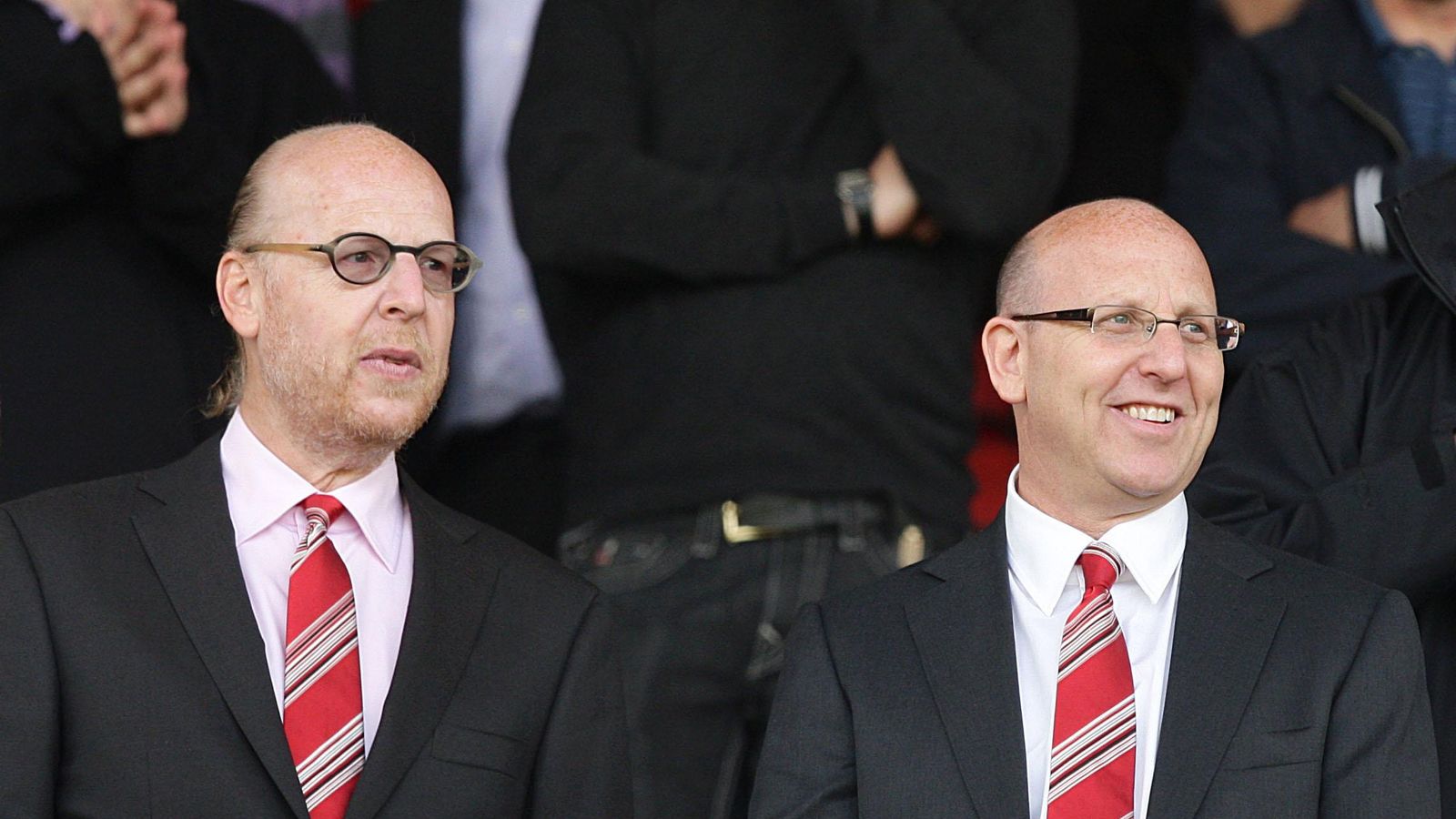
This hybrid model promised efficiency but delivered discord. Ratcliffe invested £238 million in infrastructure and revamped the executive team, appointing Omar Berrada as CEO and Dan Ashworth as sporting director only for him to leave just after six months. Yet, INEOS’ “incapabilities” have surfaced: PSR constraints limited spending, leading to redundancies and fan alienation. The Glazers’ influence persists, with veto power on major decisions and a “drag-along” clause allowing them to force Ratcliffe’s sale if a full bid exceeds $33 per share before February 2027.
By December 2025, rumors swirl of a full sale, with Middle Eastern interest from Qatar, UAE, or Saudi investors potentially valuing the club at £5-6 billion. Turki Al-Sheikh’s cryptic post about advanced talks fueled speculation, though United denied imminent deals. Brutally honest: This partial ownership is a Frankenstein’s monster—INEOS handles the mess without full autonomy, while Glazers cash in. Without a complete sale, Rangnick’s “clear football structure” remains elusive, perpetuating financial rot that hampers recruitment and ambition.
Amorim’s Challenging Tenure: Tactics, Frustration, and Blame Game
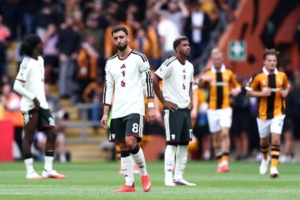
Ruben Amorim arrived in November 2024 amid fanfare, his Sporting CP success promising dynamic 3-4-3 football. Yet, by December 2025, his record is underwhelming: inconsistent results, late concessions, and a team struggling to adapt. After a 1-1 draw with West Ham, Amorim vented: “It’s frustrating, it’s angry,” lamenting competitiveness lapses.
Analytically, Amorim’s rigid system exposes midfield frailties—overrun without “legs” to press or transition. Successes, like manipulating Crystal Palace’s defense, show potential, but cautious tactics backfire, conceding in seven straight games. Fans blame him for benching talents like Kobbie Mainoo, but he’s inherited a squad ill-suited to his vision.
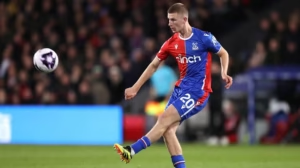
Honest assessment: Amorim isn’t blameless—his refusal to adapt (e.g., substituting defender for defender when trailing) smacks of stubbornness. Yet, sacking him now would repeat the cycle: Mourinho, Solskjaer, Ten Hag—all scapegoats for deeper issues. With no European football likely, January reinforcements (e.g., midfielders like Adam Wharton or Carlos Baleba) are crucial. Amorim needs time, but time demands visible progress.
The Squad’s Deep-Rooted Problems: Inadequate and Exposed
Rangnick warned of “deadwoods,” and in 2025, they’re thriving. Players like Casemiro, Luke Shaw, and Diogo Dalot have cycled through managers, exposing chronic weaknesses: poor ball progression, lack of cohesion, and mental fragility. Roy Keane’s verdict: “I wouldn’t trust these players to get [the club] back.”
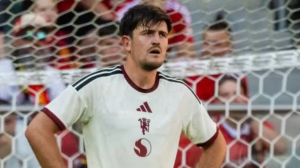
Injuries compound matters—Lisandro Martinez returns sporadically, while Harry Maguire and Benjamin Sesko remain sidelined. The “bomb squad” of unwanted players lingers, draining wages without contribution. Youngsters like Mainoo show promise, but inconsistent minutes risk their development.
Brutally, this squad isn’t “capable of delivering results,” as one fan notes. Many are mercenaries, not warriors—lacking the grit for Amorim’s high-intensity style. Overhauling 11 players for sale in 2025 signals intent, but without it, United remain a mid-table outfit.
The 2025 Transfer Window: Exposed Rot and Missed Opportunities
The summer 2025 window was meant to address key areas: striker, midfield, and defense. United splashed £71m on Bryan Mbeumo, a deal discussion that went over 40 days while united were trying to negotiate for a lower price which originally was £65m but ended up paying even more, £62.5m on Matheus Cunha, and signed Benjamin Sesko, bolstering attack. Yet, it exposed “ownership rot”—midfield remained unaddressed, Luke Shaw’s issues unresolved, and no proven No. 9 beyond risks like Sesko.
Grades vary: Mbeumo hailed as shrewd, but overall, concerns persist about attacking output and depth. PSR limits, tied to Glazers/INEOS finances, forced sales of talents like Rasmus Hojlund, Rashford (loan with an option to buy) and Garnacho (permanent exit), grading poorly in hindsight. Accurate analysis: The window plugged holes but ignored Rangnick’s overhaul call, leaving Amorim with mismatched pieces and fans lamenting unaddressed “key areas.”
Fan Sentiment: Division Between Optimism and Pessimism
X posts reveal a fractured fanbase. Calls for “Amorim out” surge after draws, with fans decrying tactics and benchings. Others demand full sale, echoing Rangnick: “Glazers out, INEOS out.” Optimists urge patience: “Need midfielders with legs,” backing Amorim’s rebuild.
Semantic searches show pessimism dominates: “United is long dead,” with some giving up. Yet, glimmers of hope persist: 86% optimistic pre-season, though reality bites. Honest: Fans aren’t toxic—they’re traumatized by 12 post-Ferguson years.
The Way Forward: Analyzing Options
- Amorim Out? Premature. His 12-month tenure shows flashes, but sacking repeats history. Give January window for midfield reinforcements; if no improvement by summer, reassess.
- Full Sale? Essential. Glazers’ clauses open doors—pursue Middle Eastern buyers for financial muscle and football focus. Without it, cycles continue.
- Wait for Summer Overhaul? Viable if patience holds. Target 3-4 signings: midfielders, wing-backs, goalkeeper. Clear bomb squad fully.
- Accept United is Dead? Give Up? Pessimistic, but realistic without change. Optimism requires action—fan protests could force sale.
Balanced: Be optimistic with caveats. Rebuild under Amorim, push for full sale, embrace patience. Rangnick was right; surgery can’t wait.
Time for the Knife
Manchester United’s plight is self-inflicted: ignored warnings, flawed ownership, inadequate squad. Amorim battles symptoms, not the disease. The way forward? Full sale first, then overhaul. Without it, glory remains a distant memory. Fans, stay vigilant—your voice is the scalpel.
About The Author