Which Process? Decoding Jason Wilcox’s “Trust the Process” at Manchester United
Wilcox’s mantra signals INEOS’s bold overhaul—structural reform, smart signings, and on-pitch identity—to revive Manchester United’s glory.
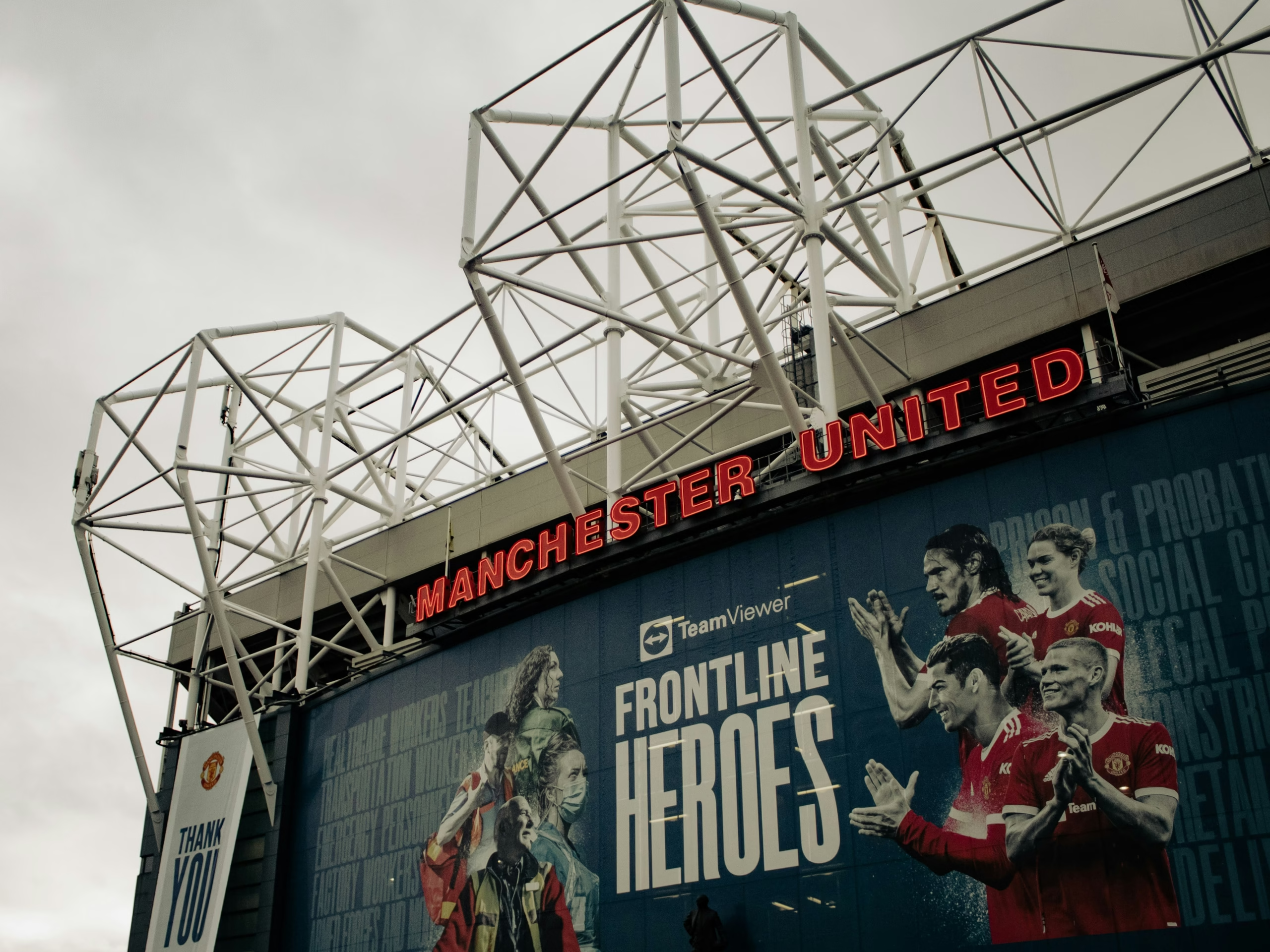
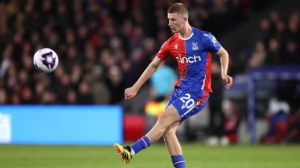
On a chilly evening at Selhurst Park in late November 2025, Manchester United secured a hard-fought 2-1 comeback victory over Crystal Palace. As the players and staff filed out, Jason Wilcox, the club’s director of football, paused briefly to speak with journalists. His message was short and pointed: “Trust the process.” The phrase, muttered almost casually according to Daily Mail reporter Chris Wheeler, quickly spread across social media and football forums. For a club sitting mid-table in the Premier League, with inconsistent results under new head coach Ruben Amorim, it landed like a plea—or perhaps a defiant statement.
But what exactly is “the process” that Wilcox is asking everyone to trust? In an era where Manchester United fans have grown weary of slogans, rebuild promises, and false dawns, this three-word mantra demands scrutiny. Is it just corporate speak to buy time, or does it refer to something tangible? Drawing from reliable sources including official club statements, interviews with Wilcox himself, and reports from outlets like The Athletic, Sky Sports, and the Manchester Evening News, this blog examines the INEOS-led overhaul at Old Trafford. It’s a multi-year project aimed at structural reform, cultural change, and sustainable success—one that’s showing early signs of progress but remains fraught with challenges.
The Backdrop: Why Manchester United Needed a New Process
To understand the process, we must first acknowledge why it was necessary. When Sir Jim Ratcliffe’s INEOS acquired a 27.7% stake in Manchester United in February 2024 (finalized over Christmas 2023), gaining full control of football operations, the club was in disarray. Post-Sir Alex Ferguson, United had cycled through managers, splashed unsustainable sums on transfers, and lacked a coherent identity. Recruitment was often reactive, driven by big names rather than fit, leading to high-profile flops and bloated wages.
Ratcliffe, a boyhood United fan and Britain’s richest man through his petrochemicals empire, vowed to restore the club to glory. His approach mirrored INEOS’s “marginal gains” philosophy, borrowed from Sir Dave Brailsford’s cycling success: fix the small things for big improvements. This meant ripping up the old structure. Out went long-serving football director John Murtough and others; in came a new leadership team inspired by Manchester City’s model.
Key appointments included:
- Omar Berrada as CEO (from Manchester City, starting July 2024).
- Dan Ashworth as sporting director (from Newcastle, but departed after just five months in December 2024 due to poor fit).
- Jason Wilcox as technical director (from Southampton, later promoted to director of football).
Wilcox, a Premier League winner as a player with Blackburn Rovers in 1995, had impressed at Manchester City’s academy and Southampton. Known for his work in youth development and implementing playing styles, he works closest with the manager on the “game model”—Manchester United’s on-pitch identity.
Defining “The Process”: A Multi-Layered Rebuild
Wilcox has repeatedly used “trust the process” internally and externally, describing it as a consistent slogan around Carrington. In interviews on Manchester United’s official podcast Inside Carrington (November 2025) and with MUTV, he elaborated on its components:
- Structural and Leadership Overhaul: INEOS ended the era of fragmented decision-making. Berrada handles overall strategy, Wilcox oversees football operations (enhanced after Ashworth’s exit), and Brailsford provides oversight. This trio—sometimes expanded to include chief operating officer Collette Roche—aims for collaboration. No more “odd man out” dynamics, as seen with Ashworth’s departure. The goal: a professional, data-driven setup free from ego clashes.
- Recruitment Revolution: Past transfers were criticized for poor value (e.g., overpaying for aging stars). Now, it’s about the “right characters” and a “no d***heads policy,” as reported by insiders. Wilcox emphasizes strict character assessments alongside talent. Signings must fit Ruben Amorim’s preferred 3-4-3 system and the club’s long-term game model—a high-pressing, possession-based style with flexibility. Recent windows reflect this: Over £200m spent in summer 2025 on players aligned with Amorim (though specifics like Benjamin Sesko are noted in reports as targets or signings). Outgoings have improved sustainability, complying with PSR rules. Wilcox told Sky Sports in November 2025 that the hierarchy works closely with the coach, using scouting, data, and analysis for targeted additions.
- Cultural and Environmental Reset: Wilcox stresses stability at Carrington. “Whether we are winning or losing, we can’t have the pendulum shifting so much where it affects the mood,” he said on the podcast. This means building team spirit, upgrading facilities, and fostering a winning mentality. INEOS’s cost-cutting (250+ redundancies in 2024, more planned) has been ruthless but aimed at efficiency—freeing funds for football investments.
- On-Pitch Implementation Under Amorim: Appointed in late 2024 after Erik Ten Hag’s sacking, Amorim brought his Sporting CP success. Wilcox praises his “very clear idea” and works daily on embedding it. Early struggles (mid-table as of December 2025, early cup exits) are acknowledged, but wins like Palace show potential. No European football this season reduces fixture congestion, allowing focus on the league.
- Long-Term Vision: Ratcliffe targets Premier League contention by 2028 (United’s 150th anniversary). It’s not about quick fixes but sustainable growth: academy promotion, smart sales, and player development.
The Evidence: Signs of Progress Amid Pain
Honesty requires balance. By December 2025, United were 12th—fluctuating form, scoring issues, and no trophies yet. Critics point to INEOS’s teething problems: staff morale dips from cuts, player frustration over perks, and Ashworth’s quick exit signaling internal turbulence.
Yet, there are positives:
- A clearer identity emerging under Amorim.
- Improved recruitment processes, with Wilcox’s influence evident in character-focused signings.
- Off-pitch upgrades: Better medical support, psychology, and training flow, as Ashworth once described (before his departure).
- Backing for Amorim: Wilcox’s post-Palace comment signals no panic sackings.
In his October 2025 MUTV interview, Wilcox said: “We are making progress… not just on the pitch, but off the pitch with our processes, the facilities, the structures, the staff.” Reports from The Athletic and ESPN note a more professional environment, even if results lag.
Criticisms and Risks: Is Blind Trust Warranted?
“Trust the process” echoes the Philadelphia 76ers’ NBA rebuild—patient tanking for future gains. At Manchester United, it risks alienating fans craving instant results. INEOS’s ruthlessness (ending Sir Alex Ferguson’s ambassador role, perk cuts) has drawn backlash, with some sources describing low staff morale.
Mid-table obscurity in 2025 raises questions: How long is the process? If Amorim fails to deliver top-four, will patience hold? Wilcox and Berrada’s reputations are tied to this; another managerial change would reflect poorly.
Moreover, while modeled on City, United lack their stability. INEOS owns OGC Nice too, raising multi-club questions (though mitigated currently).
A Genuine Process Worth Monitoring
Jason Wilcox’s “trust the process” isn’t empty rhetoric—it’s shorthand for INEOS’s comprehensive rebuild: professional leadership, smart recruitment, cultural stability, and a defined playing style under Amorim. Rooted in Wilcox’s own words and actions, it’s a shift from post-Ferguson chaos to structured ambition.
As of December 2025, it’s too early for verdicts. Progress is visible in infrastructure and intent, but on-pitch success is the ultimate metric. Fans have every right to skepticism after years of disappointment, but the foundations appear stronger than before. If INEOS stays the course—backing Amorim through dips, refining transfers, and embedding the game model—United could emerge stronger.
Trust the process? Perhaps cautiously. Watch it unfold, hold leadership accountable, and judge by results. For now, it’s the clearest plan Old Trafford has had in over a decade.
About The Author