Manchester United’s Midfield Conundrum: Is Selling Bruno Fernandes the Right Move in Ruben Amorim’s Rebuild?
Selling Bruno Fernandes would mark a seismic shift in Ruben Amorim’s project—one that demands rigorous scrutiny: shrewd strategy or catastrophic gamble?
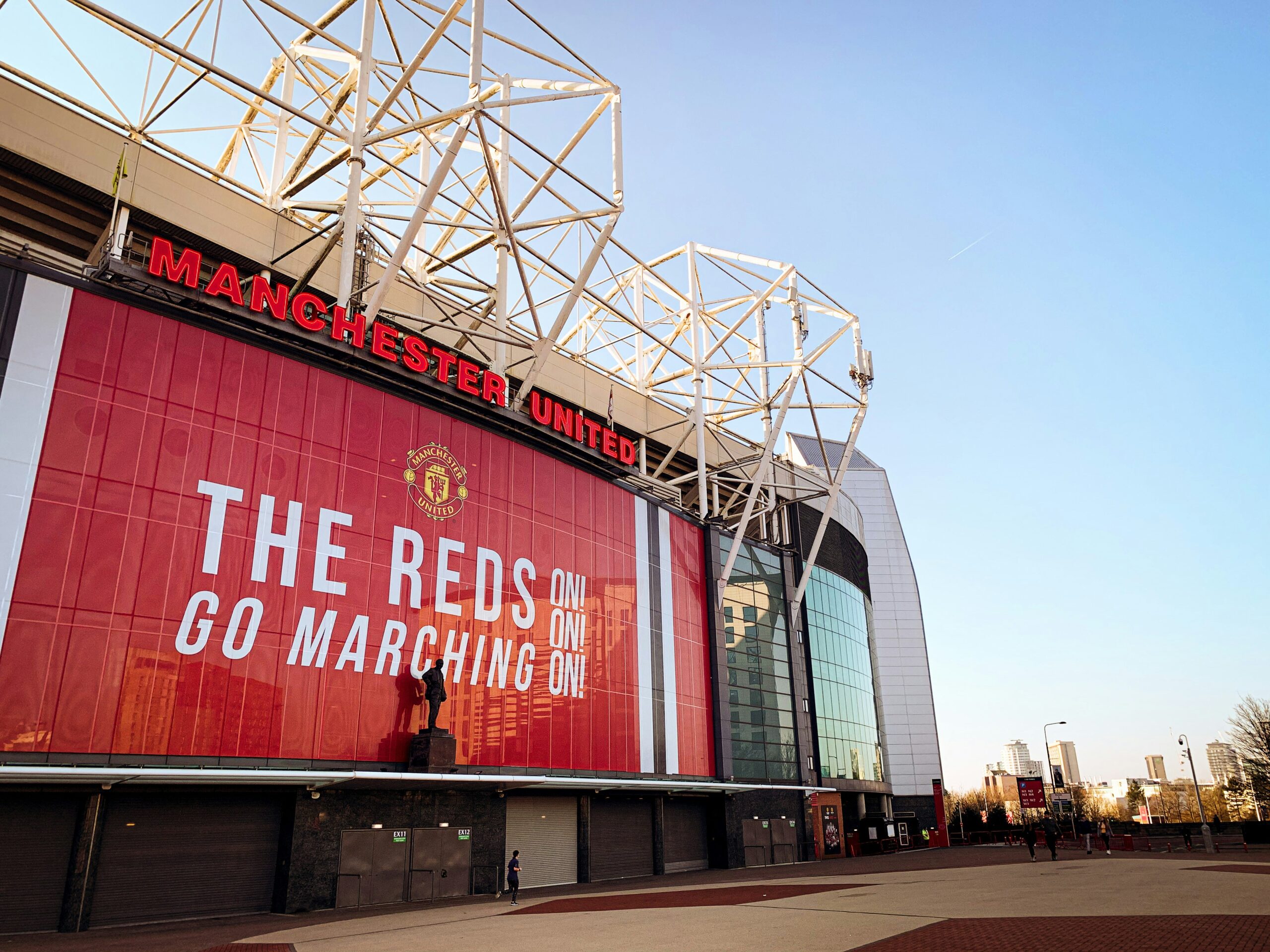
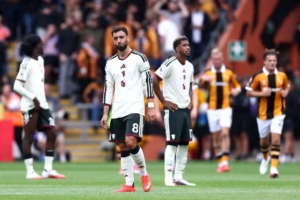
As of December 13, 2025, reports have emerged suggesting Manchester United are open to selling captain Bruno Fernandes for around £70 million, with funds potentially redirected towards signing Brighton & Hove Albion’s Carlos Baleba and Nottingham Forest’s Elliot Anderson. These claims, primarily from sources like CaughtOffside and Stretty News, paint a picture of a calculated risk under Sir Jim Ratcliffe’s INEOS regime: cash in on a 31-year-old star while his market value remains high to finance a younger, more dynamic midfield overhaul.
But is this a shrewd strategic pivot or a potentially catastrophic gamble? Bruno Fernandes has been United’s talisman since arriving from Sporting CP in January 2020, consistently delivering elite-level creativity and leadership in an often chaotic squad. Selling him would mark a seismic shift in Ruben Amorim’s project, one that demands rigorous scrutiny. This analysis delves into the factual basis of the reports, Bruno Fernandes’ irreplaceable contributions, the proposed replacements, financial imperatives, tactical fit, and broader implications for United’s revival.
The Reports: Rumour or Reality?
The speculation gained traction on December 12-13, 2025, with CaughtOffside reporting that United view Bruno Fernandes as their “most sellable asset” amid interest from Saudi Pro League clubs like Al-Hilal and Al-Ittihad. A £70m fee could fund midfield reinforcements, specifically Baleba (a defensive midfielder eyed as a Casemiro successor) and Anderson (a box-to-box option). Stretty News echoed this, noting United “won’t resist” such an offer, especially with Fernandes turning 32 in September 2026 and his contract running until 2027 (with an option for 2028).
These are not from tier-one outlets like BBC, Sky Sports, or The Guardian, which have no recent corroboration as of mid-December 2025. Historically, Bruno Fernandes has faced persistent Saudi links—rejecting Al-Hilal’s advances in previous windows—but Amorim has repeatedly affirmed his desire to keep the captain. No official club statement or direct quotes from Amorim or Ratcliffe support an active willingness to sell in 2026. This suggests the story is speculative, driven by United’s ongoing financial pressures and the need for squad rejuvenation, rather than a concrete plan.
Bruno Fernandes: Statistical Dominance and Intangible Value
Factually, Bruno Fernandes remains United’s standout performer in the 2025/26 season. According to FotMob ratings cited in multiple reports, he is the club’s highest-rated player, leading in assists and ranking second in goals. Since 2020, he has contributed directly to over 180 goals (goals + assists) in all competitions, creating more chances than any other Premier League player in that span.
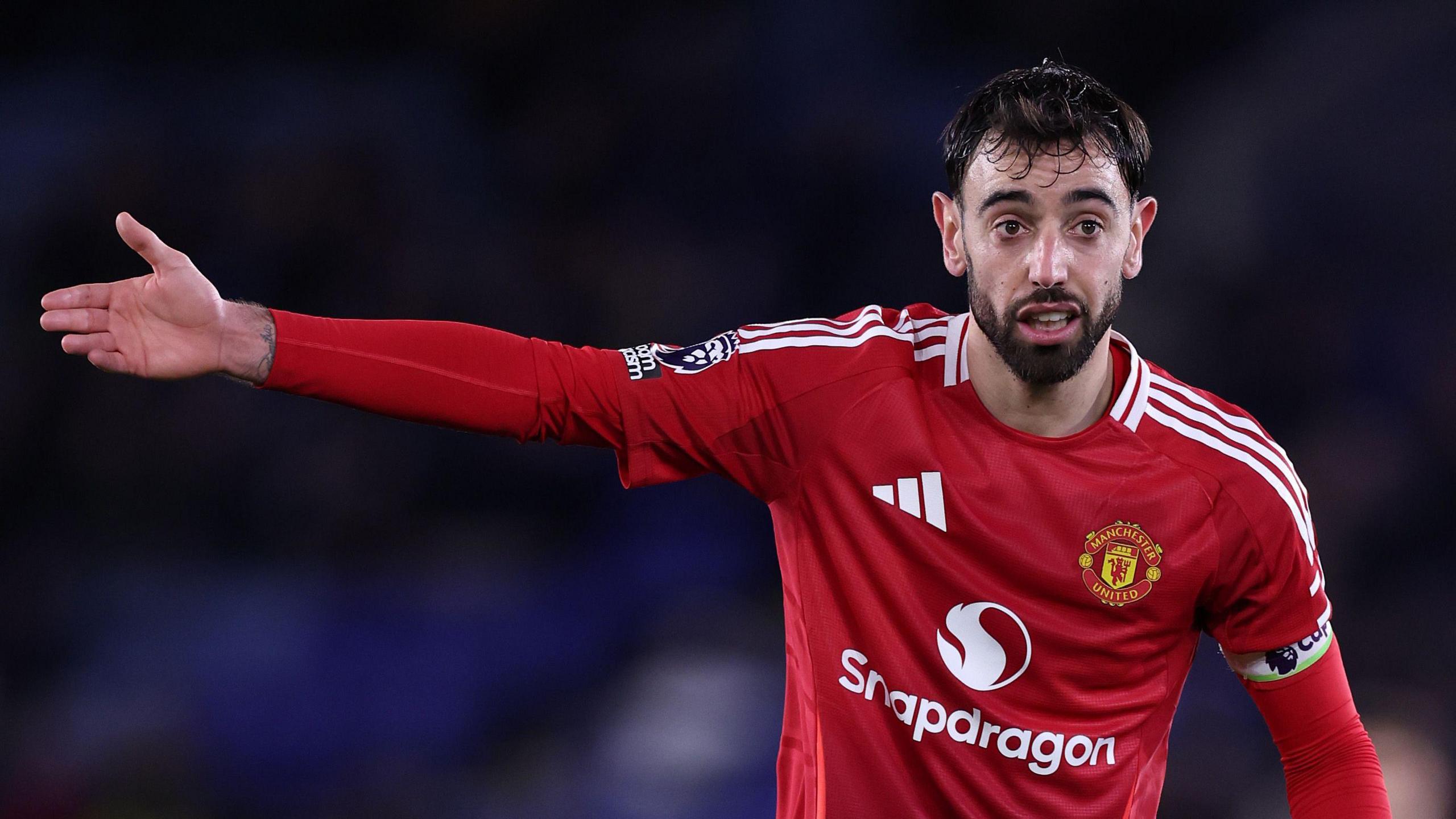
His influence extends beyond numbers. As captain, Fernandes embodies the leadership Amorim craves—taking responsibility in low moments, as the manager has noted. In Amorim’s 3-4-3 system, Bruno Fernandes has adapted to a deeper role alongside Casemiro, providing balance while retaining attacking thrust. Replacing his output—creativity, set-piece prowess, and clutch performances—would be extraordinarily difficult. Historical parallels, like Tottenham post-Gareth Bale, highlight the risks: selling a peak performer can leave a void that derails rebuilds.
At 31, age is a factor, but modern midfielders like Kevin De Bruyne and Luka Modrić have thrived into their mid-30s. Bruno Fernandes’ work rate and professionalism suggest he has several high-level years left, particularly in a structured Amorim setup.
The Proposed Replacements: Promising but Unproven at Elite Level
The linked targets—Carlos Baleba and Elliot Anderson—represent a youth-focused approach aligned with INEOS’ data-driven recruitment.
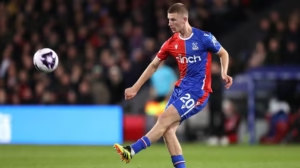
- Carlos Baleba (Brighton, 21): A Cameroonian defensive midfielder, Baleba has impressed with his ball-winning ability and progression. He could replace or rotate with the aging Casemiro (33) or even the underwhelming Manuel Ugarte. His physicality suits Amorim’s high-press system, but he lacks Fernandes’ attacking output.
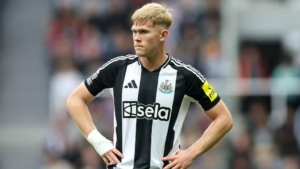
- Elliot Anderson (Nottingham Forest, 23): A versatile box-to-box midfielder, Anderson offers energy and Premier League experience. Reports position him as a potential No. 8 successor, bringing dynamism but not the visionary passing or goal threat of Fernandes.
Together, a £70m influx could cover their combined fees (estimated £50-60m total), enabling a younger pivot. However, neither is a like-for-like replacement for Fernandes’ No. 10 role. Earlier 2025 rumours linked United to Oihan Sancet (Athletic Bilbao) or even Arda Güler (Real Madrid) as creative options, but current focus is on Baleba and Anderson for depth rather than direct succession.
This strategy echoes Liverpool’s successful reinvestment after Philippe Coutinho’s £142m sale in 2018, funding Virgil van Dijk and Alisson Becker. But United’s recruitment hit rate has been poorer; mishandling Fernandes’ proceeds could exacerbate issues.
Financial Realities Under INEOS and PSR Constraints
Ratcliffe’s INEOS era prioritises sustainability after years of Glazer-era overspending. United must navigate Profit and Sustainability Rules (PSR), with limited wiggle room post-2025 summer investments in attack (e.g., Matheus Cunha, Bryan Mbeumo). Selling Fernandes at £70m would provide pure profit (amortised transfer fee from 2020 is low), easing compliance and funding targets without breaching limits.
Saudi interest is credible—Al-Hilal pursued him aggressively before—but Fernandes has prioritised competitive football, especially post-2026 World Cup. A sale would align with Ratcliffe’s “no dumb money” philosophy, maximising value on an ageing asset.
Tactical Fit in Amorim’s Vision
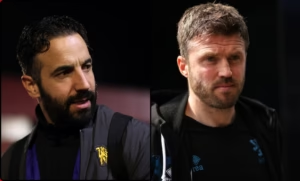
Amorim, appointed in late 2024, demands intensity, structure, and collective pressing—qualities Fernandes largely embodies. The Portuguese duo share a compatriot bond, with Amorim publicly backing his captain multiple times in 2025. However, Fernandes’ deeper deployment this season has sparked debate; some critics argue it diminishes his impact, while others see it as necessary evolution.
A younger midfield could enhance pressing sustainability, vital for Amorim’s 3-4-3. Yet losing Fernandes’ leadership mid-rebuild risks destabilising the dressing room, especially if replacements underperform initially.
Risks vs. Rewards: A Defining Decision
Pros of Selling:
- Financial boost for multiple signings.
- Squad rejuvenation, lowering average age.
- Preempting decline and contract expiry risk.
Cons:
- Immediate downgrade in quality and output.
- Leadership vacuum—Fernandes is Amorim’s on-pitch extension.
- Fan backlash and morale hit in a fragile project.
- Recruitment risk: United’s history of misspent funds (e.g., post-Pogba/Ronaldo eras).
Comparatively, keeping Fernandes provides continuity. Pairing him with young talents like Kobbie Mainoo (when fit) could form a balanced core. Amorim has hinted at rotation for Fernandes in busier schedules, suggesting managed minutes could extend his peak.
Caution Over Haste
As of December 2025, the £70m Fernandes sale remains rumour, not policy. While financially tempting, offloading United’s best player amid a rebuild carries enormous risk. Fernandes’ stats, leadership, and fit under Amorim make him indispensable for short-term competitiveness. INEOS should explore alternatives—sales of fringe players like Ugarte—for funding Baleba and Anderson without sacrificing their captain.
If Saudi bids materialise in summer 2026, United must weigh them carefully. But rushing this now could define Ratcliffe’s tenure negatively. Fernandes deserves to captain United’s resurgence; selling him might fund bricks, but he’d be removing the foundation.
About The Author