Manchester United’s Faltering Fortunes: Dissecting the 4-4 Debacle Against Bournemouth
This wasn’t just a slip-up; it was a microcosm of a club grappling with identity issues under Amorim’s stewardship.
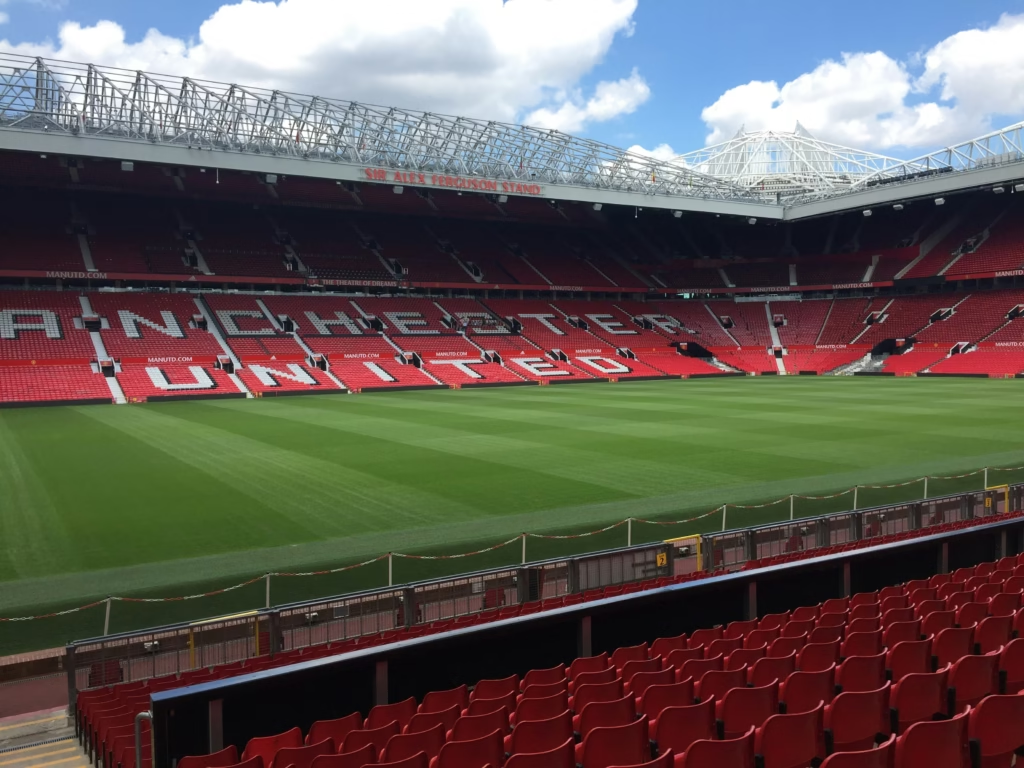
Manchester United once again squandered a golden opportunity to assert dominance over supposedly inferior opposition. Facing AFC Bournemouth—a mid-table side languishing in 13th place—the Red Devils were expected to cruise to victory, bolstering their precarious sixth position in the Premier League standings. Instead, they delivered a chaotic 4-4 draw that encapsulated the frustrations of a season mired in inconsistency. Leading three times and boasting an expected goals (xG) tally of 3.27, Manchester United contrived to drop two points, extending their undistinguished home form and highlighting persistent vulnerabilities. This wasn’t just a slip-up; it was a microcosm of a club grappling with identity issues under Ruben Amorim’s stewardship. As we delve beyond the scoreline, we’ll break down the tactical structure, in-game management, player execution, mentality, and defensive organization. Then, we’ll confront the critical “so what?”—what this result reveals about United’s true level, the efficacy of their ongoing rebuild, and whether it’s an isolated setback or emblematic of systemic rot.
Tactical Structure: A Bold Experiment That Backfired
Ruben Amorim, has largely adhered to his trademark 3-4-3 formation, a system that propelled him to success at Sporting CP but has yielded mixed results at Manchester United. Against Bournemouth, however, he ditched this dogma for a more fluid setup, starting with what resembled a 4-4-2 but incorporating elements of 3-4-2-1 and even shifting to a 4-2-4 in the second half. This departure was necessitated by impending absences for the Africa Cup of Nations (AFCON), with key attackers like Amad Diallo and Bryan Mbeumo set to depart, forcing Amorim to test alternatives like a potential 4-3-3. On paper, the change liberated United’s attack: wing-backs Diogo Dalot and Luke Shaw bombed forward, creating overloads in the final third, while Bruno Fernandes and Casemiro joined the front line to emphasize verticality.

The first half showcased the positives. United registered 17 shots—15 inside the box—and 30 touches in Bournemouth’s penalty area, setting Premier League records for a half this season. Amad’s 13th-minute opener stemmed from Dalot’s overlapping cross, with Matheus Cunha applying pressure to force a goalkeeper error. Casemiro’s header from Fernandes’ corner just before halftime restored the lead, capitalizing on set-piece prowess (Manchester United rank second in the league for goals from dead balls). Yet, the structure’s flaws emerged starkly. The back four—featuring two left-footed center-backs and a makeshift right-back in Leny Yoro—lacked cohesion, appearing “illogical” and unpracticed. Bournemouth exploited central corridors with long balls behind United’s high line, as seen in Antoine Semenyo’s 40th-minute equalizer after Shaw’s positional error left space exposed.
Brutally honest: Amorim’s rigidity in sticking to 3-4-3 for 13 months has stifled United’s attack, and this switch was a belated admission of failure. While it unlocked energy reminiscent of Sir Alex Ferguson’s era—fast, positive, and front-footed—it exposed a defense ill-equipped for the demands, turning a potential masterstroke into a tactical liability.
In-Game Management: Flexibility Amid Chaos
Amorim’s in-game decisions displayed newfound flexibility, a departure from his perceived stubbornness. Starting with the experimental back four, he adjusted mid-second half to a “proper back four” with Shaw and Dalot as full-backs, Cunha dropping left, and substitutes Benjamin Sesko and Mbeumo forming a front two. Gary Neville hailed these tweaks as “spot on,” noting how they addressed midfield overloads and bolstered the attack during Bournemouth’s second-half surge. Substitutions were timely: Kobbie Mainoo replaced Casemiro in the 61st minute to add energy and connectivity in midfield, while Lisandro Martinez and Sesko entered at 69 minutes to shore up defense and attack, respectively. Sesko’s introduction proved pivotal, assisting Cunha’s 79th-minute goal with a low cross that exploited Bournemouth’s fatigue.
However, management faltered in critical moments. After leading 2-1 at halftime, Manchester United conceded twice within seven minutes of the restart—Evanilson 37 seconds in, followed by Tavernier’s free-kick—due to poor momentum management. Amorim lamented the lack of “details” like maintaining calm and clinical finishing, but his failure to anticipate Bournemouth’s aggressive second-half press (prompted by Iraola’s halftime adjustments) was glaring. Late subs like Patrick Dorgu and Joshua Zirkzee in stoppage time aimed to secure the win but couldn’t prevent Junior Kroupi’s 84th-minute equalizer. Honest assessment: While Amorim showed adaptability, his reactive rather than proactive approach underscores inexperience in the Premier League’s intensity, contributing to dropped points from winning positions (10 this season alone).
Player Execution: Flashes of Brilliance Marred by Errors
Manchester United’s players executed the attacking blueprint superbly in patches but crumbled under pressure. Fernandes was the linchpin, assisting Casemiro’s goal and curling a stunning 77th-minute free-kick, amassing more assists (seven) than any other Premier League player this season. Amad shone in his final outing before AFCON, scoring and creating chaos with advanced positioning, while Cunha’s brace—including a drilled finish—validated his £62.5m price tag. Mainoo’s substitute appearance added dynamism, blocking transitions and energizing the crowd.
Yet, execution lapses were rampant. Casemiro’s tactical foul led to Tavernier’s free-kick goal and his subsequent suspension, while his midfield was overrun, a “recipe for disaster.” Shaw’s barge allowed Semenyo’s equalizer, and young defenders like Ayden Heaven backed off too easily, enabling Kroupi’s strike. Goalkeeper Senne Lammens made late saves but was culpable in concessions, palming shots poorly. This reflects a squad of mismatched talents: summer signings like Cunha and Sesko add firepower, but veterans like Casemiro and Shaw are past their prime, and youth like Heaven lack polish, leading to inconsistent execution.
Mentality: Resilience Without Resolve
Mentality has long plagued Manchester United, and this match was no exception. They showed grit in fighting back—leading three times and responding to a 3-2 deficit with two goals in 129 seconds—but heads dropped after concessions. The crowd’s vocal support spurred surges, yet players failed to “understand game states,” as Amorim put it, squandering leads at 1-0, 2-1, and 4-3. Bournemouth, conversely, displayed self-belief, coming from behind without panic, embodying Iraola’s aggressive ethos.
Honest truth: United’s mentality is fragile, a hangover from years of underachievement. Despite Amorim’s emphasis on resilience, the team lacks the killer instinct of elite sides, often settling for draws in winnable games—a mental block that’s cost them dearly.
Defensive Organization: A Perpetual Achilles’ Heel
Defensive woes defined the draw. United’s high press created chances but left gaps, with Bournemouth exploiting transitions via long balls into central spaces. The backline’s disorganization was evident: flat-footed for Evanilson’s goal, poor wall setup for Tavernier’s free-kick, and split for Kroupi’s equalizer. Conceding four goals at home to Bournemouth—who became the first team in top-flight history to score three or more in three consecutive Old Trafford visits—highlights chronic issues. Amorim’s shift to a back four exacerbated vulnerabilities, with no clean sheets under his tenure and a dismal ratio ranking him among the league’s worst.
Frankly, this is inexcusable. Despite investments in defenders like Yoro and Martinez, the unit lacks leadership and cohesion, turning promising attacks into desperate defenses.
The Systemic Failure in a Stalled Rebuild
This result screams volumes about Manchester United’s true level: a mid-table outfit with top-four aspirations but relegation-level defending. Sitting sixth with 26 points—level with Crystal Palace and Sunderland—they’ve scored 30 goals (second to Manchester City) but conceded 26, a damning imbalance. The draw extends a woeful home run: just two points from nine against Forest, West Ham, and Bournemouth, all winnable on paper. It’s the fifth time this season they’ve failed to win after taking the lead, underscoring an inability to close games.
On the rebuild’s effectiveness: Amorim’s 59 games have shown flashes—attacking swagger in high-scoring draws—but after 13 months, defensive frailties persist, suggesting structural flaws beyond tactics. Summer signings like Cunha and Sesko contribute offensively, but the squad’s depth is exposed by AFCON absences and suspensions like Casemiro’s. The hierarchy, led by Sir Jim Ratcliffe’s INEOS, has invested heavily yet failed to address core issues: an aging midfield, inconsistent youth integration, and a lack of defensive identity.
Directionally, there’s promise in Amorim’s flexibility, as Neville noted, but this feels like “difficult puberty”—promising yet prone to mood swings. Is it isolated? Hardly. This mirrors draws with Nottingham Forest and patterns from last season, like the Europa League tie with Lyon. It’s evidence of deep-rooted systemic failure: a club trapped in mediocrity, where tactical tweaks mask but don’t mend foundational cracks. Until the hierarchy demands accountability—from recruitment to mentality—United will continue faltering against “inferiors,” dooming the rebuild to stagnation.
This 4-4 thriller was entertaining but emblematic of United’s malaise. Amorim must instill ruthlessness, or the cycle of dropped points will persist, leaving fans yearning for the glory days.
Watch the full Manchester United vs Bournemouth highlights below.
About The Author