A Decade of Decline: How Manchester United Lost Its Way After Sir Alex Ferguson
Once football’s gold standard, Manchester United are now a warning sign. This is the unfiltered truth behind a decade of decline after Sir Alex Ferguson
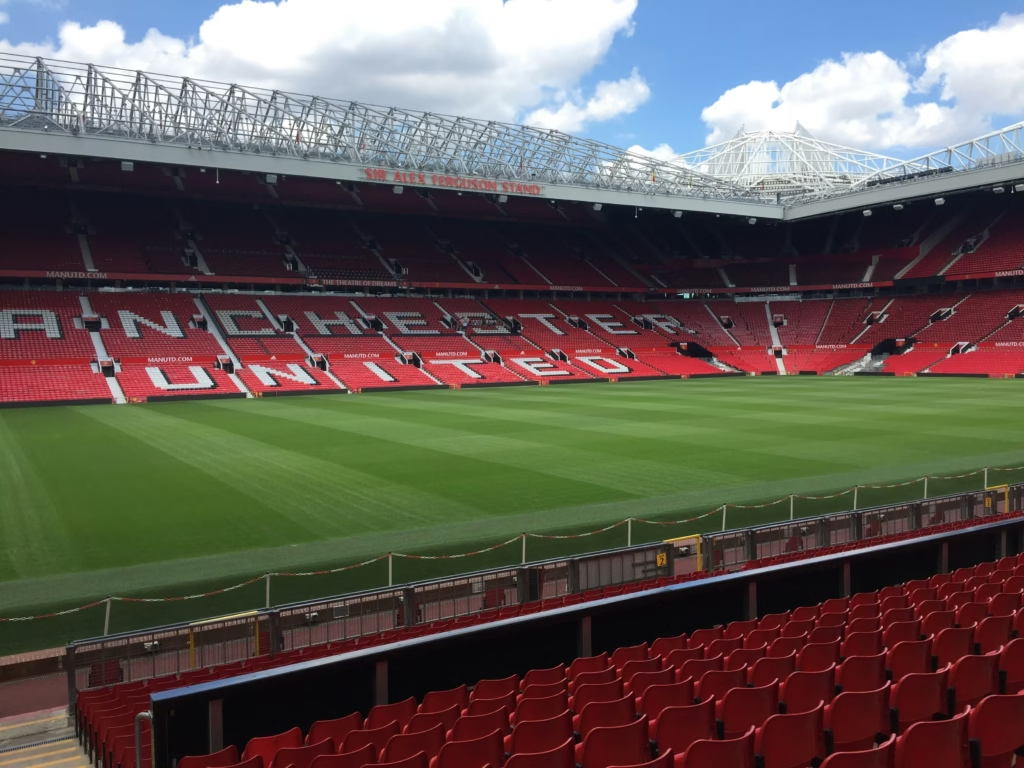
In May 2013, Sir Alex Ferguson walked away from Manchester United having completed the greatest managerial reign in English football history. Thirteen Premier League titles. Two Champions Leagues. A dynasty built on discipline, adaptability, youth development, and relentless competitiveness. United were champions of England again, finishing 11 points clear, and despite visible cracks beneath the surface, the club still felt untouchable.
Twelve years later, as the 2025 season unfolds, Manchester United are no longer a dominant force. They are a club trapped in cycles of false dawns, managerial churn, bloated squads, and structural confusion. The decline has not been sudden. It has been slow, painful, and largely self-inflicted.
This is not a story about one bad manager, one failed signing, or one unlucky season. It is the story of how a football institution lost its identity, governance, and direction—and how those failures compounded year after year.
Sir Alex Ferguson’s Final Act: Success That Masked Structural Decay
Ferguson’s final title-winning side in 2012–13 was not one of United’s greatest teams. It was a team held together by experience, mentality, and elite management rather than long-term planning. Key figures such as Ryan Giggs, Paul Scholes, Rio Ferdinand, and Michael Carrick were nearing the end of their careers. Robin van Persie, whose goals carried United to the title, was already 29 and injury-prone.
Crucially, there was no clear succession plan—neither on the pitch nor in the boardroom.
Ferguson’s authority had masked fundamental issues: aging infrastructure, inconsistent recruitment, and a growing disconnect between football operations and commercial priorities. When he left, those problems were exposed instantly. United did not simply lose a manager; they lost the central nervous system of the club.
David Moyes and the Shock of Reality
David Moyes was appointed as Ferguson’s successor in the summer of 2013, inheriting not a rebuilding project but a fragile champion. The transition was disastrous. United finished seventh, their lowest Premier League position at the time, and failed to qualify for the Champions League.
More damaging than the league position was the loss of aura. Old Trafford became a place where teams came to compete rather than survive. Tactical uncertainty, conservative football, and poor recruitment decisions—most notably the failed summer window—accelerated the decline.
Moyes’ tenure lasted less than a season, but the damage lingered. United had entered a new era without preparation or patience.
The Van Gaal Reset That Never Truly Reset Anything
Louis van Gaal arrived in 2014 with a mandate to rebuild. He did restore some discipline and brought through young players such as Marcus Rashford, but his reign was defined by rigid systems, sterile possession, and a lack of attacking identity.
Despite winning the FA Cup in 2016, Van Gaal was dismissed immediately after the final. The decision reflected a deeper problem: United were chasing short-term optics rather than long-term cohesion. Each managerial appointment reset the playing style, recruitment strategy, and squad balance.
There was no continuity—only reaction.
Mourinho: Trophies Without Foundations
José Mourinho delivered tangible success. The Europa League and League Cup in 2017 remain United’s most complete post-Ferguson season in terms of silverware. Yet even at that moment, the warning signs were clear.
Mourinho’s football was pragmatic, often joyless, and heavily dependent on individual moments. His relationship with the board deteriorated, recruitment became increasingly fractured, and dressing-room tensions escalated.
When Mourinho finished second in the league in 2018, he famously described it as one of his greatest achievements. In hindsight, it was less a triumph and more an indictment of how far United had fallen.
His eventual dismissal left behind an unbalanced squad, inflated wages, and no coherent long-term structure.
Ole Gunnar Solskjaer and the Comfort of Nostalgia
Ole Gunnar Solskjaer represented hope rooted in identity. A club legend who spoke about “United DNA,” youth, attacking football, and culture. For a time, it worked. United finished second in 2020–21 and reached multiple semi-finals.
But progress stalled. Tactical limitations were exposed, recruitment lacked precision, and United repeatedly failed in decisive moments. Most damagingly, Solskjaer left without a single trophy.
What followed was one of the most honest assessments of the club’s condition.
Ralf Rangnick and the “Open-Heart Surgery” Diagnosis
Ralf Rangnick’s interim spell in 2021–22 was chaotic on the pitch but revealing off it. He publicly described Manchester United as needing “open-heart surgery,” highlighting issues in recruitment, squad composition, and football governance.
His recommendations were largely ignored.
United finished the season poorly, and rather than embracing structural reform, the club once again opted for a managerial reset—without systemic change.
Erik Ten Hag: Discipline Without Stability
Erik ten Hag’s arrival in 2022 brought authority and tactical clarity. His first season delivered the League Cup and a top-four finish, restoring some belief. The FA Cup followed in 2024.
Yet league inconsistency, mounting injuries, and unresolved squad issues persisted. Ten Hag struggled with recruitment misfires, player unrest, and structural limitations beyond his control.
By 2024, despite domestic cups, United’s league form and overall trajectory led to his dismissal. Another manager exited with partial success and unfinished work.
The Ruben Amorim Era: Promise Under Pressure
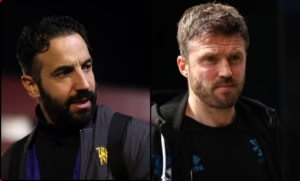
Ruben Amorim’s appointment in late 2024 signaled a philosophical shift. A progressive coach with a defined system, Amorim inherited a squad ill-suited to his ideas and constrained by financial regulations.
Results have been uneven. United remain outside the elite, performances fluctuate, and confidence appears fragile. Amorim’s challenge mirrors that of his predecessors: implementing long-term ideas in a club addicted to short-term judgments.
Recruitment: Spending Big, Thinking Small
Since 2013, Manchester United have spent vast sums in the transfer market, yet consistently failed to build a balanced squad. Players were often signed without regard for tactical fit, long-term planning, or wage structure.
The absence of a clear football hierarchy meant managers influenced recruitment heavily, leading to stylistic clashes and expensive deadwood. While some signings succeeded, many arrived at peak value, declined quickly, or failed to adapt.
The problem was never spending—it was strategy.
Ownership and the Cost of Neglect
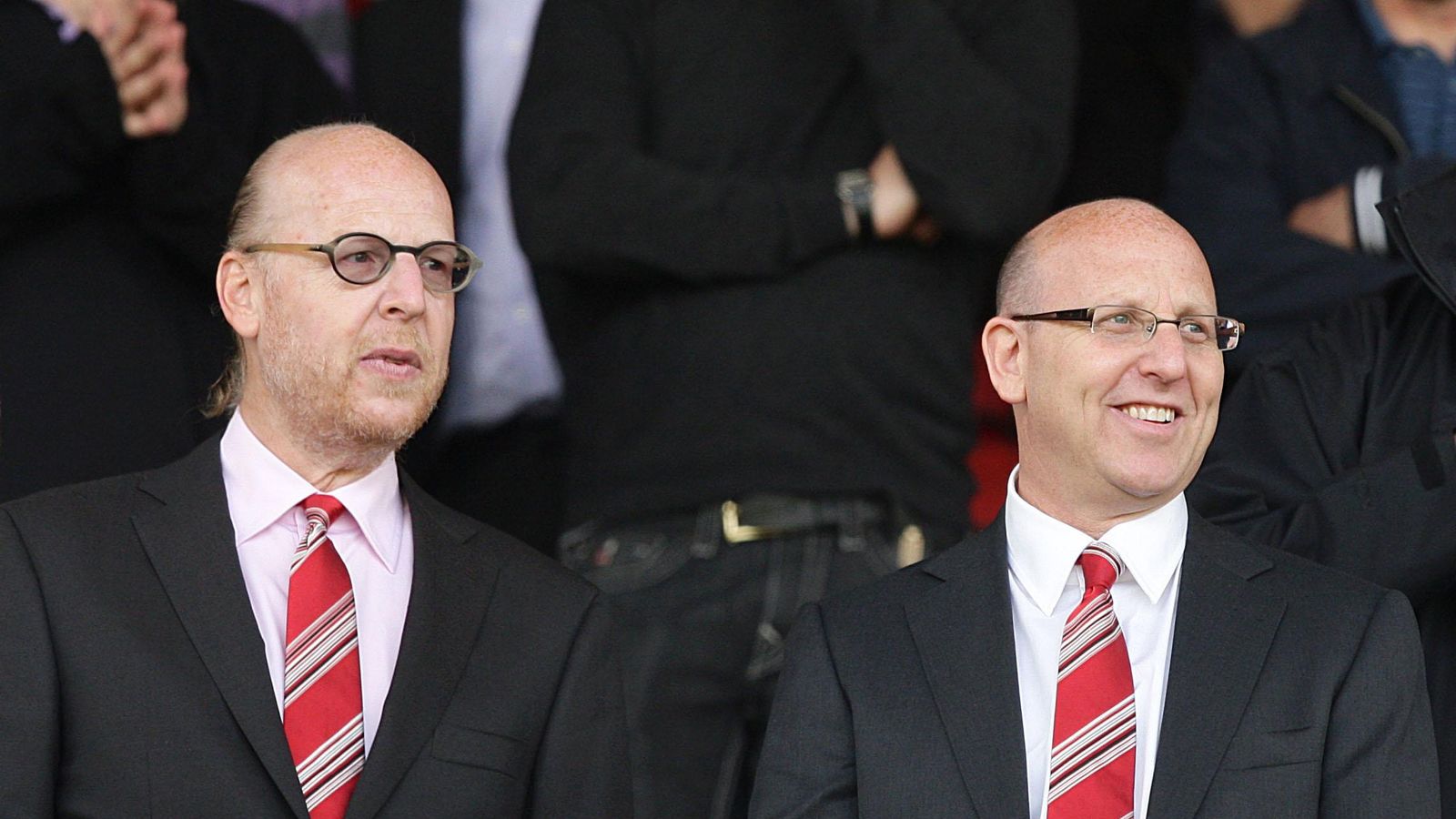
The Glazer family’s ownership remains the most controversial aspect of United’s decline. Acquired through a leveraged buyout, the club has carried significant debt for two decades. While revenues have grown, investment in infrastructure and football operations lagged behind rivals.
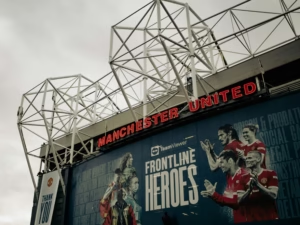
Old Trafford aged. Carrington required upgrades. Football decisions were often subordinate to commercial priorities.
Fan protests, most notably in 2021, reflected years of frustration. The partial acquisition by INEOS in 2024 brought hope, but also limitations. Without full control, reform remains constrained.
Why the Decline Was Allowed to Continue
United’s global brand masked sporting decay. Commercial success created the illusion of stability. Occasional trophies provided cover. Media narratives focused on managers rather than structures.
Most of all, nostalgia delayed accountability. Fans wanted to believe each new appointment would restore the past. But football does not reward sentiment—it rewards planning.
The Road Ahead: Rebuild or Repeat?
INEOS’s involvement has introduced football-focused leadership and long-term intent, but challenges remain: financial regulations, entrenched contracts, and cultural reset.
Manchester United can recover—but only with patience, coherence, and humility. That means empowering football experts, accepting short-term pain, and abandoning the illusion that prestige alone guarantees success.
Conclusion: A Giant Still Standing, But Unsteady
Manchester United are not finished. But they are no longer what they once were—and pretending otherwise has been the greatest mistake of all.
The post-Ferguson era will be studied as a lesson in how success can breed complacency, how power without accountability erodes institutions, and how football clubs lose their soul not overnight, but through a thousand small failures.
Whether the next decade tells a different story depends not on managers or marquee signings—but on whether Manchester United finally learn from their own history.
About The Author