Manchester United, Antoine Semenyo, and the Illusion of Progress: What Fans Are No Longer Being Told
Manchester United are willing to “change the system” for Semenyo — but what does that really say about the club? This isn’t adaptability. It’s dysfunction.
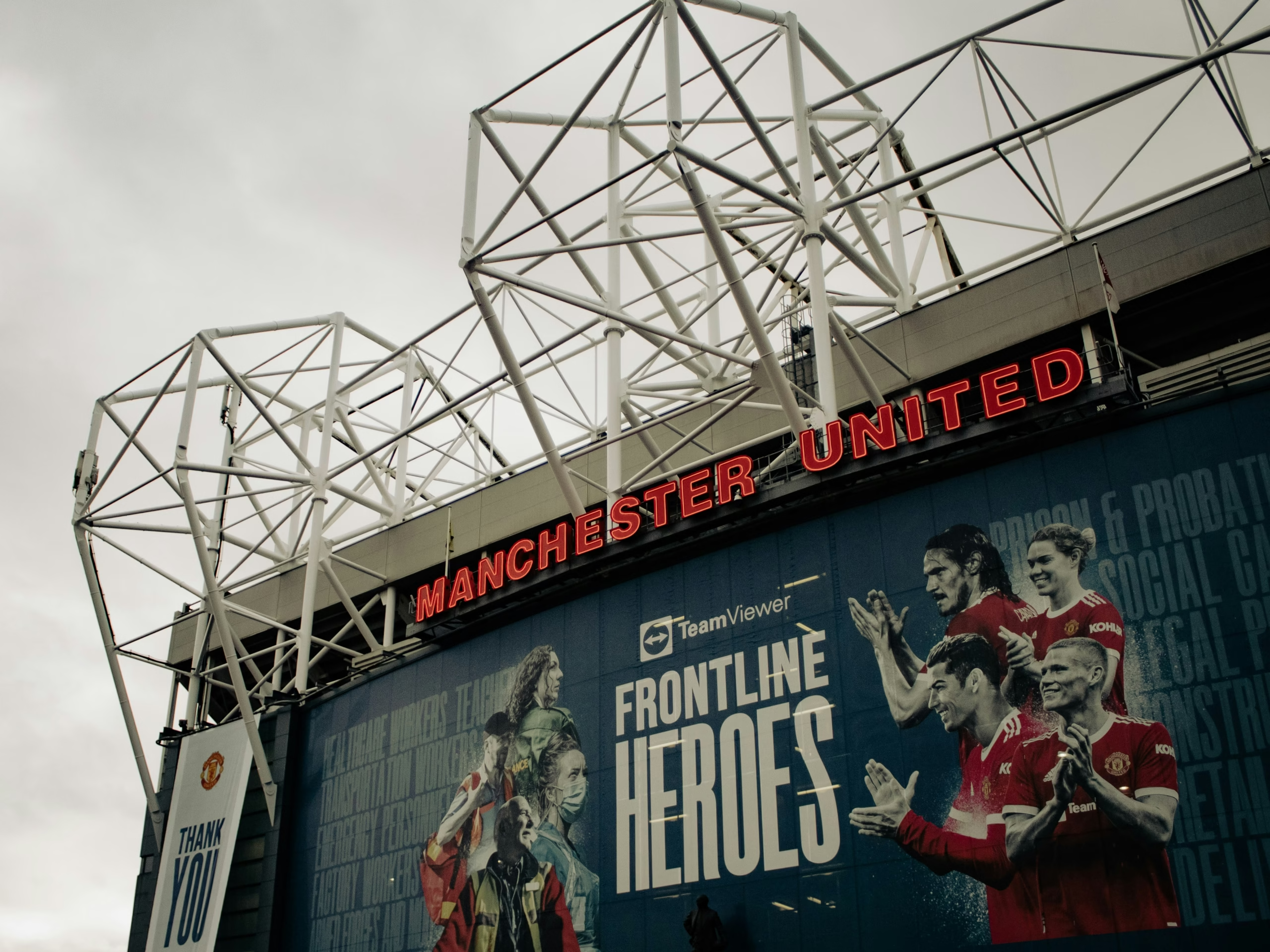
Manchester United supporters are no longer angry in the way they once were. The outrage has faded, replaced by something far more dangerous for a football club: deep suspicion. Suspicion of narratives. Suspicion of briefings. Suspicion that what they are being told is not the full truth. The reported pursuit of Antoine Semenyo — and the suggestion that United are prepared to “change the system” to convince him, despite the player making it clear he will not play as a left wing-back — has crystallised those doubts.
This is not simply a transfer story. It is not about whether Semenyo signs, or whether Ruben Amorim tweaks a formation. It is about how Manchester United operate, how they communicate, and why the same patterns of failure continue to repeat under different managers, structures, and slogans. When you look beyond the headlines, the Semenyo situation exposes truths that mainstream coverage either avoids or is unwilling to articulate plainly.
The Myth of Tactical Flexibility
The phrase “Manchester United are willing to change the system” has been presented as a positive. It is meant to signal adaptability, growth, and pragmatism. But for a club of United’s stature, it should instead raise alarm bells. Tactical flexibility is valuable only when it exists within a clearly defined footballing identity. At elite clubs, systems are not rewritten to accommodate individual signings; players are recruited because they naturally fit the system.
At Manchester United, the opposite too often occurs. Systems bend, stretch, and eventually break under the weight of recruitment decisions made without a coherent long-term plan. The willingness to alter Amorim’s structure to land Semenyo is not evidence of strategic maturity — it is evidence that the system itself is not truly embedded at club level. It exists at the discretion of individuals rather than as an institutional principle.
That distinction matters. When a system is expendable, so too is accountability. Failures can always be attributed to transition, adaptation, or the need for “one more window.” Fans are left waiting for clarity that never arrives.
Why Semenyo’s Refusal Matters More Than Reported
Much of the coverage around Semenyo’s reported refusal to play as a left wing-back has framed it as a negotiation detail or an example of player assertiveness. This framing subtly protects the club by shifting responsibility onto the individual. The truth is more uncomfortable. Semenyo’s stance is not defiance — it is self-preservation.
Players today are acutely aware of Manchester United’s recent history. They see talented attackers arrive with clear strengths, only to be repurposed into roles that dilute those strengths. They see midfielders exposed by structural imbalance. They see defenders blamed for systems that leave them constantly isolated. Careers stall not because players suddenly become worse, but because context erodes performance.
For Semenyo, accepting a left wing-back role would mean accepting responsibility for problems that predate him. It would mean being judged by metrics that do not reflect his natural game. His refusal signals something important: players now approach United with caution, not blind ambition. That shift alone should concern supporters far more than whether a deal is completed.
Recruitment Without Identity: The Core Issue United Avoid
Manchester United’s biggest problem is not recruitment quality; it is recruitment purpose. The club continues to target players before fully committing to how it wants to play. This creates squads filled with talent but lacking cohesion. Attacking players are stockpiled while control, balance, and structure are treated as secondary concerns.
The pursuit of Semenyo highlights this flaw perfectly. United already possess multiple wide attackers. What they lack is a stable platform that allows attackers to thrive consistently. Yet instead of addressing the foundation, the club continues to chase additions at the sharp end, hoping quality will somehow override dysfunction.
This approach keeps fans emotionally engaged but tactically stranded. Hope is sold, while clarity is deferred.
The Hidden Cost of Fixating on One Signing
One of the least discussed aspects of transfer strategy is opportunity cost. When a club fixates on one signing, it diverts resources, attention, and urgency away from other areas. Negotiations drag on. Internal planning stalls. Other targets are placed on hold. The squad’s broader needs remain unresolved.
At United, this pattern is familiar. Singular pursuits are framed as decisive action, while the quiet neglect of foundational issues goes largely unreported. Midfield control, defensive organisation, and positional balance do not generate the same buzz as an explosive attacker, but they determine whether a season succeeds or collapses.
By the time results falter, the narrative shifts again. The solution is always future-oriented: the next window, the next signing, the next adjustment. Rarely is the original prioritisation questioned.
Why United’s Signings So Often Appear to Fail
Manchester United have not lacked talent over the past decade. What they have lacked is an environment in which talent can function coherently. Players arrive with reputations intact, only to see their effectiveness eroded by systemic flaws. They are asked to do too much, too often, in roles that do not suit them.
Attackers are expected to compensate for midfield instability. Wide players are asked to provide both width and defensive cover simultaneously. Creative players are tasked with unlocking defences while tracking runners they should never be responsible for. When performance levels drop, the player becomes the focus of criticism rather than the context that shaped those performances.
If Semenyo were to join United under these conditions, the outcome would likely follow the same trajectory. Initial excitement would give way to tactical confusion. Statistical output would dip. Confidence would suffer. Eventually, the conversation would centre on whether he was “United quality,” rather than whether United provided the conditions for success.
Ruben Amorim and the Limits of Managerial Power
Ruben Amorim occupies an increasingly uncomfortable position. He was hired for a defined system and philosophy, yet operates within a club that still lacks alignment between recruitment, ownership, and coaching. His perceived rigidity is often criticised, but it is also a response to institutional inconsistency.
If Amorim compromises too far, he risks becoming another manager whose identity dissolves under pressure. If he refuses, he is painted as inflexible. Either outcome benefits the structure above him, which remains largely insulated from scrutiny.
The willingness to alter his system for a single signing undermines his authority as much as it exposes the club’s uncertainty. It suggests that principles are negotiable, but expectations are not. That imbalance has undone managers before him.
Why Fans Feel Something Is Being Hidden
Manchester United supporters are not imagining the disconnect. They feel it because it exists. Communication from the club is increasingly curated, designed to manage perception rather than foster understanding. Transfers are framed as progress regardless of fit. Tactical changes are framed as evolution regardless of coherence.
What fans want is not perfection. It is honesty. They want acknowledgment that the rebuild is not just about players, but about structure. That mistakes are not isolated incidents, but patterns. That solutions require discipline, not just expenditure.
The Semenyo story resonates because it cuts through the noise. It reveals a club still willing to distort itself for the sake of appearances, still reluctant to confront deeper flaws head-on.
What Manchester United Actually Need
United do not need another attacker forced into an unfamiliar role. They do not need another short-term narrative of ambition. They need balance. They need control in midfield, clarity in structure, and recruitment driven by function rather than excitement.
They need to stop asking individuals to solve collective problems. Until that changes, no system tweak or marquee signing will deliver lasting progress.
The Illusion of Movement Without Direction
The reported pursuit of Antoine Semenyo is not evidence of Manchester United moving forward. It is evidence of a club still circling familiar ground, mistaking motion for progress. The willingness to change systems to accommodate one player while deeper issues persist is not adaptability — it is avoidance.
Fans are right to question what they are being told. They are right to feel that the full picture is rarely presented. Manchester United’s problems are not hidden because they are secret; they are hidden because confronting them honestly would require change at levels the club has long resisted.
Until recruitment serves structure, until systems outlive individuals, and until accountability rises above the touchline, United will continue to sign good players — and make them look ordinary.
That is the truth beneath the Semenyo story. And it is the truth supporters deserve to hear.
About The Author