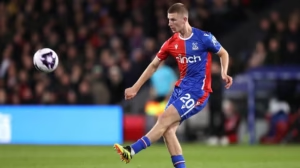
Manchester United’s January Transfer Window: Strategy, Reality, and the Hard Truth Behind What Comes Next
Manchester United enter the January transfer window facing financial limits, tactical demands, and hard lessons from the past. This in-depth analysis reveals what the club will really do — and why patience may finally be the smartest move.
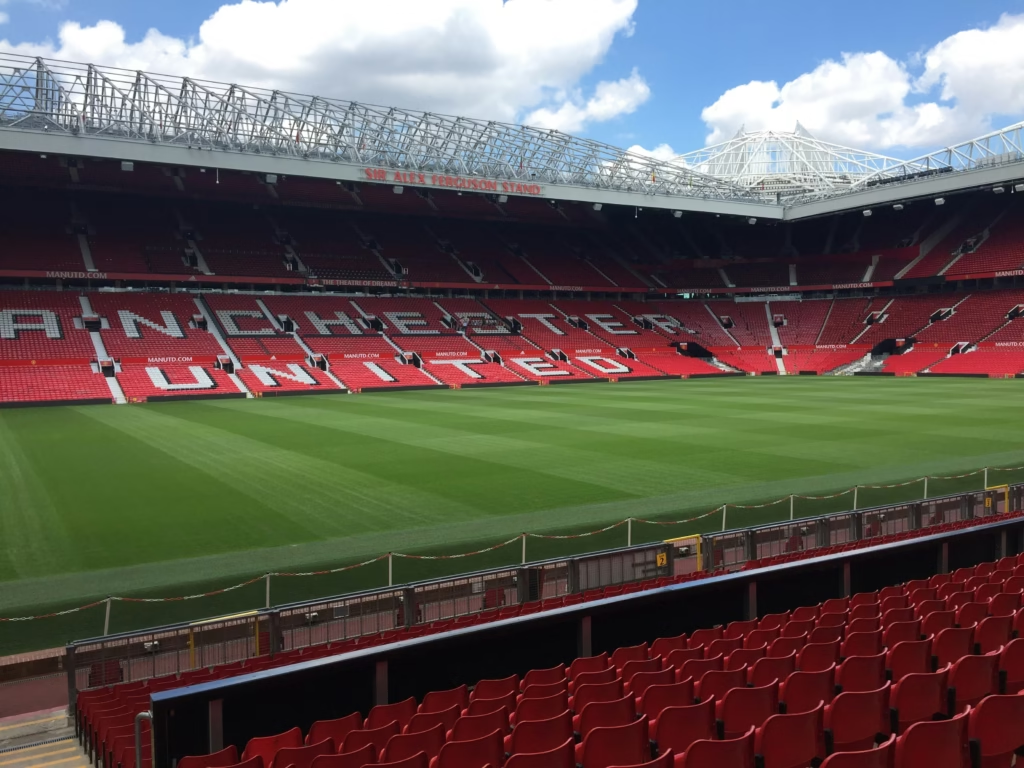
As the January transfer window approaches, Manchester United once again find themselves at a familiar crossroads. Not quite good enough to challenge at the very top, yet too big to accept stagnation, the club enters another mid-season window caught between ambition and restraint. January, historically, has been a difficult month for United — a period where desperation often meets inflated prices, and where structural problems are rarely solved in four weeks.
This winter, however, feels subtly different. Not because United are suddenly well-run, but because the club appears to have finally accepted certain uncomfortable realities. The days of chaotic mid-season spending sprees are gone. The era of papering over cracks with “statement signings” is fading. What replaces it is not yet excellence — but pragmatism.
To understand what Manchester United will do in this January window, you must first understand what they cannot do.
The Financial Reality: Why January Will Be Restrained
Despite their global stature, Manchester United are operating under genuine financial constraints. Years of inefficient recruitment, bloated wages, and short-term thinking have left the club with limited room to manoeuvre under Profitability and Sustainability Rules (PSR). The summer window required careful balancing, and January offers even less flexibility.
This matters because January is the most expensive time to buy players. Selling clubs are reluctant, prices are inflated, and quality players are rarely available unless something is broken in their current situation. United know this. The new hierarchy understands that a reckless January could compromise the summer — and the summer is where this rebuild must truly take shape.
As a result, this will not be a “fix everything now” window. It will be a supplementary window, designed to stabilise rather than transform.
Rúben Amorim’s Influence: No More Stop-Gaps
One of the most important shifts at Manchester United is philosophical. Rúben Amorim has made it clear that he does not want players signed simply to survive six months. That stance immediately narrows the market.
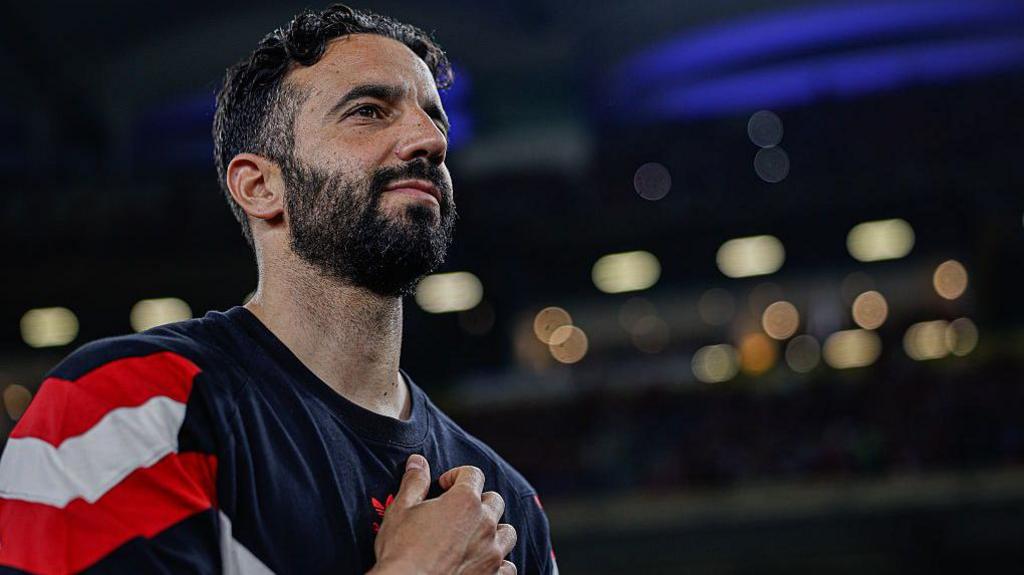
Amorim’s system demands specific profiles — players who can interpret space, press intelligently, and function within a structured framework rather than individual chaos. This is not a system that accommodates panic buys or mismatched profiles. If a player does not fit the long-term idea, they are not coming — regardless of short-term pain.
That explains why United are willing to endure temporary discomfort caused by injuries, suspensions, and international absences rather than repeating old mistakes. It also explains why January business, if it happens, will be targeted and limited.
Midfield: The One Area United Cannot Ignore
If there is one department where Manchester United are almost forced into action, it is midfield. Not because of a lack of talent, but because of a lack of reliability and balance.
The absence of Bruno Fernandes at key moments has exposed how fragile United’s creative structure remains. When he is unavailable, progression slows, tempo drops, and the burden falls unevenly on younger or less experienced players. Kobbie Mainoo, for all his promise, cannot be asked to carry the midfield every week. That is not development — it is negligence.
United’s January priority is therefore clear: a midfielder who can stabilise games, offer physical and tactical reliability, and reduce the dependency on Fernandes without blocking the pathway of younger players.
This is why the club is not chasing glamorous names. Instead, the focus is on players who understand the Premier League, who can slot into rotation immediately, and who would still make sense as squad pieces in two or three years’ time.
A move for a box-to-box midfielder — someone comfortable both defending transitions and advancing play — is the most realistic piece of business United could complete. It will not be a headline-grabbing signing, but it would be a necessary one.
Why a Defensive Midfielder Is Unlikely in January
Despite fan calls for a dominant defensive midfielder, January is simply the wrong time to pursue that profile. Elite holding midfielders are among the hardest players to source mid-season. Clubs rarely sell them, and when they do, the prices are prohibitive.
Manchester United also face an internal dilemma: signing a defensive midfielder now risks complicating the summer strategy. If the club commits significant funds in January, it reduces flexibility later — especially if Amorim wants a very specific anchor player for his long-term system.
As a result, United are more likely to look for versatility than specialisation this winter. A midfielder who can play multiple roles is more valuable in January than a niche specialist.
Wing-Backs and the Structural Problem United Still Haven’t Solved
The wing-back issue at Manchester United is not just about personnel — it is about identity. Amorim’s system relies heavily on wide players who can provide width, intensity, and tactical discipline. United do not currently have enough players who excel in that role.
Injuries and the Africa Cup of Nations have only intensified the problem. When first-choice options are unavailable, United are forced into compromises that weaken the entire structure. Full-backs play as wing-backs without the attacking instincts. Wingers are asked to track back without the defensive awareness.
Yet despite the obvious need, a January wing-back signing remains unlikely unless an opportunity arises at the right price. This is because quality wing-backs are expensive, and United are wary of signing another “system-specific” player without full summer preparation.
If Manchester United do move in this area, it will likely be opportunistic — a loan, or a player who can cover multiple positions rather than a pure specialist.
Attack: Why United Will Not Sign a Striker
Striker rumours are inevitable, but they are misleading. United invested heavily in attack recently, and January is not the moment to revisit that department. More importantly, Amorim’s issues up front are not about personnel — they are about cohesion and chance creation.
United’s attacking struggles stem from inconsistent build-up, poor spacing, and an inability to sustain pressure in the final third. Signing another forward without addressing those issues would be futile. The club knows this.
Unless an unexpected market opportunity arises, United will not pursue an attacker in January. Any meaningful attacking evolution is being saved for the summer.
Outgoings: Why United Won’t Sell Recklessly
Selling in January is just as difficult as buying. United are open to departures, but only under strict conditions. The priority is not raising funds — it is maintaining squad depth.
Young players may be considered for loans if it benefits their development and does not weaken the team. Fringe players could leave if replacements are lined up. But there will be no fire sale.
This restraint is important. In previous seasons, United have weakened themselves mid-campaign in pursuit of marginal financial relief. That cycle appears to be ending.
The Bigger Picture: January as a Bridge to Summer
Perhaps the most important thing to understand about Manchester United’s January window is that it is not an isolated event. It is a bridge.
The club’s real rebuild will not happen in January. It will happen in the summer, when contracts expire, budgets reset, and strategic decisions can be executed without panic. January’s role is simply to ensure that United reach that point without derailing their season or damaging long-term plans.
That means patience — something United have historically lacked.
What Fans Should Expect — and What They Shouldn’t
Fans should expect one or two sensible additions, not a revolution. They should expect careful language from the club, minimal leaks, and negotiations that stretch late into the window. They should not expect marquee names, dramatic unveilings, or social-media-friendly chaos.
Most importantly, fans should judge this window not by how exciting it feels, but by how little it compromises the future.
Final Verdict: A Window of Maturity, Not Magic
Manchester United’s January transfer window will frustrate some and reassure others. It will lack spectacle, but it will reflect a club slowly learning from its mistakes.
This is not ambition abandoned — it is ambition delayed. And after a decade of self-inflicted wounds, that may finally be progress.
About The Author