Manchester United Caretaker Manager Dilemma: Darren Fletcher, Ole Gunnar Solskjaer, or Michael Carrick – A Deep Dive into Capabilities, Shortcomings, and Potential Pitfalls
Ruben Amorim is gone. Manchester United are back in crisis. As Fletcher, Solskjaer, and Carrick emerge as caretaker options, we analyse who can actually stabilise United — and why this decision reveals a deeper structural failure.
Manchester United’s managerial carousel has spun once again in early 2026.
Ruben Amorim’s abrupt dismissal after a dismal run of results — one that dragged the club into the lower half of the Premier League table — has left Old Trafford in a familiar state of chaos. Another “project” has collapsed. Another reset has begun. Another season now hangs in the balance.
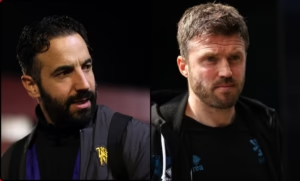
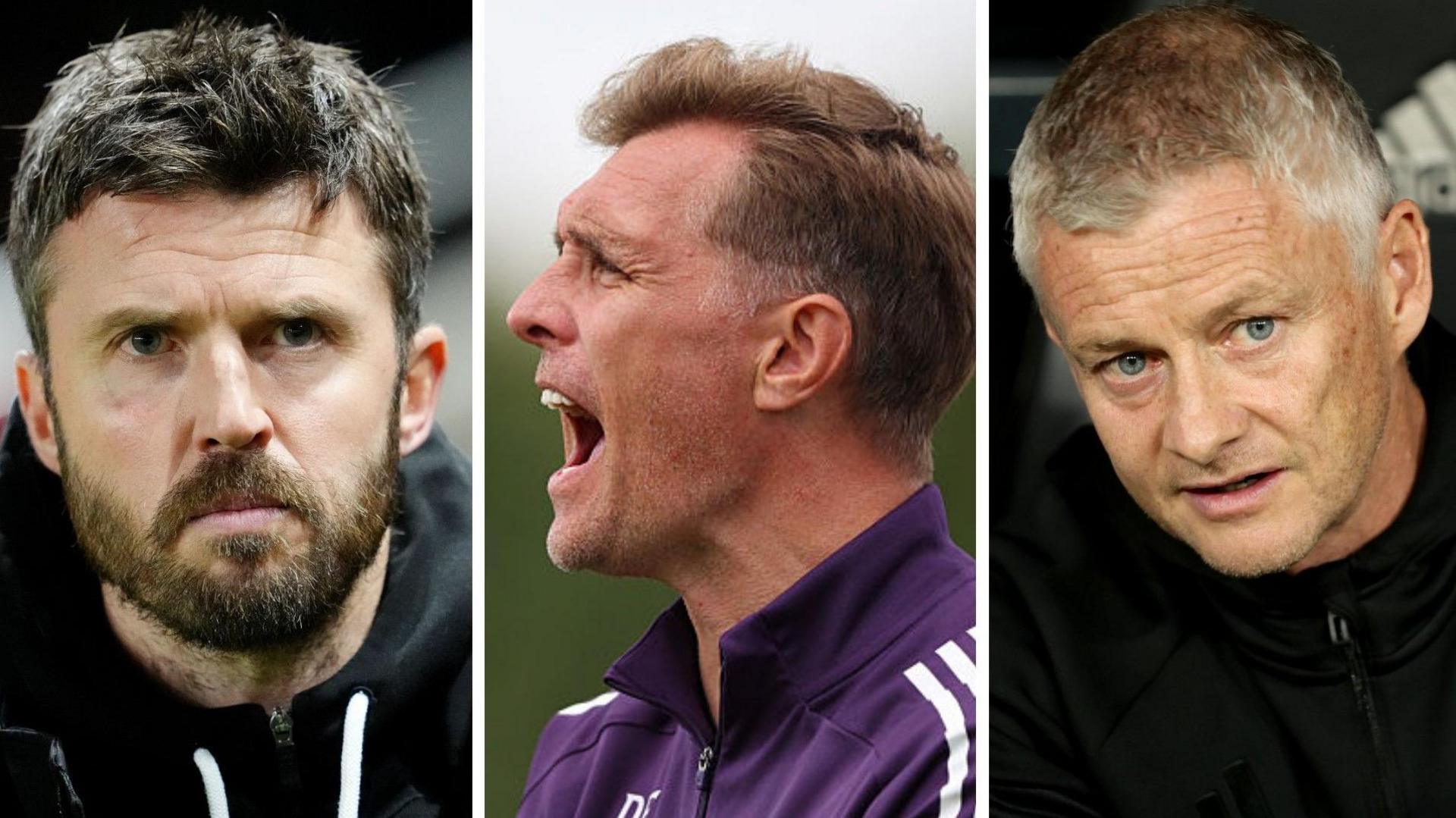
With the campaign slipping away and dressing-room confidence reportedly fragile, United’s hierarchy, led by director of football Jason Wilcox, has opened preliminary discussions with three former players: Darren Fletcher, Ole Gunnar Solskjaer, and Michael Carrick.
The idea is not long-term vision. It is damage control.
Manchester United want a caretaker manager to steady the club until the end of the 2025/26 season, buying time to identify a permanent appointment in the summer. It is an admission that patience has once again run out — a pattern that has defined the post-Ferguson era.
This in-depth analysis examines each candidate’s capabilities, limitations, and structural obstacles, assessing who is best equipped to navigate the turbulence ahead.
Because at Manchester United, caretaker roles are never truly temporary. They are auditions held in a pressure cooker.
And history shows Old Trafford rarely grants second chances.
The Broader Context: Another Reset, Another Gamble
Understanding this decision requires understanding what Amorim’s failure represents.
His appointment was supposed to mark a tactical evolution — a modern coach, a defined identity, and a clean break from reactive football. Instead, it deteriorated into confusion. Tactical mismatches, inconsistent selection, and internal tensions eroded both results and belief.
Manchester United did not just lose matches. They lost direction.
Now Darren Fletcher has been placed in interim charge for upcoming fixtures against Burnley — and potentially Brighton — while the club quietly explores more experienced hands for a longer caretaker spell.
That dual approach speaks volumes.
Fletcher offers continuity. Solskjaer and Carrick offer legitimacy.
But the underlying demand is the same: instant stabilisation in a club structurally hostile to patience.
This is not about building. It is about survival.
Darren Fletcher: The Loyal Insider in a Role Bigger Than His Résumé
At 41, Darren Fletcher is the embodiment of Manchester United’s internal culture.
An academy graduate, five-time Premier League winner, Champions League winner, and trusted lieutenant under Sir Alex Ferguson, Fletcher’s post-playing career has kept him deeply embedded at Carrington. He has served as youth coach, first-team assistant, technical director, and now under-18s manager.
No candidate understands the institutional rhythms of Manchester United better.
What Fletcher Offers
Fletcher’s biggest asset is not tactics. It is trust.
He knows the academy. He knows the dressing room. He knows the boardroom. He understands the psychological weight of the badge — something external appointments often underestimate.
In youth football, he has emphasised proactive play: pressing, energy, and rapid ball circulation. Those principles align neatly with what Manchester United’s supporters crave and what the modern Premier League demands.
There is also a symbolic power to his presence. His consultation with Sir Alex Ferguson, reportedly receiving a “blessing,” matters inside Old Trafford. In a fractured environment, emotional connection can stabilise fragile players.
Short term, Fletcher could simplify. Tighten the shape. Restore work rate. Lean into youth. Lower the emotional temperature.
That has real value.
Where Fletcher Falls Short
But elite football is unforgiving.
And Fletcher’s CV is thin where it matters most.
He has never managed a senior side. He has never navigated a Premier League relegation battle, a European knockout tie, or a hostile away ground with points slipping away. Coaching is not managing. Advising is not commanding.
United’s problems are not youth-development problems. They are structural first-team problems.
There is also a credibility risk. When results wobble — and at United they always do — authority becomes currency. Fletcher would be managing internationals who have worked under Champions League winners. Respect cannot be assumed.
Even sentiment has limits.
The Structural Obstacles
Fletcher would inherit the most brutal learning curve in English football.
A congested fixture list. A cynical fanbase. A press corps addicted to crisis. A boardroom demanding recovery without providing continuity.
One or two early defeats would not just damage results — they would damage his long-term reputation.
And that is the hidden danger: Manchester United have a habit of burning their own.
For all his loyalty, Fletcher represents the highest emotional risk and the lowest operational certainty.
Ole Gunnar Solskjaer: The Proven Caretaker with Unfinished Business
No candidate divides opinion like Ole Gunnar Solskjaer.
As a player, he is immortal. As a caretaker in 2018, he was transformative. As a permanent manager, he remains unresolved.
But context matters.
Solskjaer did not fail immediately at Manchester United. He finished second. He reached finals. He restored attacking fluency. He rebuilt morale. He stabilised chaos.
His early caretaker run — 14 wins from 19 matches — remains one of the most effective short-term turnarounds the club has experienced since Ferguson.
That history cannot be dismissed.
What Solskjaer Offers
Solskjaer’s primary strength is man-management.
He simplifies roles. He empowers forwards. He removes fear. He reconnects players with identity. In a broken dressing room, that skill is priceless.
Tactically, he is comfortable building a side that transitions quickly, protects space, and maximises pace — attributes well suited to United’s current squad profile.
He also arrives without a learning curve. He understands Old Trafford pressure, the media ecosystem, the political environment, and the expectations that crush less-prepared managers.
Caretaker football is emotional football.
Solskjaer understands that terrain better than anyone in this conversation.
The Limitations That Never Went Away
Yet honesty demands acknowledgment of why his reign ended.
United under Solskjaer plateaued.
When structure met structure, they struggled. Against organised presses, they lacked solutions. Against low blocks, they lacked patterns. Against adversity, they leaned on moments rather than mechanisms.
His tenure ultimately collapsed not through bad luck, but through tactical stagnation.
The same criticisms followed him to Besiktas: inconsistency, defensive vulnerability, and a dependence on individual brilliance.
Reappointing Solskjaer would not be neutral. It would reopen unresolved questions. It would invite instant comparison. And it would frame this period not as recovery — but as retreat.
The Obstacles of Returning
There is also a psychological cost.
Returning rarely empowers. It reminds.
Players who outlasted him will feel hierarchy shift. Supporters will project old frustrations onto new results. Every defeat would not be judged in isolation, but in memory.
And in a club addicted to forward motion, even illusory forward motion, nostalgia carries danger.
Solskjaer remains the safest emotional stabiliser.
But he is also the candidate most likely to entrench the cycle United claim to be escaping.
Michael Carrick: The Modern Coach with the Steepest Test
Michael Carrick sits in the middle ground — emotionally connected, but professionally distant.
His coaching identity has been forged away from Old Trafford noise. At Middlesbrough, he built a side defined by ball progression, positional rotation, and structural clarity. He improved players. He improved processes. He improved results.
He did not merely motivate.
He coached.
What Carrick Brings
Carrick’s greatest asset is method.
At Boro, he took a relegation-threatened squad and constructed a promotion contender. His teams pressed with cohesion, built through midfield structure, and maintained compact defensive distances — principles United have lacked.
He is also a modern coach. Comfortable with analytics. Comfortable with youth. Comfortable designing training environments that support tactical consistency.
Importantly, Carrick has already experienced managing rather than assisting. He has owned defeats. Adjusted systems. Lost dressing rooms. Rebuilt them.
That experience matters.
He would arrive not as a motivator, but as a mechanic.
And United’s problems are mechanical.
Where Doubts Remain
But Carrick’s leap would be violent.
The Championship is not the Premier League. The Premier League is not Manchester United. Managing Middlesbrough is not managing global scrutiny.
His Middlesbrough tenure, while positive, was not upward forever. Inconsistency crept in. Defensive fragility reappeared. Promotion was not achieved.
Those facts will shape perception.
He would also lack the instant emotional pull of Solskjaer or the symbolic shield of Fletcher. Buy-in would depend almost entirely on performance.
At United, performance is demanded before foundations can settle.
The Structural Risks
Carrick would be walking into a squad assembled for different managers, different systems, and different philosophies.
Implementing tactical coherence mid-season is hard. Implementing it at United is harder.
The same institutional impatience that undermined Amorim would greet Carrick. One poor month would not be interpreted as adaptation. It would be framed as exposure.
Yet of all three options, Carrick is the only one whose profile aligns with evolution rather than memory.
Comparing the Options: Stability, Sentiment, or Structure
Fletcher offers continuity — but not command.
Solskjaer offers comfort — but not progression.
Carrick offers structure — but not protection.
Manchester United’s central problem is not motivation. It is not effort. It is not history.
It is coherence.
They lack a footballing through-line. A system independent of personalities. A tactical identity that survives setbacks.
In that context, Fletcher is too light. Solskjaer is too familiar.
Carrick is the only option whose appointment suggests even a temporary commitment to footballing design.
Caretakers rarely build legacies.
But they can plant direction.
A Caretaker Role That Reveals a Deeper Disease
This search does not reveal ambition.
It reveals fragility.
Manchester United continue to treat management as crisis response rather than strategic architecture. Every dismissal resets emotional temperature but leaves the foundations untouched.
Whether it is Fletcher’s loyalty, Solskjaer’s nostalgia, or Carrick’s modernity, the next caretaker will not fix United’s core issues.
They will merely expose them.
Yet within this limited frame, Michael Carrick represents the least regressive option — not because he guarantees success, but because he offers something the club rarely chooses: process over personality.
If United are serious about escaping this cycle, the caretaker must not only stabilise results — he must reintroduce footballing logic.
Because without it, this will not be the last “temporary” solution.
It will simply be the next chapter in a decade-long decline.
About The Author