Manchester United in Revolt: Fan Rebellion, Broken Promises, and the Deep Crisis at the Heart of the Club
Old Trafford is no longer a fortress. It is a protest ground. As fans turn on INEOS and the Glazers, Manchester United’s endless sackings and broken promises reveal a club that has lost its identity, direction, and credibility.
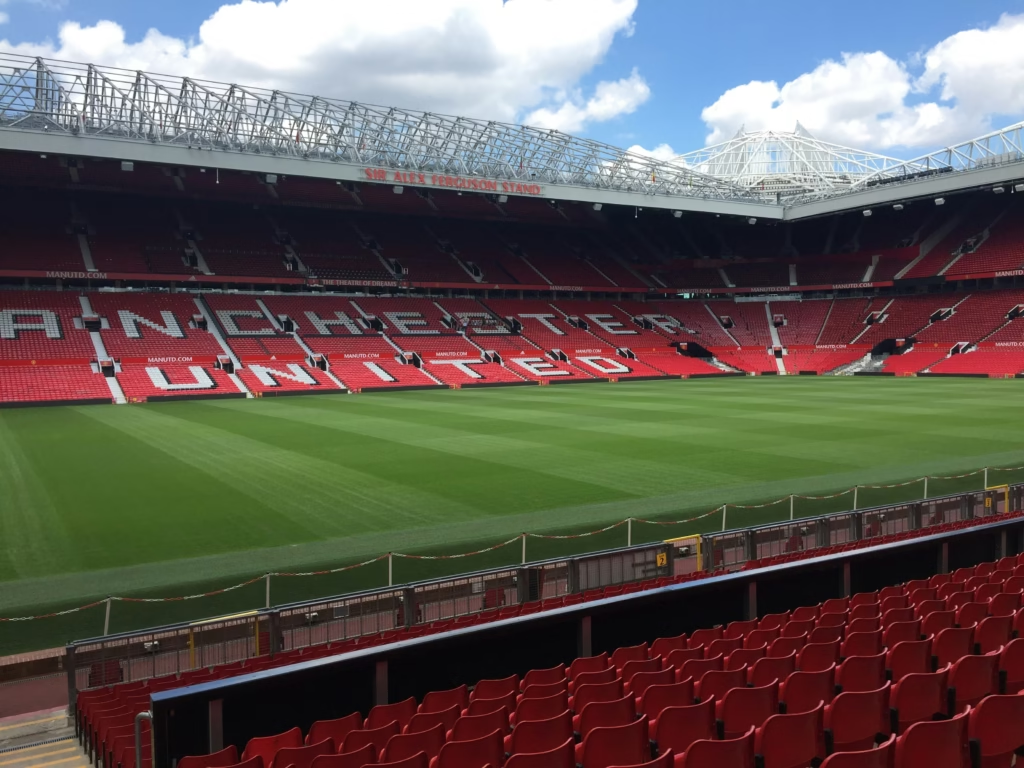
Manchester United’s most prominent supporters’ group, The 1958, released one of the most explosive statements in modern club history. They branded the club a “laughing stock” and a “circus,” placing responsibility not only on the Glazer family, but now also on Sir Jim Ratcliffe and INEOS — the very figures many fans once believed would finally save the club.
They called for a vote of no confidence in Ratcliffe, Joel Glazer, CEO Omar Berrada, and sporting director Jason Wilcox. They announced coordinated protests ahead of United’s February 1 home game against Fulham. The language was not symbolic. It was terminal.
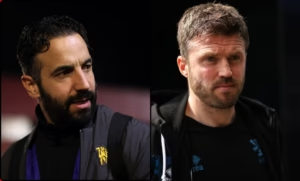
This eruption came only days after the sacking of Ruben Amorim, dismissed after just 14 months in charge. Another project scrapped. Another “reset.” Another admission that nothing underneath the surface is working.
This is no longer frustration. This is rebellion.
And rebellions do not start because of one manager. They start when belief dies.
A Club at War With Its Own Supporters
Manchester United’s crisis is no longer measured only in league positions or trophy droughts. It is now visible in the total collapse of trust between the club and its supporters.
The 1958 are not a fringe group. They represent over 100,000 members and have been central to fan mobilisation since 2021. Initially, their war was aimed squarely at the Glazers. Today, Ratcliffe is firmly in the crosshairs.
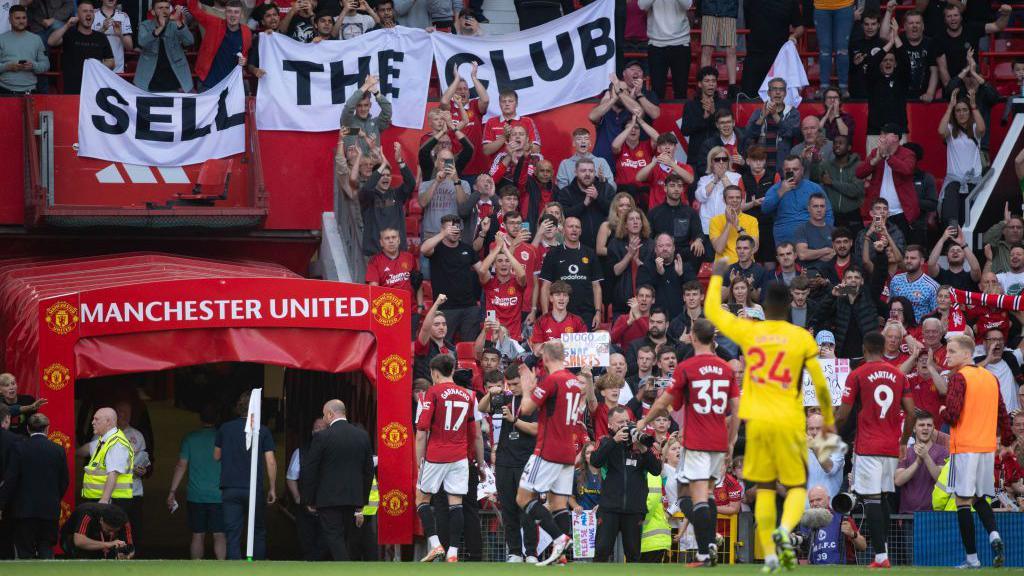
Their January statement accused the club’s leadership of running Manchester United “like a corner shop,” stripping identity, ambition, and basic competence from one of the biggest institutions in world sport.
This shift matters. Because when fan anger expands rather than narrows after ownership change, it signals something far deeper than impatience. It signals recognition that the structure itself is broken.
Ticket price increases. Removal of concessions. Mass staff redundancies. Corporate prioritisation. Constant sackings. No visible footballing direction.
The supporters are no longer reacting emotionally. They are drawing conclusions.
INEOS and the Illusion of a Turning Point
When Sir Jim Ratcliffe completed his minority investment in December 2023, it was framed as the beginning of Manchester United’s rescue mission.
A lifelong fan. A British billionaire. A man promising football competence after 18 years of leveraged decay.
INEOS took control of sporting operations. New executives arrived. New language emerged. “Best in class.” “Elite standards.” “Football-first decisions.”
By September 2024, CEO Omar Berrada unveiled “Project 150” — a bold declaration that Manchester United would win the Premier League again by 2028, the club’s 150th anniversary.
Ratcliffe publicly rejected the idea that this was a long-term rebuild.
“It is not mission impossible,” he said.
That moment now defines the current revolt.
Because less than two years later, Manchester United look further from a league title than at any point since Sir Alex Ferguson retired.
No tactical identity. No recruitment coherence. No squad profile. No visible pathway.
What was sold as transformation has, in reality, become acceleration of the same dysfunction.
The Managerial Graveyard Continues to Grow
Ruben Amorim’s dismissal did not shock anyone. And that is precisely the problem.
He was sacked on January 5, 2026 — hours after a 1–1 draw with Leeds United. Public criticism of the board. A private dispute with Jason Wilcox. A run of humiliating results. Then the familiar club statement.
Another failed appointment. Another short-termism spiral.
Darren Fletcher now holds the interim position. Ole Gunnar Solskjaer and Michael Carrick are linked once more. Old names recycled. Old comfort zones revisited.
This cycle is no longer unfortunate. It is institutional.
Since Ferguson retired, Manchester United have burned through managers like flares: Moyes, Van Gaal, Mourinho, Solskjaer, Rangnick, Ten Hag, Amorim.
Different personalities. Different philosophies. Identical endings.
INEOS were meant to end this.
Instead, they extended Ten Hag in summer 2024 before dismissing him three months later. They paid millions to extract Dan Ashworth from Newcastle, branding him “best in class,” then removed him after just 15 matches.
Ratcliffe insisted in October 2025 that Amorim needed three years.
By January 2026, he was gone.
There is no longer any credibility in timelines.
Results That Mirror the Rot
Manchester United’s league finishes now tell the story more honestly than any press release ever could.
Since winning the title in 2013, United have finished outside the top four in seven of the last twelve seasons. They slumped to eighth in 2023/24. Fifteenth in 2024/25. And midway through 2025/26, they sit seventh — already miles off the pace.
Six managers. Over £1.5 billion spent. Two minor domestic trophies. No league title. No sustained Champions League presence.
This is the longest league drought in the club’s modern history.
Under Ferguson, United collected 13 league titles in 21 years.
Since Ferguson, they have collected excuses.
And while financial reports still show massive revenue, the football output continues to sink. Commercial dominance now masks competitive decline.
Manchester United are no longer failing temporarily.
They are failing systematically.
Are United Really a “Laughing Stock”?
Emotionally, fans use the phrase to express pain. Analytically, the label is disturbingly defensible.
United remain one of the richest clubs in the world. One of the most supported. One of the most watched.
Yet, on the pitch, they operate like a mid-table organisation.
Clubs with smaller stadiums, leaner budgets, and younger squads consistently outplay them. Rivals rotate managers strategically. United cycle them desperately.
The media narrative surrounding the club has become permanently mocking: chaos, dysfunction, toxicity, boardroom interference, bloated squads, wasted money.
When rivals talk about Manchester United, they no longer speak about fear.
They speak about comedy.
And that is what hurts supporters the most.
Not losing.
But becoming irrelevant.
The 2028 Promise: Vision or Marketing?
INEOS’ 2028 title pledge now hangs over the club like a billboard from a failed political campaign.
The promise was not inherently wrong. Ambition is required.
The crime was presenting it as structured.
Behind the scenes, sources were already admitting by early 2025 that the rebuild was far larger than anticipated. That recruitment systems were underdeveloped. That financial limitations were stronger than projected.
Yet the messaging never adjusted.
Fans were sold certainty while executives were discovering chaos.
That is why the rebellion has teeth.
Because supporters are no longer reacting to defeat. They are reacting to deception.
The promise has not merely failed.
It has been exposed.
The Deeper Problem: Manchester United Has No Centre
The Glazers hollowed out the club financially. INEOS have hollowed it out structurally.
There is currently no visible football brain inside Manchester United capable of aligning recruitment, coaching, development, and performance into a single ecosystem.
Every decision appears reactive. Every appointment contradicts the last. Every project resets before it even forms.
That is why managers fail here. That is why players regress. That is why executives clash. Manchester United no longer behaves like a football club.
It behaves like a corporate brand constantly responding to crisis management. And brands cannot build teams.
What a Real Rebuild Actually Requires
Manchester United do not need another manager announcement. They need institutional surgery.
First, ownership clarity. A divided power structure ensures political conflict. Until control is unified and transparent, dysfunction will continue.
Second, sporting authority. A single football department with genuine independence must be installed and protected from boardroom interference.
Third, recruitment intelligence. Stop chasing names. Start building profiles. Stop buying “solutions.” Start building systems.
Fourth, managerial patience. Not slogans. Not press conferences. Actual operational protection for a coach to develop identity.
Fifth, cultural repair. Rebuild trust with supporters. Restore concessions. End performative consultation. Start genuine dialogue.
Finally, football honesty. Accept where the club actually is — not where it markets itself to be.
The Rebellion Is Not the Problem — It Is the Warning
Manchester United’s fan uprising is not destabilising the club. It is diagnosing it. The protests are not the disease. They are the symptom.
They exist because the club’s leadership has failed to produce coherence, credibility, or progress.
Manchester United are not cursed. They are mismanaged.
And until that truth is confronted without PR filters, new managers will continue to fall, new promises will continue to rot, and Old Trafford will continue to echo with anger instead of belief.
The club that once set standards now cannot even define them. And that is why the rebellion has begun.
About The Author