Ole Gunnar Solskjaer’s Potential Return to Manchester United: A Deep Analysis of His First Reign, Unfinished Business, and What 2026 Would Really Look Like
Ole Gunnar Solskjaer to be in talks over a shock return to Manchester United in 2026. But what would his comeback really deliver? This deep analysis explores his first reign, what he fixed, what he failed to solve, and why United are once again looking backwards in a decade-long crisis.
Manchester United is once again trapped in familiar territory: managerial chaos, fractured identity, and an increasingly restless fanbase. On January 5, 2026, Ruben Amorim became the latest name added to the club’s growing post-Ferguson casualty list. Darren Fletcher has been handed interim responsibility, but few inside or outside Old Trafford believe this arrangement will last long.
Almost immediately, one name resurfaced — Ole Gunnar Solskjaer.
As of January 10, 2026, credible reports indicate that United are in serious discussions with Solskjaer over a short-term return, potentially until the end of the 2025/26 season. For a club that has burned through managers, philosophies, and “projects” for over a decade, the idea of going back to a former coach is both comforting and deeply unsettling.
Ole Gunnar Solskjaer is not just another ex-manager. He represents one of the most emotionally complex periods of the post-Ferguson era: a time of revival, hope, near-misses, and eventual collapse. His first reign was not a failure — but neither was it a success.
We take a deep, factual, and unsentimental look at Solskjaer’s previous spell, what he actually achieved, where he fell short, and what his return in 2026 could realistically deliver. Not nostalgia. Not outrage. Just analysis.
From Emotional Rescue Act to Full-Time Appointment
Ole Gunnar Solskjaer was appointed caretaker manager on December 19, 2018, following the toxic breakdown of José Mourinho’s reign. United were drifting, the squad was fractured, and Old Trafford had become a place of anxiety rather than belief.
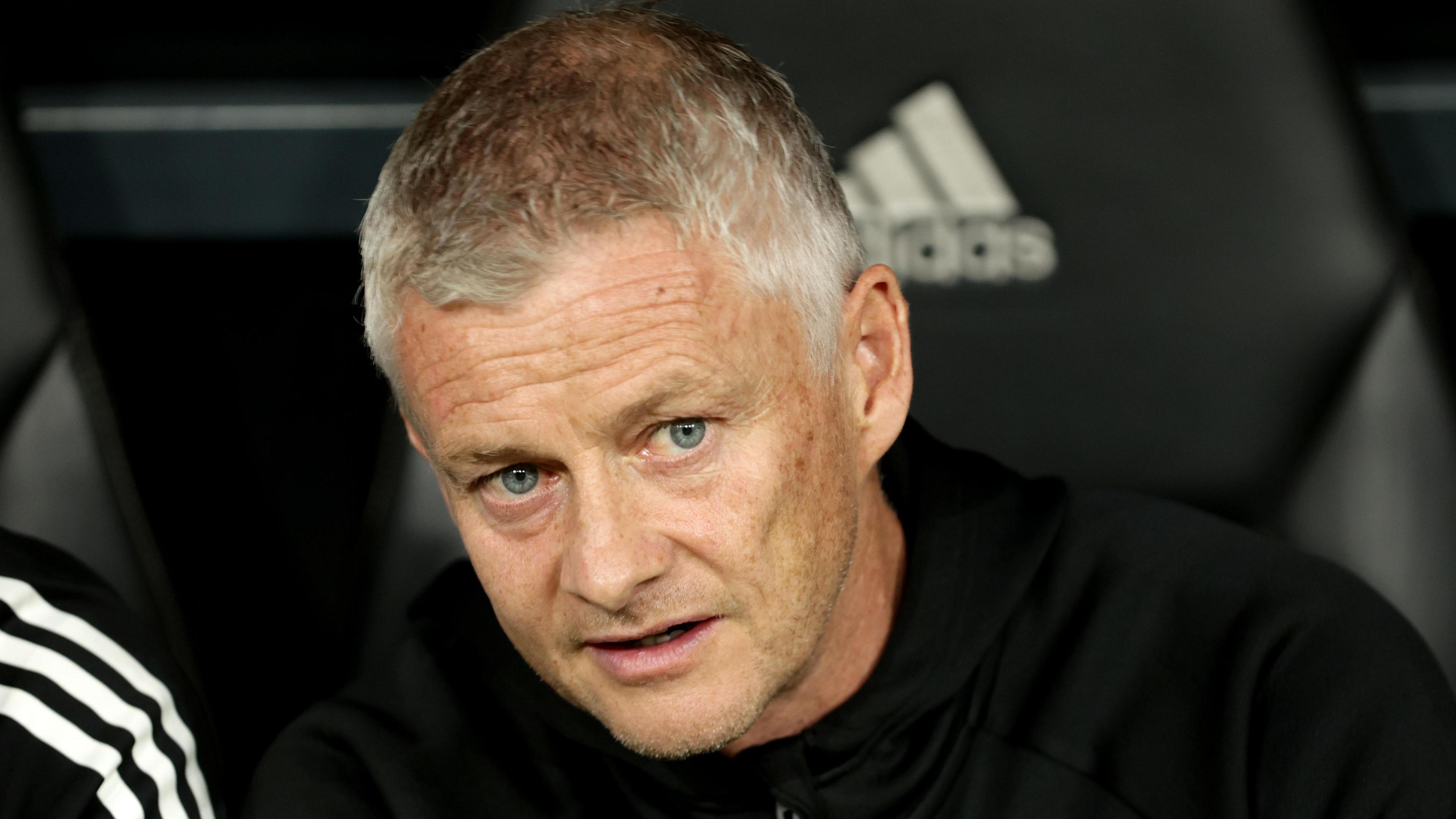
Ole Gunnar Solskjaer early impact was electric.
United won 14 of his first 19 matches in all competitions. The football was faster, the players visibly freer, and the atmosphere around the club dramatically improved. He became the first United manager since Sir Matt Busby to win his opening six league matches. The defining moment came in Paris, when United overturned a 2-0 first-leg deficit to eliminate PSG in the Champions League — one of the club’s most improbable European nights.
That run did more than win games. It restored emotional connection. Players smiled again. Fans re-engaged. The club briefly felt like Manchester United.
In March 2019, United made Ole Gunnar Solskjaer permanent manager.
In hindsight, that decision perfectly encapsulates the club’s post-Ferguson problem: reacting to emotion rather than building structure.
The Numbers: What Solskjaer’s Reign Actually Produced
Ole Gunnar Solskjaer managed Manchester United for nearly three full seasons, overseeing 168 matches across all competitions. His overall record stands at:
- 91 wins
- 37 draws
- 40 defeats
- Win rate: ~54%
In the Premier League alone, he managed 109 matches, winning 56, drawing 24, and losing 29. His side scored 195 league goals and conceded 126.
These are not catastrophic figures. They are not elite either.
Solskjaer’s United finished:
- 3rd in 2019/20
- 2nd in 2020/21
The second-place finish remains United’s highest league position since Sir Alex Ferguson retired. In 2020/21, United amassed 74 points and went unbeaten away from home all season — a remarkable achievement that underlined Ole Gunnar Solskjaer’s effectiveness as a reactive, counter-attacking coach.
In Europe, United reached the Europa League semi-final in 2020 and the final in 2021, losing to Villarreal on penalties after failing to score in 120 minutes.
On paper, Solskjaer delivered stability. In reality, he never delivered authority.
What Solskjaer Did Right: Rebuilding a Broken Club
Solskjaer inherited a squad damaged psychologically and structurally. His greatest achievement was not tactical — it was cultural.
He removed several destabilising figures, rebuilt internal relationships, and created a dressing room that functioned. Training ground morale improved. Players spoke openly about feeling trusted. Toxicity faded.
On the pitch, he restored attacking identity. United became one of the league’s most dangerous transition sides. They thrived against top teams, particularly away from home, where space allowed Solskjaer’s counter-attacking model to flourish.
Crucially, he rebuilt around younger players.
Marcus Rashford, Mason Greenwood, Scott McTominay, and later Jadon Sancho and Bruno Fernandes became central to United’s direction. Fernandes, in particular, transformed the team’s output, becoming the league’s most productive midfielder almost instantly.
Ole Gunnar Solskjaer also oversaw a partial squad cleanse. Several underperforming or ill-fitting players were moved on. Recruitment, while inconsistent, was more coherent than in previous cycles.
For the first time since Ferguson, United looked like a team rather than a collection of expensive individuals.
That matters — especially in the context of what followed.
Where It Failed: Structure, Trophies, and Tactical Limits
Ole Gunnar Solskjaer’s reign ultimately collapsed because emotional rebuilding is only the first stage of elite management.
He never completed the second.
Despite multiple deep cup runs, United failed to win a single trophy under Solskjaer. Five semi-final exits. One European final defeat. In each of those defining moments, United looked uncertain, passive, and tactically outmanoeuvred.
The Europa League final against Villarreal symbolised his shortcomings. United played 120 minutes without imposing themselves, made reactive substitutions, and appeared to rely on penalties rather than solutions.
Critics were not wrong to question his in-game management.
Solskjaer struggled to control matches. His United side often oscillated between brilliance and dysfunction. They were devastating in space, but blunt against deep blocks. Defensive organisation was inconsistent. Midfield balance was never properly solved.
Perhaps most damaging was the absence of a visible long-term tactical evolution. While rivals modernised — implementing pressing systems, automatisms, and structured build-up patterns — United remained reliant on moments.
When results dipped, there was no system to fall back on.
By late 2021, heavy defeats to Liverpool, Manchester City, and Watford exposed those weaknesses brutally. United’s structure disintegrated. Confidence vanished. Solskjaer was dismissed in November 2021.
His rebuild had stabilised United. It had not transformed them.
Why His Name Has Returned in 2026
United’s interest in Solskjaer in 2026 says more about the club than the man.
Since his dismissal, United have cycled through managers, styles, and “projects” with alarming speed. Each has promised clarity. Each has collided with the same institutional dysfunction: unclear recruitment, power struggles, short-term thinking, and inconsistent sporting leadership.
Solskjaer represents something rare in modern United discourse: familiarity without toxicity.
He understands the club. He commands baseline respect. He can stabilise without detonating the dressing room. In a season already fractured, those qualities suddenly carry value again.
There is also precedent. His first interim spell was statistically his strongest period. Players responded instantly. Performances improved. The environment softened.
From a purely short-term crisis-management perspective, his profile makes sense.
That does not mean it is ambitious.
What Solskjaer Could Realistically Deliver in 2026
If Solskjaer returns in an interim capacity, expectations must be grounded. He is not being pursued to build a dynasty. He would be asked to restore order.
The most realistic objectives would be:
- Re-establish dressing room stability
- Improve results consistency
- Secure European qualification
- Protect asset value within the squad
- Reduce public volatility around the club
On the pitch, his strengths still apply. United’s current squad remains better suited to transitional football than to high-control positional systems. Solskjaer could immediately simplify roles, reduce tactical overload, and refocus the team on pace, directness, and confidence.
A top-six finish is a reasonable projection. A Europa League push is plausible. A sudden title charge is not.
History suggests Solskjaer can raise floors — not ceilings.
The Risks: Why This Could Still Collapse
The Premier League of 2026 is more tactically advanced and physically demanding than the one Ole Gunnar Solskjaer left. Pressing systems are more refined. Recruitment models are sharper. Margins are thinner.
Solskjaer’s past weaknesses remain unresolved questions:
- Can he impose structure against low blocks?
- Can he consistently organise elite defences?
- Can he out-manoeuvre top tactical coaches?
- Can he function under an ownership group demanding measurable outputs?
He would also be returning to a harsher environment. Fan patience is eroded. Media hostility is intensified. INEOS’ performance-driven oversight is far less forgiving than the Glazer era’s dysfunction.
The emotional shield that protected him before may no longer exist.
If results falter early, nostalgia will not save him.
What Fans Should Prepare For
A Solskjaer return would likely follow a familiar emotional curve. Initial optimism. Improved performances. A sense of relief.
Then reality.
Fans should expect effort, improved cohesion, and moments of high-quality attacking football. They should also expect structural limitations to resurface over time.
This would not be a revolution. It would be triage.
United supporters searching for salvation in this appointment risk misreading its purpose. If Ole Gunnar Solskjaer returns, it will not be to solve Manchester United’s decade-long crisis. It will be to slow the bleeding.
What comes after him — recruitment policy, executive clarity, footballing structure — will matter far more than what happens during his months in charge.
Not Redemption — Responsibility
Ole Gunnar Solskjaer’s first reign at Manchester United was neither the disaster critics portray nor the success romantics remember. He repaired a broken club. He restored belief. He raised standards.
He did not build a winning machine.
If he returns in 2026, it will not be a fairy tale. It will be an admission: that Manchester United still does not know what it is.
Solskjaer could steady the ground. He could protect the squad. He could reconnect club and supporters. Those are not small contributions.
But unless the structures above him change, his second spell would likely end the same way as the first — with gratitude, disappointment, and the same unanswered questions.
At Manchester United, managers no longer define eras.
They survive them.
About The Author