Manchester United vs Fulham: A Defining Premier League Night at Old Trafford
Manchester United host Fulham at Old Trafford with top-four hopes on the line and fan protests looming. A must-win night shaped by pressure, politics, and performance.
A Match Framed by Momentum and Unrest
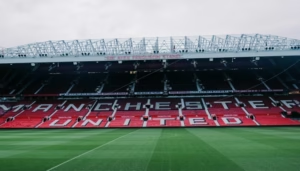
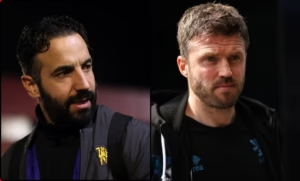
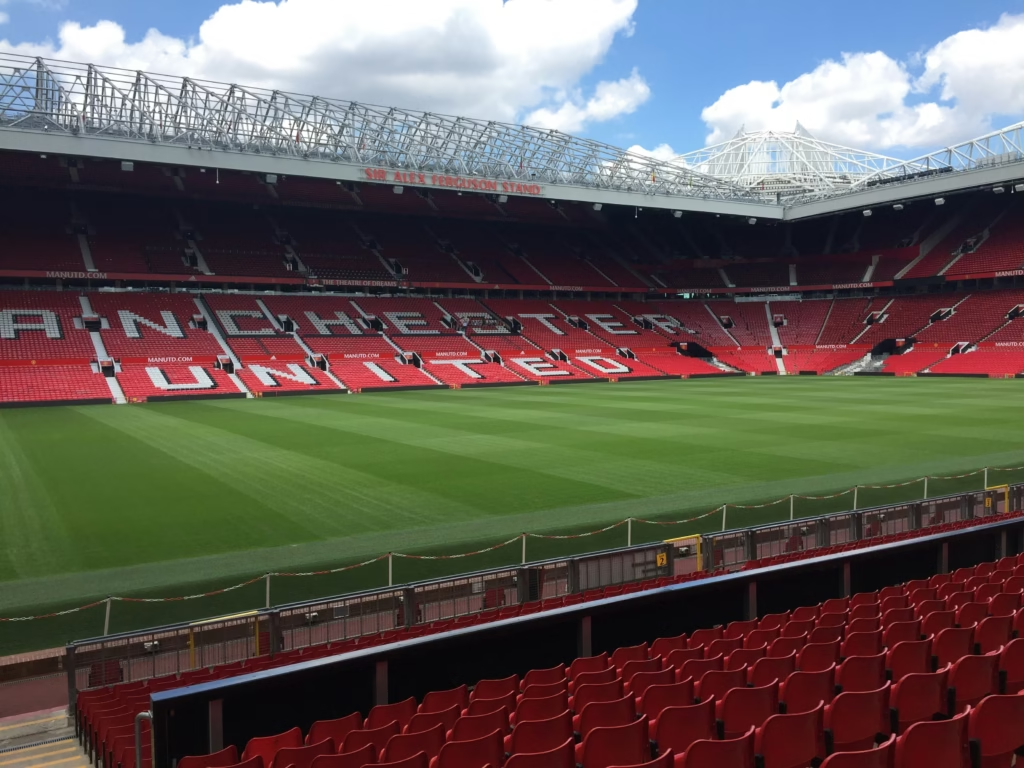
Manchester United’s meeting with Fulham at Old Trafford on February 1, 2026 arrives wrapped in contradiction. On the pitch, there is renewed belief. Under interim manager Michael Carrick, United have produced back-to-back statement victories over Manchester City and Arsenal, results that have injected confidence into a season that once threatened to unravel. Off the pitch, however, long-standing frustrations with the club’s ownership have resurfaced, with supporters preparing fresh protests that underline how fragile the relationship between fans and hierarchy remains.
This fixture therefore carries significance beyond ninety minutes. United are not only defending their place in the top four, they are attempting to project stability during a period of institutional turbulence. Fulham, confident and well-organized, represent a serious obstacle rather than a routine home assignment. The outcome will shape both United’s league trajectory and the emotional temperature around Old Trafford.
The Premier League Context: A Tight and Unforgiving Race
The league table illustrates just how little margin for error United possess. With 23 matches played, Arsenal lead the way on 50 points, while Manchester City and Aston Villa sit just behind on 46. Manchester United occupy fourth place with 38 points, but Chelsea are only one point adrift, ready to pounce on any slip.
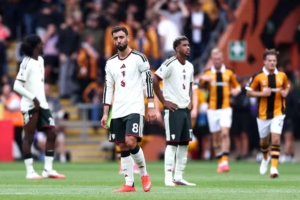
Fulham’s position adds further tension. Seventh with 34 points and only one defeat in their last eight league outings, Marco Silva’s side have quietly positioned themselves as genuine European contenders. For Manchester United, this makes the fixture close to non-negotiable. Victory would create vital breathing space and extend Carrick’s unbeaten league run to eight matches. Dropped points, however, could see United fall out of the top four almost immediately, reinforcing how unforgiving this stage of the season has become.
Manchester United Team News: Balancing Stability and Absence
Carrick’s selection is shaped by both continuity and enforced compromise. Patrick Dorgu’s hamstring injury, sustained against Arsenal, removes a key defensive option for an extended period, while Matthijs De Ligt remains sidelined with a persistent back problem. As a result, the Maguire–Martínez partnership is expected to anchor the defense once again, a pairing that has looked increasingly settled in recent weeks.
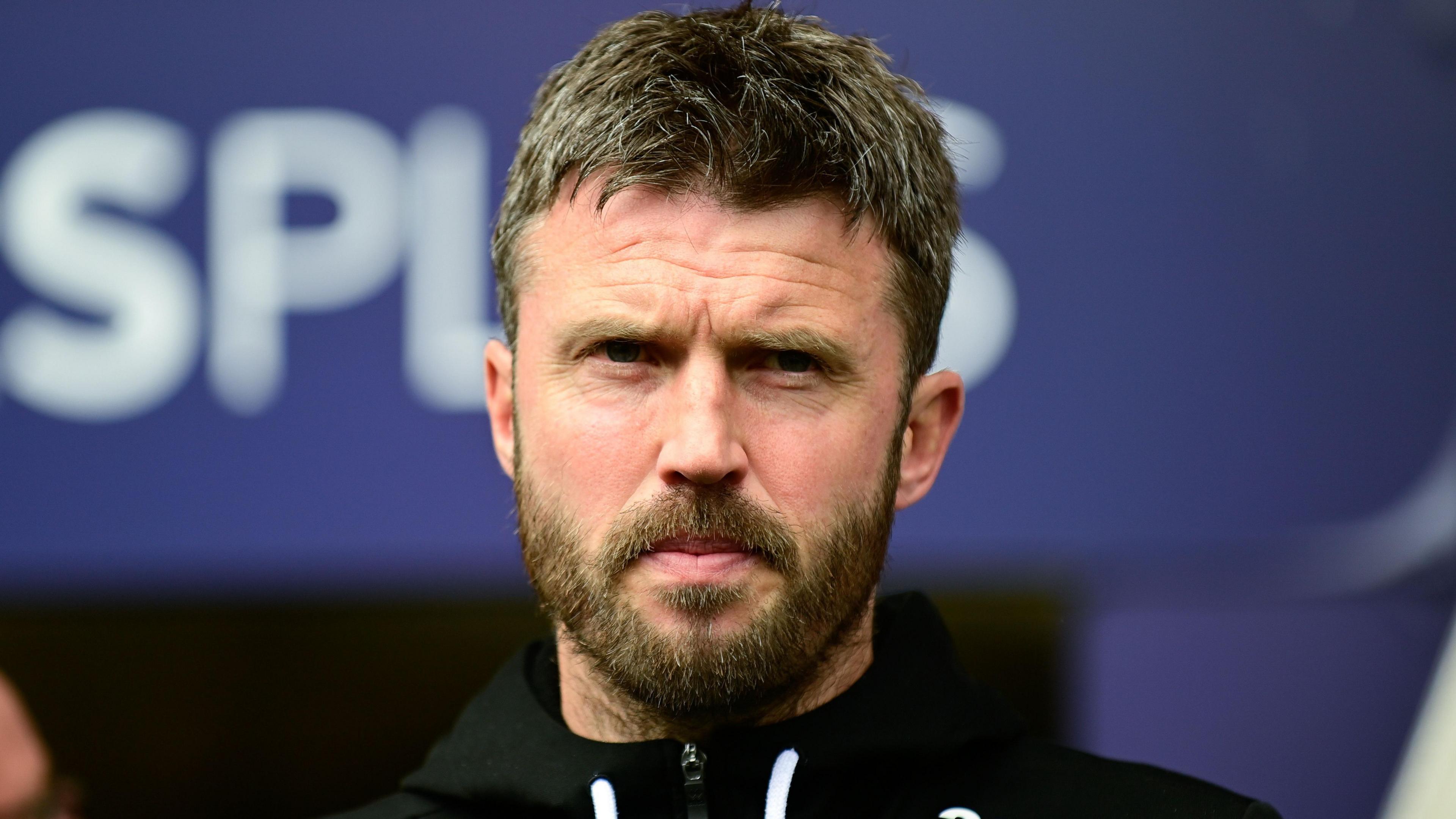
There is cautious optimism surrounding Joshua Zirkzee, who has returned to training, though his readiness for a starting role remains uncertain. Senne Lammens is likely to retain his place in goal although there speculations that he might get rested but the not yet confirmed officially from Carrick, Diogo Dalot and Luke Shaw will be operating at full-back. In midfield, Casemiro and Kobbie Mainoo provide a blend of experience and composure, allowing Bruno Fernandes to operate higher up the pitch.
The attacking structure should reflect Carrick’s preferred 4-2-3-1 shape, with Amad Diallo and Matheus Cunha supporting Bryan Mbeumo. It is a system that prioritizes vertical movement and fluid rotation, and it has delivered United’s most convincing performances of the season.
Fulham’s Selection Picture and Tactical Identity
Fulham arrive in Manchester with problems of their own but also with confidence drawn from recent consistency. Rodrigo Muniz and Sasa Lukic are unavailable due to thigh injuries, limiting Silva’s options through the middle. Kenny Tete’s potential return would be a welcome boost defensively, while questions remain over the availability of Samuel Chukwueze and the match fitness of Oscar Bobb.
Bernd Leno is set to marshal the defense, with Antonee Robinson and Timothy Castagne providing width from full-back. In midfield, Sander Berge and Alex Iwobi offer athleticism and ball progression, while Emile Smith Rowe and Harry Wilson add creativity behind Raúl Jiménez. Fulham’s 4-2-3-1 mirrors United’s structure, but their emphasis on compactness and counter-attacking discipline has unsettled stronger sides than United this season.
How United Can Win: Control, Patience, and Precision
Manchester United’s recent successes have been built on speed and transition, but Fulham present a different challenge. Breaking down a compact block will require patience rather than adrenaline. Ball circulation must be sharp, and Fernandes’ ability to find pockets between the lines will be central to unlocking Fulham’s shape.
Full-back involvement will be crucial, particularly Luke Shaw’s overlaps on the left, while Cunha’s movement between midfield and attack could destabilize Fulham’s defensive structure. At the other end, United must remain alert to Jiménez’s hold-up play and the late runs of Iwobi, threats that can punish lapses in concentration.
Set-pieces also loom large. United’s aerial presence gives them a clear advantage, and exploiting dead-ball situations could provide the breakthrough if open play becomes congested. Above all, an early goal would be invaluable, forcing Fulham to abandon their low-risk approach and opening spaces for United’s attackers.
Why This Is a Must-Win for the Top-Four Push
The broader stakes for Manchester United cannot be overstated. Champions League qualification remains both a sporting and financial imperative, particularly for a club attempting to reset its identity. While a goal difference of +7 reflects progress, it is not enough to mask how fragile United’s position remains.
Fulham may lack the historical weight of United’s traditional rivals, but they represent exactly the type of opponent that has derailed previous campaigns. A win would reinforce the sense that Carrick’s interim spell has restored coherence and belief. Failure, by contrast, would reignite doubts and invite pressure at a time when unity is already in short supply.
Protests at Old Trafford: Energy or Distraction?
Adding to the tension is a significant protest planned by supporter group The 1958. Thousands are expected to gather ahead of kick-off, voicing opposition to both the Glazer family and INEOS. The demonstration reflects years of accumulated frustration, fueled by debt, declining infrastructure, and perceived mismanagement.
The effect on the match itself is difficult to predict. A charged atmosphere can elevate players, turning Old Trafford into a cauldron that intimidates visiting teams. Equally, it can introduce anxiety and fracture focus if emotions spill over. Much will depend on how the players channel the noise, and whether it manifests as support or unrest once the game begins.
The Bigger Picture: Where Manchester United Go From Here
The protest speaks to deeper structural issues that no single victory can resolve. Decades of leveraged ownership have left United burdened with debt and outdated facilities, while recent decisions under INEOS have raised questions about long-term vision and competence. Trust between supporters and leadership is eroded, and repairing it will require more than rhetoric.
A credible path forward involves transparency, investment in infrastructure, and a clear footballing strategy that prioritizes performance over financial extraction. Stability under Carrick may offer short-term calm, but meaningful revival depends on governance reform and renewed alignment with the club’s supporters.
Ninety Minutes That Reflect a Club at a Crossroads
Manchester United vs Fulham is more than a league fixture. It is a snapshot of a club caught between revival and unrest, hope and frustration. Victory would strengthen United’s top-four ambitions and validate recent progress on the pitch. Yet the protests serve as a reminder that deeper battles continue off it.
As Old Trafford prepares for both football and demonstration, the challenge for Manchester United is clear. Deliver on the pitch, honor the commitment of the supporters, and prove that progress is possible even amid uncertainty. Only then can the club begin to reconcile its past with its future.
About The Author