Manchester United’s Crossroads: Navigating Free Agents, Ronaldo Rumors, and an Ambitious Summer Rebuild
Manchester United’s post-Amorim era under Carrick offers hope, but Ronaldo fantasies, free-agent shortcuts, and stadium hurdles threaten the rebuild. Brutal truth: nostalgia won’t win titles—only fresh energy and smart strategy will.
As February 2026 dawns, Manchester United finds itself engulfed in speculation. Free agents linger like shadows, former players whisper comebacks, and the eternal Ronaldo saga spins anew. Fans debate “dream signings” on social media, but the reality is stark: United’s rebuild demands more than nostalgia or bargain-bin fixes. With a new manager needed, squad overhauls looming, and stadium plans gathering dust, the summer ahead could define the club’s trajectory—or expose its enduring flaws. This article dives deep, pulling no punches on where United stands and what must change.
The Lingering Echo of Transfer Gossip
The mid-season transfer window slammed shut on February 2, 2026, with Manchester United opting for minimal activity. No blockbuster incomings; instead, a flurry of academy loans dominated the deadline day. Ethan Wheatley headed to Bradford City, James Scanlon to Swindon Town, Gabriele Biancheri to Rotherham United, and Jacob Devaney to St Mirren—all temporary moves to foster development. Permanent exits included Sam Mather to Kayserispor and Joe Hugill to Kilmarnock, trimming the fringes without addressing core issues.
Yet, the gossip mill churns on. Stories of free agents linked to clubs, including ex-United stars, refuse to fade. Jesse Lingard, now 33 and unattached after his Nottingham Forest stint, has been floated as a potential returnee for a coaching or squad role. Raheem Sterling, released by Chelsea in January 2026, remains a high-profile free agent open to moves outside London. Even Paco Alcacer, the former Barcelona striker, circulates in rumors for clubs seeking experienced forwards.
Fans adore these “what if” scenarios—imagining a savvy signing that reignites glory days. But let’s be brutally honest: this fixation on post-window buzz highlights Manchester United’s stagnation. Under INEOS’ partial ownership, the club has preached fiscal prudence, yet the window yielded no reinforcements for a squad lacking depth and chasing European football next season. Rumors persist because reality bites; without fresh legs, United’s title challenges remain pipe dreams.
Free Agents: Temptation or Trap for United’s Rebuild?
Manchester United doesn’t need free agents—they need vitality. The query hits the nail: linking to aging or unattached players signals a club still clinging to shortcuts rather than strategic evolution. History screams caution. Past free-agent flirtations, like the ill-fated return of Paul Pogba or the brief Edinson Cavani spell, offered flashes but no sustained impact.
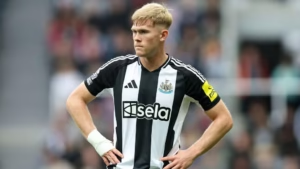
Current free-agent pools tempt with names like Sterling (31, €5m value) or Kurt Zouma, but do they fit a rebuild craving “fresh energetic legs”? Sterling’s pace has waned, and Lingard’s last meaningful contribution feels eons ago. Reports suggest Manchester United could target free agents in summer due to limited funds. But this smacks of desperation. Casemiro, set to depart as a free agent in summer 2026, exemplifies the pitfalls: a £300,000 weekly wage drain for diminishing returns.
Brutally, pursuing free agents betrays a lack of learning. Post-Ferguson eras have seen bloated squads from panic buys—think Alexis Sanchez’s wage fiasco. United must prioritize youth and mid-career talents with resale value, like the £62.5m signing of Matheus Cunha last summer. Free agents might plug gaps cheaply, but they rarely propel titles. Fans debating “dream signings” overlook this: glamour without grind leads nowhere.
The Ronaldo Rumor Mill: Fantasy or Feasible Return?
No United discourse escapes Cristiano Ronaldo. At 41 in February 2026, the legend’s Al Nassr tenure teeters. Reports claim he’s on strike, furious over the league’s handling of Karim Benzema’s Al Hilal move. Unhappy in Saudi Arabia, Ronaldo eyes a European return, with Manchester United repeatedly linked.
The rumors peaked with claims of ongoing talks for a summer reunion—Ronaldo willing to slash wages, viewing his 2022 exit as a Ten Hag spat, not club betrayal. Fichajes reports United negotiating a shock deal, leveraging Ronaldo’s €50m release clause. Ex-teammates weigh in: one suggests a third spell could shock, but odds hover at 40/1.
Honesty time: Ronaldo won’t return—and shouldn’t. His 2021 comeback netted 18 Premier League goals but fractured squad harmony, culminating in a Piers Morgan interview exposing rifts. At 41, even with 18 goals in 22 Al Nassr games this season, he’s no long-term fix. United’s rebuild needs forward-thinking, not backward glances. Rumors persist because Ronaldo’s aura sells headlines, but pursuing him reeks of nostalgia over necessity. As one report notes, he’s “betrayed” by Saudi chiefs, eyeing MLS or Europe—but Old Trafford? Unlikely and unwise.
Summer 2026: An Overwhelming Overhaul Awaits
Which direction for Manchester United this summer? The to-do list is daunting: new manager, players, stadium progress—all in one window. History whispers skepticism; post-Glazer takeovers promised revolutions but delivered mediocrity.
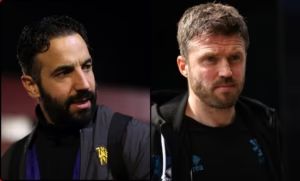
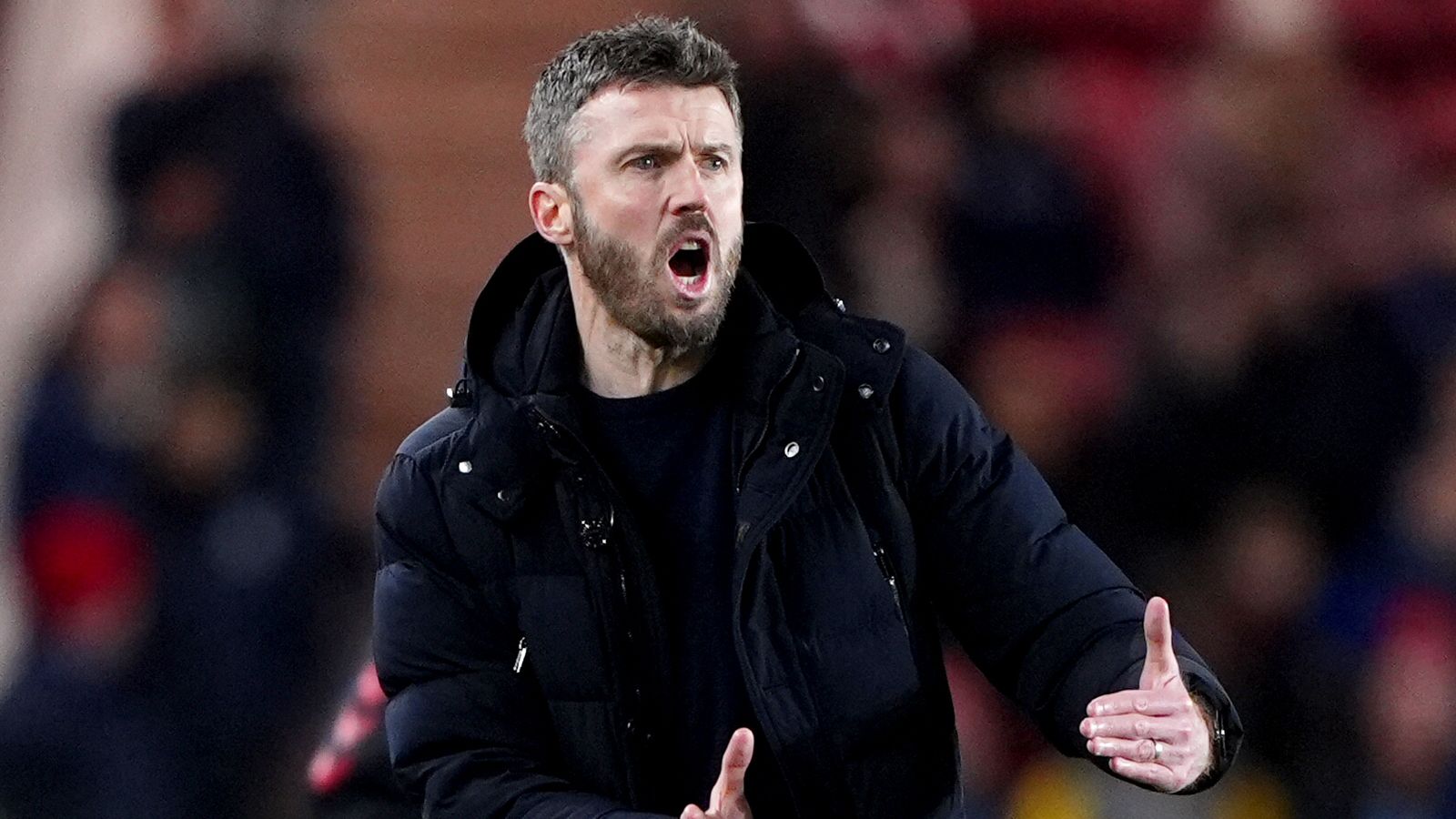
Managerially, Ruben Amorim’s sacking leaves a void. Michael Carrick steps in as head coach, with no January signings planned. Sources indicate an interim for the season’s remainder, then a permanent hire—perhaps a “top target” like Ralf Rangnick’s echo. Brutally, Manchester United’s managerial merry-go-round—Solskjaer, Rangnick, Ten Hag, Amorim—exposes poor planning. Summer must yield a visionary, not another stopgap.
Player-wise, we expect a midfield purge. Casemiro’s exit frees £300k weekly; Jadon Sancho follows, saving £1m in wages overall. Targets? TEAMtalk reveals a “mind-blowing” spree eyeing four stars, but funds limit ambitions. Outgoings like Marcus Rashford (unwilling to return from Barcelona loan) and Tyrell Malacia (frustrated by blocked Besiktas move) signal churn. United needs “fresh energetic legs”—think Bryan Mbeumo or Benjamin Sesko types, not veterans.
Stadium? More on that below. One summer can’t fix all, but inertia isn’t an option. History says otherwise: 2013’s post-Ferguson window botched, setting a decade-long tone.
Historical Lessons: Why United Keeps Repeating Mistakes
Manchester United’s history is a cautionary tale. Since Sir Alex Ferguson’s 2013 retirement, rebuilds have faltered under Glazer neglect. David Moyes inherited an aging squad; Louis van Gaal spent big on flops like Angel Di Maria; Jose Mourinho clashed over transfers; Ole Gunnar Solskjaer chased sentiment over strategy.
INEOS promised change, but echoes persist. The 2025 summer saw £225m splashed on Cunha, Mbeumo, and Sesko—solid, but not transformative. Amorim’s brief reign ended in sack; now Carrick inherits chaos. The fact is: United hasn’t challenged for titles consistently since 2013. Free-agent links and Ronaldo rumors show the club hasn’t learned—still lured by quick fixes over patient scouting.
Fans’ “dream signings” debates fuel this cycle. Social media amplifies hype, but data tells truth: free agents rarely yield trophies. United must emulate Liverpool’s model—astute buys like Virgil van Dijk—or Arsenal’s youth infusion. Ignoring history dooms repetition; summer 2026 must break the mold.
The Stadium Saga: From Dreams to Delays
No rebuild ignores infrastructure. United’s Old Trafford, iconic yet crumbling, demands action. Plans for a £2bn, 100,000-seater “New Trafford” adjacent to the old site aim for 2030 completion, but delays mount. Foster + Partners leads, promising the “world’s greatest stadium,” but land issues—£350m Freightliner disputes—push timelines back.
Short-term? 2026 upgrades fix the leaky roof and pitch, signaling commitment. Greater Manchester Mayor Andy Burnham backs regeneration, creating 15,000 homes and 48,000 jobs—no public funds for the stadium itself. Ratcliffe’s vision: a northern Wembley, hosting finals.
Honestly, this is overdue. Old Trafford’s decay symbolizes club malaise—rain-soaked stands mirroring on-pitch woes. A new stadium could galvanize, but five-year builds often stretch; 2030 looks optimistic. United must navigate bureaucracy without derailing squad investments.
Charting a Bold, Realistic Path Forward
Manchester United stands at a precipice. Free-agent gossip and Ronaldo rumors distract from essentials: energetic recruits, a stable manager, and stadium progress. Summer 2026 offers a reset, but history warns of pitfalls. Brutally, the club must shed nostalgia, embrace data-driven decisions, and invest wisely. No more shortcuts; build for sustained success. Fans deserve titles, not endless debates. If United learns, glory awaits; if not, the cycle continues.
About The Author