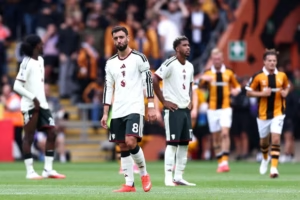
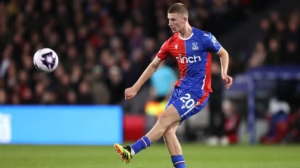
West Ham 1-1 Manchester United: Late Sesko Strike Salvages Point in Heartbreaking Draw – Full Post-Match Analysis
Manchester United’s five-game win streak ends in frustrating 1-1 draw at West Ham. Benjamin Sesko’s dramatic 96th-minute equaliser rescues a point, but exposes tactical flaws and ongoing struggles against compact sides under Michael Carrick.
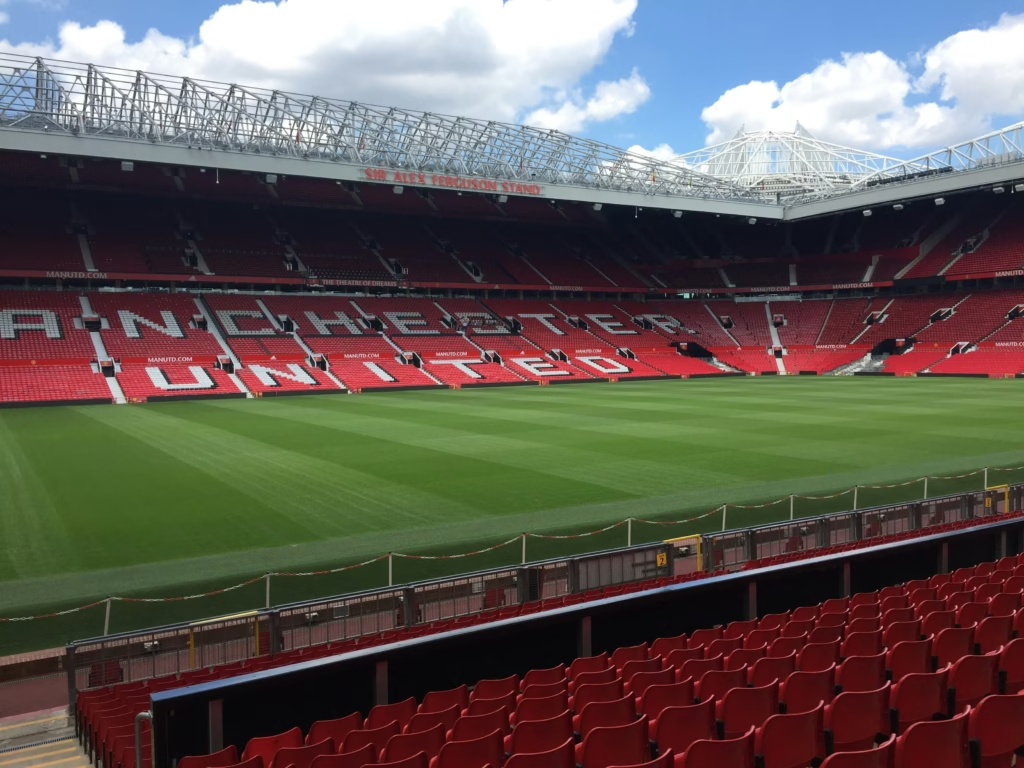
Manchester United’s pursuit of a fifth consecutive Premier League victory under Michael Carrick came to a frustrating end at the London Stadium on February 10, 2026. A last-gasp equalizer from substitute Benjamin Sesko in the 96th minute rescued a 1-1 draw against relegation-threatened West Ham United, but it did little to mask the Red Devils’ underwhelming performance. Tomas Soucek’s second-half tap-in had put the Hammers ahead, and for much of the game, it looked like United’s familiar struggles against compact, lower-table sides would cost them dearly. This result extends United’s winless streak at the London Stadium to five league matches, with their last victory there dating back to September 2021 – a lingering curse that Carrick couldn’t break.
The draw keeps Manchester United in fourth place with 45 points from 26 games, but it highlights ongoing issues that could jeopardize their European qualification hopes. West Ham, meanwhile, remain mired in the relegation battle, two points from safety despite a resilient display. As the season enters its critical phase, this match raises pressing questions: Have opponents decoded Carrick’s tactics? Did United fail to dismantle West Ham’s defensive block? And is the top-four race slipping away?
Match Recap: Dramatic Equalizer Denies West Ham Crucial Win
The game at the London Stadium unfolded as a tale of two halves, with West Ham’s defensive solidity frustrating Manchester United’s possession dominance. Manchester United controlled 65% of the ball, registering nine shots to West Ham’s seven, but their expected goals (xG) of 0.62 underscored a lack of cutting edge. West Ham, managed by Nuno Espirito Santo, set up in a compact low block, ceding possession but limiting United to just three shots on target.
The first half was a drab affair, with neither side creating clear chances. Manchester United’s midfield duo of Casemiro and Kobbie Mainoo dictated play, but the front line – featuring Matheus Cunha, Bruno Fernandes, and Bryan Mbeumo in a fluid setup – struggled to penetrate. West Ham’s Mads Hermansen was rarely tested, while United’s Lammens dealt comfortably with sporadic Hammers counters.
The breakthrough came five minutes after the restart. Jarrod Bowen whipped in a low cross after a quick one-two with Soucek, who tapped home from close range to give West Ham a 1-0 lead. It was a goal born from United’s defensive lapse – a swift counter-attack, allowing Soucek to tap in. From there, West Ham retreated deeper, inviting pressure but absorbing it effectively.
Carrick responded with substitutions around the 70-minute mark, introducing Sesko and Joshua Zirkzee for Cunha and Amad Diallo. The changes injected urgency, but United’s attacks remained predictable – crosses from wide areas that Mavropanos and Axel Disasi cleared with ease. It wasn’t until the sixth minute of stoppage time that Sesko delivered. Bryan Mbeumo curled in a cross from the right, and the Slovenian striker flicked a stunning first-time finish past Hermansen from a tight angle. The goal, described by Carrick as an “unbelievable finish,” salvaged a point and extended his unbeaten run to five games.
Attendance was 62,473, with the match broadcast on Peacock. Key stats: Manchester United had 22 touches in the opposition box compared to West Ham’s nine, but big chances were scarce (2-1 to West Ham).
Did Opponents Read Michael Carrick’s Tactics and Exploit Weaknesses?
Michael Carrick, appointed interim head coach in January 2026 after Ruben Amorim’s dismissal, had overseen four straight wins – including impressive victories over Manchester City and Arsenal – before this draw. His approach emphasizes possession-based football, quick one-twos, and positional discipline, drawing from his time under managers like Sir Alex Ferguson and Jose Mourinho. However, against West Ham, signs of predictability emerged.
Carrick stuck with a 4-2-3-1 formation, relying on full-backs like Luke Shaw and Dalot to provide width while the front three roamed fluidly. This worked in transitional games against top sides, but against a parked bus, it faltered. West Ham’s midfield trio of Soucek, Mateus Fernandes, and Potts man-marked United’s creators, forcing sideways passes and limiting verticality. As one analyst noted on X, “Carrick’s 4-4-2 out of possession doesn’t press high enough, allowing teams like Fulham or West Ham to play through”.
Substitutions raised eyebrows. Removing Cunha – who was direct and involved in build-up – for Sesko shifted to a more physical style, but it came too late. Amad stayed on despite a quiet game, while Cunha’s roaming left Shaw exposed on transitions. West Ham exploited this by targeting the left flank, where Bowen created the opener through a counter-attack.
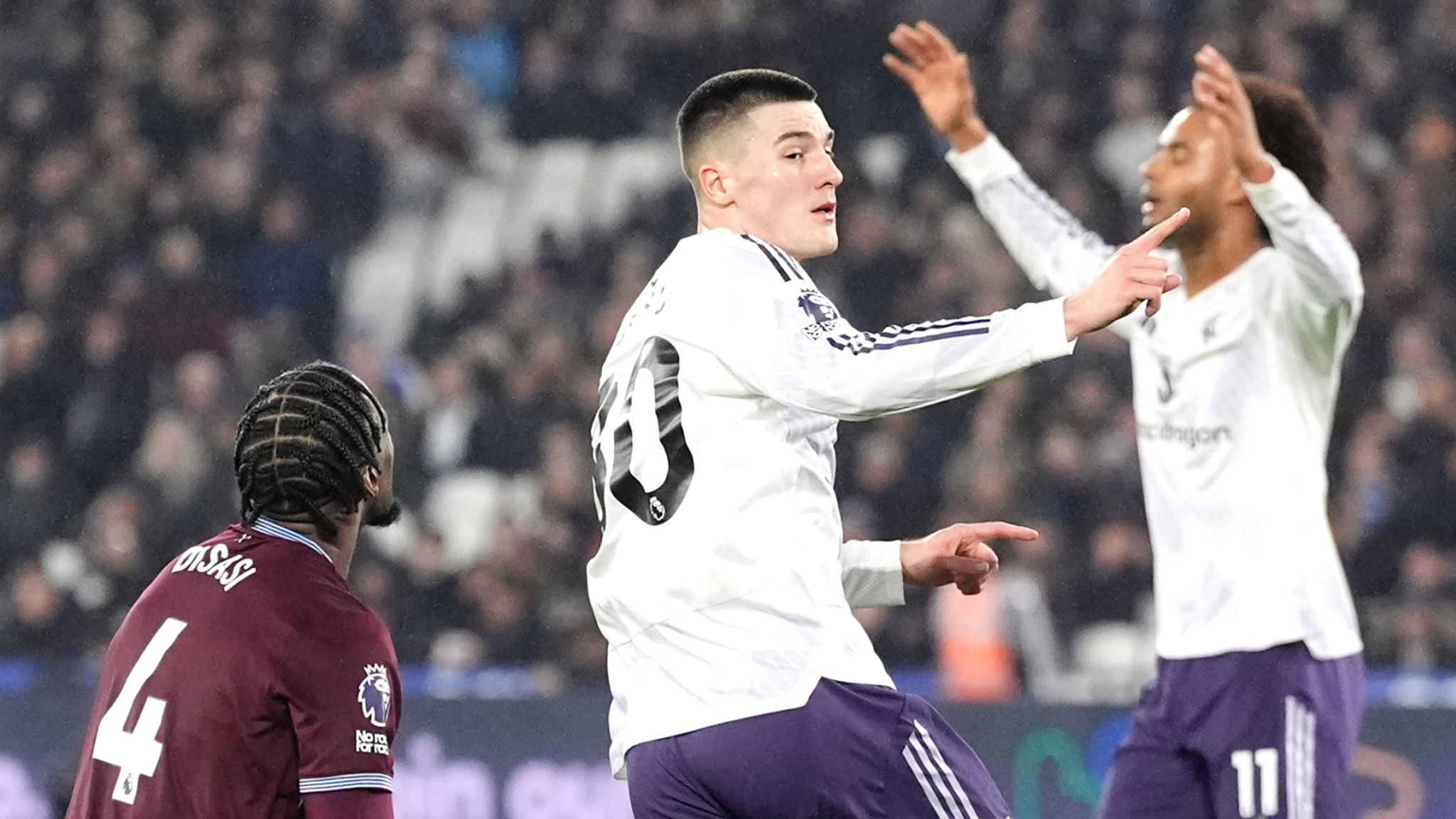
Carrick’s post-match comments acknowledged the issue: “We absorbed pressure well but needed more urgency in the final third”. Honestly? Yes, opponents like West Ham have studied Carrick’s patterns – high possession without penetration – and countered with compactness. If this becomes a trend, his “predictable” rigidity could be exposed further.
Manchester United’s Ongoing Struggle to Break Deadlocks Against Compact Defenses
One of the match’s defining features was Manchester United’s inability to dismantle West Ham’s defensive setup. The Hammers negated United’s attacks with a low block, forcing 629 passes from the visitors but yielding few clear opportunities. This isn’t new; United have historically struggled against bottom-half teams under recent managers.
In the 2025/26 season, United have played 13 games against bottom-half opponents, winning six, drawing seven, and losing none – accumulating 25 points. While unbeaten, the draws highlight inefficiency: they’ve dropped many points from winnable fixtures, including ties against Burnley, Wolves, and now West Ham. Against top-half sides, they’ve been more clinical, but low blocks expose a lack of creativity.
Carrick’s side dominated possession (52.8% season average), but against West Ham, touches in the box were skewed toward long balls rather than incisive moves. The false-nine experiment with Mbeumo didn’t work; he’s no focal point against physical defenders like Mavropanos. As a fan post on X brutally put it, “We play without urgency, settling for draws against relegation fodder”.
This pattern threatens European aspirations. Manchester United need to evolve – perhaps incorporating more direct play or better set-piece variation – to avoid more dropped points. The fullbacks are a mess, no box deliveries and this is an area area United must address in the summer. If United are to chase for a title, they need lethal, efficient and clinical finishers as well as fullbacks.
Are Manchester United’s Top-Four Hopes in Serious Threat?
With 12 games left, United sit fourth on 45 points, a point ahead of fifth placed Chelsea, two points behind Aston Villa and five clear of Liverpool who are sixth placed with a game in hand. The draw maintains their position, but it feels like two points lost in a tight race. Arsenal lead with 56 (game in hand), City on 50 (game in hand), and Villa on 47 (game in hand) – the top three seem secure but still achievable, leaving United battling for the final Champions League spot.
Remaining fixtures favor Manchester United: only one game against a current top-four side (Aston Villa at home), with most against mid-to-bottom teams. However, their form against lower sides – dropping points in “winnable” games – is a red flag. If draws persist, Chelsea or Liverpool or both could overtake them.
Carrick’s unbeaten start (four wins, one draw) has injected optimism, but this result exposes vulnerabilities. As ESPN noted, “The first dropped points of Carrick’s spell is no disaster, but United must capitalize on easier runs”. Top-four hopes aren’t doomed yet, but another slip could make them precarious.
Player Ratings: Standouts and Underperformers in a Frustrating Draw
Bart Lammens (GK): 6.5 – Solid, no chance on the goal.
Diogo Dalot (RB): 5 – At fault for Soucek’s opener, poor positioning.
Lisandro Martinez (CB): 7.5 – Dominant in duels, crucial late blocks.
Harry Maguire (CB): 6 – Steady but needless fouls invited pressure.
Luke Shaw (LB): 6 – Exposed on counters, limited attacking impact.
Casemiro (CM): 8 – Pivotal in possession.
Kobbie Mainoo (CM): 7 – Composed, but lacked forward thrust.
Amad Diallo (RW): 5.5 – Quiet, justified sub but stayed on oddly.
Bruno Fernandes (AM): 7 – Two assists in recent games, but stifled here.
Matheus Cunha (LW): 7 – Direct, involved in build-up; poor sub decision.
Bryan Mbeumo (CF): 6 – Ineffective as false nine, better on right wing.
Subs: Benjamin Sesko (8) – Game-changer with stunning goal. Joshua Zirkzee (6.5) – Added presence.
West Ham’s Soucek (7.5) and Bowen (7) shone, but United’s stars underdelivered.
Was Carrick Rigid or Predictably Exposed?
Carrick’s insistence on his system – even against a block – smacks of rigidity. He didn’t adapt early, sticking to possession without varying tempo. As a Guardian report highlighted, “Sesko’s strike earned a point, but West Ham dented survival hopes by exposing United’s predictability”.
Honest assessment: Predictable. Carrick must introduce flexibility – more rotation, tactical tweaks – to avoid being “read” by rivals. His Middlesbrough sacking in 2025 stemmed from similar issues; repeating them at United could cost dearly.
The Curse of London Stadium: Why Manchester United Can’t Win There
United’s last win at London Stadium was a 2-1 victory in September 2021, thanks to Jesse Lingard and David De Gea heroism. Since then, four losses and now a draw. Factors include West Ham’s home resilience, poor away form against them, and psychological baggage.
This “curse” amplifies struggles against bottom sides, costing points in qualification races.
Looking Ahead: How United Can Bounce Back for European Qualification
To secure Europe, Manchester United must address compactness issues. Carrick’s contract runs to season’s end; strong finish could earn permanence, but names like Tuchel, Ancelotti and Enrique lurk.
Next up: Everton away on February 23. A win is essential to rebuild momentum.
Final Thoughts: A Wake-Up Call for Carrick’s Red Devils
This draw was heartbreaking but revealing. United’s quality shone late, but systemic flaws – tactical predictability, poor subs, and bottom-half woes – demand fixes. Brutally, it’s a threat to top-four ambitions if unaddressed. Yet, with Carrick’s foundation (built on Amorim’s reforms), there’s hope. The chase for Europe continues – but the margin for error is slim.
About The Author