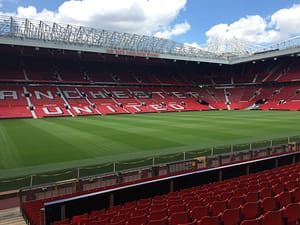
Amorim’s Old Trafford Nightmare: Has the Portuguese Prodigy Lost the Plot After Everton Humiliation?
One year in, Ruben Amorim’s rigid 3-4-3 is crumbling. A defeat to 10-man Everton has exposed everything: tactical inflexibility, poor subs, and a squad that doesn’t fit. Is the Portuguese project already broken?
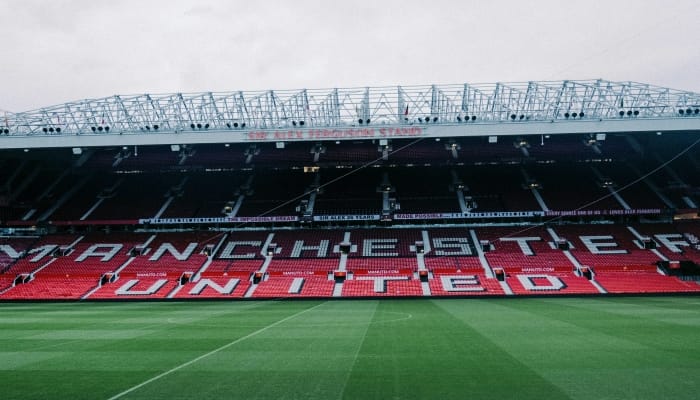
In the dim glow of Old Trafford’s floodlights, where ghosts of glory once danced, Ruben Amorim’s Manchester United tenure is starting to resemble a cautionary tale. It’s November 26, 2025, and the scars from Monday night’s 1-0 capitulation to a 10-man Everton side are still raw. Kiernan Dewsbury-Hall’s curling beauty in the 29th minute wasn’t just a goal; it was a dagger to the heart of a manager who arrived with the swagger of a tactical revolutionary, promising to drag United back to the summit. Instead, Amorim’s Reds laboured for 77 minutes against numerical odds, mustering the intensity of a pre-season friendly. Jordan Pickford, England’s No. 1 under Thomas Tuchel, repelled wave after tepid wave, while Idrissa Gueye’s bizarre red card for slapping teammate Michael Keane only amplified the farce. United, who entered the game three points off the top four, now languish in 10th, their five-game unbeaten streak shattered like the dressing-room TV Amorim once smashed in frustration.
This isn’t hyperbole; it’s the unvarnished truth of a campaign teetering on the brink. Amorim, the 40-year-old wunderkind who ended Sporting CP’s 19-year title drought, was hailed as United’s salvation when he replaced Erik Ten Hag last November. His 3-4-3 system—compact, pressing, positional—was meant to inject identity into a squad adrift. Yet, after 33 Premier League games under his watch, United have harvested just 34 points, a haul that screams mediocrity. The Everton loss, branded an “embarrassment” by Gary Neville and a tactical own-goal by Jamie Carragher, has ignited a firestorm of criticism. Fans are fleeing early, legends like Wayne Rooney are decrying regression, and whispers from Carrington suggest Amorim’s job hangs by a thread thinner than Luke Shaw’s injury updates. Is this the unraveling of a philosophy mismatched to its canvas, or merely a storm before the renaissance? As United stare down a Selhurst Park trip to Crystal Palace on November 30, let’s dissect the debris: the back-three folly, tactical stubbornness, substitution sins, squad fit, echoes of past managers, the dressing-room chill, fan fury, INEOS’s ticking clock, and whether top-four dreams are DOA—or if AFCON’s looming exodus will bury them deeper.
The Back-Three Enigma: Solid Foundations or Shifting Sands?
At the core of Amorim’s gospel is the 3-4-3, a shape he wielded like Excalibur at Sporting, yielding two Primeira Liga titles and a Champions League upset over Manchester City. It’s a system predicated on overloads, third-man combinations, and a high line that compresses space like a vice. Wing-backs surge, inverted wingers tuck in, and the front three press ruthlessly, turning turnovers into daggers. In theory, it’s poetry: proactive possession fused with defensive bite. But at United? It’s prose that’s devolved into drudgery.
Against Everton, the back three of Leny Yoro, Matthijs De Ligt, and Luke Shaw was a fortress without moat or drawbridge. United conceded just one shot on target from open play, yet their build-up was laboured, passing patterns rehearsed to death but executed with the fluidity of concrete. Everton, even reduced to 10, bypassed the press with long balls, exposing the high line’s Achilles’ heel: transitions. Gueye’s slap aside, David Moyes’s Toffees won 55% possession, a statistic that should haunt Amorim like a bad dream. Research from 21st Group underscores the mismatch—only three United players (De Ligt, Mazraoui, Martinez) have meaningful experience in a three-man defence, a hangover from Ten Hag’s back-four blueprint.
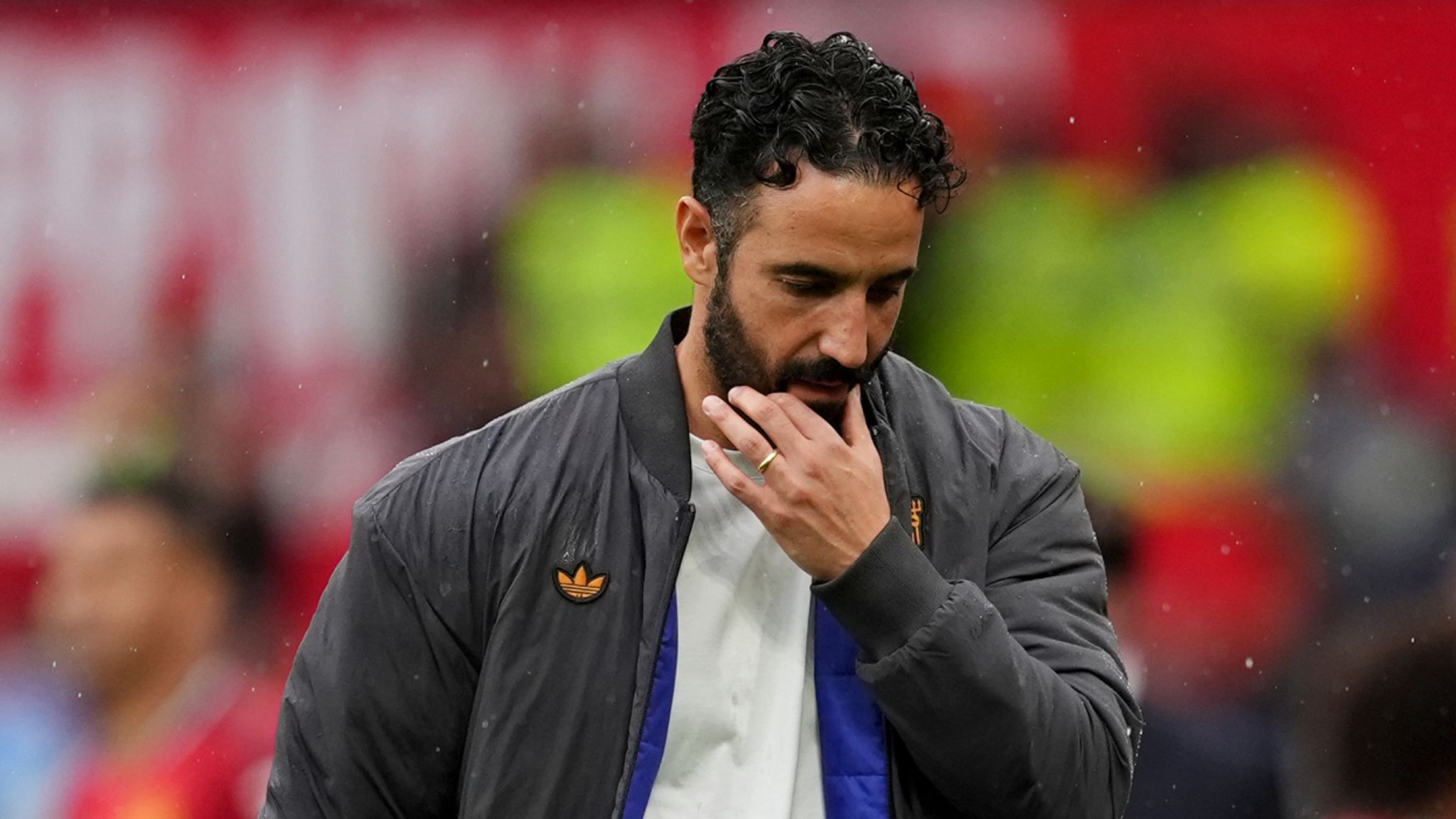
The numbers don’t lie. United rank 12th for possession (48.2%), 14th for progressive passes, and a woeful 18th for goals from open play (0.92 per game). At Sporting, Amorim’s sides averaged 1.8 goals per match; here, it’s 1.3, with set-pieces propping up the ledger. Critics like Rooney lambast it as “inflexible,” a rigid grid that stifles creativity. Yet, glimmers exist: the 2-1 Anfield heist in October showcased overloads dismantling Liverpool’s midfield. The issue? United’s squad isn’t built for it. Full-backs like Mazraoui and Diogo Dalot excel as wing-backs, but centre-halves like Maguire lumber, lacking the ball-playing nous of a Ruben Dias. Without summer bolsters (a Lecce wing-back Amorim craves), the system creaks.
Amorim defends it fiercely: “Their squad was built for this system,” he quipped post-Wolves loss last season, eyeing Palace’s similar setup. But as X users rage—”Amorim has as much imagination as a rock”—the back three feels less like a bedrock and more like quicksand.
Tactical Rigidity: The Stubbornness That Stifles
Amorim’s unyielding fidelity to the 3-4-3 borders on dogma. “I won’t change my philosophy; you’d have to change the man,” he declared after the Grimsby Carabao Cup debacle in August, a penalty-shootout loss to League Two minnows that echoed the Everton ignominy. In a league where adaptation is oxygen—think Arteta’s mid-game switches or Slot’s fluidity—this rigidity is asphyxiating. Against 10 men, why persist with a conservative pivot of Manuel Ugarte and Kobbie Mainoo, when a 2-3-5 overload could’ve buried Everton? Carragher nailed it on Monday Night Football: “Amorim’s credentials are questioned because he didn’t adapt.”
The Everton autopsy reveals the malaise. United’s press, once “ruthless,” yielded just 12 regains in the final third, per Opta—bottom-third in the league. Transitions exposed flanks, with wing-backs pinned back. Neville’s “complacency” charge stings because it reeks of Ten Hag’s later days: a system exposed, unadjusted. X sentiment echoes this—posts decry “no identity,” with fans pleading for the “mobile attack” of his Sporting vintage. Amorim’s retort? “We tried it at Anfield.” But one win doesn’t absolve a season of stasis.
This isn’t mere teething; it’s tactical myopia. In a Premier League where 70% of goals stem from open play, United’s rehearsed routines falter against low blocks. Everton parked the bus masterfully, and Amorim’s refusal to pivot—say, to a 3-4-1-2 with Bruno Fernandes as a free No. 10—left them punching fog.
Substitutions: Half-Time Heroics or Reactive Roulette?
Amorim’s use of the bench remains a glaring weakness, a double-edged sword that too often cuts United rather than the opposition. The halftime hook of Noussair Mazraoui—replaced by a peripheral Mason Mount who contributed nothing of note—was a damning admission that the first-half plan had already collapsed. Later changes (Casemiro off for Mainoo at 58’, Dorgu for Dalot) brought marginal energy but came far too late; with 77 minutes against ten men, United still managed only seven shots on target and an xG of 0.92. Amorim himself admitted, “We didn’t understand the moments of the game,” a phrase that sums up the reactive, hesitant substitutions that squandered a golden opportunity.
The problem runs deeper than timing. Publicly shredding Manuel Ugarte after the Europa League final loss to Tottenham fractured trust, while the current striker crisis—Matheus Cunha and Benjamin Šeško injured, Joshua Zirkzee toothless with 0.12 xG against Everton—leaves Amorim praying for inspiration. Rasmus Højlund’s possible January recall from Napoli feels like an emergency patch rather than a plan. Against Crystal Palace and with AFCON set to rob United of Mbeumo, Amad and Mazraoui for up to eight games, the bench must become a weapon, not a lottery. Right now, it’s the latter—and it’s costing points.
Philosophy vs. Personnel: A Mismatch Made in Transfer Hell?
Amorim’s ethos—compact defending, high pressing, youth integration—clashes with United’s DNA. Fernandes thrives as the inverted No. 10, but wingers crave width, not tucking in. Mbeumo and Amad fit the inverted mold, their five combined goals underscoring synergy. Yet, the spine—Ugarte’s “comfortable” lapses, Maguire’s distribution woes—sabotages it.
INEOS’s £250m summer splurge (Cunha, Mbeumo, Dorgu talks) aimed to retool, but it’s piecemeal. Amorim’s “biggest problem”? Doubt in the ranks, per his October admission. Shaw backs the “toxic” purge, but Rashford’s loan and exile and Hojlund’s ousting bred resentment. The philosophy fits on paper; in practice, it’s a square peg in United’s round hole.
Echoes of the Past: Mourinho’s Shadow, Ten Hag’s Ghost
Amorim’s arc mirrors Jose Mourinho’s: early promise, then siege mentality. Like Jose’s 2016-18 slide—tactics rigid, dressing room divided—Amorim’s “worst team in history” barb post-Brighton (3-1 loss, TV smashed) evokes the Special One’s paranoia. Ten Hag’s high-line press crumbled under injuries; Amorim’s high back three fares no better, with 14 goals conceded from counters.
Van Gaal’s 2015-16 back-three experiment yielded fourth but bored fans to tears—Amorim risks the same apathy. Solskjaer’s pragmatism won hearts; Amorim’s idealism alienates. The pattern? United devours visionaries, spitting out husks.
| Manager | System | Peak Position | Key Failing | Amorim Parallel |
|---|---|---|---|---|
| Van Gaal | 3-4-3/4-3-3 | 4th (2015-16) | Tactical boredom | Rigid shape stifles flair |
| Mourinho | 4-2-3-1 | 2nd (2017-18) | Dressing-room rift | Public player call-outs |
| Ten Hag | 4-3-3 | 3rd (2022-23) | Injury vulnerability | High line exposed |
Dressing-Room Chill: From Jubilation to Jitters
October’s Anfield dressing-room revelry—players high-fiving after ending a 10-year drought—feels like ancient history. Now, it’s frosty. Amorim’s leadership group (Fernandes, Maguire, Heaton, Martinez, Mazraoui, Dalot) aims for unity, but Ugarte’s evisceration “rippled” the squad. Post-Everton, Amorim envied Gueye’s “fight,” wishing his lot scrapped like that—minus the red. Sources whisper “crisis of confidence,” with some fearing resignation over adaptation. Yet, Mbeumo and Cunha’s arrivals lifted spirits, per insiders. Keane’s warning post-Anfield—”Keep going”—looms large.
Fan Fury: From Chants to Complaints
Old Trafford’s Stretford End, once Amorim’s choir, now murmurs dissent. Post-Everton X erupts: “Embarrassing… ashamed,” one fan laments; another: “No identity, fans leaving early.” Chants persist, but apathy creeps—echoing the Grimsby exodus. United fans, scarred by cycles of hope and heartbreak, demand results. Palace offers redemption; failure there? Pitchforks sharpen.
INEOS’s Impatience: Vision or Vendetta?
Sir Jim Ratcliffe’s cabal—Omar Berrada, Jason Wilcox—envisioned a “clear path” via redundancies and youth. But with United eyeing relegation whispers, pressure mounts. INEOS backs Amorim publicly—talks for Dorgu, midfield pleas—but whispers of successors (Iraola, Glasner) circulate. Ratcliffe’s “future-proof” mantra clashes with legends’ alienation; Keane threatens touts over tickets. Expect January action—a midfielder like Lamine Camara—to appease.
Palace Pivot: What Must Improve?
Selhurst Park, November 30: a cauldron where Palace thrive against “Big Six” sides, unbeaten in four vs. United. Dean Henderson’s shutouts haunt; United’s away drought since 2020 persists. Improvements? Intensity first—Amorim’s bugbear. Press higher, win duels (United lost 52% vs. Everton). Subs proactive: unleash early. Adapt: if Palace low-block, switch to 3-4-1-2. Zirkzee must menace; without Cunha/Sesko? Prediction: 2-1 United, but only if Amorim bends.
Top-Four Hopes: Withered or Winnable?
Pre-Everton, United eyed fourth at 4/1 odds, three points adrift. Now? Supercomputer tips tenth—No Champions League once again , no European football. With 26 games left, 70 points beckon, but big games loom. No Europe aids recovery, per pundits. Still time? Yes—if Amorim evolves. But regression risks fifteenth redux.
Everton’s Exposé, AFCON Avalanche: Problems Piling
The Everton loss laid bare frailties: no focal point without Cunha/Sesko, press bypassed, fight absent. Gueye’s fire? United’s spark? Extinguished. Now, AFCON (Dec 21-Jan 18) exacerbates: Mbeumo (5 goals), Amad (key creator), Mazraoui (versatile cover) depart, missing up to eight games (Villa, Bournemouth, West Ham, Wolves, etc.). Amorim begs delays, but FIFA’s Dec 8 deadline bites. Academy call-ups (Mainoo elevated) loom, but “struggle” is his word. This exodus could crater top-four bids, turning Palace into a must-win.
Amorim’s United isn’t doomed—yet. The Everton humiliation was a mirror, reflecting flaws but also potential. Palace demands reinvention: adapt, ignite, unite. Fail, and the criticism swells to a roar. Succeed, and redemption beckons. In football’s cruel theatre, the Portuguese poet must pen his epic—or exit stage left. Old Trafford waits, impatient as ever.