A Club on the Brink: Rising Tension Between Ruben Amorim and Jason Wilcox Exposes Manchester United’s Deepening Structural Crisis
The smiles have disappeared, January optimism has faded, and tension is growing behind the scenes at Manchester United. Ruben Amorim’s strained relationship with Jason Wilcox is not just a personal clash—it is a warning sign of deeper structural failures that could define the club’s future.
Manchester United do not implode overnight. They erode slowly, quietly, often behind carefully managed public messaging. By the time tension becomes visible to the outside world, the damage is usually already well underway.
That is why the growing strain between Ruben Amorim and Jason Wilcox should not be dismissed as routine workplace disagreement. The absence of smiles on the touchline, the unusually downbeat tone in press briefings, and the increasingly pessimistic messaging around January transfers are not isolated incidents. They are signals—clear ones—that something fundamental is no longer aligned at the heart of the club’s football operation.
While both men remain in constant dialogue, reports that those conversations have become increasingly “fraught” tell their own story. Dialogue without resolution is not progress. It is stagnation. And stagnation is where Manchester United have repeatedly found themselves over the past decade.
The real concern is not whether Amorim and Wilcox disagree. Disagreement is healthy. The concern is that Manchester United once again appear to have created a structure where disagreement cannot be resolved constructively—only endured until one party breaks.
When Optimism Fades: How the Amorim Project Lost Its Early Momentum
Ruben Amorim did not arrive at Old Trafford without scrutiny. His appointment was framed as a bold step toward modernity, a coach with a defined philosophy, tactical clarity, and a track record of building cohesive, aggressive teams. From the outset, the messaging was about alignment. United would finally move away from reactive decision-making and toward a coherent football vision.
Jason Wilcox’s role was central to that narrative. As a senior football executive, he was meant to be the bridge between vision and execution, ensuring recruitment, squad planning, and long-term strategy supported the head coach rather than constrained him.
For a brief period, that alignment appeared real. Public appearances were warm. Communication was frequent. There was a sense—at least externally—that Manchester United had learned from past mistakes.
But football clubs are judged not by words, but by actions. And gradually, the cracks began to show.
Amorim’s recent public comments marked a clear tonal shift. Gone was the quiet confidence. In its place came realism laced with frustration. When a manager starts openly questioning whether his system is realistic within the club’s financial and structural constraints, it is rarely a spontaneous admission. It is usually the culmination of repeated private conversations that have failed to deliver clarity or reassurance.
January Transfers and the Moment the Illusion Cracked
January transfer windows often expose the truth behind a club’s ambitions. For Manchester United, this one has done exactly that.
Amorim’s update on potential incomings did not sound like a manager managing expectations. It sounded like a man preparing the ground for disappointment. There was no sense of a clear plan unfolding, no conviction that weaknesses would be addressed decisively. Instead, there was an implicit acceptance that the squad he inherited may largely be the squad he must endure.
This matters deeply because Amorim’s tactical model is not flexible by accident. It is precise by design. His preferred structure requires specific player profiles—particularly in wide areas and central defence. That reality was known long before he signed his contract. It was analysed, debated, and publicly discussed.
So when that same structure is now described as financially or practically unrealistic, it raises an uncomfortable question: was this ever properly planned?
Either Manchester United recruited Amorim without fully committing to the demands of his system, or they promised backing they were never prepared to deliver. Both scenarios reflect poorly on the club’s governance, not the coach.
The Shadow of Dan Ashworth and a Pattern United Cannot Escape
This is where the parallels with Dan Ashworth’s departure become impossible to ignore.
Ashworth did not leave because he lacked competence or vision. He left because Manchester United failed to provide a functional environment in which football professionals could operate with clarity and authority. Reports at the time pointed to blurred responsibilities, internal resistance, and strategic disagreements that could not be resolved.
Fast-forward to the present, and the same themes are re-emerging.
If Amorim is now experiencing similar friction—uncertain influence over recruitment, competing priorities within the hierarchy, and constraints that undermine the very philosophy he was hired to implement—then the issue is no longer individual failure. It is institutional repetition.
Manchester United have become adept at cycling through talented people without ever fixing the structure that causes their exits. That is not bad luck. It is a systemic flaw.
Assigning Blame Misses the Point—but Responsibility Still Matters
It is tempting to frame this situation as a clash of personalities. That would be convenient, but inaccurate.
Ruben Amorim carries responsibility, as all managers do. He accepted the challenge knowing the scale of the rebuild and the club’s recent instability. His insistence on tactical purity, while admirable, inevitably narrows his margin for error in a league as unforgiving as the Premier League.
However, managers should be judged on whether they are supported to succeed, not whether they survive by abandoning their principles.
Jason Wilcox, for his part, occupies a role that demands balance. He must operate within financial realities while still enabling football progress. If his decisions are perceived as restrictive rather than supportive, trust inevitably erodes. A football director cannot function effectively if the head coach views him as an obstacle.
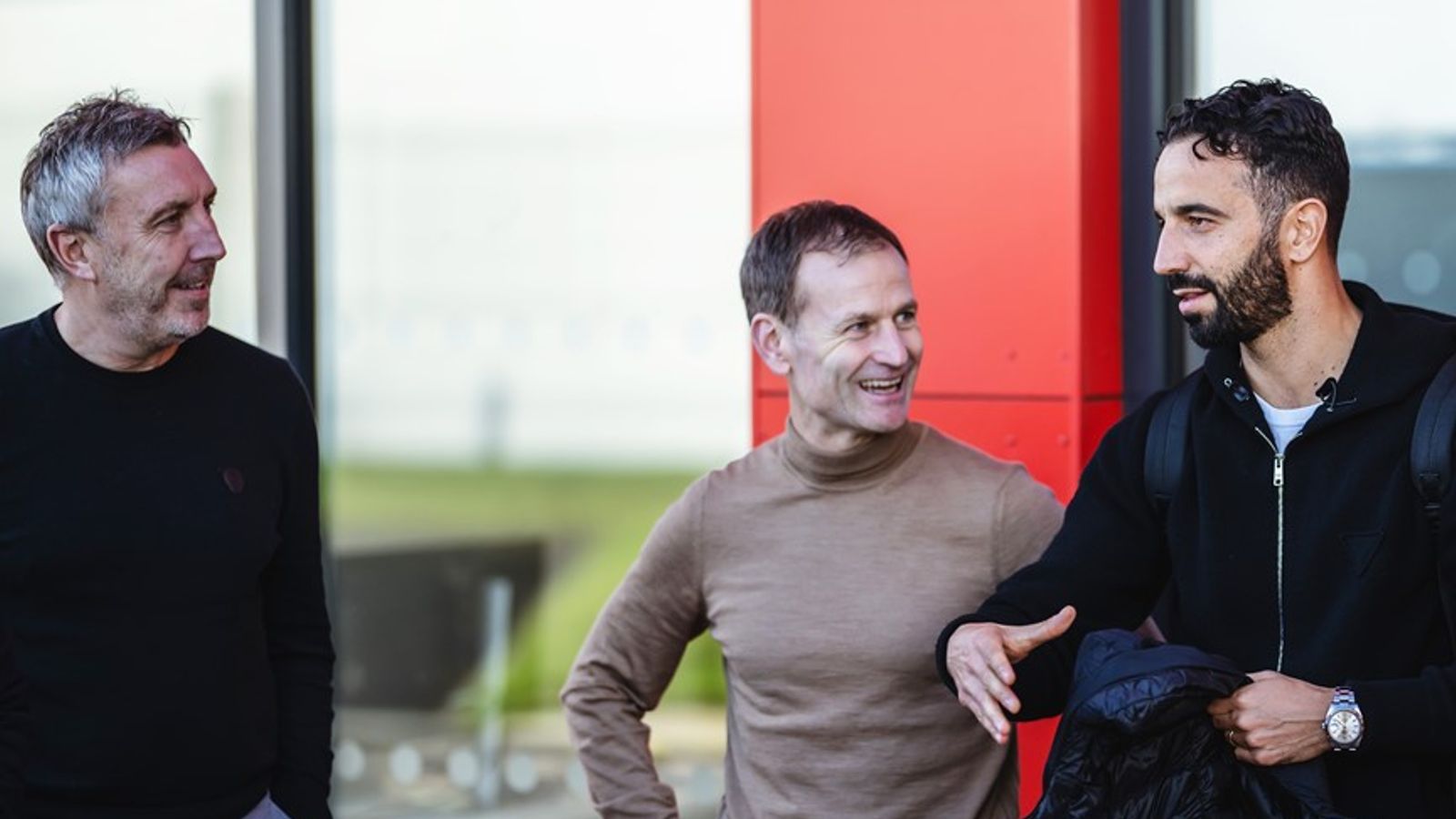
Yet focusing solely on these two individuals misses the larger truth. Manchester United’s hierarchy has repeatedly failed to define clear lines of authority, coherent long-term planning, and genuine accountability. Until that changes, every relationship at the top of the football department will eventually fracture.
Is Ruben Amorim Already on Borrowed Time?
Publicly, there is no indication that Manchester United are preparing to move on from Amorim. Privately, however, history offers a sobering lesson.
At this club, managerial exits rarely begin with sackings. They begin with erosion. Erosion of authority. Erosion of confidence. Erosion of belief.
When a manager’s transfer requests are diluted, when public messaging becomes cautious, and when narratives subtly shift toward portraying the coach as inflexible or unrealistic, the foundations begin to crumble.
Amorim does not need to lose the dressing room to be in danger. He simply needs to lose the backing of the structure above him. Once that happens, results become secondary. The outcome becomes inevitable.
On-Field Consequences: How Structural Tension Translates Into Performances
Players are acutely sensitive to instability. They hear the whispers, read the subtext, and feel the uncertainty long before supporters do.
When tension exists between a manager and the club’s hierarchy, it manifests in subtle but damaging ways. Commitment wanes. Tactical conviction softens. Players begin to hedge, unsure whether the system they are being asked to execute will still exist in six months’ time.
Recruitment paralysis compounds the problem. Existing weaknesses remain unaddressed, while competition for places stagnates. Over time, performances suffer—not because players lack ability, but because belief erodes.
Manchester United’s recent inconsistencies cannot be divorced from this context. Footballing chaos rarely exists in isolation.
Off the Pitch: The Cost to United’s Reputation
Manchester United are not just rebuilding a squad; they are attempting to rebuild credibility. Stories of internal tension undermine that effort.
Elite coaches and executives observe how clubs treat their people. They note whether visions are supported or undermined. If United continue to develop a reputation for internal conflict and strategic confusion, attracting the right leaders becomes increasingly difficult.
This is not merely about Amorim or Wilcox. It is about whether Manchester United can convince the football world that they are finally serious about structural reform.
Where Is Manchester United Really Heading?
The tension between Ruben Amorim and Jason Wilcox is not an isolated episode. It is a reflection of a club still wrestling with its identity.
Manchester United stand at a junction. One path leads toward genuine modernisation, where football decisions are aligned, authority is respected, and projects are allowed to mature. The other leads back to the cycle of short-term fixes, scapegoating, and perpetual rebuilds.
Which path they choose will determine not just Amorim’s future, but the club’s trajectory for years to come.
A Warning United Cannot Ignore
Manchester United have been warned before. They ignored those warnings, and paid the price repeatedly.
The rising tension between Ruben Amorim and Jason Wilcox should not be sensationalised, but it must be taken seriously. It is not about personalities. It is about whether this club has finally learned how to support a football vision—or whether it remains trapped in patterns it refuses to confront.
If nothing changes, the question will not be if Amorim leaves, but when. And when that happens, Manchester United will once again find themselves asking the wrong questions, having failed to answer the right ones in time.