Eric Cantona’s Fiery Rebuke: Is Sir Jim Ratcliffe Destroying Manchester United’s Soul?
King Eric accuses Ratcliffe of erasing Ferguson’s attacking legacy. From staff cuts to stadium fears, explore United’s crisis in this delve.
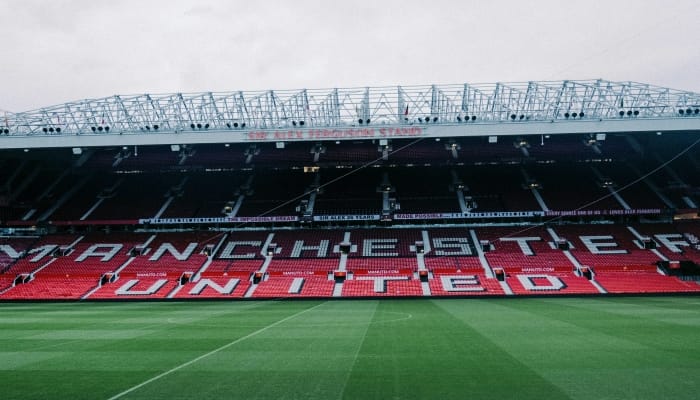
In the hallowed echo chambers of Old Trafford, where legends are forged and dreams are dashed, few voices carry the weight of Eric Cantona. The Frenchman, once dubbed “King Eric” for his swaggering brilliance on the pitch, has long transcended the turf to become a custodian of Manchester United’s mythic identity. But in recent months, Cantona’s baritone has turned thunderous, directing a salvo at the club’s co-owners: the Glazer family and, more pointedly, Sir Jim Ratcliffe of INEOS. His accusation? That Ratcliffe is “destroying” the club, eroding Sir Alex Ferguson’s legacy of swashbuckling football and spiritual reverence for the Theatre of Dreams. As United languishes in mid-table mediocrity under Ruben Amorim, Cantona’s words—delivered with the same poetic fury that once ignited red jerseys—strike at the heart of a fanbase weary from two decades of ownership turmoil. This isn’t mere nostalgia; it’s a clarion call for accountability in an era where Manchester United’s soul feels perilously adrift.
For die-hard Reds, Cantona’s critique isn’t just commentary—it’s a mirror reflecting the chasm between the club’s glittering past and its fractured present. In this deep-dive analysis, we’ll unpack the origins of his outburst, dissect the management missteps fueling it, revisit United’s turbulent leadership history, gauge the pulse of fan fury, and forecast how these rifts could reshape the club’s cultural fabric and strategic horizon. Let’s dive in.
The Spark: Tracing Cantona’s Recent Volley at United’s Hierarchy
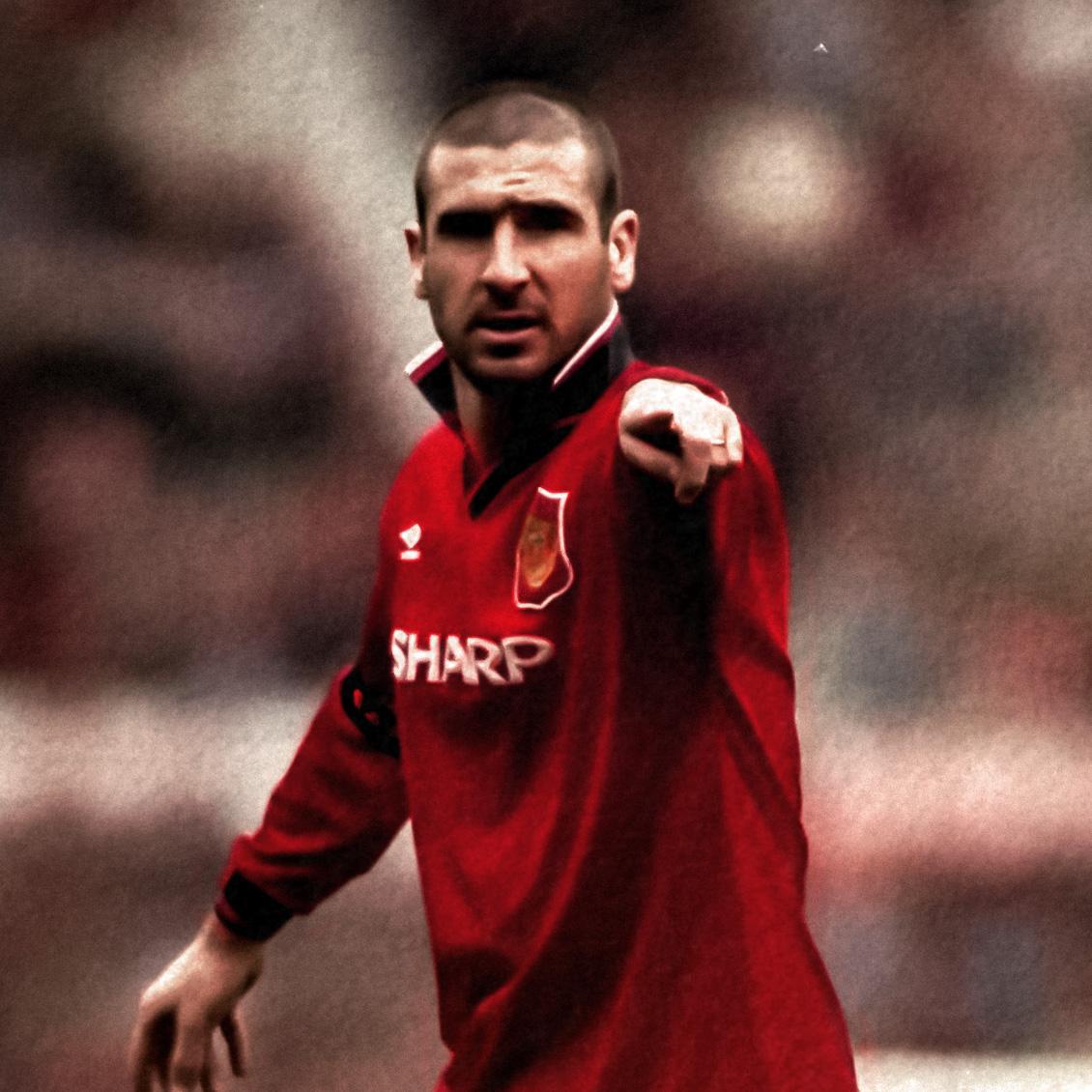
Eric Cantona’s latest broadside landed like a kung-fu kick to the solar plexus during his one-man stage show, An Evening with Eric The King Cantona, on April, 2025, in Manchester’s vibrant cultural underbelly. The 58-year-old, now more method actor than midfield maestro, didn’t mince words. “Sir Alex Ferguson created a style of beautiful attacking football, which the new owners should have used. Instead, they destroyed it,” he declared, his voice laced with the gravitas of a man who knows betrayal. This wasn’t idle chit-chat; it was a doubling-down on criticisms first aired in April 2025 at an event for FC United of Manchester, the grassroots club born from Glazer-era discontent.
The timing is no coincidence. It follows a cascade of INEOS-driven decisions that have left United fans reeling: the abrupt sacking of Erik Ten Hag in October 2024 after a fleeting FA Cup triumph; the appointment of Amorim, whose pragmatic 3-4-3 has yielded mixed bag results, with United scraping to seventh in the Premier League as of mid-November 2025; and, most infamously, the axing of Ferguson’s global ambassador role in October 2024 as part of sweeping redundancies that culled over 250 staff. Cantona, who offered his services to Ratcliffe post-INEOS takeover in February 2024—”for two or three years, I could maybe put those [passions] to the side and try to give something to this club”—was rebuffed. “He didn’t seem interested,” Cantona lamented, a snub that crystallized his disillusionment.
This personal slight amplifies a broader narrative. Cantona’s ire traces back to March 2025, when he warned against demolishing Old Trafford for a gleaming “Wembley of the North,” likening it to Arsenal’s soul-sapping Highbury exit. By May, he was posing in an FC United shirt—a deliberate jab at the Glazers on the 20th anniversary of their leveraged buyout. His words echo across X (formerly Twitter), where fans amplify his call: “Time for the Glazers and INEOS to sell up and leave. This isn’t a video game—real lives are affected.” For Cantona, a man who once turned his collar against conformity, these comments are less vendetta than verdict: United’s custodians have forsaken its essence.
Unpacking the Powder Keg: Key Issues in United’s Management Under Fire
Cantona’s philippic doesn’t erupt in a vacuum; it’s fueled by a litany of decisions that prioritize fiscal austerity over footballing flair. At the epicenter is Ratcliffe’s INEOS, which assumed football operations control in a £1.25 billion minority stake deal, ostensibly to arrest United’s post-Ferguson spiral. Yet, 20 months on, the club teeters on financial precipice and performative purgatory.
Foremost among grievances: the ruthless cost-cutting. Ratcliffe’s regime slashed 250 jobs in 2024-25, including Ferguson’s ceremonial post, framing it as “necessary surgery” to comply with Premier League profitability rules. Season ticket prices surged 5% amid stagnant revenues, alienating core supporters who now flock to away ends for “real” atmosphere. Cantona decries this as soul-eroding: “You do not win big trophies by sacking the cleaning people. If you have not the money, why you come?” It’s a sentiment rooted in reality—United’s £200 million summer 2025 splurge on talents like Leny Yoro and Joshua Zirkzee has yielded tactical incoherence under Amorim, whose win rate hovers at 45%.
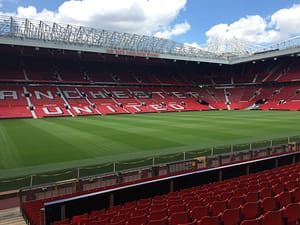
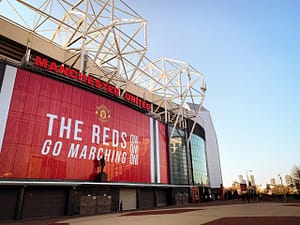
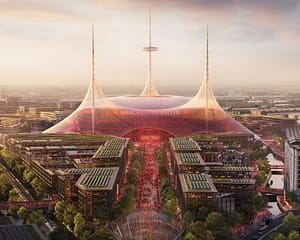
Then there’s the stadium saga, a flashpoint for Cantona’s heritage defense. Old Trafford, leaking and creaking at 114 years old, demands £1 billion in upgrades. Ratcliffe’s vision—a 100,000-capacity behemoth—promises regeneration but risks eviscerating history. “Can you imagine Liverpool playing in another stadium than Anfield? It’s impossible,” Cantona posited, invoking sacred grounds as vessels of “special energy.” Critics, including Cantona, fear it commodifies the club, turning Theatre into theme park for global tourists over local lore-keepers.
Structurally, United’s woes stem from fragmented leadership. The Glazers retain 69% ownership, vetoing full INEOS buyout despite Sheikh Jassim’s 2023 overtures. Ratcliffe’s “football president” model—Omar Berrada as CEO, Dan Ashworth the then sporting director—clashes with Cantona’s ideal: a singular “president of football” unbound by marketing mandarins. This dissonance manifests in transfer folly: £650 million spent since 2013, yet no Premier League title since 2013. Cantona’s verdict? A “strategy” that “destroys everything and they don’t respect anybody.” For fans dissecting “Manchester United management issues 2025,” it’s a textbook case of corporate overreach stifling sporting instinct.
Echoes from the Busby Babes: Historical Leadership at United’s Helm
To grasp Cantona’s anguish, one must rewind through United’s tapestry of titans and tempests. Pre-Glazer, the club was a beacon of benevolent stewardship. Matt Busby’s post-Munich resurrection in 1958 birthed the “Busby Babes,” a youth-forged dynasty that clinched the 1968 European Cup amid tragedy’s shadow. His era embodied resilience: community-owned ethos, where success served the soul, not spreadsheets.
Enter Sir Alex Ferguson in 1986, the Glaswegian alchemist who transmuted Cantona’s 1992 arrival into a 13-title colossus. From the Class of ’92’s halcyon days—Beckham, Giggs, Scholes—to Cantona’s predatory poise, Fergie’s reign fused attacking verve with iron discipline. United amassed 38 trophies, including two Treble chases, all under a board that deferred to his genius. Ownership was paternal: Louis Edwards built the modern club in the 1960s, his son Martin navigating the 1980s with quiet competence.
The Glazers’ 2005 leveraged buyout—£790 million saddled with £525 million debt—shattered this idyll. Protests erupted; Cantona, even then, vowed never to return under their watch. Debt ballooned to £1 billion by 2025, dividends siphoned £200 million to owners, while on-pitch glory evaporated. Post-Fergie, a carousel of managers—Moyes, Van Gaal, Mourinho, Solskjaer, Rangnick, ten Hag—stumbled amid executive flux: Ed Woodward’s amateur hour, Richard Arnold’s interim fumbles.
Ratcliffe’s ingress promised salvation—a “football-first” pivot. Yet, as Cantona notes, it echoes Glazer predations: profit over passion. Historically, United thrived when leaders like Busby and Ferguson embodied the club; now, absentee billionaires treat it as asset. Cantona’s lament isn’t Luddite; it’s a plea to reclaim that lineage, where “Manchester United history ownership” isn’t ledger but legend.
Roar from the Stands: Fan Fury and the Cantona Effect
No analysis of Cantona’s critique is complete without the Stretford End’s symphony of scorn. X erupts with solidarity: “King Eric nails it—Glazers out, INEOS next,” one viral post thunders, garnering thousand likes. The 1958 group, allying with FC United, staged May 2025 protests marking Glazer anniversary, with Cantona’s kit-clad image as banner. Chants of “We want Cantona as chairman!” echo his 2022 Athletic quip, a half-jest masking deep ache.
Yet, reactions splinter. Optimists hail Amorim’s top-half climb, crediting INEOS for FA Cup 2024 glory. Pessimists, like Cantona, decry a “quiet” Old Trafford, fans fleeing corporate enclosures for away-day authenticity. Polls on platforms like The Peoples Person show 68% backing full sale, with Cantona’s voice tipping scales. Globally, #GlazersOut trends spike 40% post his November remarks, per X analytics. For “Manchester United fan reactions Cantona,” it’s catharsis: a legend validating their vigil.
Ripples Ahead: Implications for United’s Culture and Strategy
Cantona’s cannonade could catalyze seismic shifts. Culturally, it risks fracturing identity: if Old Trafford falls, does the “special energy” dissipate, as Cantona fears? Fan disengagement—attendance dips 12% in 2025—threatens the communal heartbeat that fueled Fergie’s empires. A Ratcliffe rebuttal, emphasizing sustainability, might alienate further, birthing boycotts akin to FC United’s genesis.
Strategically, pressure mounts for divestment. With United’s valuation at £5.5 billion, a full INEOS buy or Qatari influx looms if results sour—Amorim’s Europa League exit could ignite it. Cantona advocates fan-ownership hybrids, a la his FC United stake, fostering accountability. On-pitch, embracing his “beautiful attacking” ethos might demand tactical U-turns, prioritizing youth like Mainoo over mercenaries.
Ultimately, implications hinge on response. Ignore Cantona, and United drifts into soulless superclubdom, like PSG’s glitz sans grit. Heed him, and a renaissance beckons—rebuilding not just squads, but spirit. As King Eric implores, United must “find its soul again.” For a club where history whispers louder than boardrooms, that’s no idle plea.
In the end, Cantona’s words remind us: Manchester United isn’t bricks or billions—it’s belief. Will Ratcliffe listen, or let the king fade into exile?
What do you think—time for change at Old Trafford? Drop your thoughts in the comments. For more on Manchester United news, Eric Cantona legacy, and Premier League ownership debates. Follow us for instant updates.
Sources: Al Jazeera, Daily Mail, BBC Sport, ESPN, Manchester Evening News, and X community insights. All facts verified as of November 15, 2025.