Ultimate Forex Trading Guide for Beginners and Intermediate Traders: Master Forex Trading in 2026
Poor risk management and a lack of discipline—not poor strategies—are the main reasons why most forex traders lose money. With stop-losses, 1% risk guidelines, and a tried-and-true 12- to 24-month route to steady gains, this 2026 guide shows you how to trade more wisely.
Millions of people throughout the world are still drawn to forex trading because it offers freedom, high liquidity, and the possibility of significant rewards. This thorough forex trading book offers useful, step-by-step insights, regardless of whether you’re an advanced trader trying to hone your edge or a total novice investigating forex trading for the first time.
You’ll discover a practical route to profitability, tried-and-true risk management techniques, and the inner workings of the FX market. By the time it’s over, you’ll know why the majority of forex traders lose money and how discipline sets the winners apart. Let’s get started and lay the groundwork for your profitable FX trading.
What Is Forex Trading and How Does the Forex Market Work?
The art of purchasing and selling currencies on the international market in order to benefit from price swings is known as foreign exchange trading, or forex trading. With daily trade volume over $7 trillion (and estimations reaching $9.6 trillion during peak periods), it is the largest financial market on Earth. The forex market is open around-the-clock, five days a week, in major financial hubs like London, New York, Tokyo, and Sydney, in contrast to stock markets that close at night. Forex trading is perfect for traders with full-time jobs or flexible schedules because of its constant accessibility.
Currency pairings are at the heart of forex trading. You constantly exchange one currency for another, such as the most popular pair, EUR/USD (euro vs. US dollar). The strongest currencies in the world are included in major pairings like EUR/USD, GBP/USD, and USD/JPY, which also have the narrowest spreads and most liquidity. Exotic pairings, like USD/TRY, couple a major currency with one from an emerging country, whereas minor pairs (crosses), like EUR/GBP, do not include the USD. Since majors usually move more reliably, it is crucial for beginners in forex trading to comprehend these categories.
Spreads and leverage are two essential strategies that every trader has to understand. The difference between the bid (sell) and ask (buy) prices that your broker quotes is known as the spread. During peak hours, spreads on key pairs often run from 0.5 to 2 pip, with a pip being the smallest price shift (typically 0.0001).
When you first start trading forex, concentrate on low-spread pairings because wider spreads on exotics raise your trading expenses. Leverage increases your purchasing power. For example, with 50:1 leverage, which is typical in the United States, $1,000 may control $50,000. In forex trading, leverage increases possible gains but also increases losses. Because excessive use causes quick account blowouts, regulators restrict it at 30:1 in Europe and 50:1 in the US. When trading forex, always consider leverage to be a two-edged sword.
Types of Forex Trading: Scalping, Day Trading, and Swing Trading
Not every way of forex trading suits every personality or way of life. Early selection of the appropriate kind enhances consistency and reduces frustration. Scalping is making dozens or hundreds of transactions per day while only holding positions for a few seconds or minutes. Scalpers use 1-minute or tick charts to target small price movements (1–5 pips), depending on ultra-low spreads and heavy leverage. Beginners in forex trading find this high-intensity method difficult due to transaction costs and emotional exhaustion, but it works well for traders who can stare at screens all day and thrive on adrenaline.
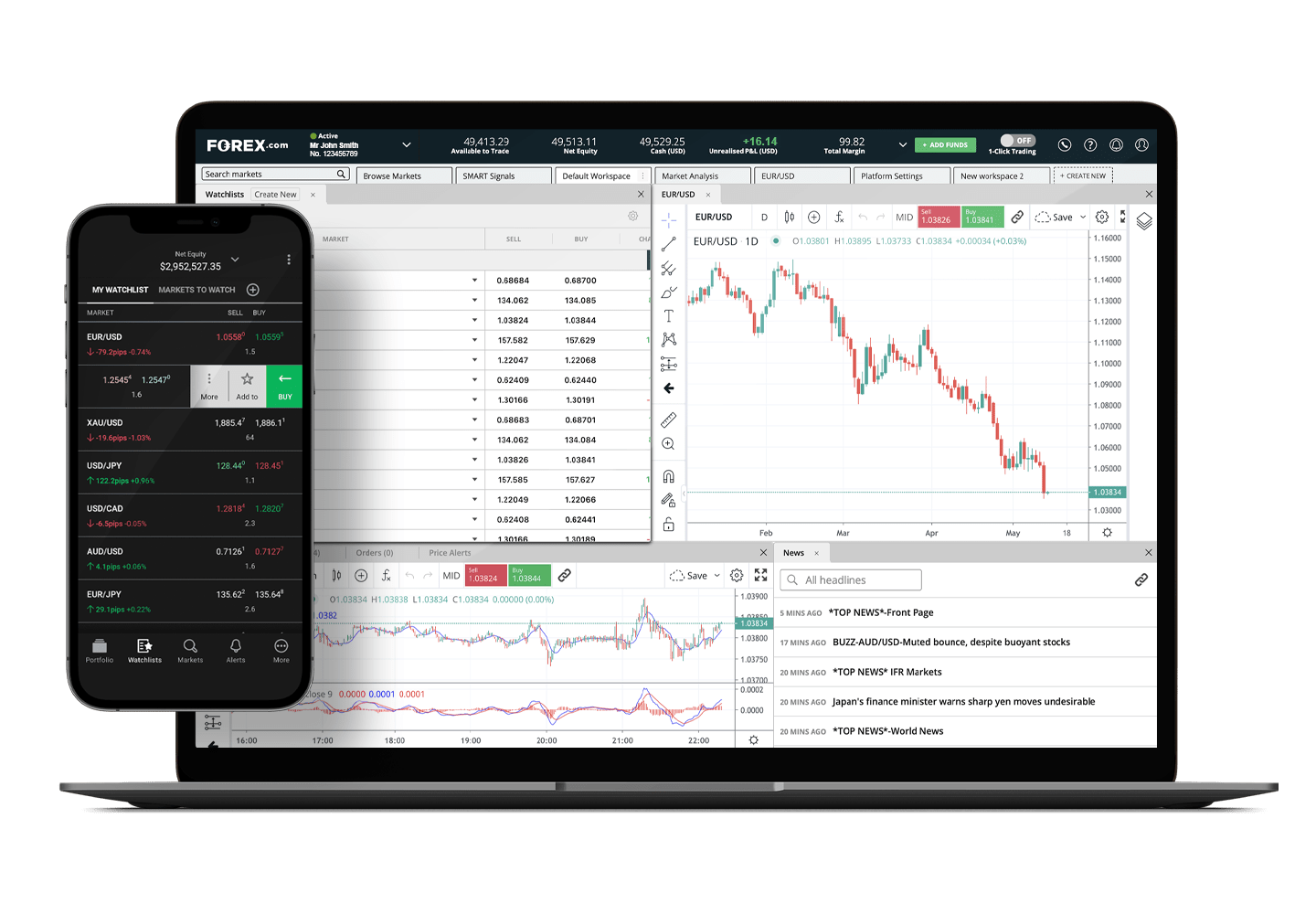
Day trading closes all positions before the market turns over at 5 p.m. ET, keeping positions active for just one session. In order to identify 20–100 pip movements, day traders examine 15-minute to 4-hour charts using technical indicators like moving averages and RSI. Day trading is popular among intermediate forex traders with daytime availability since it eliminates nighttime gaps and unexpected news. To avoid overtrading, nevertheless, it need intense concentration and fast decision-making.
Swing trading adopts a more laid-back strategy, holding deals for a few days or weeks. Daily or 4-hour charts are used by swing traders to ride bigger movements that are fueled by fundamentals like economic data or interest rate decisions. Because it only takes 30 to 60 minutes of analysis every day, this approach is ideal for time-pressed professionals. Higher reward-to-risk ratios and less screen time are what make swing trading in forex trading so appealing, but you have to put up with overnight danger from weekend gaps. After becoming disciplined in forex trading, many effective intermediate traders mix components, beginning with swing trading and then experimenting with day trading.
Risk Management Strategies in Forex Trading: Stop Loss, Position Sizing, and Beyond
The foundation of sustainable forex trading is risk management; without it, even the best strategy fails. The golden rule is to never risk more than 1-2% of your entire account on a single trade. This formula helps you survive losing streaks: Position size = (Account balance × Risk percentage) ÷ (Stop-loss distance in pips × Pip value). If you have a $10,000 account with a 50-pip stop on EUR/USD (pip value $10 per standard lot), you trade only 0.2 lots. Intermediate traders scale this up only after demonstrating consistency.
In forex trading, stop-loss orders cannot be negotiated. To limit losses at your predetermined risk level, place them automatically when you initiate a transaction. When the price goes in a favorable direction, trailing stops allow winners to run by raising the stop. Using a minimum 1:2 risk-reward ratio, risk 1% to make 2%, combine stops with take-profit goals. Because of this imbalance, you may earn overall even if you only win 40% of deals.
Other tactics include avoiding trading during significant news unless you are an expert in it and diversifying across three to five uncorrelated pairings. Keep track of each deal in a notebook, noting the risk taken, the rationale, and the result. To improve your forex trading advantage, review every week.
How to Choose the Best Forex Broker for Trading
Your experience in forex trading may be made or broken by the broker you choose. Put regulation first above anything else. Seek out brokers who have been approved by reputable organizations, such as CySEC in Europe, ASIC in Australia, FCA in the UK, or CFTC/NFA in the United States. These authorities avoid the terrifying tales of unregulated platforms disappearing with deposits by enforcing separated customer funds, negative balance protection, and public reporting. For 2026 compliance, check the broker’s license directly on the regulator’s website.
Next, assess the state of the market. Compare commissions (if any), maximum leverage that corresponds to your region, and spreads (less than 1 pip on EUR/USD during London/New York overlap). Because of its bespoke indicators, backtesting, and mobile apps, MetaTrader 4 or 5 continues to be the industry standard for novice forex traders. Reputable brokers provide free demo accounts, quick execution (less than 50 ms), and round-the-clock assistance.
Examine recent customer evaluations that highlight slippage during volatility and withdrawal quickness. Steer clear of brokers that urge excessive leverage or promise “guaranteed profits”, these are warning signs. To experience forex trading with little real-money risk right away, start with a registered broker that offers micro-lots.
Step-by-Step Guide to Placing Your First Forex Trade
Forex trading guide
Are you prepared to carry out? To start trading forex safely, adhere to this precise procedure. This is a complete guide for beginners forex trading.
Create and validate an account. Get the MT4/5 full KYC and use virtual money to finance it.
Examine the market. Use a combination of basic (economic calendar) and technical (candlestick patterns, support/resistance) techniques. Determine the direction of the trend throughout the time period you have selected.
Utilizing the previously described 1% risk criteria, determine position size. Based on previous fluctuations, establish stop-loss and take-profit levels.
Put in the order. In the market watch, right-click the pair, pick “New Order,” select Buy or Sell, enter lot size, and set stop-loss/take-profit. Click OK after confirming.
Keep an eye on and control. Your stop-loss should never be moved farther away. Exit and record the outcome once the price reaches take-profit or stop.
Examine. Examine victory rate and risk-reward after 20 to 30 transactions. After you’ve been profitable on demo for at least two months, only then should you move to live trading.
This repeatable process builds muscle memory essential for all levels of forex trading.
Why Most Forex Traders Lose Money: The Real Reasons Revealed
70–90% of retail forex traders routinely lose money, according to industry figures. Approximately 75–85% of regulatory disclosures are made by brokers and organizations such as the FCA; this percentage will remain constant until late 2026. The unpleasant reality? Losses are not caused by “rigged markets” or broker manipulation theories, but rather by human behavior.
Over-leverage and inadequate risk management are the main actual causes. In an attempt to make rapid money, traders risk 10% to 20% on each deal, which can result in account-killing hits. Impulsive entry motivated by FOMO or revenge trading following losses result from the absence of a stated trading plan. The harm is exacerbated by emotional choices, changing stops, and averaging down lost positions.
Overtrading and fatigue are caused by unrealistic expectations (dreaming of 100% monthly profits). Instead of viewing forex trading as a skill-based industry, many novices treat it like gambling and forego education. Oversized positions are forced by undercapitalization, and mistakes cannot be learned if a log is not kept. Despite a wealth of free materials, statistics continue to be depressing due to these self-inflicted mistakes.
Why Discipline and Risk Management Matter More Than Strategy in Forex Trading
Forex risk management. In forex trading, a successful strategy by itself makes no assurances. Without discipline, you may have a 60% win-rate method and lose everything. Average techniques become wealth-building through risk management and emotional control. Think about two traders who are utilizing the identical moving-average crossover: Trader A consistently earns 1-2% monthly gain while taking a 1% risk on each trade and strictly adhering to the guidelines. Trader B pursues losses, takes a 10% risk, and blows up in a matter of weeks. The distinction? self-control.
Maintaining discipline entails following your strategy even when the market puts your patience to the test. Instead of “making it back,” it entails leaving after reaching your daily loss limit. This is enforced via risk management through the objective size of positions and the mechanical use of stops. Regardless of the sophistication of their approach, winners uphold rigorous guidelines, according to studies of thousands of accounts. Psychologically savvy intermediate traders outperform those constantly adjusting indicators. Consistency consistently outperforms genius in forex trading.
A Realistic Path to Profitability in Forex Trading: Timeline and Expectations
Profitable forex trading. It is possible to do forex trading profitably, but it requires patience and reasonable expectations. The majority of novices require three to six months to learn the fundamentals of demo mastery and testing techniques. Make the switch to live trading with $500–$2,000, taking a 0.5% initial risk as you gain confidence. Treat the first six to twelve months of life as education rather than income, and anticipate little losses as tuition.
It usually takes 12 to 24 months of intentional practice to achieve true consistency. At first, aim for 1–5% monthly returns; professional funds aim for 10–20% yearly. Only 10–20% of traders make it this far because they give up too soon. Monitor your progress using journal measures, such as increasing risk-adjusted returns, decreasing drawdowns, and increasing win rates. Once you have demonstrated six consecutive months of profitability, steadily increase your capital. Only when forex trading is treated like a vocation, with constant learning, community support, and strict discipline, does it become a feasible side gig.
Commit to the process by starting with a demo account today. Those who embrace the trip and respect risk are rewarded in forex trading. You now have the practical information to steer clear of typical errors and achieve long-term success in forex trading by using this guide as your road map. Trade wisely, maintain self-control, and observe how your abilities develop over time.