Leeds United vs Manchester United: Roses Rivalry Derby Pre-Match Analysis
Leeds United host Manchester United at Elland Road in a high-stakes Roses derby. With Leeds unbeaten and United struggling for consistency, this pre-match analysis breaks down tactics, form, psychology, and what could decide the game.

The Premier League returns to Yorkshire this weekend for one of its most historic fixtures, as Leeds United welcome Manchester United to Elland Road in the renewed Roses rivalry derby. While this is a matchup steeped in history, the context surrounding the two sides in the early weeks of 2026 adds layers of intrigue. Leeds arrive on the back of a gritty, goalless draw at Anfield against Liverpool, a performance that reinforced their defensive credibility and resilience. Manchester United, in contrast, limp into the fixture after a frustrating 1-1 draw with Wolves at Old Trafford, highlighting a squad struggling to find consistency, rhythm, and defensive stability.
This is far more than a typical mid-table contest. It is a collision of momentum versus reputation, tactical structure versus individual quality, and psychological readiness versus historical expectation. For Leeds, the opportunity to challenge a traditionally dominant United side at home offers both prestige and practical points in the fight to consolidate mid-table security. For Manchester United, the fixture represents a litmus test of their form, mentality, and ability to impose themselves away from Old Trafford under Ruben Amorim, particularly while missing key personnel.
Leeds United: Defensive Grit and Tactical Discipline
Leeds’ recent performances have been defined by discipline rather than flair. Their goalless draw at Anfield, where they frustrated one of the league’s most potent attacking sides, highlighted a team that has found coherence under Daniel Farke. The back three, often marshaled by Pascal Struijk and supported by disciplined wing-backs, has reduced vulnerabilities in central areas, while their midfield screen ensures the defensive lines remain compact and cohesive. Leeds’ defensive metrics have improved markedly; they are now difficult to break down and rely on positional awareness and collective effort rather than aggressive pressing, which minimizes exposure on the counter.
Yet Leeds’ strength is not purely defensive. They have found a route to goals through the form of Dominic Calvert-Lewin, whose ability to hold up play and attack aerial balls provides a crucial focal point. Leeds’ attacks are often initiated through direct transitions, exploiting space behind opposition defenses and using the pace of wide players to stretch the field. While they may not dominate possession, they maximize efficiency through structured attacking phases and intelligent movement. Their set-piece organization has also been a consistent threat, offering a practical source of goals when open-play creativity is limited.
Despite this solidity, Leeds have limitations. Their creativity beyond Calvert-Lewin is sporadic, and they often rely on transitional bursts rather than sustained territorial pressure. Injuries to key squad members, while managed, continue to restrict tactical flexibility, which could become significant against a technically gifted United side.
Manchester United: Inconsistency and Structural Vulnerability
Manchester United enter this fixture as slight favorites on paper but with several underlying issues that make them vulnerable. The draw with Wolves at Old Trafford was emblematic of United’s inconsistency this season. After taking the lead through Joshua Zirkzee, they conceded late at halftime, revealing recurring defensive lapses and a tendency to falter under transitional pressure. The pattern is clear: United attack with intent but occasionally lack the cohesion to control games once the opposition adjusts, particularly when defending leads.
Injuries and absences exacerbate these vulnerabilities. Ruben Amorim’s side will be without Bruno Fernandes, Kobbie Mainoo, and Matthijs De Ligt, and Harry Maguire, reducing leadership, defensive organization, and creative threat. Without these players, United’s midfield can lack tempo and penetration, while the backline becomes more exposed to set pieces and fast breaks—two areas where Leeds are particularly dangerous.
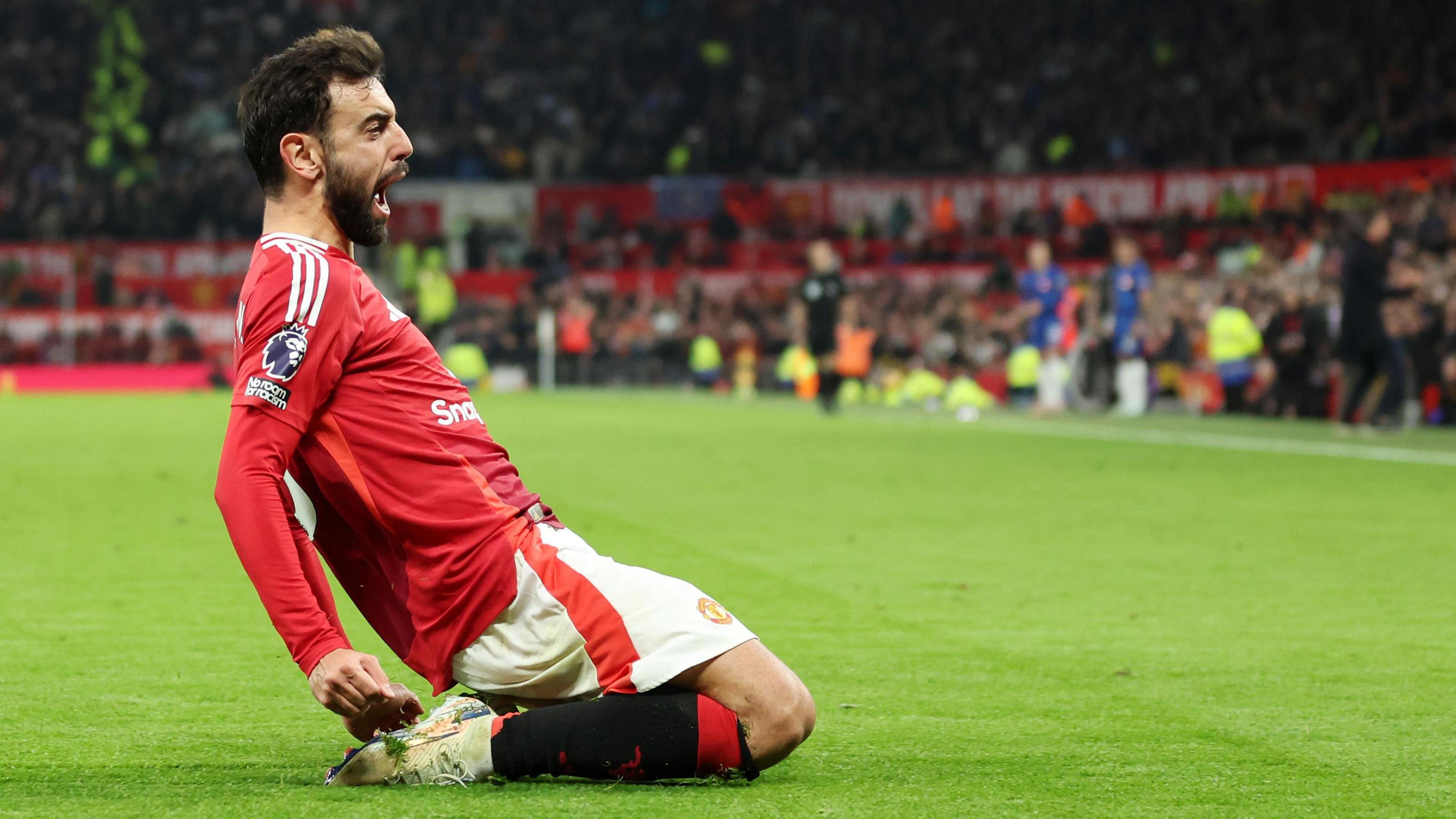
Manchester United’s attacking structure is capable but fragmented. They generate shots and create chances, yet when facing disciplined, compact units like Leeds, patterns can become predictable. Without a controlled tempo or incisive link-up play, United may struggle to convert possession into quality opportunities. Defensively, they are among the more porous top-six sides in recent months, making them susceptible to Leeds’ direct and transitional attacks.
Tactical Considerations: How the Match May Play Out
The tactical battle between these two sides will likely hinge on several key factors. Leeds’ compact defensive shape aims to force United wide, slow the tempo, and limit penetration through the middle. The effectiveness of their back three, combined with disciplined midfield coverage, could frustrate United’s attempts at possession-based dominance. If Leeds can disrupt United’s rhythm and capitalize on transitional moments or set pieces, they can realistically take points at home.
United, for their part, must control tempo, vary their attacking patterns, and maintain defensive vigilance. Over-reliance on individual moments or one-dimensional attacks will play into Leeds’ defensive setup. The absence of key playmakers adds another layer of complexity, as Amorim will have to find alternatives to link midfield and attack efficiently. Failure to do so could see United hemmed into prolonged periods without clear-cut opportunities.
The game’s psychological dynamics are equally critical. Leeds enter with confidence, riding the momentum of an unbeaten streak and bolstered by a passionate home crowd. United, meanwhile, are under pressure to win away and prove consistency, but recent draws and defensive fragility have placed added mental strain on the squad. This divergence in psychological readiness may influence the tempo, risk-taking, and decision-making on the pitch.
Historical Context and Head-to-Head
Historically, Manchester United dominate the Roses rivalry, with Leeds rarely breaking through in the Premier League era. Only once in the last 19 league encounters has Leeds emerged victorious, emphasizing the long-term numerical advantage United hold. However, these statistics do not fully account for the current season’s tactical trends and form trajectories. Leeds’ improved defensive coherence and unbeaten momentum provide them with a platform to challenge United in ways that historical data alone cannot predict.
Moreover, the fixture carries narrative weight. For Leeds, any positive result is both a statement and a continuation of a mid-table consolidation strategy. For United, a win is expected, but the fixture will be remembered if the side underperforms or concedes points to a historically inferior opponent.
Player Battles to Watch
Several key duels may dictate the outcome:
- Dominic Calvert-Lewin vs United’s makeshift defense: Calvert-Lewin’s aerial ability and hold-up play could expose United’s weakened central pairing, particularly on transitions and set-pieces.
- Midfield battle: United rely on Ugarte and Casemiro for balance, but Leeds’ disciplined midfield coverage can neutralize passing lanes, forcing United to play laterally rather than vertically.
- Wide confrontations: Leeds’ wing-backs versus United’s wingers will be pivotal. Success here can allow Leeds to create overloads, while United must exploit any space left behind defensive lines to unlock chances.
Possible Scenarios
Three likely scenarios emerge for this fixture:
- United narrowly win: If they manage to impose possession, maintain defensive concentration, and convert key moments, United can edge Leeds in a tight, low-scoring encounter.
- Draw: The most probable outcome if Leeds execute their defensive game plan effectively while United fail to break through compact lines. A 1-1 or 0-0 scoreline reflects tactical parity and current form.
- Leeds upset: Less likely but not impossible, especially if United’s defensive lapses coincide with clinical finishing from Leeds’ forwards. Set-pieces and transitional breaks may decide the game.
Predictive models suggest United as favorites, but the margin is narrow, reflecting both Leeds’ current momentum and United’s inconsistencies. This is a contest where strategy, psychology, and execution will matter more than historical reputation.
The Tactical and Psychological Battle That Will Decide the Roses Derby
The Roses rivalry derby is far from a foregone conclusion. Manchester United’s quality and depth give them a theoretical edge, but Leeds’ tactical discipline, unbeaten momentum, and home advantage make them genuine contenders for at least a point. United will need to control tempo, vary attacking patterns, and remain vigilant defensively to succeed, while Leeds must maximize transitions, set-pieces, and disciplined defensive phases.
Ultimately, this match promises a tactical and psychological duel, one where history, momentum, and strategy converge. United cannot afford complacency, and Leeds will play with confidence and purpose. Whether the result is a narrow win for United, a tactical stalemate, or a surprise home victory, fans should expect a fiercely contested encounter defined as much by structure and discipline as by individual brilliance.