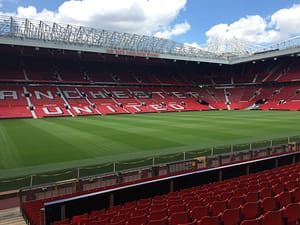
Manchester United vs Sunderland: Mount and Sesko Shine in Crucial 2-0 Victory | Old Trafford Relief
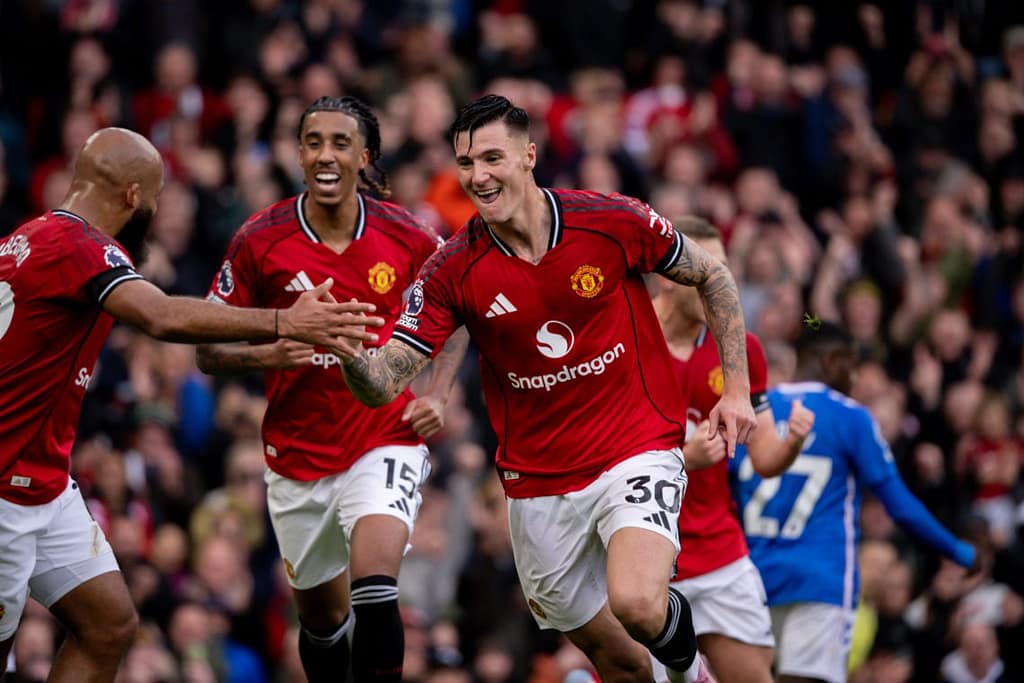
Benjamin Sesko celebrating a goal
Manchester United vs Sunderland ended 2–0 at Old Trafford as Mason Mount and Benjamin Sesko sealed a crucial win for Ruben Amorim’s side, easing pressure and restoring confidence after a turbulent start to the season.An early composure from Mason Mount and a prosaic, clinical finish by Benjamin Sesko gave United a two-goal cushion inside the first half; the second period was characterised more by game management than expansion, but a composed debut from new goalkeeper Senne Lammens and a disciplined defensive performance helped preserve a clean sheet. The result eases the pressure on manager Ruben Amorim — at least for the short term — while highlighting the work still required if United are to build sustained momentum this season. Reuters+1
Match summary — key moments and the tactical picture
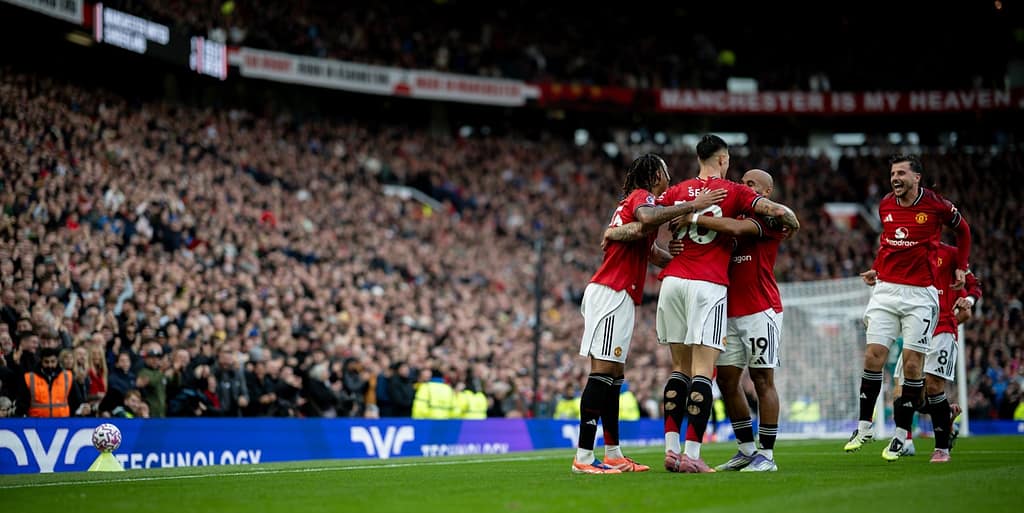
The decisive moments came in the first half. United took the lead inside the opening quarter of an hour when Mason Mount collected play in a congested area, showed calm in front of goal and finished low past the Sunderland goalkeeper to settle an edgy Old Trafford crowd. The goal changed the tone: United’s press became more structured, their midfield triangles moved with purpose, and they forced Sunderland to chase the ball rather than create sustained pressure of their own. Reuters.
On 31 minutes United doubled their advantage. From a period of good pressure and a throw into the box, Benjamin Sesko reacted quickest to poke home from close range — a simple but vital striker’s finish that made the result look considerably more comfortable than the overall balance of the game suggested. Sunderland were unusually unlucky with the disallowed penalty call before half-time (VAR intervened), a moment that might have shifted the game had it been awarded. After the second goal, United largely controlled tempo through Bruno Fernandes and Mason Mount, while using the width of their wing-players to pin Sunderland back. Premier League+1
Tactically Ruben Amorim set his team up to press aggressively in phases while relying on compact midfield support to recycle possession. The front three rotated intelligently to create passing lanes; Bruno acted as the creative hub from half-spaces and Mount provided late runs into the box. Defensively, United relied on disciplined lines and physical centre-back work to snuff out Sunderland’s direct moments. The second half saw United cede territory at times as they shifted into possession management mode — inviting more crosses and moments of pressure — but the backline and debutant goalkeeper stood up when required. Opta Analyst+1
Key match statistics
Below are the headline metrics that shaped the result:
- Final score: Manchester United 2 — Sunderland 0. Manchester United
- Possession: Manchester United ~51% — Sunderland ~49%. Ladbrokes
- Shots (total): Man United ~15 — Sunderland ~8; Shots on target: Man United 6 — Sunderland 3. ESPN.com
- Passes (approx.): United 445 — Sunderland 416 (reflecting United’s small edge in control and forward intent). Ladbrokes
- Corners: United 2 — Sunderland 3. Ladbrokes
- Expected goals (xG): Match xG data showed a narrow advantage to United, indicating the win was marginally deserved but not overwhelming. (Detailed Opta/Analyst match centre available for deeper breakdown). Opta Analyst
The statistical picture shows a balanced game on paper: a tight possession split and relatively modest shot volumes. What separated the sides was finishing efficiency, defensive organisation, and a VAR intervention that preserved United’s two-goal lead. Reuters
Player ratings (Manchester United — out of 10)
Senne Lammens (GK) — 7.5
A calm debut. Lammens claimed crosses confidently and produced a crucial late save to ensure a clean sheet — a composed introduction to life at Old Trafford. Reuters
Right / Centre backs — Diogo Dalot & Matthijs de Ligt — 7.0 / 7.0
Dalot offered energy and useful forward thrusts; his involvement in the second-goal sequence (throw in) proved decisive. De Ligt was steady, won aerial duels and organised the backline. Reuters
Left side & full-back rotation — Luke Shaw / Yoro — 6.5 / 6.5
Shaw provided support in possession and phases of constructive passing; Yoro delivered physicality and was dependable when called on. Manchester United
Midfield — Casemiro / Bruno Fernandes / Mason Mount — 6.0 / 7.0 / 8.0
Casemiro did the dirty work but picked up a booking and had moments of loose distribution. Bruno remained the creative fulcrum and linked play well. Mason Mount was the standout: he scored a composed opener, linked play intelligently and provided leadership — earning Man of the Match plaudits in many reports. The Guardian+1
Wide attackers / forwards — Bryan Mbeumo / Benjamin Sesko — 7.0 / 7.5
Mbeumo caused problems in one-on-one situations and supplied quality service for the opener. Sesko finished clinically for his goal and worked hard to hold up play and bring others into the attack. Reuters
Substitutes (impact): The bench helped shore up midfield and saw United manage the final stages without unnecessary risk; tactical changes were conservative but effective in preserving the clean sheet. ESPN.com
Post-match reaction — what was said
Ruben Amorim struck a cautious tone after the game: he praised the players for their fight in decisive moments while acknowledging the team’s inconsistencies and the need for more sustained performances. He described the win as important for calming a “tense” period and stressed that results must be followed by improvements in rhythm and execution. Reuters
Mason Mount was unequivocal in backing his manager and the squad’s cohesion — telling reporters the dressing room were “100% behind” Amorim and stressing the importance of unity and consistency as United head into a pivotal stretch of fixtures. That public show of support from a senior, influential player will be noted by pundits and boardroom observers alike. The Guardian
Other players echoed relief at returning to winning ways and highlighted defensive discipline as a positive; Sunderland’s manager, meanwhile, criticised his side’s poor start and inability to turn spells of possession into clear scoring opportunities. Reuters
What the result means for Ruben Amorim’s project
Context matters: Amorim arrived under high expectation and has faced intense scrutiny following a difficult run of results. This victory does two important things for him:
- Short-term breathing space. The tangible outcome — a clean sheet and two different goalscorers on home soil — reduces immediate negative noise and gives Amorim time to work and implement corrections. Media and pundit narratives immediately framed the win as easing pressure on the manager. Reuters
- Evidence of dressing-room backing. Public support from figures such as Mason Mount helps stabilise the environment; when senior voices publicly commit to the manager, it strengthens internal cohesion and can blunt external criticism. The Guardian
Caveats remain. Amorim himself highlighted inconsistency, and the team’s habit of becoming passive in parts of matches is a tactical problem that will be exposed by elite opponents. In short: the win is meaningful, but not definitive. Sustained improvement — particularly in away performances and second-half tempo control — will be needed to convert temporary reprieve into long-term confidence and success. Opta Analyst+1
League table — where this leaves United
The victory nudged Manchester United up to eighth place with 10 points after seven games (according to club and league publications on 4 October 2025). The table remains tight at this stage of the campaign; a couple of wins can yield significant upward movement, and likewise a short run of poor results can quickly drop a side down the standings. This is why consistent league form, not isolated victories, will determine the arc of Amorim’s season. Reuters+1
Looking ahead — Anfield next (Liverpool)
United’s next assignment is a daunting test at Anfield, where they face Liverpool following that club’s dramatic defeat to Chelsea at Stamford Bridge. Liverpool’s recent reverse — a late winner for Chelsea — underlines that even the top sides have vulnerabilities, but Anfield’s atmosphere and Liverpool’s quality still present a stern challenge. Amorim must ensure his side are mentally sharp, defend set pieces and transitions with maximum focus, and be willing to press aggressively to disrupt Liverpool’s play out from the back. Reuters+1
Tactically, United will benefit from attacking the wide spaces, getting their full-backs involved, and ensuring Bruno and Mount find pockets between Liverpool’s defensive lines. But above all, they must reduce sloppy, avoidable turnovers — those moments are where Liverpool can punish errors in a flash. The psychological uplift from the Sunderland win may help, but a markedly more assertive performance will be needed to take points from Anfield. Reuters+1
Final verdict — encouraging, but not a cure
Manchester United’s 2–0 win over Sunderland was the sort of result that can re-stabilise a club in transition: it brought a clean sheet, two different sources of goals and positive public backing for Ruben Amorim from senior players. Yet the match also underlined recurring issues — dips in tempo, moments of sloppy possession and the need for more consistent intensity across 90 minutes. If Amorim is to transform tolerance into long-term support, he will need to turn encouraging individual results like this into a sustained run of convincing performances. For now, the club and supporters can exhale — cautiously. Reuters+1
Sources & further reading
Reporting and stats used for this article were drawn from Reuters’ match report, Manchester United’s official match report, the Premier League match centre, ESPN match coverage and The Guardian’s post-match reaction. For deeper statistical analysis and xG breakdowns see The Analyst / Opta match centre. The Guardian+4Reuters+4Manchester United+4