Manchester United’s Commitment to Ruben Amorim: Backing Without Recruitment Is a Dangerous Gamble
Manchester United say they back Ruben Amorim — but backing without proper recruitment has doomed managers before. History may be repeating itself.
Manchester United’s decision to retain Ruben Amorim as head coach has been one of the most scrutinized managerial stories of the 2025–26 season. Despite poor results, mounting pressure from pundits and fan unrest, the club’s leadership — notably Sir Jim Ratcliffe and the INEOS football hierarchy — has publicly reiterated their support for the Portuguese manager. Yet on the pitch, United continue to struggle with inconsistent performances and an evident mismatch between squad capability and tactical demands.
At the heart of this debate is a question every United supporter fears: Can managerial backing alone salvage results, or does a lack of coherent recruitment undermine any long-term vision?
United’s Public Backing of Ruben Amorim
Continuous Support from the Board
Reportedly, Manchester United’s leadership has not shifted its stance on Ruben Amorim’s position. Renowned transfer journalist Fabrizio Romano confirmed that United “keep supporting Amorim’s work” and have made no internal moves at this stage to replace him despite disappointing results after and beyond the November international break. Tribuna
This retaining of faith reflects an organizational approach that prefers stability over knee-jerk reactions, with Ratcliffe reportedly keen to allow Amorim a full season to develop his ideas after a summer of heavy transfer spending. Sky Sports
Confidence Despite Mounting Pressure
Amorim himself appears unperturbed about his future, stating publicly that he is “not concerned” about his job security despite recent defeats, telling media he will work hard regardless of criticism. ESPN.com Additionally, his comments underline the risk he knowingly accepted when joining a club with immense pressures and little margin for error: “I know when I choose this profession that you have the risk of results and I understood my decision…without new signings it is a danger for a coach.” ESPN.com
The Contradiction at the Core: Backing Without Recruitment
It’s one thing for a club to publicly back its manager — and that appears to be happening — but another to provide the necessary tools for success. Amorim’s mission coincides with Manchester United’s ongoing struggle to build a squad reflective of his tactical approach.
Tactical Philosophy vs Squad Composition
Amorim is a manager defined by his tactical identity — flexible but rooted in controlled possession, positional play and a 3-4-3 formation. His sticklers for evolving this system are well documented, including a staunch refusal to abandon his tactical core even under pressure. ESPN.com
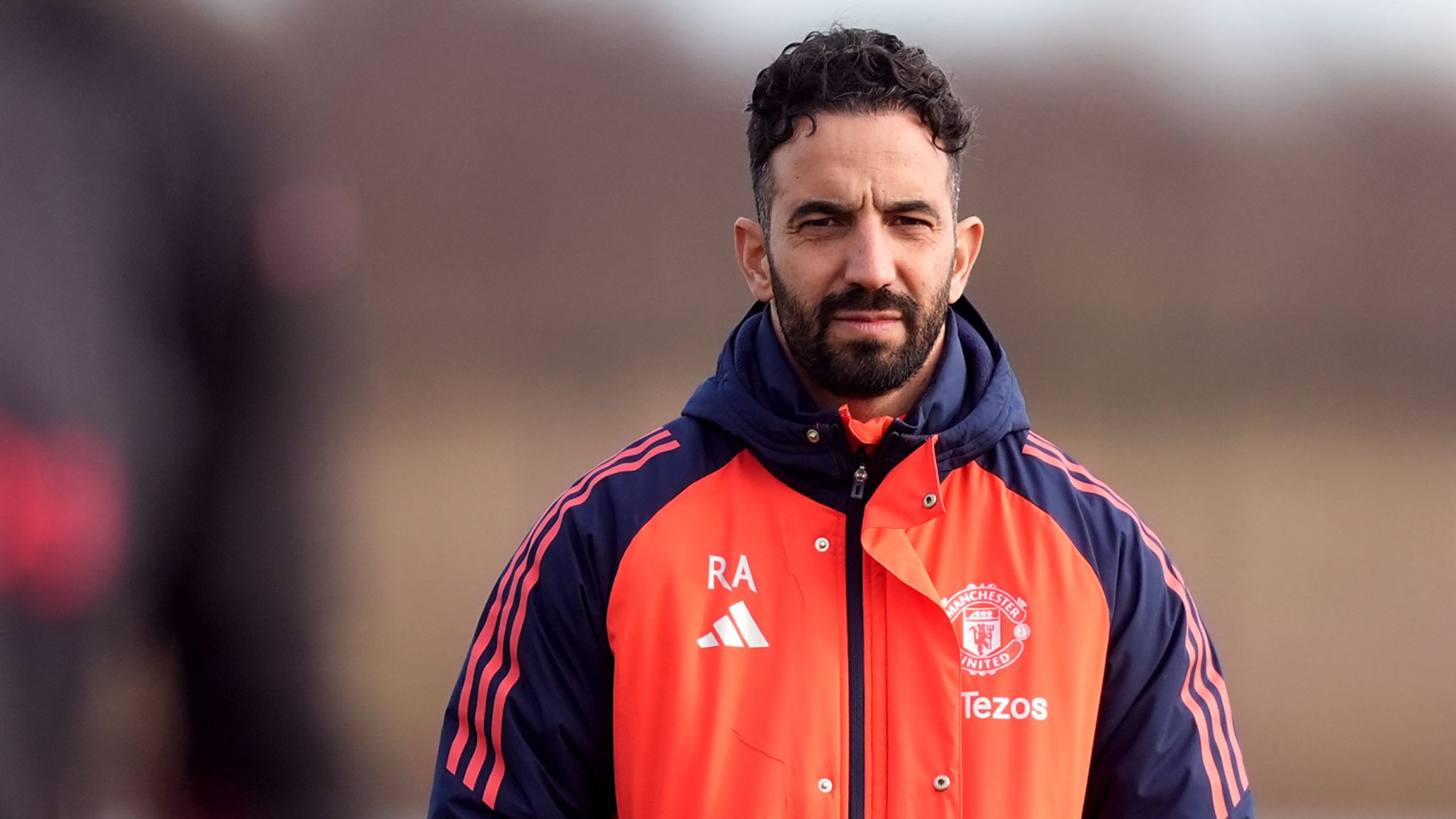
Yet the current Manchester United squad — assembled under previous regimes and devoid of key profiles tailored to execute Amorim’s system — remains a mismatch:
- Specialized Wing-backs: His preferred 3-4-3 relies heavily on wing-backs with elite physical and attacking traits. United’s options are not archetypal for this role, leading to tactical dilution and defensive vulnerabilities.
- Midfield Dynamics: Manchester United still lack a dynamic central midfielder capable of consistently enabling ball progression and defensive balance — an issue forcing coaches to use veteran Bruno Fernandes out of his ideal role. Forbes
- Goalkeeping Uncertainty: The goalkeeping situation remains in flux, with neither Lammens nor Bayındır providing consistent assurance — a stability issue from last season continuing into this campaign.
These structural problems are not anecdotal — they are tactical realities club analysts and journalists have repeatedly highlighted as a reason for United’s inconsistent performances.
Transfer Activity: A Mixed Picture
There has been some movement in the transfer market, but not necessarily enough to realign the squad with Amorim’s demands:
- January 2026 rumours point to Manchester United potentially pursuing important signings, and reports suggest that Amorim has green-lit major transfer deals. OneFootball
- Discussions around midfielder Carlos Baleba and defensive targets indicate United’s transfer focus is partially influenced by the head coach’s vision. Sports Mole
- TeamTalk reported United’s plans to target a high-impact Inter Milan player described as a “devastating force”, indicating board and manager may be aligned on recruitment priorities. TEAMtalk
- However, selling players before acquiring reinforcements and the desire to balance finances has limited United’s ability to bring in multiple elite options. Publicly, Amorim acknowledged that they need departures before strengthening. Reddit
Critically, while transfer links and plans exist, the volume and quality of incomings have yet to consistently reflect a decisive shift — a crucial gap amidst reports that the manager is still being backed.
Performance Metrics and On-Field Reality
Backing in abstract is one thing; results are another.
Inconsistency and Underachievement
Manchester United’s form under Amorim has been erratic at best, and poor at worst. The team dropped crucial points and suffered heavy defeats, prompting strong criticism from pundits like Jamie Carragher, who labeled the situation a “disaster… that has to end as quickly as possible.”
Their performance data also signals deeper performance issues:
- United lost 16 of Amorim’s first 41 games in charge at one point, showing a lack of cohesion and clear tactical identity. Reddit
- More recent matches show sporadic improvements — such as a Boxing Day win over Newcastle — but without consistent attacking potency or tactical clarity. This inconsistency underlines a central theme: support without results fractures credibility.
Fragmented Squad Support
The team’s internal dynamics reportedly reflect mixed sentiments as well. Some players publicly back him, while insider reports indicate dissatisfaction among others about tactical rigidity and role clarity.
The Kobbie Mainoo saga is one such example, where limited playing time has highlighted tension points between managerial decisions and player expectations — further complicating the narrative.
Financial Realities: Limits on Recruitment
Manchester United’s financial context cannot be overlooked.
Profit & Sustainability Pressures
The Telegraph and other reports indicate that under Sir Jim Ratcliffe and INEOS, United have emphasized cost-cutting and financial discipline to align with profit and sustainability rules. This translates to reduced transfer budgets relative to previous windows and heightens competition in pursuit of elite targets.
Thus, Manchester United’s apparent cautious approach is not merely strategic — it’s structurally compelled. While fans may see a lack of backing, the club is arguably trying to balance financial discipline with competitive ambition — a difficult tightrope at an elite level.
Manager’s Request vs Club Capability
Amorim has clearly articulated his need for investment in “big players” and described certain windows as “crucial”. Yet limited funds and player sales requirements have constrained the club’s response.
This constraint does more than slow progress — it forces painful choices: prioritizing tactical fit versus financial sustainability, or short-term fixes versus long-term development. Unfortunately for supporters, the priority pipeline has trailed behind expectations.
What This Means for United’s Project
Managerial Continuity vs Tactical Rebuild
United’s leadership is currently betting on continuity. They seem to believe that without a coherent tactical vision rooted in sustained backing, frequent managerial changes will only perpetuate instability. Amorim’s slightly improved metrics in underlying data — like shots and touches in key areas — may provide optimism behind the scenes, even if results don’t always reflect that.
This philosophy mirrors broader football trends: clubs increasingly weigh process metrics (tactical identity, expected goals, possession quality) alongside results. It’s a long-term mindset, but one that requires ruthless clarity on recruitment alignment.
The Transfer Imperative
However, every managerial strategy ultimately hinges on player recruitment:
- A manager’s identity must have the tools to realize it.
- Signing players misaligned with tactical needs weakens coherence.
- Failing to invest in key areas makes any philosophy vulnerable to collapse.
United presently teeters in this dangerous middle ground: backing a coach without adequately recruiting for his ideal system.
Backing Without Action Is Not Enough
Manchester United’s stance on Ruben Amorim reflects a genuine desire to break the cycle of hasty managerial changes. There is evidence of board support, a degree of tactical alignment, and public commitment even amid pressure. Yet backing without targeted recruitment is like prescribing medicine without dosage — the intent is there, but the impact remains questionable.
For Amorim’s tenure to be vindicated, United must:
- Invest strategically — Allocate transfer funds to secure players who fit the tactical system rather than merely big names.
- Clarify priorities — Ensure recruitment aligns with both immediate performance boosts and long-term structural needs.
- Build tactical consistency — Allow the manager to refine his identity, but with measurable benchmarks and genuine resources.
Without these steps, backing an underperforming manager risks becoming not an act of faith, but an expensive, prolonged mistake.