Manchester United vs Brighton: FA Cup Third Round at Old Trafford — A Tactical Examination of Identity, Instability, and the Fight for Direction
Manchester United host Brighton in the FA Cup at a moment of deep instability. We break down the tactics, the psychology, and what this match truly represents for a club still searching for direction.
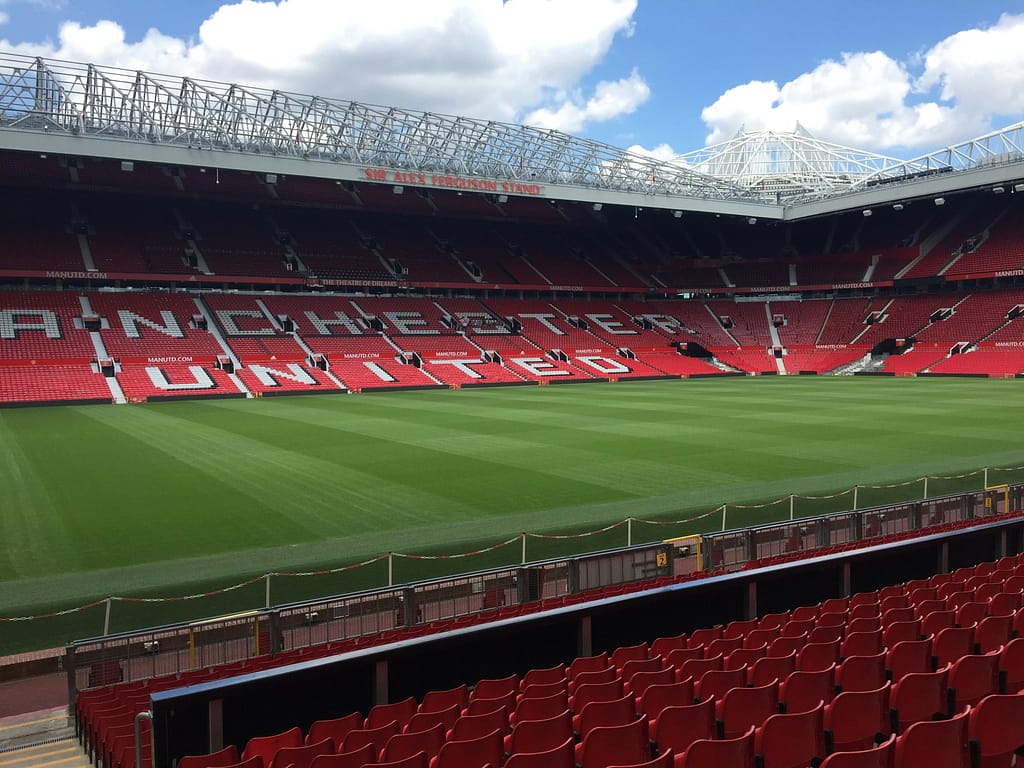
A Historic Stage, a Modern Crisis
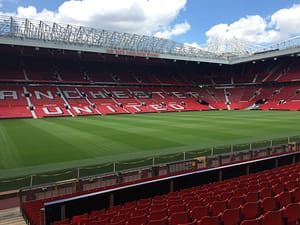
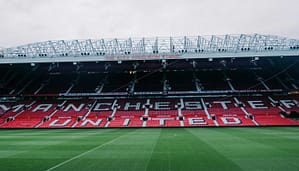
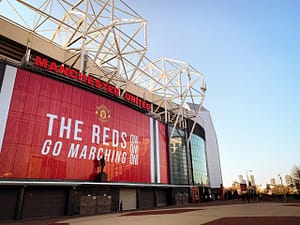
As the winter dusk settles over Old Trafford on Sunday evening, January 11, 2026, Manchester United once again step onto one of football’s most symbolically charged stages. The FA Cup third round rarely feels like an ordinary fixture for this club. It is woven into United’s mythology — from Busby’s rebuilding years to Ferguson’s relentless dynasties — and yet, in the present, it arrives carrying a very different emotional weight.
Brighton & Hove Albion are the visitors, but the spotlight is firmly on the hosts. This is not merely a cup tie. It is a temperature check on a club still reeling from managerial upheaval, still drifting through a season defined less by progress than by uncertainty. Only days after the dismissal of Ruben Amorim, United enter this match under the temporary guidance of Darren Fletcher, a familiar face now tasked with navigating an unfamiliar storm.
Brighton arrive in Manchester without the same historical burden, but with a clarity of purpose that increasingly defines modern Premier League success. Under Fabian Hürzeler, they have become a side comfortable with the ball, courageous without it, and increasingly unafraid of hostile stadiums. They come not as hopeful guests, but as structured competitors.
This match, then, is about far more than advancement to the fourth round. It is about direction. About whether United can extract coherence from chaos, and whether Brighton can once again demonstrate that organisation, not heritage, dictates modern football outcomes.
United After Amorim: The Vacuum of Yet Another Reset
The departure of Ruben Amorim felt less explosive than inevitable. When he arrived, he brought a defined footballing ideology and the promise of structural modernisation. What followed instead was a prolonged struggle between concept and context. His preferred back-three system never truly embedded itself within the squad. Players appeared uncertain of spacing, responsibilities shifted week to week, and United often looked like a team attempting to perform instructions rather than expressing instincts.
Results reflected that confusion. Draws replaced wins. Control dissolved into chaos. Defensive sequences became exercises in survival rather than systems of protection. When the club finally acted, it did so not to spark renewal, but to halt erosion.
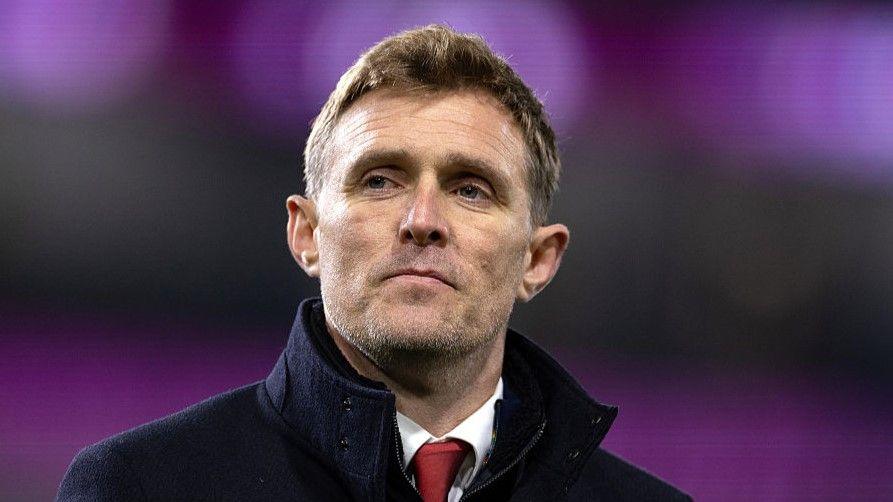
Darren Fletcher’s appointment as interim coach is significant precisely because it does not pretend to be revolutionary. Fletcher is not a grand-theory manager. He is a club figure, deeply embedded in Carrington’s ecosystem, familiar with the players, the politics, and the pressures. His presence offers something United have lacked: continuity without illusion.
His first match in charge, a 2–2 draw away at Burnley, was instructive. The result itself changed little, but the performance carried subtle meaning. The back three was abandoned. A back four restored natural reference points. Bruno Fernandes played higher. United were imperfect, but they were recognisable. In a season of blurred identity, that alone felt like progress.
This FA Cup tie becomes Fletcher’s first home examination. The roar, the scrutiny, the expectation. Interim managers often speak of “simplifying.” In United’s case, simplification is not tactical minimalism — it is emotional repair. The task is not to impose ideology, but to stabilise behaviour.
Brighton’s Journey: From Clever Project to Competitive Force
While United navigate yet another reset, Brighton continue a far quieter, far more coherent evolution. Under Fabian Hürzeler, their football has become increasingly mature. Where Brighton sides of recent seasons dazzled with invention, this iteration impresses with control. Their pressing is synchronised rather than reactive. Their possession is purposeful rather than ornamental. They understand not just how to attack, but how to manage games.
Their recent draw away at Manchester City served as a case study. Brighton were not passive. Nor were they reckless. They pressed in zones, retreated collectively, and countered with discipline. They looked like a team that trusts its structure.
That trust travels well. Brighton no longer approach fixtures like Old Trafford as exceptional events. They approach them as problems to solve. This psychological shift matters. It alters decision-making under pressure. It sharpens collective movement. It narrows emotional variance.
For all their technical quality, Brighton’s most dangerous attribute may be organisational belief. They arrive with the quiet confidence of a team that knows how it wants to play — and why.
Squad Context: Recovery for United, Continuity for Brighton
United’s team news reflects a squad slowly emerging from fragmentation. The returns of Bruno Fernandes, Mason Mount, and Kobbie Mainoo have restored options across the spine. Harry Maguire’s availability adds aerial presence and experience to a defence that has often lacked both. Yet the picture remains incomplete. Matthijs De Ligt’s continued absence limits structural rotation, while AFCON has deprived United of Noussair Mazraoui, Bryan Mbeumo, and Amad Diallo — players who offer balance, depth, and unpredictability.
What remains is a group in reassembly. Not broken, but not whole.
Brighton’s absences are fewer, and crucially, less disruptive to their systemic base. Solly March and Mats Wieffer remain sidelined, and Yankuba Minteh’s fitness will be assessed late, but the core of Hürzeler’s framework remains intact. That continuity enables rotation without reinvention. It allows Brighton to change personnel without sacrificing behavioural coherence.
This contrast underpins much of the tactical narrative. United will rely more heavily on individual initiative. Brighton will rely on collective execution.
Fletcher’s United: Structure Before Style
Fletcher’s likely continuation with a 4-2-3-1 is revealing. It is not adventurous, but it is functional. It offers natural defensive spacing. It allows defined midfield roles. It gives United a platform rather than a puzzle.
At its heart sits Kobbie Mainoo. United’s most important internal development in recent years, Mainoo brings qualities United’s midfield has too often lacked: spatial awareness, press resistance, and tempo intelligence. His ability to receive under pressure and play forward rather than sideways will dictate whether United build or merely recycle.
Alongside him, Fletcher will likely deploy a stabiliser rather than a creator. The aim is not to dominate possession, but to protect transitions. Under Amorim, United were often stretched vertically — centre-backs exposed, midfielders bypassed, full-backs isolated. Fletcher’s early adjustment compresses distances. It shortens passing lanes. It invites the game into zones United can contest.
Higher up, Fernandes becomes the axis. Too frequently this season, United’s captain has been forced into deep-lying firefighting roles. Fletcher’s repositioning of him closer to the opposition box is not cosmetic; it is philosophical. Fernandes is not a metronome. He is a disruptor. His value lies in risk, in early balls, in movement between lines. Against Brighton’s organised block, United will need exactly that willingness to fracture structure.
Out wide, United’s threat is acceleration. Not merely pace, but vertical intent. Brighton’s full-backs push high within their system. That creates the very spaces United must target. The success of United’s wide players will depend less on individual dribbling and more on timing — when to run, when to hold, when to drag markers into corridors Fernandes can exploit.
Up front, United require more than goals. They require reference. Someone to occupy centre-backs, to connect phases, to create depth. Brighton’s defensive organisation thrives when opposition attacks are static. Movement disrupts that comfort.
Brighton’s System: Control, Compression, and Calculated Risk
Brighton’s likely shape mirrors United’s on paper, but not in philosophy. Their double pivot is not merely protective; it is distributive. Their wide players are not touchline wingers; they are interior manipulators. Their striker is not simply a finisher; he is a structural component.
Hürzeler’s Brighton defend by narrowing the field. They compress central zones, force circulation wide, then spring forward through rehearsed pressing traps. Their goal is not immediate regains, but directional control. They shepherd opponents into predictable spaces, then attack the ball with numerical advantage.
In possession, Brighton are patient but not passive. Their rotations aim to draw midfielders out, not to overwhelm defenders. Once lines are bent, runners attack the newly created channels. It is football built on sequence rather than spectacle.
Against United, Brighton will seek to quiet the stadium through rhythm. Long spells of ball retention. Controlled tempo. Delayed penetrations. The aim is psychological as much as tactical. Old Trafford’s modern volatility thrives on transitions. Brighton’s structure is designed to suffocate them.
The Midfield War: Where This Match Will Be Decided
More than flanks or forwards, this tie will hinge on midfield behaviour. United’s recent struggles have often been rooted not in defensive incompetence, but in midfield disconnection. When distances stretch, protection dissolves.
If he starts, Mainoo’s duel with Brighton’s central operators becomes central. If he can turn under pressure, United progress. If he is forced backwards, Brighton control. The same applies to Fernandes. If he receives between the lines, United threaten. If he is pushed wide or deep, Brighton dictate.
This is where Fletcher’s in-game management will matter. Whether United step onto Brighton’s midfield or retreat into a mid-block will shape the evening. High pressing risks exposure. Low retreat risks suffocation. The balance lies in coordinated engagement — pressing triggers rather than pressing impulse.
Defensive Fragility vs Organised Persistence
United’s defensive story this season has not been one of constant collapse, but of repeated erosion. Goals conceded through hesitation rather than brilliance. Brighton’s movement is precisely the type that exploits such cracks.
Third-man runs, blind-side movement, delayed overlaps — these mechanisms test communication. United’s back four will need clarity. Who steps? Who holds? Who passes runners on?
Maguire’s potential involvement introduces aerial dominance, but Brighton’s threat is often grounded rather than vertical. They pull before they penetrate. They stretch before they strike.
Set-pieces add a further layer. United gain presence when Maguire plays. Brighton, however, are well-drilled at second balls and blocking patterns. Dead-ball moments may feel secondary, but in a finely balanced cup tie, they often become decisive.
The Emotional Theatre of Old Trafford
Tactically, this match is intriguing. Emotionally, it is volatile.
Old Trafford remains one of the world’s great football theatres, but it is no longer a sanctuary. The crowd’s relationship with this team is complex: loyal, restless, wounded. Fletcher’s presence may initially soften the mood, but patience is fragile.
Early momentum matters. United require not just control, but connection. The crowd needs cues — intensity, clarity, conviction. Brighton will seek to deny them those cues. Their slow possession phases, their deliberate restarts, their structural pauses are tools of psychological management.
If United score first, the stadium lifts them. If Brighton establish rhythm, unease spreads.
This emotional layer cannot be separated from the tactical one. Football at this level is never purely schematic. It is relational. Atmosphere influences decision-making. Decision-making reshapes atmosphere.
United’s Chances: Between Instinct and Instability
From a purely footballing perspective, this tie is delicately poised. United possess individuals capable of altering matches through moments of quality. Brighton possess systems capable of controlling them out of them.
United’s season remains defined by inconsistency. Performances rise and fall within the same match. Brighton’s consistency, though less glamorous, provides reliability.
The FA Cup complicates logic. It removes margins. It rewards momentum. It amplifies emotion. United’s history in this competition still matters — not tactically, but psychologically. Players know what it means. Supporters still believe in its magic.
Yet belief without structure is fragile. Brighton’s strength lies in reducing randomness. United’s hope lies in harnessing it.
Identity on Trial
This match is not about Ruben Amorim. Nor is it about Darren Fletcher’s future. It is about whether Manchester United can, even temporarily, look like a football team rather than a football question.
Brighton do not arrive seeking theatre. They arrive seeking execution. Their journey is one of construction. United’s is one of reconstruction.
The FA Cup has always been where these paths intersect. Where heritage meets organisation. Where emotion confronts method.
When the whistle blows and Old Trafford rises, one side will attempt to control the night. The other will attempt to feel it.
Which impulse prevails may determine not only who advances, but what this season becomes.