Manchester United’s Perpetual Purgatory: Another Sacking, Another Reset, and the Inescapable Truth of Decline
Another manager has fallen at Old Trafford, but the real crisis remains untouched. Manchester United’s decline is no longer a phase — it is structural.
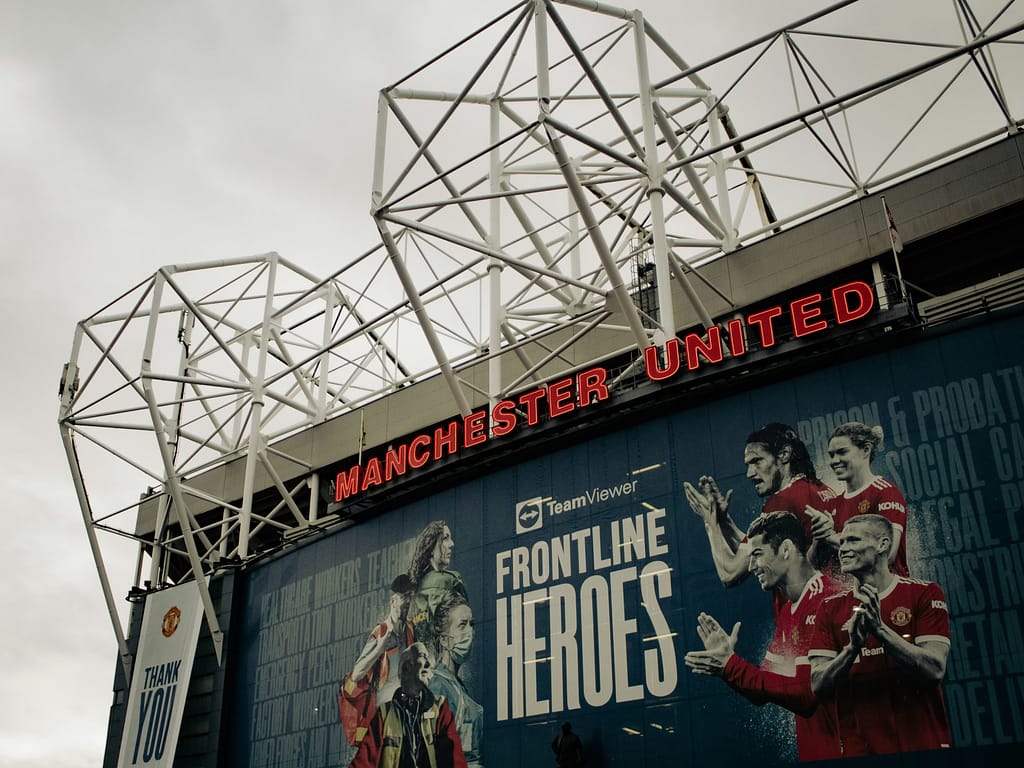
Manchester United woke up on January 6, 2026, to a headline their supporters have come to know too well. Ruben Amorim was gone. Fourteen months after arriving as the latest symbol of renewal, the Portuguese coach had become the newest name on a growing list of failed saviours. The official statement was brief, professional, and emotionless. It spoke of “departure” and “appreciation.” It did not speak of direction, accountability, or what comes next. On paper, United are sixth in the Premier League. In reality, they are nowhere. The league position flatters performances that have been disjointed, fragile, and frequently uninspiring. The football has lacked authority. The squad has lacked cohesion. And the club, once the global reference point for dominance and personality, now looks like an institution constantly reacting to events rather than shaping them.This latest dismissal is not shocking. What is shocking is how routine it has become. Since Sir Alex Ferguson retired in 2013, Manchester United have now appointed and dismissed manager after manager in a cycle that has delivered vast spending, fleeting optimism, and sustained regression. David Moyes, Louis van Gaal, José Mourinho, Ole Gunnar Solskjaer, Ralf Rangnick, Erik Ten Hag, and now Ruben Amorim have all taken turns attempting to fix what has proven to be a far deeper problem than any single coach. Another reset has begun. But the truth United continue to avoid is that nothing is being reset at all.
A Familiar Story: Why the Amorim Project Collapsed
Ruben Amorim did not arrive without credentials. At Sporting CP, he built a disciplined, tactically modern side that won titles, developed players, and restored domestic authority. He was admired for his clarity of ideas, his intensity, and his ability to impose collective structure. When United turned to him in late 2024, it was framed as a forward-looking appointment: a young coach with modern methods who could finally build something sustainable.What he inherited, however, was not a foundation. It was a contradiction. Manchester United’s squad had been assembled by different executives for different managers, under different footballing philosophies. The result was a group of players with mismatched profiles, overlapping roles, and no coherent tactical identity. Amorim’s preference for a back three and aggressive positional structure demanded very specific qualities. United’s squad largely did not possess them. Some players adapted in moments. Others never looked comfortable. Full-backs struggled to become wing-backs. Centre-backs were pulled into unfamiliar spaces. Attacks often stalled because movements were not instinctive but rehearsed. Matches became fragmented. The team rarely controlled territory or rhythm. They either survived or collapsed. Results reflected that instability. Wins came, but rarely convincingly. Performances lacked continuity. Defensive security never truly developed, and attacking output depended heavily on isolated actions rather than system reliability. By the turn of 2026, United were not a side moving forward slowly. They were a side treading water.Yet to reduce Amorim’s failure to tactics would be to repeat the club’s long-standing mistake. Behind the scenes, tension reportedly grew around recruitment control, internal authority, and responsibility for poor outcomes. Amorim’s public comments increasingly hinted at frustration with a structure where sporting leadership, executive management, and coaching direction often overlapped without clear hierarchy. At Manchester United, power has been distributed so widely for so long that accountability has become almost theoretical. Amorim did not lose the dressing room overnight. He was gradually absorbed into the same fog that has engulfed so many before him. The football did not convince. The mood darkened. The margin for patience shrank. Eventually, as always, the manager paid.
Twelve Years Without a Footballing Identity
The most damaging aspect of Manchester United’s post-Ferguson era is not that they have chosen the wrong managers. It is that they have never chosen a shared footballing direction. Each appointment has represented a different idea of what United should be. Continuity gave way to control. Control gave way to counter-attack. Counter-attack gave way to pressing. Pressing gave way to structure. At no point did the club build a stable identity capable of surviving changes in the technical area.

Elite clubs replace managers without dismantling themselves. Manchester City, Bayern Munich, and Real Madrid change coaches but protect principles. Manchester United change coaches and change principles with them. Recruitment shifts. Tactical planning resets. Youth development priorities move. Squad profiles are abandoned.The consequence is visible on the pitch. United rarely look like a team that has been built. They look like a team that has accumulated.Over twelve years, vast resources have been committed to players who suited immediate needs but not long-term coherence. Every new manager inherited expensive contradictions. Every sacking left behind financial and tactical debris. Over time, the squad has grown heavier, slower, and mentally fragile. This is not transition. It is erosion.
The Dressing Room Dynamic
No serious analysis of Manchester United’s decline can ignore the dressing room. Through seven managerial regimes, the one constant has been the squad’s ability to outlast authority. Coaches have been reshaped. Methods have been softened. Standards have been renegotiated. Very few players have experienced meaningful consequence for collective underperformance.When results collapse repeatedly without deep structural change, a message is inevitably absorbed: survival does not depend on excellence. It depends on patience elsewhere running out first. Overpayment has intensified this dynamic. High wages offered without sustained success reduce urgency. Comfort expands. Risk diminishes. The internal pressure that once defined elite dressing rooms weakens. Modern Manchester United players are not lacking talent. They are lacking an environment that demands relentless competitiveness. When accountability is inconsistent, professionalism becomes optional. When leadership changes every season, emotional investment declines. Short-term survival replaces long-term growth. The idea that players are consulted on managerial futures, whether exaggerated or not, reflects a deeper problem. At the highest level, players shape matches, not hierarchies. When authority fragments, performance inevitably follows.
The Nostalgia Reflex
Every crisis at Manchester United now produces the same reflex. Supporters, exhausted by instability, look backwards for comfort. Familiar names resurface. Familiar faces promise emotional clarity if not structural change. The renewed discussion around Ole Gunnar Solskjaer illustrates this perfectly. Solskjaer was not a failure. He steadied the club. He improved atmosphere. He delivered moments of genuine optimism. But his tenure also demonstrated the limitations of emotional leadership unsupported by elite structure. To revisit that era now would not represent progression. It would represent retreat. Nostalgia offers relief, not solutions. It softens disappointment but does not correct dysfunction. Clubs in true decline do not fall because they lack affection. They fall because they mistake affection for strategy. Manchester United’s repeated drift toward sentiment reveals an institution increasingly uncomfortable with the scale of reform actually required.
The Structural Core of the Crisis
The most persistent illusion at Old Trafford is that decline is cyclical. That with the right manager, momentum will naturally return.
The evidence of the last twelve years suggests otherwise. Ownership decisions during the leveraged buyout era reshaped the club’s priorities. Infrastructure stagnated. Football departments lost coherence. Executive influence grew. The sporting side became reactive rather than visionary. Commercial success increasingly replaced footballing dominance as the club’s most reliable constant.
The arrival of INEOS and new football executives promised modernisation. Yet structural change in elite football does not occur through appointments alone. It requires concentrated authority, long-term insulation from panic, and a willingness to accept competitive discomfort.
So far, Manchester United have reshuffled more than they have rebuilt.
The club still struggles to define who ultimately owns football decisions. Recruitment has improved in organisation but not in clarity. Long-term squad planning remains clouded by short-term results. The academy produces talent, but pathways remain uncertain. Facilities lag behind direct competitors.
United operate like a global brand attempting to run a football club rather than a football club managing a global brand.
That inversion matters.
Recruitment and the Death of Coherence
Perhaps nowhere is United’s institutional confusion clearer than in recruitment. For over a decade, players have arrived under shifting rationales. Some were chosen to execute pressing football. Others were signed for counter-attacking transitions. Others for possession dominance. Others simply because opportunity arose. Very few signings have been part of a continuous architectural plan. As a result, United’s squad contains quality but not chemistry. Technical profiles overlap without complementing. Mentalities clash. Age curves are misaligned. Leadership is inconsistent. Balance is fragile. This is why every manager eventually faces the same wall. They attempt to impose structure on a squad that was never designed for one unified structure. Without philosophical discipline, recruitment becomes accumulation. Accumulation produces confusion. Confusion produces managerial turnover. The cycle feeds itself.
The Financial Undercurrent
While football discussions often focus on tactics and personalities, the financial context around Manchester United is increasingly significant. Modern revenue models are heavily performance-linked. European qualification influences sponsorship leverage, global engagement, and commercial valuation. Prolonged absence from elite competition erodes not only prestige but operational flexibility.At the same time, wage commitments remain among the highest in European football. That imbalance — elite expenditure with sub-elite performance — is unsustainable over time.As regulatory controls tighten, United may soon face strategic decisions they have long postponed: asset sales driven by necessity rather than vision. When rebuilding is dictated by financial pressure rather than football logic, recovery windows narrow. The danger is not collapse. The danger is managed mediocrity. That is where major clubs quietly lose relevance.
What Genuine Reconstruction Would Demand
True renewal at Manchester United would be uncomfortable. It would require more than a new manager. It would require a clear football identity defined at executive level and protected beyond individual tenures. Recruitment would need to become philosophical rather than reactive. Wage structures would need rationalisation. Authority would need consolidation. Facilities must modernise. Youth pathways must integrate. Performance departments must be insulated from commercial turbulence.Most of all, the club would need to accept that it is no longer restoring dominance. It is attempting to rebuild competitiveness. That psychological shift matters. Institutions that believe they are still giants behave differently from those that recognise they must become elite again. Until Manchester United fully internalise that difference, every new appointment will carry impossible expectations and insufficient support.
The Inescapable Truth
Ruben Amorim’s dismissal will dominate news cycles. It will spark debate. It will energise rumours. It will briefly create the illusion of movement.But it does not address the reason Manchester United keep returning to this moment.The club is not failing because managers are poor. It is failing because its operating model remains unresolved. Authority is fragmented. Recruitment is incoherent. Cultural standards have softened. Financial logic increasingly competes with football logic. Manchester United are not temporarily lost. They are structurally unsettled. And until that reality is confronted not in words but in governance, the cycle will continue. Another manager will arrive. Another philosophy will be announced. Another short rise will be followed by another familiar fall.This is no longer about who comes next. It is about whether Manchester United are finally willing to become a football club again, rather than a brand constantly searching for one.