Manchester United Faces AFCON Crisis: How Mazraoui, Mbeumo, and Diallo’s Absence Could Derail Amorim’s Revival
As Manchester United grind through another turbulent season under Ruben Amorim, the shadow of the 2025 Africa Cup of Nations (AFCON) looms large. With the tournament kicking off on December 21, 2025, in Morocco and running until January 18, 2026, three pivotal players—Noussair Mazraoui (Morocco), Bryan Mbeumo (Cameroon), and Amad Diallo (Ivory Coast)—are set to depart Old Trafford at a critical juncture. These aren’t fringe squad members; they’re the engine room of Amorim’s high-octane 3-4-3 system. Mazraoui’s injury-plagued start has limited his impact, but his return has been transformative. Mbeumo’s explosive goals and Diallo’s flair have injected life into United’s attack. Their combined absence could expose the squad’s chronic depth issues, forcing tactical gymnastics from Amorim. In this deep dive, we analyze their irreplaceable roles, the potential fallout, and how Amorim might pivot to keep United’s top-four dreams alive. en.wikipedia.org
The Rise of Noussair Mazraoui: From Bayern Benchwarmer to United’s Tactical Anchor
Noussair Mazraoui arrived at Manchester United in August 2024 from Bayern Munich for £17 million, a bargain for a versatile defender who had won the Bundesliga just months prior. At 27, the Dutch-born Moroccan international was meant to shore up Erik ten Hag’s leaky backline. But injuries struck early—a heart procedure in October 2024 sidelined him, followed by a muscle tear that limited him to sporadic appearances in the 2024-25 season. givemesport.com transfermarkt.com
Fast-forward to 2025-26, and Mazraoui has been a revelation when fit. In 10 Premier League outings, he’s clocked 6.8 average ratings, ranking fifth in the league for tackles won (42) and top-10 for interceptions (18). His two-footed prowess allows seamless switches between right-back and left in Amorim’s fluid 3-4-3, where wing-backs are the system’s lifeblood. Mazraoui’s progressive passes (4.2 per 90) and key passes (1.1) enable quick transitions, feeding United’s front three with precision. unitedinfocus.com givemesport.com
In a squad desperate for defensive solidity—United conceded 58 goals in 2024-25—Mazraoui’s 88% duel success rate has been a bulwark. He’s instrumental in Amorim’s build-from-the-back philosophy, ranking first among United defenders for successful take-ons (12). Yet, his “few stats due to injury” narrative persists; he’s missed 15 games across competitions since joining. As Morocco’s host nation star, his AFCON call-up is inevitable, leaving a void in United’s right flank. unitedinfocus.com
Bryan Mbeumo: The £65m Goal Machine Fueling United’s Counter-Attacks
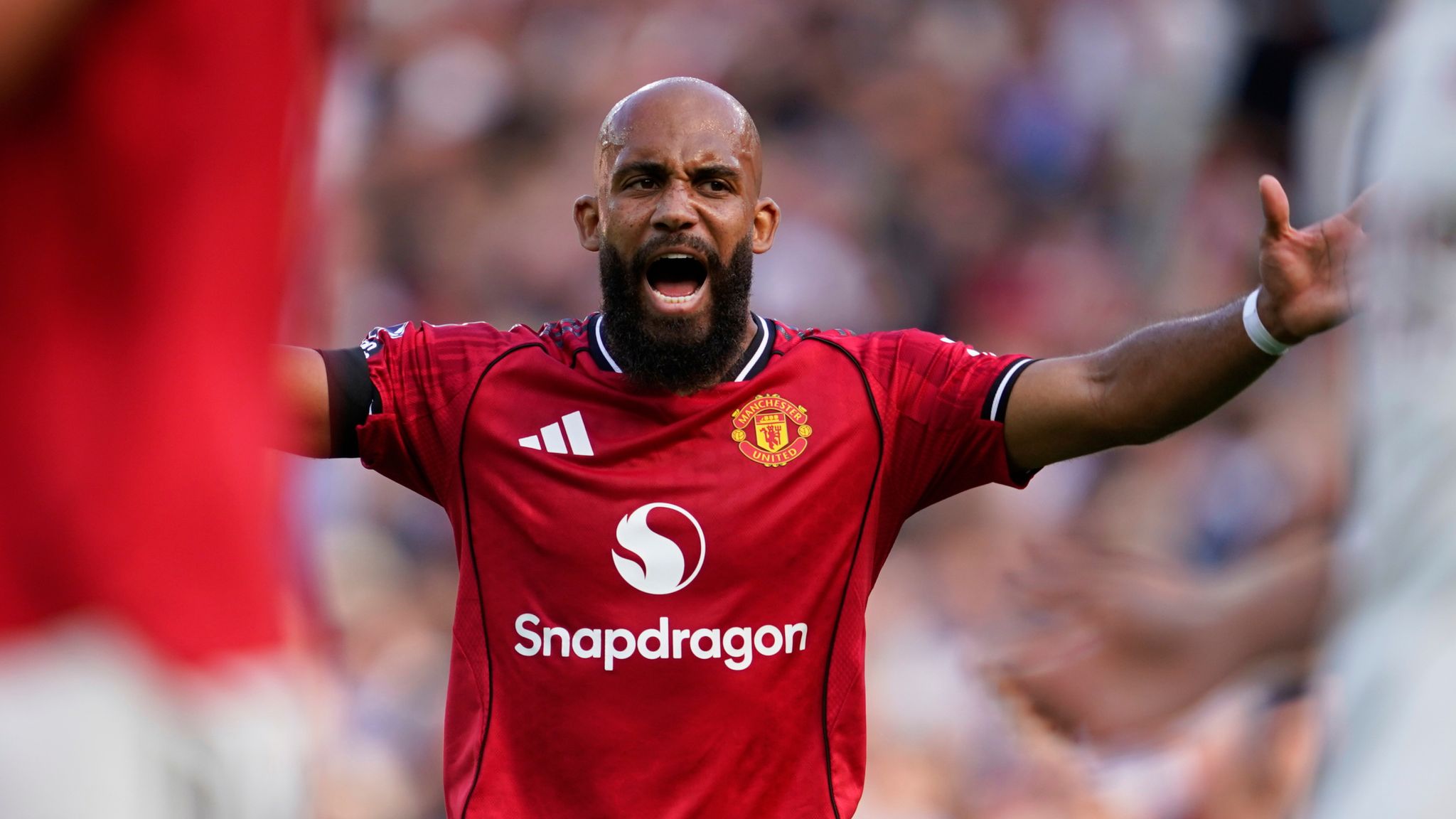
Bryan Mbeumo’s summer 2025 transfer from Brentford for £65 million (plus £5m add-ons) was United’s statement of intent under Amorim. The 25-year-old Cameroonian, who netted 20 Premier League goals in 2024-25, rejected Tottenham to join Old Trafford, citing Amorim’s vision. Earning £150,000 weekly, Mbeumo has justified every penny. espn.com nytimes.com
In 10 starts this season, he’s bagged five goals and one assist, with a 6.61 average rating that belies his impact. As United’s right-sided No. 10 in the 3-4-3, Mbeumo thrives in transitions—his 17 shots on target lead the squad, matching Bruno Fernandes. His versatility shines: 70 career Brentford goals, plus 51 assists, translate to United’s counter-attacking blueprint, where he exploits spaces behind defenses with blistering pace (top speed: 34.8 km/h). givemesport.com one-versus-one.com
Amorim praises Mbeumo as a “working machine” for his pressing (2.3 tackles per 90) and off-ball runs, creating overloads on the right. Cameroon’s Group F clash with Ivory Coast means Mbeumo could face Diallo early, but his absence will sting United most. Without his xG overperformance (3.2 goals above expected last season), United’s attack loses its sharp edge.
Amad Diallo: The Ivorian Spark Plug Lighting Up Old Trafford
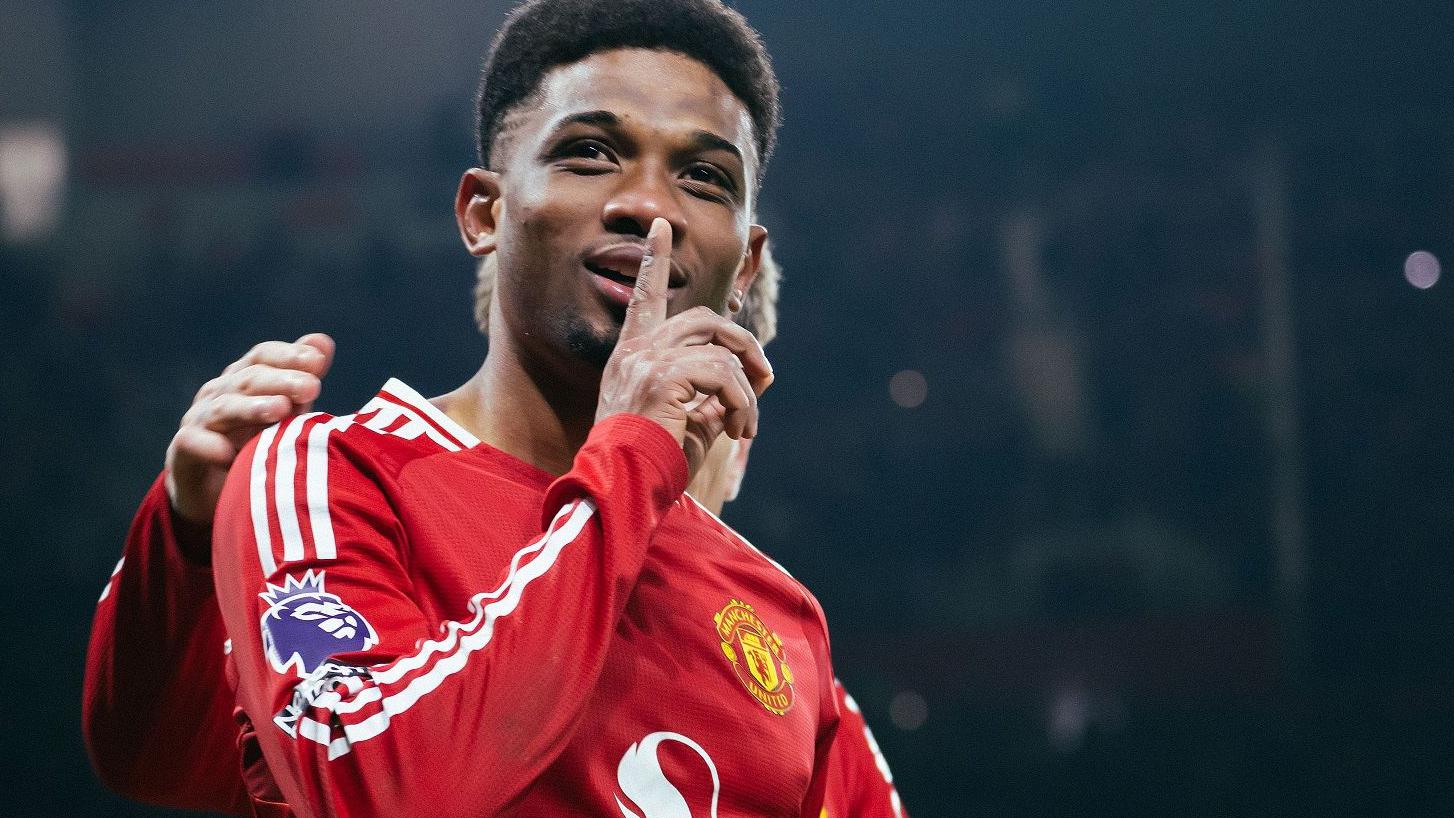
Amad Diallo’s journey from Atalanta youth product to United’s breakout star is pure football romance. Signed in 2021 for £19m, the 23-year-old Ivorian endured loans at Rangers and Sunderland before exploding in 2024-25. A hat-trick against Southampton in January 2025—United’s first since Ronaldo’s in 2022—highlighted his arrival, finishing with 11 goals and earning a contract extension to 2030 at £120,000 weekly. en.wikipedia.org manutd.com
This season, Diallo’s two assists in nine games (7.5 average rating) underscore his flair. In Amorim’s system, he operates as a right wing-back or inverted winger, ranking fourth in shots on goal (10) and joint-sixth league-wide for goal-creating actions (18 last season). His late equalizer at Anfield in January 2025 and FA Cup heroics against Liverpool cemented his cult status.
Diallo’s dribbling (2.8 per 90) and vision pair perfectly with Mbeumo, forming a deadly right-flank duo. An ankle injury sidelined him mid-2024-25, but his return has added unpredictability to United’s possession play (top-5 in Europe for central circulation). As Ivory Coast’s defending champions navigate Group F, Diallo’s creativity will be missed dearly.
Why These Three Are the Heartbeat of Amorim’s Manchester United
Ruben Amorim’s 3-4-3 isn’t just a formation—it’s a philosophy of control, overloads, and rapid transitions. Mazraoui anchors the wing-back roles, providing width and recovery pace. Mbeumo and Diallo, as dual No. 10s, overload the right, with Mbeumo’s finishing (conversion rate: 28%) complementing Diallo’s playmaking (xA: 0.3 per 90).
Collectively, they’ve contributed 7 goals and 5 assists in 2025-26, plus defensive metrics that have helped United concede just 12 in 10 games. In a squad mid-rebuild—£200m spent in 2025 on Cunha, Sesko, and others—their synergy is irreplaceable. Amorim’s insistence on the system (“I’m not changing”) amplifies their importance.
The Looming Shadow: AFCON Dates and United’s Fixture Nightmare
AFCON 2025, hosted by Morocco, disrupts the Premier League from December 21 to January 18. Morocco (Group A), Cameroon (Group F), and Ivory Coast (Group F) are favorites to advance, meaning Mazraoui, Mbeumo, and Diallo could miss 4-6 United games, including holiday fixtures against Arsenal (Dec 26), Liverpool (Jan 4), and City (Jan 11).
United’s schedule intensifies: FA cup knockouts overlap, stretching the squad thin. With Lisandro Martinez nearing return from a February knee injury, the defense is stabilizing, but midfield and attack lack backups. Amorim has warned: “We’ll have time to suffer.”
Possible Outcomes: From Top-Four Push to Relegation Scrap?
Optimistically, United could consolidate eighth place, using the break for rotation. Recent form—three straight PL wins—suggests resilience. Pessimistically, without their right-flank dominance, goals dry up (United’s attack ranks 9th in xG), exposing depth woes. Last season’s 15th-place finish haunts; another slide could pressure Amorim.
Injuries compound risks—Sekou Kone’s recent knock adds uncertainty. A mid-table finish is likely, but AFCON could cost 6-9 points, derailing Champions League hopes.
Amorim’s Tactical Arsenal: Shifts to Survive the Depth Drought
Amorim’s playbook emphasizes adaptability within the 3-4-3. Without Mazraoui, Diogo Dalot shifts right, Patrick Dorgu covers left—both versatile but less dynamic (Dalot’s 1.8 key passes vs. Mazraoui’s 2.1). For Mbeumo and Diallo, Matheus Cunha drops deeper as a false 9, with Mason Mount inverting from the left.
To counter depth issues, Amorim could tweak to a 3-4-2-1, packing midfield with Kobbie Mainoo’s tempo control (slowing play, per Amorim). Harry Maguire partners Leny Yoro at center-back for aerial duels, while Bruno Fernandes roams box-to-box (more running, as he notes). Youth injections like Diego Leon at wing-back add energy.
These shifts prioritize control over chaos, aligning with Amorim’s “stable possession” ethos. But without January reinforcements, survival mode beckons.
Beyond the Pitch: The Broader Impact on United’s Season and Legacy
AFCON absences aren’t new—United lost Andre Onana similarly in 2024—but this trio’s synergy elevates the stakes. Financially, missing Europe hurts revenue; squad unrest could follow if results falter. For players, national duty boosts morale—Mazraoui’s home soil could yield glory—but club form suffers.
Amorim’s challenge mirrors his Sporting tenure: turning misfits into winners. Success here cements his legacy; failure fuels “IN Amorim We Trust” memes.
Final Verdict: United’s Test of Fire
Mazraoui, Mbeumo, and Diallo embody Amorim’s vision—versatile, relentless, transformative. Their AFCON exodus tests United’s resolve amid depth deficits. Tactical tweaks and youth gambles offer hope, but outcomes hinge on resilience. As December dawns, Old Trafford braces for battle. Will Amorim conquer the chaos, or will AFCON 2025 become United’s breaking point?