Manchester United’s Crippling Injury Crisis: A Devastating Blow That Could Shatter Season Ambitions
Manchester United’s injury crisis exploded in the heartbreaking 2-1 loss to Newcastle. Key absences like Lisandro Martínez and Noussair Mazraoui have shattered defensive balance, threatening Carrick’s unbeaten run and top-four ambitions. Resilience or ruin?
The St. James’ Park nightmare lingers fresh in the memory. Manchester United’s 2-1 defeat to a ten-man Newcastle United on March 4, 2026, wasn’t just a loss it was a stark revelation. As William Osula’s stoppage-time winner sealed United’s fate, the cracks in the squad became impossible to ignore. With key defenders sidelined and the injury list swelling, this crisis isn’t a mere setback; it’s a genuine threat to the club’s top-four aspirations. Under interim manager Michael Carrick, Manchester United had built momentum with an unbeaten run, but the Newcastle debacle exposed vulnerabilities that could unravel the remainder of the 2025/26 Premier League campaign. As a devoted Red Devils supporter, we’ve seen this club conquer adversity before, but the current situation demands urgent scrutiny. How did we get here, and can United salvage their season?
This injury epidemic isn’t random misfortune it’s a culmination of persistent issues in squad management and physical demands. Manchester United sit precariously in the race for Champions League qualification, with Arsenal, and Manchester City pulling away. The loss to Newcastle ended a seven-match unbeaten streak under Carrick, who took over in January after Ruben Amorim’s dismissal. Now, with fixtures piling up, the absence of pivotal players like Lisandro Martínez, Matthis De Ligt and Noussair Mazraoui amplifies the peril. These aren’t fringe figures; they’re structural pillars whose voids disrupt the entire tactical framework. Let’s dissect the damage.
Detailed Breakdown of Key Injuries
Lisandro Martínez’s calf injury, sustained in late February, has ruled him out until mid-March at the earliest. The Argentine World Cup winner isn’t just a defender he’s the heartbeat of United’s build-up play. Martínez’s ability to progress the ball from deep positions is elite; his pass completion rate hovers around 90% in progressive passes, often initiating attacks that bypass midfield pressure. Tactically, he provides left-footed balance in a back three or four, allowing Manchester United to switch play fluidly and maintain possession in high-risk areas.
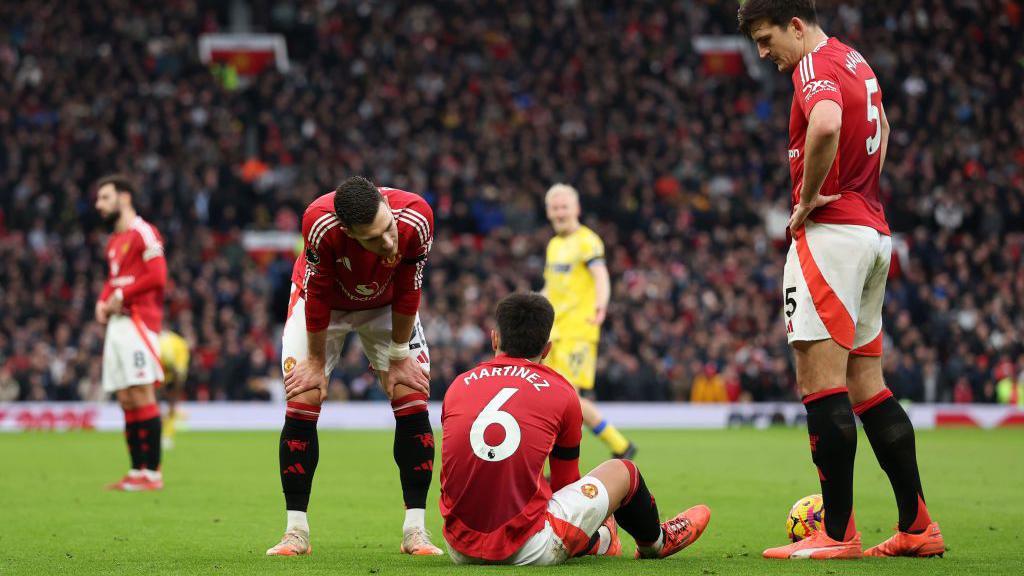
Without him, United’s defensive solidity crumbles. Martínez’s aggressive pressing and recovery speed averaging over 2.5 interceptions per 90 minutes shield the midfield, reducing exposure for players like Bruno Fernandes. His absence forces makeshift pairings, like Harry Maguire partnering Leny Yoro, which lacks the same synergy. Structurally, this weakens the left channel, where opponents exploit gaps in transitions. The Newcastle game highlighted this: United conceded from a counter after losing possession in build-up, a scenario Martínez often averts with his anticipation.
The Newcastle Game Injuries
Equally alarming is Noussair Mazraoui’s recent setback. During the Newcastle clash, the Moroccan international was substituted in the 85th minute after walking gingerly, nursing an undisclosed injury, likely muscular, given his visible discomfort. Mazraoui, a summer 2024 arrival from Bayern Munich, brings versatility as a right-back or wing-back. His tactical importance lies in overlapping runs and defensive recoveries; he ranks in the top 10% of full-backs for progressive carries and tackles won.
What Mazraoui adds is balance on the right flank, complementing Amad Diallo’s inward drifts. His crossing accuracy (around 35%) creates chances for Sesko, while defensively, he covers for midfield lapses. Absent him, Diogo Dalot shifts right, but Dalot’s more attack-minded style leaves flanks exposed, evident in Newcastle’s exploitation of wide areas. The injury’s timing exacerbates matters; with Patrick Dorgu (hamstring, out until mid-April) and Tyrell Malacia as backups, Manchester United’s full-back depth is threadbare. This structural weakness invites opponents to target transitions, turning potential draws into defeats.
Beyond these, the crisis extends: Matthijs De Ligt’s back injury sidelines him until April, depriving Manchester United of aerial dominance (he wins 75% of duels). Mason Mount’s knock keeps him out until mid-March, robbing midfield creativity. Harry Maguire and Luke Shaw battled illnesses leading into Newcastle, with Shaw substituted early in the prior Crystal Palace win. These absences compound, creating a domino effect: reduced rotation leads to fatigue, amplifying error rates in high-intensity games.
Tactical Consequences for the Manager
Michael Carrick, the interim boss with a playing legacy at United, faces his sternest test. Since January, he’s instilled discipline, guiding United to five wins in six Premier League games initially. But injuries disrupt his preferred 3-4-2-1 setup, which relies on defensive organization and quick transitions.
Defensively, without Martínez and Mazraoui, organization falters. Carrick favors a high line, but absent Martínez’s recoveries, midfield protection erodes. Casemiro, already slowing at 34, gets overrun, as seen in Newcastle’s midfield dominance. Pressing intensity drops; United’s press success rate dipped below 30% against Newcastle, allowing easy escapes.
Build-up from the back suffers most. Martínez’s ball-playing initiates phases, but replacements like Yoro prioritize safety over progression, leading to long balls and lost possession. This isolates forwards like Sesko, who thrives on service from wide areas, Mazraoui’s domain.
Squad Depth and Recruitment Questions
Does United have the depth to weather this storm? Bluntly, no. The squad’s backbone is solid, but backups lack quality. At center-back, Yoro and Heaven are promising but raw; Maguire’s reliability wanes with age. Full-backs? Dalot and Malacia suffice, but injuries expose frailties, Dorgu’s absence leaves the left vulnerable.
Recruitment decisions under INEOS have been mixed. The 2025 summer saw Mbuemo, Sesko and Cunha arrive, bolstering options, but failing to address chronic defensive depth created weaknesses. Why no additional center-back after Jonny Evans’ retirement? Squad planning feels flawed: over-reliance on injury-prone stars like Shaw (recurrent issues) and De Ligt (back problems) screams negligence.
Historically, United’s recruitment prioritized flair over resilience, think the post-Ferguson era. Now, with FFP constraints, winter inaction (no signings in January 2026) bites hard. As a supporter demanding excellence, this reeks of complacency. Sir Jim Ratcliffe’s regime promised data-driven decisions, yet the squad’s imbalance, strong in attack but fragile defensively questions their strategy.
Implications for the Season
This crisis could torpedo Manchester United’s season. Currently at third position, the Premier League race for UEFA Champions League spot tightens. Dropping points to struggling sides like Newcastle erodes momentum; a top-four finish, essential for Carrick’s permanence, slips away.
Pressure mounts on remaining players. Fernandes, already carrying the creative load, faces overload his yellow card tally risks suspensions. Fatigue looms: with 10 games in April, including Chelsea and Liverpool, exhausted legs invite errors.
The Newcastle defeat’s momentum loss is palpable. Pre-loss, United eyed a title challenge per Carrick’s bold claims; now, survival mode beckons. Wider consequences? Progression stalls without depth, draining resources. Fan morale dips, Old Trafford demands trophies, not excuses. If unchecked, this defines 2025/26 as another transitional flop.
Potential Solutions
Solutions demand intelligence, not panic. Tactically, Carrick could shift to a 4-3-3, packing midfield for protection—using Fernandes passing to mimic Martínez’s build-up. Youth integration: Promote Ayden Heaven for center-back grit; his U21 displays show promise in duels.
Smarter rotation: Prioritize league over cups, resting Fernandes midweek. Training adjustments lighter sessions to prevent overload could stem the tide. Transfers? Summer 2026 must target a versatile defender like Ezri Konsa for depth.
Long-term: Overhaul medical protocols. Manchester United’s injury record (over 50 absences last season) suggests training intensity mismatches fitness levels. As a fan, I urge proactive steps, hire specialists in load management. Simplistic fixes like “buy more players” ignore FFP; strategic scouting for durable talents is key.
Strong Conclusion
Will this injury crisis define Manchester United’s season, or can the club demonstrate the resilience that once defined the team’s greatest eras? The ghosts of 1999’s Treble overcoming adversity through grit haunt Old Trafford. Yet, with Carrick at the helm and stars like Martínez and Mazraoui sidelined, the path forward tests United’s mettle. Committed club supporters won’t accept mediocrity; this club must rise, adapting with tactical acumen and bold decisions. The season hangs in the balance and the debate rages, but action must follow. Manchester United’s legacy demands nothing less.