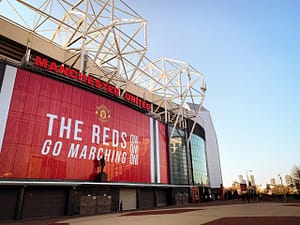
Manchester United and the Mohamed Kader Meïté Links: Why Another Forward Is Not the Answer to United’s Real Crisis
Manchester United’s reported interest in Mohamed Kader Meïté may excite fans, but it exposes a deeper truth. United’s real crisis is not in attack — it is in their aging midfield, fragile defensive structure, and long-term squad planning.
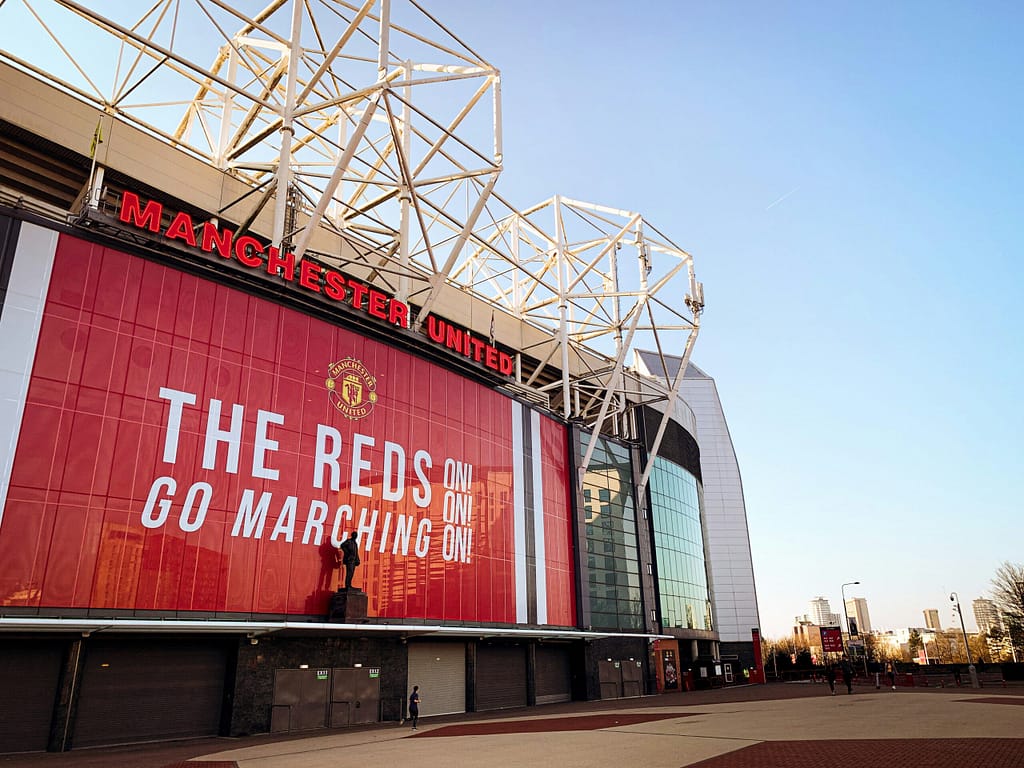
Manchester United are linked with Rennes striker Mohamed Kader Meïté and these reports have generated the kind of predictable excitement that always accompanies the emergence of a young, physically imposing forward. The appeal is understandable, but when the rumour is examined with any seriousness, it reveals far more about how modern transfer narratives are shaped than it does about Manchester United’s genuine priorities. Because the uncomfortable reality is this: United’s most urgent problems are not located in the penalty area. They are embedded in the structural core of the team — in midfield balance, defensive protection, the aging profile of key positions, and the absence of a coherent long-term squad plan.
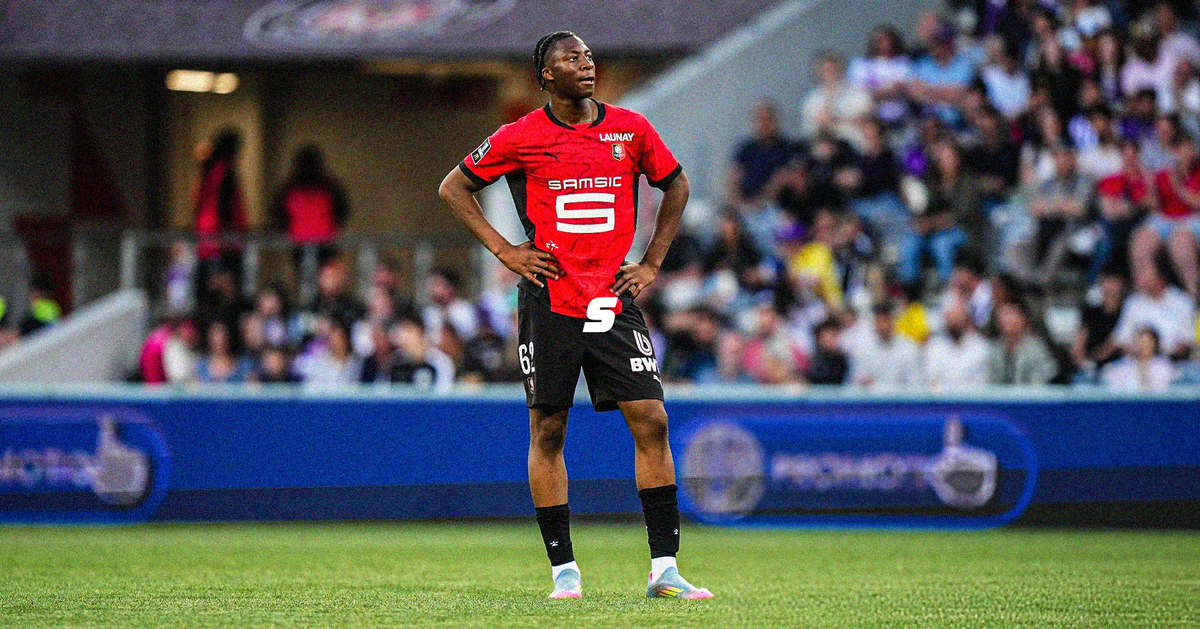
Meïté is widely regarded as a promising prospect. His physical presence, athletic profile, and early signs of productivity have naturally placed him on the radar of recruitment departments across Europe. Manchester United monitoring such a player is neither surprising nor controversial. Elite clubs track hundreds of young players every season as part of long-term scouting operations. What is far more questionable is the way these links are being framed publicly, as though the potential addition of another forward meaningfully addresses the problems that have undermined United for several campaigns.
A Transfer Link That Distracts From the Real Issues
The current discourse around Meïté risks becoming another example of how Manchester United’s transfer coverage often drifts toward the superficial rather than the fundamental. The club already possesses a wide range of attacking profiles, Cuhna, Sesko, Mbuemo, Amad, loaned players such as Hojlund, Rashford and Antony, while their output has not always been consistent, attacking numbers alone do not explain why United struggle to control matches. Their performances continue to be defined by volatility, long periods without possession, defensive fragility in transition, and an inability to dictate tempo against well-coached sides. None of these problems are rooted in the absence of a teenage striker.
For several seasons, United’s attack has operated on unstable foundations. Forwards are frequently asked to create something from broken phases of play rather than from sustained attacking structures. They receive the ball with limited support, are forced into low-percentage actions, and are often isolated from midfield. When attacking players fail in such environments, the conclusion is usually that the solution lies in signing another one. In reality, the conditions that shape attacking efficiency have been defective long before the ball reaches the penalty area.
The Midfield: Where Manchester United’s Crisis Actually Lives
Modern elite football is increasingly decided in midfield zones. The capacity to resist pressure, control space, sustain intensity, and dominate transitional moments determines whether teams impose themselves or merely react. Manchester United’s greatest competitive disadvantage over recent years has been their persistent failure to establish this control.
Casemiro’s arrival initially disguised many of these deficiencies. His positional intelligence, anticipation, and experience allowed United to survive phases that would otherwise have been terminal. However, the physical decline that accompanies age has gradually reduced his margin for error. Duels are contested later, recovery runs are slower, and the space he can effectively cover has narrowed. This is not a criticism of his career; it is the unavoidable biology of elite sport.
With Casemiro now expected to depart, United are facing not merely the loss of an experienced player, but the exposure of a recruitment failure. There is no clear successor within the squad capable of anchoring the midfield with comparable defensive authority. The absence of a long-term plan for this role is far more alarming than any shortage of forwards. Defensive midfielders of genuine top-level quality are the most difficult profiles to source, yet United enter this transitional moment without a ready replacement or an established pathway.
Bruno Fernandes and the Unresolved Creative Question
Compounding this uncertainty is the ambiguous situation surrounding Bruno Fernandes. For years, Fernandes has been United’s primary creative conduit, shouldering an extraordinary burden for chance creation, leadership, and momentum. However, his profile has always been that of an attacking risk-taker rather than a controller. He thrives when given license to accelerate play, not when tasked with regulating it.
As questions persist about his long-term future and tactical role, United face a strategic crossroads. If Fernandes remains central to the project, the club must construct a midfield behind him that can absorb risk, dominate possession, and protect defensive zones. If he leaves or transitions into a different role, United must replace not just his goals and assists, but his entire creative output from central areas. Either pathway demands targeted midfield recruitment of the highest order.
This context renders any heavy focus on forward additions premature. Creativity, tempo, and territorial control originate deeper. Without addressing those layers, attacking signings become cosmetic solutions to structural problems. Ralf Rangnick had warned about this cosmetic solutions and called out for an “open heart surgery”.
Defensive Exposure as a Consequence of Midfield Failure
Manchester United’s defensive struggles are frequently reduced to individual errors or perceived inadequacies among centre-backs. Such narratives overlook the systemic pressures placed upon the back line. When midfield units fail to control central corridors or counterpress effectively, defenders are repeatedly forced into expansive spaces, lateral cover, and high-risk recoveries.
Players like Harry Maguire, whose contract is almost coming to an end and whose game has always relied on positioning, anticipation, and structured defensive blocks, are particularly vulnerable in such contexts. As athletic decline intersects with systemic exposure, defensive performances are judged harshly, yet often unfairly. Even elite defenders suffer when isolated. The issue is not simply who United have at centre-back, but the environment in which those defenders are operating.
Addressing this begins not with chasing quicker centre-backs alone, but with restoring functional protection ahead of them. Without that, any defensive recruitment becomes a temporary patch rather than a stabilising solution.
Squad Age Profile and the Cost of Deferred Rebuilding
Another dimension often underappreciated is the age distribution of United’s core positions. While some areas of the squad have been refreshed, the spine has remained disproportionately reliant on players approaching or beyond their physical peaks. This creates a delayed-rebuild effect, where decline becomes abrupt rather than gradual, forcing clubs into reactive spending.
Manchester United are now entering that phase. Casemiro’s departure is not an isolated event; it is part of a broader demographic shift. The challenge is not simply replacing individuals, but re-engineering the physical and tactical profile of the team. That process must begin centrally, where athleticism, endurance, and spatial intelligence have the greatest multiplier effect on collective performance.
Pursuing young forwards while postponing this work risks repeating a pattern in which surface improvements mask foundational erosion.
Why Forward Signings Dominate Headlines — and Why They Mislead
Forwards sell narratives. They generate goals, compilations, and immediate emotional engagement. They are easier to evaluate in isolation because their output appears measurable. This makes them attractive focal points for transfer discourse.
Midfielders who block passing lanes, maintain compactness, and stabilise possession rarely command the same attention, despite their disproportionate influence on match outcomes. Manchester United’s recruitment over the past decade has leaned heavily into this imbalance, often privileging marketable attacking additions while leaving the connective tissue of the team underdeveloped.
The Meïté links sit comfortably within this tradition. They generate conversation without challenging underlying assumptions. Yet the history of United’s recent struggles demonstrates that attacking reinforcements layered onto unstable midfields do not elevate teams; they merely rotate the cast.
Tactical Consequences of an Unbalanced Core
When midfield structures fail, tactical problems cascade forward. Build-up becomes rushed. Pressing becomes fragmented. Attacking players are forced into isolated dribbles or speculative shooting. The team oscillates between reactive counter-attacking and sterile possession, unable to establish a consistent identity.
Supporters often interpret this inconsistency as a lack of attacking quality or confidence. In reality, it is the product of unstable connectivity between units. The spaces attackers receive the ball in, the angles of support, and the timing of runs are all shaped by what happens behind them. Without coordinated midfield mechanisms, attacking talent is diluted.
Until Manchester United address how they progress the ball, regain it, and occupy central zones, their forward line will continue to appear less effective than it truly is.
Psychological and Strategic Costs of Avoidance
There is also a psychological cost to avoiding core reconstruction. Each new attacking signing raises expectations while the environment remains unchanged. When results fail to stabilise, those players become symbols of disappointment, contributing to a culture of rapid disillusionment and constant reset.
Over time, this erodes patience, disrupts managerial projects, and distorts recruitment priorities. The club becomes trapped in cycles of short-term correction rather than long-term design. Breaking that cycle requires the discipline to invest where progress is least visible but most consequential.
What Manchester United Should Actually Be Building
If Manchester United are serious about returning to sustained elite performance, their next phase must be defined by central reinforcement. This includes acquiring a defensive midfielder entering his physical prime, capable of anchoring the team through multiple cycles. It also requires adding a technically secure, athletically robust central midfielder who can link phases, support pressing structures, and reduce the creative burden on attacking specialists.
In parallel, the defensive unit must be modernised in line with these midfield changes, not in isolation from them. Only once these foundations are re-established does it become rational to assess whether the forward line requires further evolution.
Why the Meïté Links Feel Misaligned
The discomfort surrounding the Meïté rumour does not stem from the player’s profile, but from the moment in which it has emerged. Manchester United are approaching a structural turning point. Decisions made now will shape not just the next season, but the next era. In that context, attention drifting toward developmental forwards feels misaligned with the urgency of the task.
Supporters have witnessed too many cycles in which attractive signings obscured unresolved deficiencies. Each iteration has ended the same way: inconsistency, managerial turnover, and another rebuild.
Foundation Before Finish
Manchester United’s path back to the top will not be defined by the next forward they sign. It will be defined by whether they finally commit to reconstructing the centre of the team with the same ambition historically reserved for attacking purchases.
Mohamed Kader Meïté may develop into an excellent striker. But Manchester United’s crisis is not one a striker can solve. It is a crisis of balance, protection, and planning.
Until the midfield is rebuilt, the defense is properly shielded, and the squad’s age profile is modernised, every attacking rumour will continue to feel like decoration on an unfinished structure.
And unfinished structures do not win titles.