The Rot at the Heart of Manchester United: How Ownership Has Engineered a Slow, Systemic Decline
Manchester United’s decline is not a footballing accident. It is the consequence of years of ownership failure — debt, neglect, and divided control that have hollowed out the club from the top down. Until that changes, no manager or rebuild will restore United’s former greatness.
Manchester United’s collapse did not happen overnight. It did not begin with a missed chance, a tactical error, or a poor managerial appointment. It began quietly, in boardrooms far removed from the pitch, long before supporters realised the scale of what was unfolding. What fans are witnessing today — the stagnation, the confusion, the endless cycle of managerial churn — is not failure in isolation. It is the logical outcome of two decades of ownership decisions that prioritised financial extraction over football excellence.
To understand why Manchester United now resemble a mid-table club rather than a global powerhouse, one must stop looking at the dugout and start looking upstairs. Managers have been blamed, players have been replaced, and systems have been rewritten countless times, yet the decline continues unabated. That is because the disease has never been on the pitch. It has always been at the top.
From the Glazers’ leveraged takeover in 2005 to INEOS’ partial intervention in 2024, Manchester United have been caught in a destructive ownership model that has hollowed out the club from the inside. As of January 2026, following the sacking of Ruben Amorim after just fourteen months in charge, the evidence is overwhelming: this is an ownership crisis masquerading as a footballing one.
The Glazers’ Takeover and the Original Financial Sin
In 2005, Manchester United were a uniquely powerful institution. They were debt-free, commercially dominant, and competitively stable under Sir Alex Ferguson. The club generated enormous revenue while retaining full control over its future. That stability ended the moment the Glazer family completed their leveraged buyout.

Rather than purchasing Manchester United outright, the Glazers borrowed heavily against the club’s own assets, transferring the burden of repayment onto United themselves. Overnight, a club with no debt found itself servicing hundreds of millions in loans. This was not an investment in football; it was a financial restructuring designed to extract value.
Over the following two decades, the consequences became impossible to ignore. More than a billion pounds has been paid in interest, fees, and financing costs. Hundreds of millions were taken out in dividends. Meanwhile, the club’s infrastructure stagnated, recruitment lacked coherence, and long-term planning gave way to short-term survival.
What made this model especially destructive was its timing. The modern era of football demanded investment, innovation, and strategic governance. Manchester City, Liverpool, Real Madrid, and Bayern Munich adapted accordingly. Manchester United, shackled by debt, did not. The club continued to spend heavily on transfers, but without a guiding structure, turning expenditure into waste rather than progress.
Sir Alex Ferguson’s Shadow and the Collapse Beneath It
For years, Sir Alex Ferguson masked the structural damage inflicted by ownership. His authority, experience, and footballing intelligence compensated for weaknesses above him. When he retired in 2013, Manchester United were exposed.
What followed was not simply poor decision-making; it was organisational chaos. Managers were appointed with incompatible philosophies. Recruitment oscillated wildly between styles and priorities. Long-term planning was replaced by reactive spending designed to paper over cracks.
David Moyes was given impossible expectations without authority. Louis van Gaal was backed and then undermined. José Mourinho delivered trophies but clashed with an incoherent hierarchy. Ole Gunnar Solskjær was entrusted with cultural rebuilds but denied elite sporting support. Ralf Rangnick diagnosed the problems publicly — and was promptly marginalised. Erik Ten Hag attempted reform but drowned in contradictions. Ruben Amorim, hired as a progressive manager, found himself constrained by the same broken structure.
The result has been predictable. No Premier League title since 2013. Repeated humiliations in big matches. Record transfer spending without identity. A club permanently stuck between rebuilding and chasing relevance.
Ruben Amorim and the Illusion of Change
When Ruben Amorim was appointed, there was genuine belief that Manchester United had finally embraced modern football thinking. His reputation as a structured, demanding manager suggested a break from the past. Yet within fourteen months, the illusion collapsed.
Amorim’s tenure was defined by tension rather than transformation. Despite reaching a Europa League final, his league record was historically poor. Defensive instability, inconsistent selection, and visible frustration dominated his time in charge. Most revealing were his comments about his role — repeatedly stressing that he was a “manager, not a head coach.”
Those words mattered. They exposed a fundamental issue: authority without power. Amorim, like those before him, was expected to deliver results without control over recruitment or long-term planning. His dismissal in January 2026 was not a solution. It was another reset button pressed by a club addicted to short-term fixes.
Old Trafford as a Metaphor for Decline
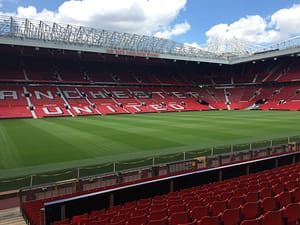
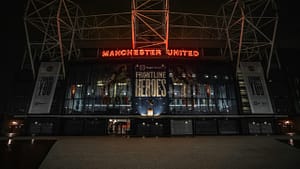
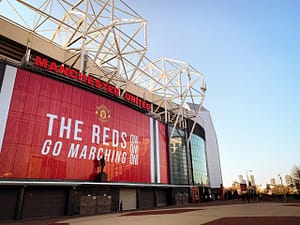
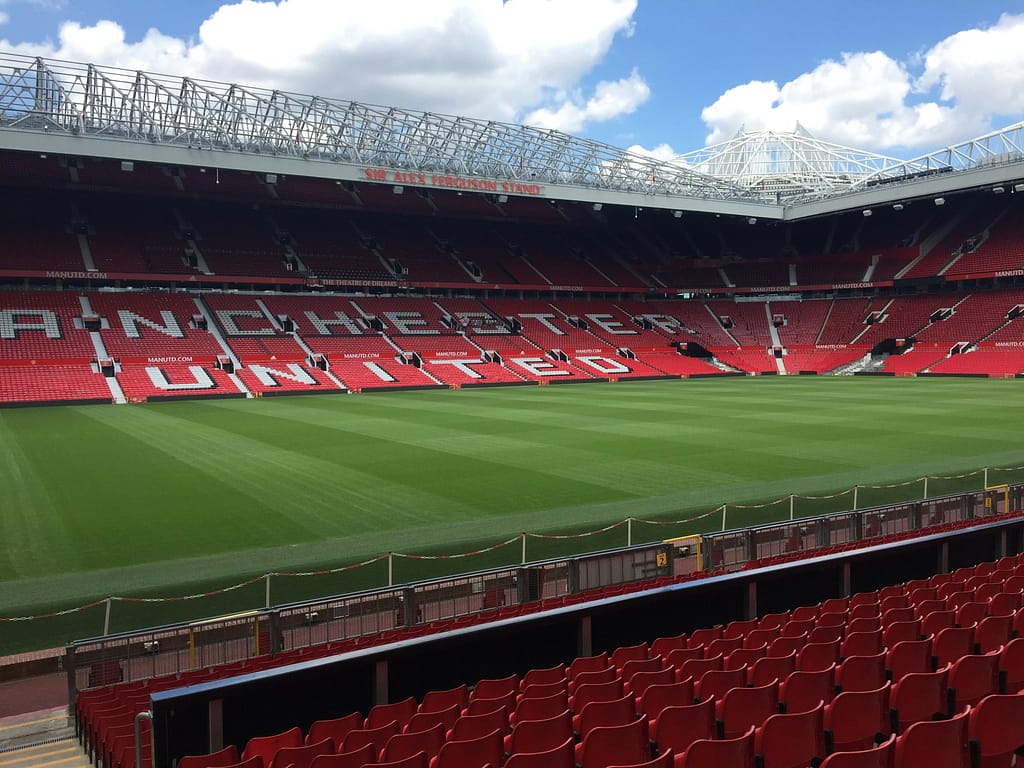
No symbol captures Manchester United’s ownership failures more vividly than Old Trafford. Once a stadium that represented dominance and innovation, it has become a physical reminder of neglect.
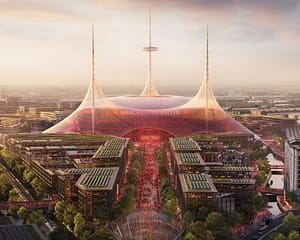
Leaking roofs, outdated facilities, and poor fan experience have turned the Theatre of Dreams into a source of embarrassment. While rivals invested billions into stadium redevelopment, Manchester United delayed, deferred, and ignored the inevitable. Minor renovation plans scheduled for 2026 feel like admissions of guilt rather than statements of ambition.
This decay did not occur by accident. It happened because dividends were prioritised over reinvestment. Because servicing debt took precedence over modernisation. Because ownership treated Old Trafford as an asset rather than a home.
INEOS and the Problem of Partial Control
Sir Jim Ratcliffe’s arrival through INEOS in 2024 was welcomed as a potential turning point. At last, football decisions would be overseen by people who understood the sport. Yet the structure of the deal ensured that real power remained fragmented.
INEOS controls football operations, but the Glazers retain majority ownership and voting rights. This split authority has created a dysfunctional governance model where accountability is blurred and responsibility is diluted. Decision-making slows. Conflicts escalate. No one truly owns failure.
The cost-cutting measures introduced under INEOS — redundancies, ticket price increases, reduced staff benefits — may have been financially necessary, but they further alienated supporters. Worse still, they failed to address the core issue: the debt and ownership structure that caused the crisis in the first place.
INEOS’ own financial pressures have only intensified doubts about long-term commitment. What was sold as reform now risks becoming another layer of instability.
Fan Resistance and Moral Clarity
Manchester United supporters have understood the truth longer than most. From green-and-gold protests to stadium demonstrations, fans have consistently identified ownership as the root problem. Their resistance was never emotional excess; it was moral clarity.
Supporters recognised that managers were being set up to fail, players were being misused, and the club’s identity was being eroded. The creation of FC United of Manchester was not rebellion — it was a warning.
Each protest has carried the same message: without ownership change, nothing changes.
The Inescapable Conclusion
As of January 2026, Manchester United are a club in limbo. The debt remains. The stadium deteriorates. Another manager search begins. Interim solutions replace long-term vision. The cycle repeats.
This is not misfortune. It is design.
Manchester United cannot return to elite status under the current ownership model. Partial reforms are insufficient. Cosmetic changes only delay the inevitable. Until the Glazers exit fully and the club is restructured with football at its core, decline will continue — slowly, predictably, and painfully.
Greatness cannot be reclaimed while the rot remains embedded at the top. Manchester United’s revival does not begin with the next manager. It begins with ownership accountability — and nothing less.