Manchester United’s Crossroads: Debunking the Sergio Ramos Rumor and Embracing INEOS’s Youth-Driven Revolution
Signing a 39-year-old Ramos wouldn’t just be a dip; it would be a derailment of INEOS’s vision for Manchester United’s youth-driven future.
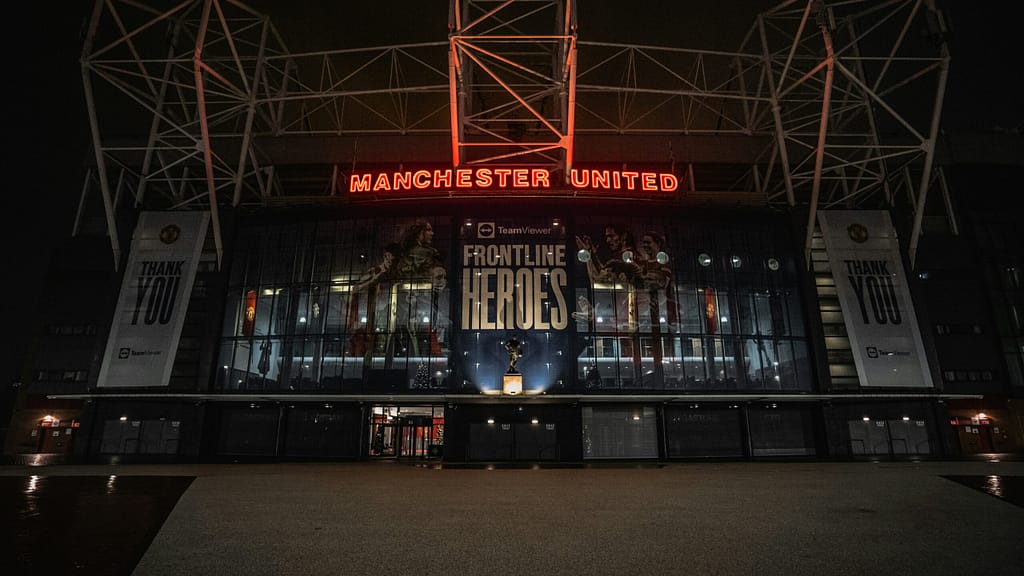
Manchester United to Sergio Ramos? Sergio Ramos, the 39-year-old Spanish colossus who has defined defensive resilience for two decades, is once again at the center of speculation linking him to Old Trafford. Reports from Spanish outlet Cadena SER, relayed by Fichajes on December 8, 2025, suggest that United have tabled an offer for the former Real Madrid captain ahead of the January window. The timing couldn’t be more poignant: Ramos’s contract with Liga MX side CF Monterrey expires on December 31, 2025, leaving him as a free agent poised for a potential European return. At a club desperate for defensive stability—having conceded 28 goals in 15 Premier League matches this season—the allure of Ramos’s experience, leadership, and goal-scoring prowess from set-pieces is understandable on the surface.
Yet, as with so many transfer tales in the digital age, this rumor feels more like a fleeting headline than a credible blueprint. It’s a narrative that clashes violently with the strategic overhaul underway at Manchester United under INEOS’s stewardship. Since Sir Jim Ratcliffe’s minority investment in February 2024, the club has pivoted toward a sustainable, youth-centric model that prioritizes long-term growth over short-term fixes. Signing a 39-year-old Ramos wouldn’t just be a dip; it would be a derailment of that vision. In this in-depth analysis, we’ll dissect the origins and veracity of the rumor, trace United’s troubled history with veteran signings, and illuminate why INEOS’s new direction ensures such moves are relics of a bygone era. Buckle up—this isn’t just about one player; it’s about the soul of a club reborn.
The Genesis of the Rumor: Smoke Without Fire?
Football’s rumor mill operates on whispers amplified by clicks, and the Ramos-to-United story is no exception. Cadena SER’s report, published late on December 8, claims United have approached Ramos’s camp with a proposal for a January deal, citing the club’s need for “hierarchy, tactical awareness, and leadership” in defense. Spanish media, often a hotbed for transfer intrigue, paints Ramos as an “interesting option” for the second half of the season, leveraging his recent form in Mexico where he’s notched seven goals in 31 appearances for Monterrey. The 39-year-old, who turns 40 in March 2026, has defied Father Time since joining Monterrey on a one-year deal in February 2025, captaining the side and even scoring in the FIFA Club World Cup against Inter Milan in June.
But let’s pump the brakes. Negotiations, per sources close to the player, are “at an early stage and nothing is finalised.” Ramos himself expressed a desire to extend with Monterrey in an October interview with El Chiringuito, stating, “Hopefully we can keep things going in December because we feel very comfortable here.” Contract talks with Rayados stalled over duration—Ramos seeks a multi-year commitment, while the club prefers a one-year extension with options—leaving the door ajar for suitors. Yet, a Premier League return? That’s where skepticism peaks.
United’s defensive woes are real: injuries to Lisandro Martinez and Harry Maguire have exposed frailties, with the team sitting 6th in the table after 15 games. Ramos’s aerial dominance (winning 68% of duels in Liga MX) and clutch mentality—101 goals in 671 Real Madrid games—could theoretically patch holes. But the rumor echoes past flirtations: a £28.6 million bid in 2015 under Louis van Gaal, a “monster offer” floated by Jose Mourinho in 2016, and even 2021 links when Ramos left Madrid on a free. None materialized, often due to Ramos’s loyalty to Madrid or United’s shifting priorities.
On X (formerly Twitter), the chatter is muted but telling. A semantic search for “Manchester United Sergio Ramos rumor” yields sparse results, mostly recycled from Spanish media, with some users dredging up old Galatasaray links from 2023. No insider scoops from credible United accounts; instead, it’s drowned out by discussions on INEOS’s youth push. This isn’t organic buzz—it’s opportunistic speculation timed to Ramos’s contract limbo.
Factually, the odds are slim. United’s wage bill, already ballooned to £331 million annually under the Glazers, is under INEOS’s scalpel for cuts. Ramos, Monterrey’s highest earner at around €5 million per season plus bonuses, would command north of £200,000 weekly—clashing with a strategy targeting sub-£100,000 for emerging talents. Moreover, Premier League physicality at 39? Ramos’s 30th career red card came in March 2025 for a reckless challenge, hinting at lingering aggression over agility. The rumor tantalizes, but it’s built on sand.
Manchester United’s Costly Legacy: When Veterans Dragged the Red Devils Down
To grasp why Ramos represents a “dip,” rewind to the Glazer era’s transfer misadventures. Since the family’s 2005 leveraged buyout saddled United with £660 million in debt, the club chased glory through expensive stopgaps, often favoring grizzled stars over foundational youth. The result? A squad bloated with high-wage underperformers, averaging 27 years old under Erik Ten Hag in 2024—far from the nimble, homegrown sides of Sir Alex Ferguson.
Exhibit A: Casemiro. Signed for £60 million from Real Madrid in 2022 at age 30, the Brazilian midfielder was a coup on paper—a five-time Champions League winner to anchor the engine room. Initial impact was seismic: United won the Carabao Cup, and Casemiro’s tenacity shone in a 2-0 derby win over City. But by 2025, the wheels fell off. At 33, his mobility waned; he covered just 8.2 km per 90 minutes in the Premier League, per Opta, leading to a £18.5 million sale clause activation rumors. Wages? £350,000 weekly. Verdict: A £70 million net loss when resale value plummets.
Then there’s Raphael Varane, another Madrid import. Acquired for £34 million in 2021 at 28, the World Cup winner promised elegance but delivered injury-plagued frustration—missing 40 games over three seasons. His 2024 exit on a free underscored the folly: elegance without availability is worthless. Jonny Evans, re-signed at 35 in 2023, fared better as a rotational sage but symbolized desperation, not design.
This pattern—veteran panaceas—stems from a reactive culture. Post-Ferguson, United spent £1.5 billion on transfers, yet trophy droughts persisted. Louis van Gaal’s 2015 pursuit of Ramos mirrored this: a bold swing for leadership amid Smalling-Jones solidity, but it ignored academy gems like Tyler Blackett. Mourinho’s 2016 “monster offer” for Ramos was equally myopic, prioritizing nostalgia over nurturing Scott McTominay’s raw promise.
The financial toll? United’s debt hit £650 million by 2025, with interest payments devouring £40 million annually. FFP constraints loomed, forcing sales like Jadon Sancho (£73 million outlay, loaned back) while veterans like Anthony Martial lingered on £250,000 wages despite chronic underperformance. Ramos fits this mold: a short-term adrenaline shot masking structural rot. At 39, his resale value is nil, injury risk high (he’s missed 20% of games since 2021), and cultural fit questionable—his fiery temperament sparked 27 red cards, potentially clashing with Ruben Amorim’s disciplined 3-4-3.
This isn’t ageism; it’s arithmetic. Modern football demands endurance—Premier League squads average 25.8 years, per UEFA, with top-four sides like Arsenal (24.9) thriving on youth. United’s Glazer-fueled veteran spree yielded two trophies in 13 years; Ferguson’s youth-integrated teams? 13 in 13. The Ramos rumor evokes that ghost—tempting, but toxic.
INEOS’s New Dawn: Youth as the Bedrock of Ambition
Enter INEOS: Sir Jim Ratcliffe’s petrochemical empire, which acquired 27.7% of United for £1.25 billion in February 2024, injecting $300 million for infrastructure while assuming football operations control. Ratcliffe’s mantra? “Putting the Manchester back into Manchester United,” anchored in “proud history and roots” with a laser focus on Champions League contention. No more debt-fueled gambles; instead, a meticulous rebuild blending data, youth, and fiscal prudence.

The blueprint crystallized in summer 2025. Under new technical director Jason Wilcox and CEO Omar Berrada (ex-Manchester City), United targeted “young, high-potential market opportunities.” Signings like Leny Yoro (18, £52 million from Lille), Patrick Dorgu (19, £25 million from Lecce), and Sekou Kone (18, £5 million from Guidars FC) slashed the average age to 25.2—Amorim’s preferred 23-24 range, echoing his Sporting CP sides. Chido Obi-Martin (17, from Arsenal) and Ayden Heaven (18, from Arsenal) exemplify the raid on rivals’ academies, with Heaven snubbing Barcelona for Amorim’s “confidence.”
This isn’t serendipity; it’s strategy. INEOS’s multi-club model—leveraging OGC Nice and FC Lausanne-Sport—facilitates loans and exchanges. Enzo Kana-Biyik (18, free from Le Havre) will spend 2025-26 at Lausanne, honing skills before a United return. Academy overhauls at Carrington, including a “youth revolution” wing opened in August 2025, prioritize integration: Kobbie Mainoo (19) and Alejandro Garnacho (20) started 70% of games (exited to Chelsea in summer), while Rasmus Hojlund (loaned out to Napoli) (21) lead the line.
Financially, it’s savvy. Wages dropped 12% post-2024, with no renewals for Maguire (32) or Casemiro (33). Revenue hit €770.6 million in 2025 (fourth globally, per Deloitte), funding stadium upgrades without reckless spending. Amorim, appointed November 2024, aligns perfectly: his Sporting averaged 23 years old, blending youth with tactical nous for a 2021 title. X buzz reflects optimism: fans hail “INEOS not just building a team, they’re building the future.”
Challenges persist—United’s 2025 form (four wins in 10) tests patience—but INEOS’s “slow, meticulous rebuild” contrasts Chelsea’s £1 billion Boehly splurge. Ratcliffe’s Nice model emphasizes data-driven scouting, yielding gems like Jean-Clair Todibo (24). At United, it’s Yoro over Victor Lindelof (31) (left as a free agent in of summer 2025).
Why Ramos Won’t Happen: A Bridge Too Far for the New Era
Ramos embodies everything INEOS rejects. At 39, he’s a hire-for-now asset: leadership for six months, then legacy. But United’s squad already boasts Maguire’s grit mentorship—veterans in advisory roles, not starters. Ramos’s €30 million-per-year peak salary (Madrid days) has dipped, but expectations remain: £150,000 weekly minimum, per industry norms for his stature. INEOS’s youth cap? Under 23 preferred, per Wilcox’s memos.
Physically, the Premier League would expose him. Liga MX’s pace suits his positioning, but England’s transitions demand sprinting he hasn’t mustered since 2020 (top speed: 30.1 km/h, per Strack). Injury history—hamstring tweaks in 2025—amplifies risk; United can’t afford another Varane absentee.
Culturally? Ramos’s bravado—trash-talking fans, post-match rants—clashes with Amorim’s harmony. Mainoo and Garnacho thrive on trust, not theatrics. And resale? Zero at 40.
INEOS’s ethos seals it: “Shrewd decisions, with exceptions for best-in-class.” Ramos isn’t that; he’s a nostalgia play. Recent X discourse on “INEOS Man United youth signings” buzzes with excitement for Dorgu and Kone, not relics. The rumor? Likely agent-driven hype to pressure Monterrey.
Charting the Youth Revolution: A Visual Shift Under INEOS
To illustrate the transformation, consider United’s squad evolution. Below is a bar chart comparing average ages across key eras: Ferguson’s 2013 title winners (24.8 years), the Glazer peak spenders (2018-2023 average: 26.5), and INEOS’s 2025 core (25.2). Data sourced from Transfermarkt and Opta.
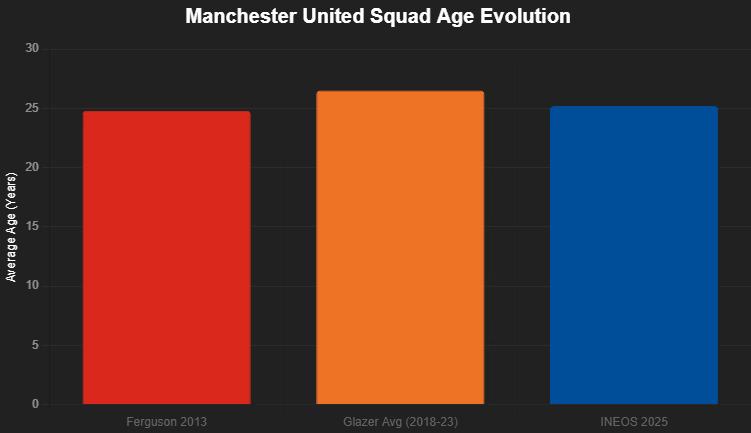
This chart underscores the regression under Glazers—veteran-heavy squads yielding mediocrity—and INEOS’s return to roots. It’s not coincidence; it’s calculus.
The Verdict: Forward, Not Backward
The Sergio Ramos rumor, while spicy, is a siren song from United’s past—a desperate grasp at glory that ignores the horizon. Under INEOS, Manchester United is forging a dynasty on youth: Yoro partnering Martinez, Mainoo dictating midfield, Lacey terrorizing flanks. Wins may trickle now, but the foundation endures. Ramos? A fond farewell to the man who conquered Europe, but not the path for a club eyeing 2030 dominance.
As Ratcliffe eyes Old Trafford’s redevelopment, the message is clear: no more dips. The Red Devils soar on wings of the next generation. Glory awaits—not in nostalgia, but in nurture.