Manchester United vs Tottenham Hotspur: A Tactical Examination of Two Projects Still Searching for Control
Manchester United and Tottenham both talk about progress, but this match will expose who actually has structural control. A tactical deep dive into the real battle at Old Trafford.

Beyond the Narrative: What This Fixture Really Reveals
When Manchester United host Tottenham Hotspur at Old Trafford, the instinct is to frame the occasion around rivalry, spectacle, or league implications. Yet the real significance of this match lies beneath those familiar narratives. This is not a clash between two fully realized teams operating at structural maturity. It is a meeting between two ambitious but incomplete tactical projects, each capable of impressive passages yet repeatedly undermined by recurring systemic weaknesses.
Strip away momentum talk and table pressure, and the core issue becomes sharper: which team currently possesses the stronger internal framework to manage transitions, sustain control, and withstand structural stress across ninety minutes? This fixture is less about headline drama and more about organizational integrity.
Manchester United’s Central Problem: Control Without Security
Manchester United’s recurring issue in recent seasons has not been a lack of attacking tools. The squad contains vertical runners, creative distributors, and aerial presence. The deeper problem has been match control. United often generate promising attacking sequences, especially when wide players isolate defenders and early passes break lines, yet those spells frequently lack continuity. Dominance in territory does not always translate into territorial security.
The root cause is spacing. When United build with both full-backs advanced and the midfield pivot positioned aggressively, the team becomes elongated. If possession is lost during these phases, the counter-press must be perfectly synchronized. Too often it has not been. The result is exposure in half-spaces, forcing central defenders into emergency recovery rather than composed defensive engagements. The issue is not effort but calibration. Their structure sometimes expands faster than it can recover.
Tottenham’s Structural Ambition and Its Risk Profile
Tottenham approach matches with proactive intent. Their objective is territorial compression: advance the defensive line, push midfielders into supporting zones, and recycle possession aggressively to sustain pressure. When functioning smoothly, this creates momentum and sustained occupation of the opposition half.
However, this ambition carries inherent risk. Once the first wave of pressure is bypassed, the distances between midfield and defence can widen dramatically. Recovery sprints replace controlled positioning. Against teams comfortable attacking space quickly, this becomes a recurring vulnerability. Spurs do not lack bravery; they sometimes lack recalibration. Their structure is assertive but occasionally brittle under rapid transitions.
In short, both teams overextend in different ways.
The Midfield Axis: Where the Game Will Tilt
The defining battle lies centrally. Manchester United’s double pivot must strike a delicate balance between aggression and restraint. If they press Tottenham’s build-up too forcefully without layered coverage, Spurs can play through them and expose the defensive line. If they retreat too passively, Tottenham settle into rhythm and dictate tempo.
Tottenham’s midfield faces a mirrored dilemma. Their interior players must support forward progression without vacating central screening zones. If both advance simultaneously and possession turns over, the defensive line becomes isolated. United’s wide attackers thrive in precisely those chaotic transition channels.
Second-ball dominance may quietly decide this contest. In matches between structurally imperfect teams, loose recoveries often determine territorial momentum. The side that anticipates and reacts faster to broken phases will likely control the flow.
Rest-Defence Configuration: The Hidden Tactical Battle
Modern football increasingly hinges on how teams position themselves while attacking. Manchester United’s rest-defence shape has occasionally lacked staggered security. When both full-backs operate on the same horizontal line, transitional protection weakens. If Tottenham switch play quickly after regaining possession, the far-side channel can become immediately exploitable.
To mitigate this, United may need asymmetry in their full-back positioning, ensuring at least one remains slightly deeper during sustained attacks. This reduces width marginally but increases defensive resilience.
Tottenham’s rest-defence structure also warrants scrutiny. Their high line compresses space effectively but narrows the margin for positional error. If United execute early diagonal passes behind the full-backs, Spurs’ recovery angles must be flawless. The defensive unit’s lateral communication will be tested repeatedly.
Wide Areas: Opportunity and Exposure
Both teams generate threat from width, but those same areas represent risk. Manchester United’s wingers prefer direct isolation, attacking defenders on the outside shoulder. Tottenham’s wide forwards often invert, drifting into central corridors to combine or shoot.
This dynamic creates overlapping vulnerability. If United’s full-backs advance recklessly, Spurs can exploit the vacated channels. Conversely, if Tottenham’s wide players fail to track defensive runners, Manchester United can overload the flanks.
The match could repeatedly pivot on who manages wide transitions more intelligently rather than who attacks them more flamboyantly.
Game-State Psychology: The Impact of the First Goal
The opening goal will dramatically shape tactical behaviour. If Manchester United score first, the match is likely to stretch. Tottenham would need to increase vertical urgency, raising the risk profile and inviting counter-attacks. United’s transitional strength becomes amplified in such scenarios. This was evident in the derby and the Emirates triumphant win.
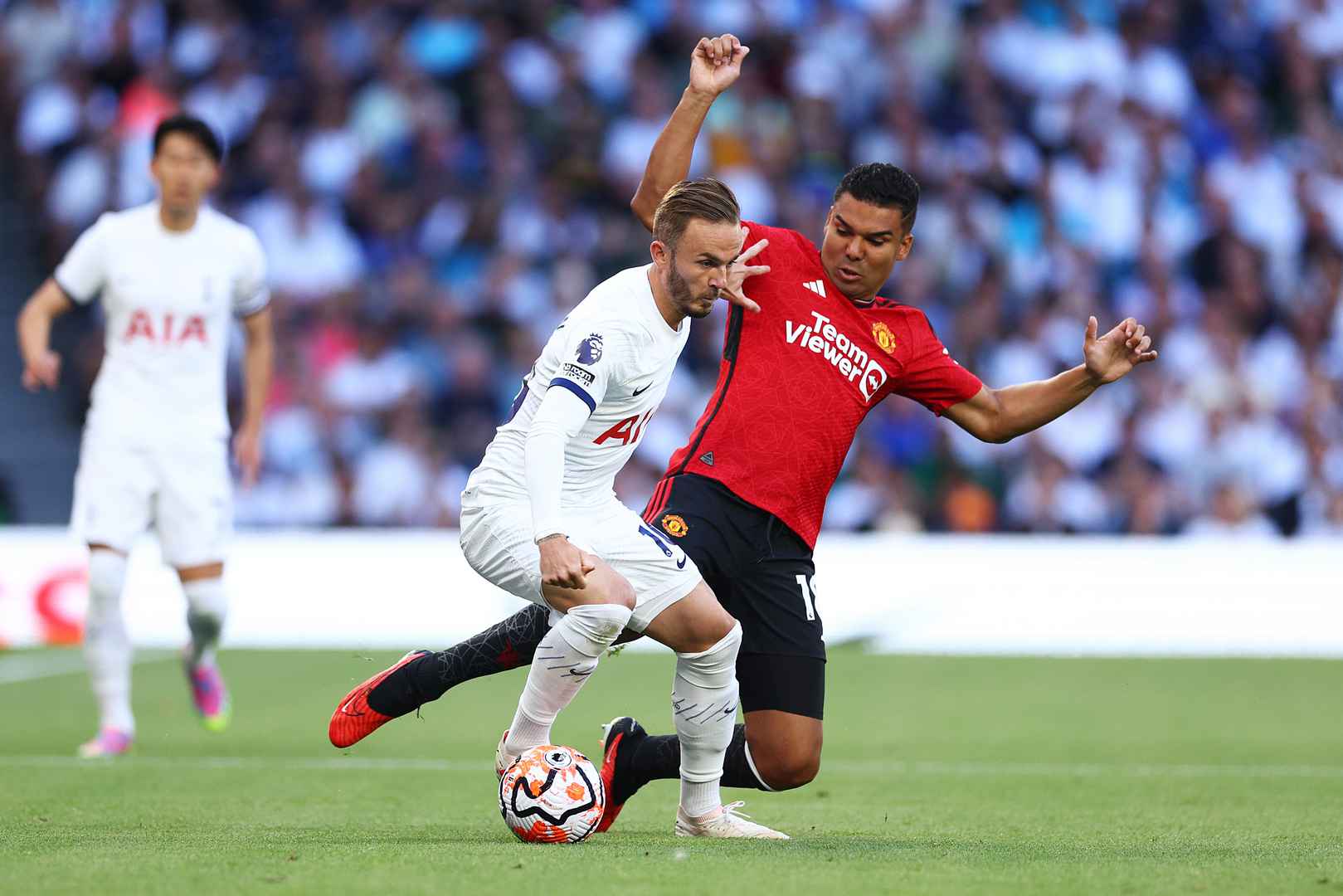
If Tottenham score first, United face a sterner structural test. Breaking down a compact defensive block demands patient circulation and coordinated off-ball movement, areas where United have sometimes lacked precision. Frustration can accelerate tempo unnecessarily, creating counter-exposure.
Neither side has consistently demonstrated calm authority when chasing matches. Emotional management will matter as much as tactical design.
Set Pieces and Micro-Decisions
In contests where open-play dominance fluctuates, set pieces frequently determine outcomes. Both teams possess aerial capability, yet marking discipline has not always been immaculate. A single lapse in concentration during a corner sequence could prove decisive.
Beyond dead balls, the match will hinge on micro-decisions: whether a centre-back steps into midfield or holds position, whether a midfielder delays an opponent rather than diving into a tackle, whether a full-back contains rather than overlaps. These small positional choices accumulate across ninety minutes, shaping the structural narrative of the game.
The Psychological Undercurrent of Old Trafford
Old Trafford remains symbolically imposing, but it no longer guarantees dominance. The crowd can energize pressing phases, yet impatience can also seep into the stadium if early pressure yields no reward. Tottenham’s challenge will be to remain composed during United’s inevitable early surges.
If Spurs survive the opening exchanges with structural discipline intact, the match may shift into a more calculated tempo rather than emotional chaos.
What Victory Would Actually Mean
For Manchester United, winning this fixture would suggest that tactical refinements are beginning to produce structural coherence rather than isolated bursts of form. It would indicate improved spacing discipline and better game-state management.
For Tottenham, a victory at Old Trafford would validate their proactive philosophy under hostile conditions. It would demonstrate that their structural ambition can withstand sustained pressure without collapsing into defensive disorder.
However, defeat for either side would not define the season. It would reinforce existing doubts about stability.
Honest Projection: Stability Over Spectacle
Given the defensive spacing issues evident in both systems, a match featuring goals at both ends appears more plausible than a controlled stalemate. Yet expecting dominance from either team would ignore the evidence of inconsistency present in both.
A narrow 2–1 result in either direction aligns more closely with tactical reality than a comfortable margin. The side that makes fewer structural mistakes, rather than the side that produces the most spectacular moments, will likely prevail.
Final Assessment: A Structural Audit Disguised as a Rivalry
This fixture functions as a diagnostic test for both Carrick and Thomas Frank. It will reveal whether either team has progressed from ambition toward coherence. It will measure defensive discipline under stress, spacing intelligence during transitions, and psychological maturity in fluctuating game states.
Manchester United versus Tottenham Hotspur may deliver spectacle, but its deeper significance lies in structural evaluation. The team that best balances proactive intent with defensive responsibility will not simply win the match. They will provide tangible evidence that their project is evolving beyond potential and toward sustainable identity.
That is what truly matters here.