Whispers from the Touchline: Ole Gunnar Solskjær’s Heart-Wrenching Verdict on Manchester United’s Fall from Grace
In the dim glow of a Norwegian autumn evening, Ole Gunnar Solskjær’s voice cracks like a fault line in the soul of Manchester United. It’s November 2025, and the man who once embodied the club’s unyielding spirit— the baby-faced assassin who snatched glory from Bayern Munich in 1999—sits for an interview on The Overlap, his words laced with the quiet devastation of a love affair gone sour. “Probably a wrong choice,” he murmurs about re-signing Cristiano Ronaldo, the prodigal son whose return ignited Old Trafford only to leave it smoldering. “Only two current players would have survived under Sir Alex,” he adds, his eyes distant, as if staring through the ghosts of Ferguson’s dynasty. And then, the gut punch: watching United flail in the Premier League’s mid-table mire is “hard to watch.” These aren’t barbs from a bitter exile; they’re confessions from a wounded devotee, raw and resonant, echoing the collective ache of a fanbase that once dared to dream in scarlet.
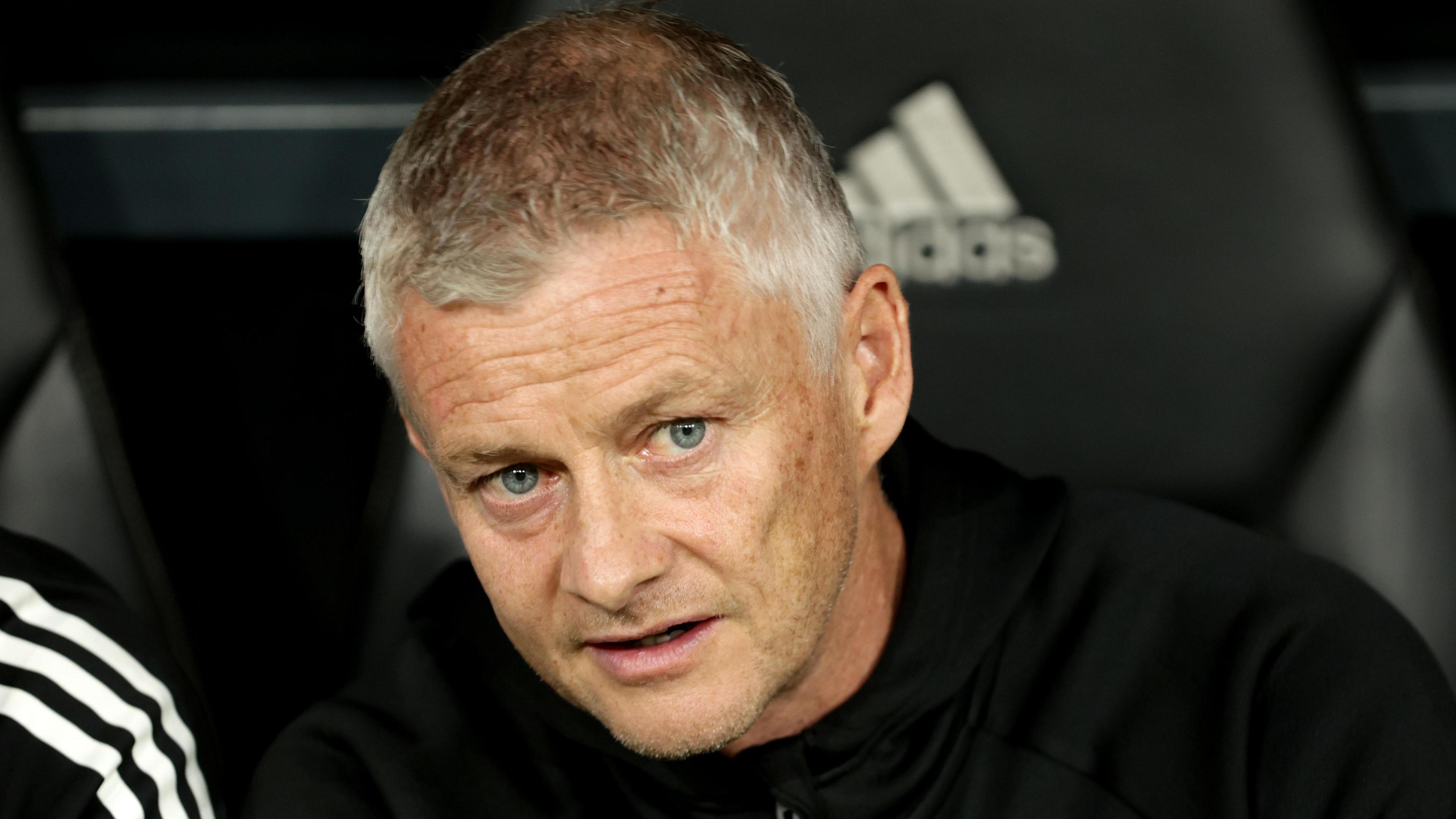
Solskjær’s reflections, delivered with the restraint of a man who knows the weight of every syllable, land like autumn leaves on a funeral pyre. They stir the embers of nostalgia, fanning flames of frustration that have simmered since Ferguson’s retirement in 2013. For United supporters, this is no mere post-match analysis; it’s a requiem for what was, a mirror held mercilessly to what is. The club, once a colossus striding Europe, now stumbles under the weight of its own ambition—seventh in the league as of this writing, with a squad bloated by ill-fated gambles and a hierarchy paralyzed by indecision. Solskjær’s words don’t just dissect the past; they bleed into the present, forcing us to confront the rot at the core. In an era where football’s giants are rebuilt on data and dollars, his honesty feels like a relic of the Ferguson era: unflinching, familial, and fiercely protective. Yet, beneath the surface, one wonders— is this gentle candor, or a veiled indictment that could reshape the club’s fractured narrative?
The Ronaldo Reckoning: A Faustian Bargain That Broke the Dream
Let’s begin with the elephant in the room, the signing that promised resurrection but delivered damnation: Cristiano Ronaldo’s 2021 return. Ole Gunnar Solskjær, in his Overlap appearance, doesn’t mince words. “It felt so right when he signed… the fans felt that at the Newcastle game, when Old Trafford was rocking,” he recalls, his voice catching on the memory of that 4-1 thrashing, Ronaldo’s brace a thunderclap of hope. But hindsight, that cruel historian, reveals the truth: “It was a decision that was very difficult to turn down… but it turned out wrong.” Ronaldo, at 36, arrived not as the wiry winger Solskjær had mentored in 2003, but as a goal machine demanding centrality—a predator whose hunger clashed with a squad still finding its teeth.
Emotionally, this admission guts you. Imagine the euphoria: the club, adrift under Ole Gunnar Solskjær interim-to-permanent tenure, snatches Ronaldo from Manchester City’s grasp in a coup orchestrated with Ferguson’s blessing. It’s poetic justice, a middle finger to rivals, a reclamation of glory. Yet, as Solskjær reflects, “Maybe other players felt less important because, obviously, this is one of the world superstars that comes in.” The ripple effects were seismic. Jadon Sancho, the £73m prodigy signed that summer to inject pace and promise, “really struggled,” Ole Gunnar Solskjær reveals now, attributing it partly to an ear infection but more damningly to the shadow of CR7’s ego. Marcus Rashford, United’s homegrown heart, wilted under the Portuguese’s gravitational pull, his form fracturing like the club’s illusions. Ronaldo tallied 24 goals that season, a statistical salve, but at what cost? The team’s fluidity evaporated; counter-attacks became afterthoughts, defenses exposed as opponents exploited the flanks Ronaldo vacated.
Analytically, this exposes United’s recruitment Achilles’ heel: a fetish for marquee names over squad harmony. Post-Ferguson, the Glazers’ era has been a parade of galactico gambles—Angel Di Maria’s flair without fight, Paul Pogba’s talent without temperament, Antony’s tricks without end product. Ronaldo epitomized this: a £17m fee masking a £480,000-weekly wage that strained finances already battered by COVID. Solskjær, ever the loyalist, shoulders the blame—”I felt we had to take it”—but his words subtly finger the boardroom’s complicity. Why pursue a 36-year-old relic when Solskjær coveted Harry Kane or Jude Bellingham, players who aligned with his vision of youth-infused grit? The answer lies in United’s culture: a desperate nostalgia, chasing echoes of 2008 rather than forging a new dawn. This isn’t just poor strategy; it’s emotional sabotage, prioritizing short-term adrenaline over long-term architecture.
The Ferguson Litmus Test: Only Two Survivors in a Squad of Shadows
Deeper still cuts Solskjær’s Ferguson verdict: “Only two current players would have survived under Sir Alex.” He doesn’t name them—speculation swirls around Lisandro Martínez’s tenacity and perhaps Kobbie Mainoo’s precocious poise—but the implication is a dagger. In Ferguson’s forge, players were molded or melted; mediocrity was mutiny. Roy Keane’s snarl, Gary Neville’s steel—these were non-negotiables. Today’s squad? Solskjær’s subtext screams of softness, a “Gen Z” generation he once labeled “petty” in a 2023 interview, prone to leaks and captaincy rejections.
The emotional toll here is visceral, a betrayal of the United DNA. Ferguson didn’t just win; he instilled a siege mentality, turning underdogs into overlords. Solskjær, his most faithful disciple, watched that ethos erode. “Some weren’t as good as they thought,” he lamented in 2023, but by 2025, it’s clear: the club’s culture has devolved into entitlement’s echo chamber. Recruitment bears the brunt—scouting stars like Erling Haaland in 2018, only for the board to balk at £4m, a pittance now dwarfed by his City billions. Instead, United chased Sancho’s hype, ignoring Solskjær’s pleas for pragmatic predators. Leadership? The Glazers’ absenteeism, Ratcliffe’s meddling—it’s a vacuum where vision should thrive.
This revelation peels back layers of institutional decay. Under Ferguson, recruitment was ruthless: buy young, blood academy gems, sell the spent. Now, it’s scattershot—£400m on wingers since 2019, yet no midfield maestro. Ole Gunnar Solskjær critique subtly exposes this: not as a whistleblower, but as a son grieving his father’s legacy. It’s hard not to feel the sting, the what-ifs piling like unanswered prayers. Would Bruno Fernandes’ flair endure Ferguson’s glare? Could Casemiro’s decline have been averted with bolder youth integration? Solskjær’s silence on names amplifies the pain—it’s an invitation to fans to judge their own, fostering a cathartic reckoning.
The Ache of Spectatorship: “Hard to Watch” and the Exile’s Lament
Perhaps most harrowing is Ole Gunnar Solskjær admission: United’s struggles are “hard to watch.” Spoken from his post-sacking wilderness—managing Besiktas in Turkey since 2023, a far cry from Old Trafford’s roar—this isn’t schadenfreude; it’s sorrow. The man who lifted United from Mourinho’s ashes, who coaxed second-place finishes from a patchwork side, now winces at 5-0 humiliations and Europa League exiles. Emotionally, it’s a father’s heartbreak, watching prodigies like Rashford—whom Ole Gunnar Solskjær praises for “finding the right balance” on loan at Barcelona—falter under pressure he once shielded them from.
This vulnerability reveals a club adrift, its culture poisoned by short-termism. Leadership, once Ferguson’s iron fist, is now a carousel: Ten Hag’s disciplinarian Dutch dream curdled into fifteenth place by 2025, his reign a litany of injuries and infighting. Ole Gunnar Solskjær words humanize the dysfunction— he loves United too much to lie, yet too loyally to eviscerate. Is he exposing flaws? Subtly, yes: the Ronaldo fiasco as symptom of boardroom panic, the Ferguson filter as indictment of player accountability. Or is it mere honesty from a “former manager who still loves the club”? I lean toward the latter, laced with the former—a gentle nudge toward introspection, not a coup.
Contrasts in Critique: Ole Gunnar Solskjær’s Whisper Against the Roars of Mourinho and Van Gaal
Ole Gunnar Solskjær quietude stands in stark relief to his predecessors’ thunder. José Mourinho, the Special One, exited United in 2018 with scorched-earth salvos: “The kitchen is a mess,” he snarled, blaming everyone from Pogba to the owners, his pressers pyrotechnics that alienated as much as they illuminated. Louis van Gaal, sacked in 2016 after an FA Cup miracle, dismissed the club as “small-time” in retirement, his philosophical barbs dissecting recruitment as amateur hour. Both men wielded words as weapons, their outspokenness fueling media maelstroms but eroding bridges—Mourinho persona non grata, Van Gaal a footnote.
Ole Gunnar Solskjær? His is the scalpel to their sledgehammers. No Twitter tirades, no leaked dossiers; just measured melancholy that invites empathy. This Norwegian reserve—rooted in his playing days as Ferguson’s silent assassin—makes his critique more potent. Where Mourinho’s rage repels, Ole Gunnar Solskjær regret resonates, positioning him as United’s conscience rather than its critic. It’s a masterclass in emotional intelligence: by loving the club aloud, he amplifies the flaws without fracturing the family.
Echoes from the Stands: Fan Fury, Media Magnification, and Ten Hag’s Tightrope
The fallout? Electric. On X (formerly Twitter), fans erupt in a spectrum of sentiment. “Ole’s telling truths the board won’t hear—Ronaldo killed our soul,” tweets, capturing the adoration for his candor. Reddit’s r/reddevils threads pulse with agreement: “Only two? Spot on—sell the lot and rebuild like Fergie,” one user vents, tallying 2,500 upvotes. Yet dissent simmers: “Ole’s bitter— he couldn’t hack it either,” counters a Mourinho apologist, igniting flame wars that mirror the club’s chaos.
Media interpretations vary, but the consensus is damning. The Guardian hails Solskjær’s words as “a warning for Amorim,” the new Portuguese boss inheriting Ten Hag’s wreckage in 2025, urging a cultural purge. BBC Sport frames it as cyclical despair: “From Busby Babes to Ice Age,” with Solskjær’s voice the thaw’s first crack. The Athletic‘s Andy Mitten, who chronicled Solskjær’s 2023 confessions, sees evolution: from defensive to diagnostic, his 2025 remarks a maturing mea culpa that spares no one, least of all himself.
For Erik Ten Hag, sacked mid-2025 after a trophy-less tumble, this is existential. Solskjær’s shade—Ronaldo as “wrong choice” echoing Ten Hag’s own clashes with the icon—undermines his legacy of iron-fisted exits (Sancho to Dortmund, Rashford loaned out). Fans, per Stretty News polls, split 60-40: 60% view Ole as healer, 40% as hinderer. In a pre-season shadowed by these ghosts, Amorim must navigate the narrative: heed Solskjær’s “gentle truths” or dismiss them as ex-manager envy? The Dutchman’s reign, already fragile, teeters on this tightrope—his data-driven rebuild clashing with Ole’s intuitive heart.
Gentle Truths or Disguised Bombs? A United Reckoning
In the end, Solskjær’s words are both: gentle truths wrapped in the velvet glove of affection, yet bombs whose shrapnel shreds the complacency. They reveal a club whose culture craves quick fixes over quiet foundations, whose recruitment chases headlines not harmony, whose leadership whispers where it should roar. Subtly exposing flaws? Undoubtedly—Ronaldo as metaphor for misaligned ambition, the Ferguson duo as siren for squad surgery. But primarily, it’s honest reflection from a man whose United blood runs redder than most, his pain our own catharsis.
The message for Manchester United? Listen, damn it. Not to sack the scapegoats, but to rebuild the soul: invest in scouts like Solskjær’s Haaland hunch, foster Ferguson’s fearlessness, shun the galactico trap. As Old Trafford groans under another season’s strain, let Ole’s whisper be the spark. For in his heartbreak lies hope—a reminder that from ashes, assassins rise. The wheel turns; it’s time to grip it, not mourn its spin.