André Onana doesn’t want an exit. He wants a war.
André Onana refuses to quit Manchester United. Fresh from Trabzonspor loan, the £44m signing insists he’ll fight Senne Lammens for the No.1 jersey next season—despite errors, lost trust, and Lammens’ stellar form. Redemption or denial in the INEOS era?
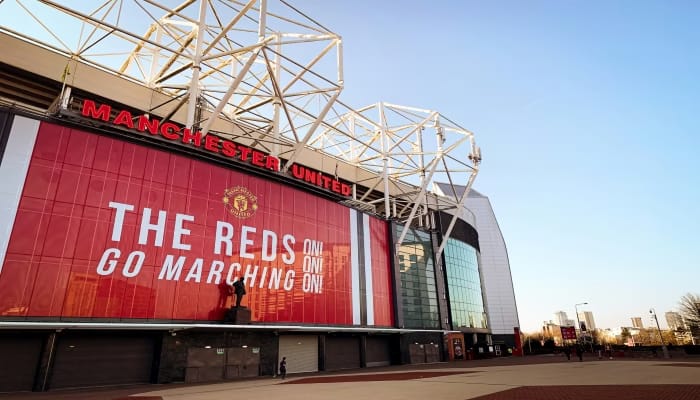
Outside Old Trafford
The 29-year-old Cameroon international, currently on a season-long loan at Trabzonspor, has told those close to him he intends to return to Manchester United this summer and battle Senne Lammens for the No.1 shirt. He believes the club will grant him that chance. Whether this is a calculated redemption arc or flat denial is the question now dominating the Manchester United goalkeeper situation heading into the 2026 summer window.

Get Samsung Galaxy S26 Ultra, Unlocked Android Smartphone, 512GB, Privacy Display, Galaxy AI, AI Camera, Super Fast Charging 3.0, Durable Battery, 2026, US 1 Year Warranty, Black. Get the phone through my Amazon affiliate link
Manchester United signed Onana from Inter in July 2023 for an initial £44.1m on a five-year deal. Two and a half seasons later, the experiment has delivered more liability than legacy. His loan to Trabzonspor in September 2025 was not a development move—it was damage limitation after recurrent errors eroded trust under Ruben Amorim. The stakes for André Onana Manchester United future are binary: reclaim the gloves or become another expensive footnote in the INEOS rebuild.
Why Onana Lost the No.1 Spot
Performance data paints a clinical picture of decline. In 2023-24, his debut Premier League season, Onana faced an unprecedented volume of shots—around 200 in the league alone, the highest single-season total for any Manchester United goalkeeper in the modern era. He made 147 saves and kept nine clean sheets, but the underlying metrics were already flashing warnings. Save percentage hovered near or below league average, with early errors leading to goals in high-profile ties, including distribution mistakes against Galatasaray that proved Nemanja Matic’s pre-transfer scepticism prescient.
The 2024-25 Campaign
By 2024-25 the regression accelerated. Across 34 Premier League appearances he conceded 44 goals at a 67-69% save rate, matching just nine clean sheets again but now ranking among the division’s worst for errors leading to goals. Opta data showed him topping or near-topping the charts with eight errors leading to goals across all competitions since the start of the previous campaign—more than any other Premier League keeper. Specific low points included two errors in a 2-2 Champions League draw at Lyon (directly culpable for both goals), a Carabao Cup exit embarrassment against Grimsby, and soft handling or positioning lapses that gifted tap-ins.
Advanced metrics told the same story. Goals prevented figures flipped negative in stretches; one analysis pegged him at -4.7 xGOT conceded versus expected in early periods before marginal improvement. Distribution, the asset that supposedly justified his fee under Erik Ten Hag’s high-line build-up, became erratic. Long-pass completion rates dropped from promising early levels (mid-60s%) to the low 50s by season’s end. Short-passing accuracy in transitions hovered in the mid-80s but often invited pressure when inaccurate.
Andre Onana vs Other Goalkeepers
Compare that with elite Premier League benchmarks in the same window. David Raya at Arsenal posted save percentages consistently above 75% with minimal errors and positive goals-prevented totals. Alisson at Liverpool and Ederson at Manchester City maintained sub-1.0 goals-against averages behind settled defences, with distribution accuracy north of 85% and near-zero game-changing blunders. Onana’s shot volume was inflated by Manchester United’s porous defending, yet his conversion of those opportunities lagged. The tactical mismatch was clear: Amorim’s system demanded reliability in transitions and set-piece organisation. Onana’s occasional heroic saves—strong shot-stopping bursts that prevented 2.7-4.7 goals in patches—could not offset the psychological tax of recurring mistakes at Old Trafford.
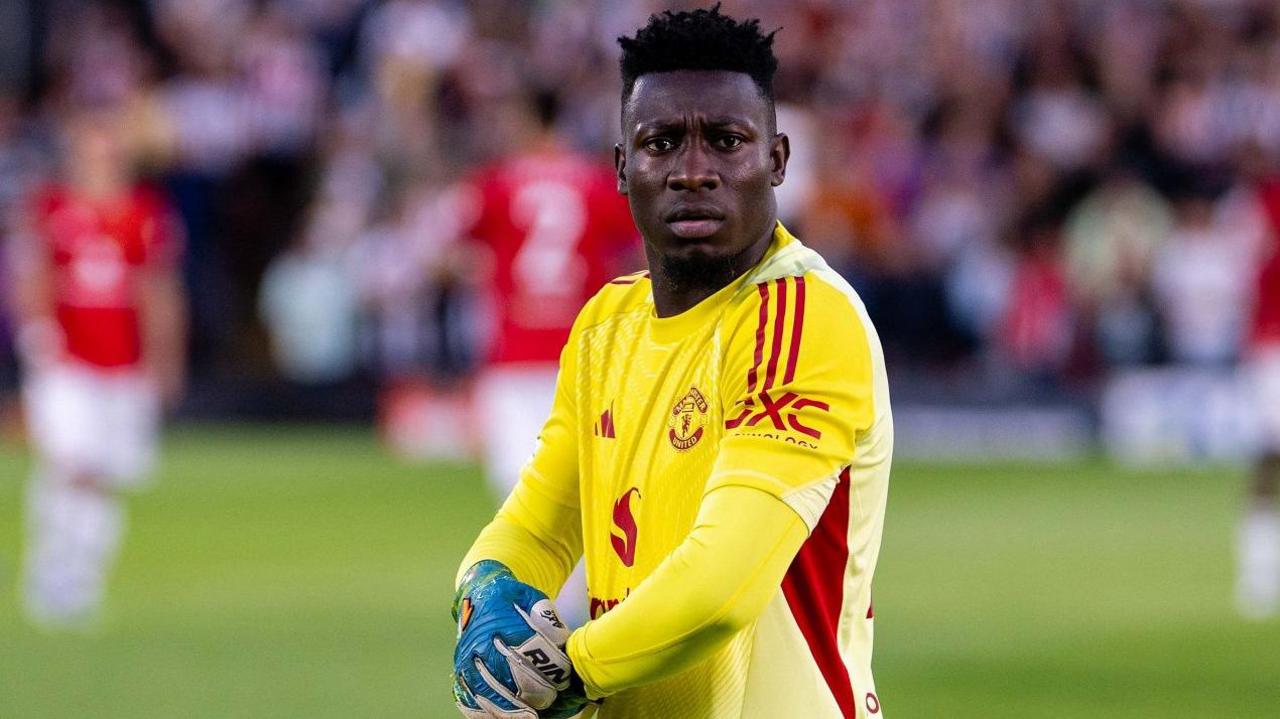
The psychological dimension compounded the technical. Arriving as the heir to David de Gea’s long reign, Onana faced immediate scrutiny in a results-obsessed environment. High-profile slips eroded confidence; substitutions and benchings followed. By April 2025 Amorim had seen enough after the Lyon display, dropping him for the Newcastle trip. Come the 2025-26 season, the decision was made: sign 23-year-old Senne Lammens from Royal Antwerp for £18m and ship Onana out. The loan to Trabzonspor carried no fee and, crucially, no wage contribution from Manchester United—freeing the books on his £120,000-a-week base salary (rising to £170k in European campaigns).
Does the Manager Still Trust Him?
Selection trends under Amorim, and now interim Michael Carrick, speak louder than any private assurance. Onana started the 2025-26 campaign behind both Lammens and Altay Bayindir before the latter’s own inconsistencies forced the Belgian’s promotion. Lammens has started 21 consecutive Premier League games, kept five clean sheets, conceded 26 goals, and earned consistent praise for calmness under pressure. His display in the recent 1-0 win at Everton—vital saves, commanding set-piece handling, zero chaos creation—drew Michael Carrick’s public endorsement: “You want a goalkeeper to be reliable, trustworthy… Senne is that.”
Body language during Onana’s final weeks at the club told its own story. Substitutions almost after errors, minimal interaction in warm-ups, and the swift pivot to a younger, cheaper profile signalled eroded trust. Amorim’s public comments, before his January 2026 exit, framed the goalkeeper issue as structural rather than fixable with the incumbent. The message was implicit: this is not a temporary dip. Public reports confirm Onana faces “a struggle to reclaim it” despite his belief he will compete. In modern elite management, trust is data-led and performance-proven. Lammens’ 7.18 FotMob average rating and error-free start have reset the baseline.
INEOS Decision: Sentiment or Ruthlessness?
INEOS inherited a bloated wage bill and a squad rebuild mandate when they assumed sporting control. Keeping Onana means absorbing two remaining years at £6.2m+ annually, plus any performance bonuses, while his market value has cratered to €15m (December 2025 Transfermarkt valuation). Selling him this summer likely for £10-15m to a mid-table Premier League side, Turkish club, or Saudi interest represents a £30m+ hit on the original fee but clears the books and creates headroom.
The recruitment model under INEOS prioritises youth, data, and scalability. Lammens, signed at 23 for £18m, fits perfectly: proven in Belgium, adaptable, low risk, high upside. Retaining Onana as backup or squad insurance contradicts that philosophy. Financially, United reported a £4.2m net profit in Q2 2025-26 (versus prior-year loss), but revolving credit facilities rose and exceptional items from managerial changes loom. Every £120k weekly saving counts in a squad where squad analysis demands efficiency. Sentiment has no line in the INEOS spreadsheet. Ruthlessness has defined their approach elsewhere why exempt the goalkeeper?
If Onana Stays, What Must Change?
Assume, against the data, he wins pre-season competition. Defensive structure must tighten around him; the high-shot volume that masked his weaknesses cannot recur. Build-up patterns need recalibration fewer risky passes into midfield congestion, more disciplined short options. Confidence restoration would require a run of clean sheets and minimal scrutiny, something Old Trafford rarely grants.
Competition in goal remains non-negotiable. Lammens has already shown starter quality. A genuine battle risks destabilising both. Manchester United’s squad analysis shows the position demands one undisputed No.1 to anchor the press and transitions. Onana’s history suggests that if he stays, the cycle of doubt restarts by October.
The Cold Reality: United Cannot Afford Another Goalkeeping Gamble
Manchester City, Arsenal, and Liverpool treat the position as settled infrastructure, not recurring experiment. Donnarumma, Raya, and Alisson operate with near-zero tolerance for error chains. Their clubs invest once and move on. Manchester United’s recent history, De Gea’s long decline, the Onana misstep, Bayindir’s cameo failures shows the cost of instability: dropped points, managerial pressure, transfer budget leakage.
Elite teams do not indulge “fight to re-establish” narratives when a younger, performing alternative exists. Lammens’ form has already stabilised the Manchester United goalkeeper situation in ways Onana never sustained. Another gamble risks derailing the broader INEOS rebuild—tactical cohesion, dressing-room confidence, and financial flexibility for outfield upgrades.
Final Verdict
Manchester United should cash in this summer. Evidence from two full seasons, loan exile, and Lammens’ immediate impact is overwhelming: Onana’s distribution promise never fully materialised under Premier League intensity, his error rate remains anomalously high, and the financial drag is unsustainable. A decisive sale—targeting £12-15m plus wage offload—aligns with data-driven recruitment and frees resources for squad depth. Prediction: by 1 September 2026, Onana will be a former Manchester United player. The club’s next goalkeeper will arrive as No.1, not challenger.
Is Onana’s determination admirable… or is it delaying the inevitable? The numbers, the selections, and the rebuild blueprint say the latter. Manchester United’s future cannot be held hostage by one keeper’s war.