How Robotics is Transforming Manufacturing, Logistics, and Warehousing in 2026
Robotics is transforming manufacturing, shipping, and storage by increasing production around-the-clock, cutting expenses, and changing the nature of work. Automation is here, from Tesla’s humanoid future to Amazon’s army of a million robots.
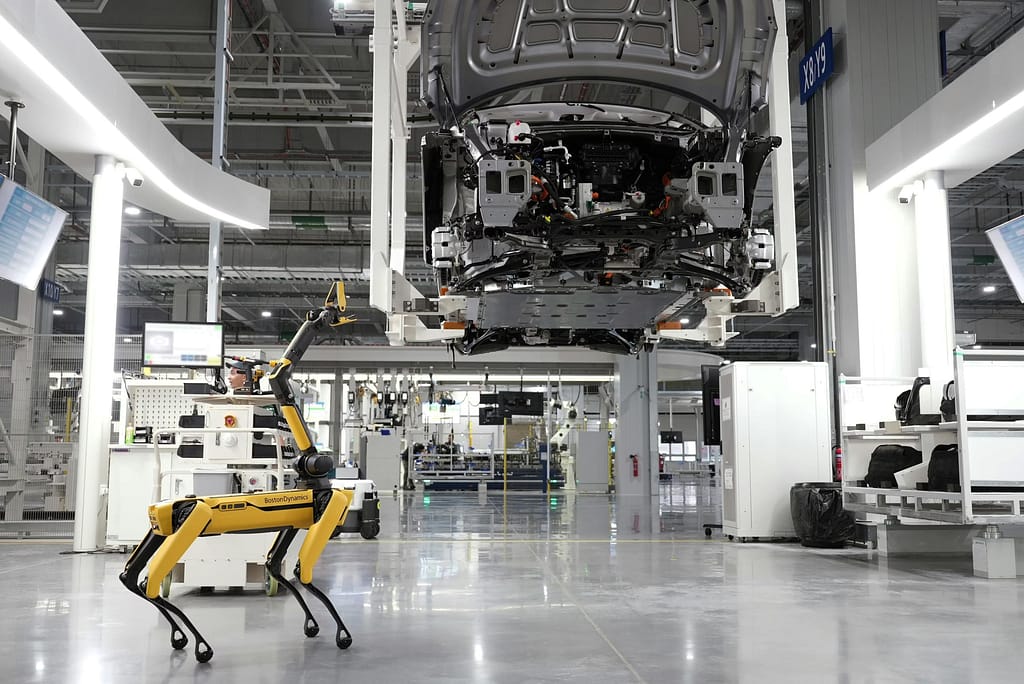
Think about a vast warehouse bustling with activity at three in the morning, with not a single human in sight. Pallets fly across floors under the guidance of fleets of autonomous mobile robots, while robotic arms accurately sort thousands of packages every hour. This is the everyday reality of robots changing businesses all around the world. By 2026, robotics will have completely changed manufacturing, shipping, and storage, resulting in previously unheard-of levels of efficiency.
Robots are revolutionizing the production, transportation, and storage of commodities, with over 450,000 logistics robots supplied worldwide in 2025 alone, a sixfold increase from 2019. Productivity is skyrocketing, expenses are falling, and supply chains are becoming more resilient to upheavals as businesses use robotics automation. However, this robots revolution also raises important issues regarding employment and the nature of labor in the future.
Robotics Transforming Manufacturing: Precision, Speed, and 24/7 Output
From heavy assembly-line arms to sophisticated, adaptable devices that work with people, robotics in manufacturing has come a long way. Robotics is revolutionizing manufacturing at Gigafactories in automotive behemoths like Tesla. Robotic systems handle welding, painting, and assembly at speeds that humans just cannot match at Tesla’s Shanghai factory, which works at 95% automation levels. The business is now expanding its humanoid Optimus robots, and by the late 2020s, it hopes to produce millions of units a year on specialized manufacturing lines at Giga, Texas. By doing dangerous or repetitive jobs, these robots will free up people for higher-value positions.
Another excellent example of robotics in production comes from Foxconn, a pioneer in electronics. Thousands of Foxbot humanoid robots were used by the corporation for assembly and quality control, replacing manual labor with supervision and creativity. According to studies, the use of robots in Chinese manufacturing increased labor productivity by 11% and total factor productivity by 8%. It also increased overall employment in expanding companies by raising output. Here, robotics is revolutionizing industries through zero-defect precision, robots consistently repeat movements with sub-millimeter accuracy.
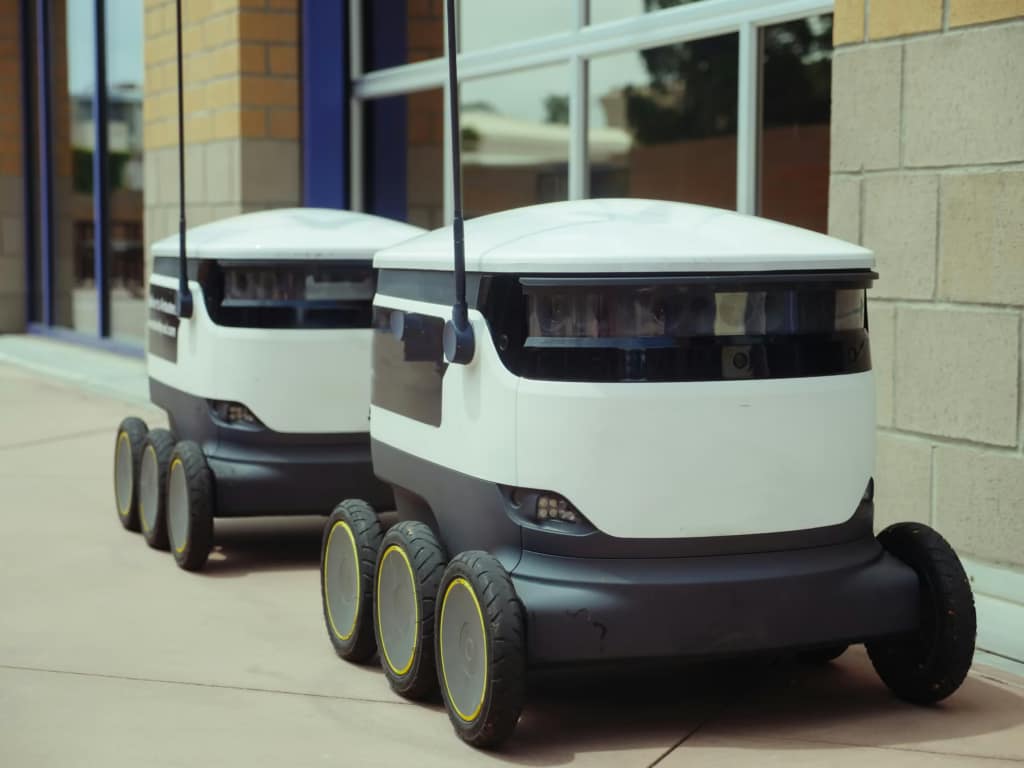
Smaller industries now routinely use Cobots, or collaborative robots, from firms like Universal Robots. They handle delicate soldering or heavy lifting without the need for safety cages while working securely beside humans. The outcome? Manufacturing facilities increase output by 10–20% and improve worker productivity by 7–20%. Because robotics in production operates continuously, unaffected by shifts or weariness, downtime decreases. As AI vision systems detect flaws quickly, quality significantly increases and mistake rates decrease. Manufacturing is being transformed by robotics, which is not replacing factories but rather enhancing them to compete on a global scale.
Robotics in Logistics and Warehousing: Streamlining the Supply Chain Revolution
Robotics adoption is now centered on logistics and storage. Since 2012, Amazon has deployed over a million robots throughout its distribution hubs, making it the poster child. By moving whole inventory pods to pickers, its Kiva-style mobile robots, now developed into Hercules and Proteus models, reduce walking time by 75–80% and increase pick rates from 100 items per hour to 300–400. Inventory is processed 75% quicker by the Sequoia system alone. Orders fly out the door at previously unthinkable sizes thanks to robotics in storage, which directly supports the expansion of e-commerce.
Using a multi-vendor robotics strategy, DHL, the world’s leading logistics company, has automated 95% of its warehouses. Container unloading at 650–700 cases per hour, tasks that previously taxed human teams, is made possible by partnerships with Boston Dynamics for Stretch robots (more than 1,000 units ordered). While autonomous forklifts increase efficiency by 20%, Locus Robotics’ autonomous mobile robots (AMRs) manage picking and deliver 30% more units per hour. By reducing physical strain and injury, robotics in logistics at DHL frees up human workers to concentrate on solving complicated problems.
Symbotic solutions are used by other industry giants, such as Walmart, to double fulfillment center productivity through automated storage and retrieval. Thousands of grid-climbing robots work in Ocado’s supermarket warehouses to complete 65,000 orders every week with little assistance from humans. With quicker throughput, fewer mistakes, and robust chains that can withstand manpower shortages or demand surges, robotics is revolutionizing the logistics and warehousing sectors and taking on the e-commerce boom. The trend is picking up speed, with warehouse robots markets expected to reach $25 billion by 2034.
How Robotics is Improving Productivity Across Key Industries
Fundamentally, robotics is revolutionizing businesses by producing quantifiable increases in production. Robotics in manufacturing allows for continuous, round-the-clock work, which reduces production time while preserving perfect uniformity. Massive productivity increases result from a 2.7% decrease in labor hours needed for every 1% increase in robot density. AI-guided navigation and picking allow human-robot teams in warehouses to increase efficiency by up to 85%, with throughput occasionally increasing fivefold.
The advantages of logistics are similarly impressive. Bottlenecks in warehousing are eliminated by robotics, which uses machine vision to reduce mistakes to almost nil while sorting, lifting, and transporting without strain. Almost 4,000 items are shipped per employee each year thanks to Amazon’s robots fleet (up from 175 in 2015). Similar leaps can be seen in DHL’s deployments: AMRs dynamically adjust routes to traffic, while robotic picking cells stack a variety of boxes flawlessly.
Why are these advances occurring? Robotics combines speed, accuracy, and scalability in production, shipping, and warehousing. While AI enables them to learn and optimize on the go, robots do repetitive jobs flawlessly. When hazardous tasks are transferred to machines, downtime decreases, waste decreases, and safety increases. In general, robots’ transformation of sectors increases competitiveness; businesses claim 10–15% cost reductions and quicker cycle times that increase market share. The productivity narrative is a data-driven shift that is now taking place; it is not just hype.
Why Businesses Are Adopting Robotics Automation at Record Pace
For solid reasons that go beyond trendy terms, businesses are racing toward robotics automation. Millions of industrial and logistical positions remain vacant in the United States alone due to labor shortages, which are made worse by aging workforces and changing consumer demands. In production, robotics rapidly fills gaps and operates around-the-clock without the hassles of hiring. DHL’s Boston Dynamics and Locus deployments are primarily motivated by manpower shortages.
Saving money closes the sale. Due to decreased labor costs, fewer accidents, and fewer mistakes, first robot investments soon pay for themselves. Foxconn’s transition to robotics significantly reduced the cost of repetitive tasks while increasing productivity. By avoiding the need to hire hundreds of thousands more personnel in warehouses by 2027, Amazon’s army of one million robots will save billions. E-commerce requires next-day delivery, which only automation can consistently provide. Robotics is revolutionizing sectors by providing quality and speed benefits.
Urgency is increased by supply-chain resiliency and worldwide rivalry. Reshoring, when automation in logistics makes domestic businesses cost-competitive once again, is encouraged by tariffs, disruptions, and rising wages. Sustainability is also important since accurate robotics minimizes material waste. ROI is indisputable, with warehouse automation markets expected to reach $30 billion in 2026 and double by 2030. Companies need robotics automation to be flexible in a changing world, not as a luxury.
Robotics and Employment: Disruption, Creation, and the Human Element
Jobs are undoubtedly impacted by robotics’ transformation of sectors, provoking discussion about opportunity versus displacement. According to studies, one robot for every 1,000 people might result in a 0.2% decrease in employment and a modest drop in salaries in impacted areas. Manufacturing is most affected, with millions of routine jobs mechanized since 2000. According to Oxford estimates, up to 20 million industrial employment worldwide may change by 2030. Amazon’s quest for robotics in warehousing has resulted in an 8–10% reduction in typical fulfillment center manpower in recent years.
However, the image isn’t entirely negative. Jobs in robot programming, maintenance, AI supervision, and system integration are created by robotics in manufacturing and logistics. According to the World Economic Forum, increased digital use will result in net employment creation, with 170 million new positions balancing job losses. Cobots alter the dynamic by augmenting rather than replacing workers, allowing robots to undertake tedious tasks while people tackle complicated choices. Following robotic integration, DHL employees report increased happiness and reduced physical strain.
Reskilling is essential. Businesses like Tesla and Foxconn retrain employees for higher-value jobs, sometimes increasing pay. In the end, robotics’ impact on employment changes the nature of labor; regular tasks decrease while creative, technical, and supervisory professions increase. The robots revolution need proactive training, yet data indicates that increased productivity drives economic expansion, which in turn generates additional possibilities. Instead than terminating employment, robotics in manufacturing, shipping, and storage is changing it.
Industries Most Affected by Robotics: Manufacturing, Logistics, and Warehousing Lead the Charge
The industries most affected by robotics include manufacturing, logistics, and warehousing, and for good reason. 38% of industrial robots worldwide are used in the automotive and electronics industries. Robotics is used by Ford, Tesla, and BMW (using Figure humanoids) for high-quality, precise assembly. Here, robotics is revolutionizing production by enabling fast customisation and lights-out factories.
Logistics comes next. Robotics is used in logistics at scale by e-commerce behemoths like Amazon and DHL to manage increasing quantities that would be too much for human-only operations. For efficiency and precision, FedEx and UPS employ robotic sorters and unloaders. The fastest-growing industry is warehousing, where autonomous systems like Symbotic and Locus dominate new developments and markets are expected to reach $26 billion by 2033.
Due to the repetitive, high-volume, and physically demanding nature of their work, these three industries lead the way while others observe and learn, retail, food, and even agriculture adopt comparable tech. Industry transformation by robotics starts here and spreads outward. Massive efficiency is produced by the concentration, which also puts pressure on rivals to catch up or lag behind.
The Future of Robotics in the Global Economy: AI Integration and Economic Transformation
In the future, robotics will change industries and significantly alter the world economy. With professional and service robots driving development, the robotics industry is expected to reach $160–260 billion by 2030. Mass deployment, hundreds of thousands to millions of units of humanoids, such as Tesla’s Optimus, is anticipated to do a variety of activities across industries. When integrated with more general intelligence technology, AI integration transforms robots into autonomously learning, adaptive “physical AI” systems that can contribute $15.7 trillion to the world economy.
Logistics networks become very resilient and efficient, warehouses are on the verge of complete automation, and production relocates to expensive areas thanks to reasonably priced robotics. Less expensive robotic labor might increase production without putting pressure on wages, which benefits developing countries as well. However, there are still issues with fair transitions, moral AI governance, and infrastructure for broad adoption.
Reshoring, sustainability, and new business models will be fueled by robotics in manufacturing, shipping, and warehousing. As robotic abundance reduces costs and promotes innovation, the world’s GDP may increase. The future is bright: if societies make investments in inclusive policies and education, robots’ transformation of sectors will lead to riches, safer workplaces, and plenty. Warehouse robotics alone may generate more than $6–25 billion a year by 2035, but the real value is found in transformed economies where people and robots work together to accomplish goals that neither could on its own.
In conclusion, robots’ transformation of manufacturing, logistics, and storage is not a far-off future; rather, it is already here, bringing about productivity booms, strong adoption drives, and subtle changes in employment. Prominent companies such as Amazon, Tesla, DHL, and Foxconn demonstrate the effectiveness of the strategy. The global economy is poised for a new age of efficiency and opportunity as robots continues to advance with AI. In this robotics-driven future, companies and employees that adapt will prosper.