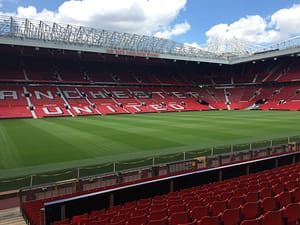
Unstoppable Battle: What Manchester United Must Do to Beat Brighton — Match Preview & Tactical Plan

Saturday’s clash between Manchester United and Brighton & Hove Albion at Old Trafford takes on significance beyond three points. United are in the midst of a rebuild under manager Rúben Amorim and coming off a statement win away from home, while Brighton continue to punch above their weight and pose a complex tactical challenge. The result will reveal whether United can convert the momentum of their recent victory into consistent home performances and climb the table, or if Brighton will exploit United’s vulnerabilities and extend their impressive recent dominance. It’s not just about who wins — it’s about the tone United set for the rest of the season. Brighton arrive confident and organised; United must show maturity, tactical discipline, and an ability to impose their game.
Current form and context
In this match preview, Form and context are vital here. United’s 2-1 win at Anfield was a statement result, restoring belief in the squad and underlining that the new era can deliver big results under pressure. But one victory does not mean a season make — the challenge now is consistency, especially at home, where United have for seasons wrestled with uneven performances. Meanwhile, Brighton have been quietly efficient in recent weeks: their win away at Newcastle demonstrated not just resilience but the capacity to transition defence into attack with real speed and intelligence. The stats reflect the subtle nuances: head-to-head data suggests that Brighton have actually had the edge in recent clashes — they’ve won six of the last eight meetings with United. AiScore+5ESPN.com+5SI+5 That is a worrying trend for United at home, and it serves as a reminder that Brighton are no simple “away team” to be dispatched easily. To dominate this fixture, United must not only rely on home advantage but must improve substantially in key phases: from pressing and possession transitions, to set pieces, to defensive organisation.
Team news — injuries, suspensions & selection dilemmas
In terms of team news, United are relatively fortunate in that they face this match without a large number of enforced absences, which gives Amorim the luxury of selection. However, luxury brings dilemmas: whether to stick with the side that delivered away or to rotate and freshen up. One must consider the full-back/wing-back slots and whether United should keep continuity or inject pace and youth. For Brighton, their squad appears stable and free from major injury crises — meaning United’s tactical plan must assume a full-strength opponent. The mental state is as important as the physical: United must channel the confidence from their recent win without slipping into over-confidence. Brighton, conversely, may have the psychological edge: recent wins bring momentum, and the belief that they can beat United at Old Trafford may make them dangerous. The fact that Brighton have won their last three visits to Old Trafford underlines that psychological edge. RotoWire+3ESPN.com+3The Busby Babe+3 United must manage not only their physical lineup but also the underlying mindset. Do they start fast and aggressive, or do they risk being hit on the break by a confident Brighton?
Predicted line-ups & formations
A look at the probable starting XIs and formations offers insight into how the two sides might set up tactically.
- Manchester United (likely): Amorim might choose a 3-4-2-1 or 4-2-3-1 depending on personnel and opposition shape. A back three of De Ligt, Maguire and a third option may give defensive solidity, with wing-backs providing width. A double pivot — one defensive mid anchoring, one linking forward — could be key. Up front, United may deploy an inside-forward or support striker behind the main striker to exploit half-spaces. Manchester United predicted XI: Lammens; De Ligt, Maguire, Shaw; Amad, Casemiro, Fernandes, Dorgu; Mbeumo, Cunha; Šeško.
- Brighton (likely): Brighton often operate with a compact midfield, disciplined backline and full-backs/wing-backs who push to overload flanks. A 3-4-2-1 shape is common, allowing rapid transition from defence to attack, with players capable of interchanging positions behind the striker. Brighton predicted lineup (4-2-3-1): Bart Verbruggen (GK), Mats Wieffer, Jan Paul van Hecke, Lewis Dunk, Ferdi Kadioglu, Carlos Baleba, Yasin Ayari, Yankuba Minteh, Georginio Rutter, Diego Gomez, Danny Welbeck.
The tactical battle hinges on how United impose their structure and how Brighton challenge it. For example, if United’s wing-backs are caught too high or too wide, Brighton will exploit the vacated half-spaces. Conversely, if United can compress midfield and force Brighton into wide channels, they can gain territorial advantage. Recognising these shapes in advance allows United to plan transitions, pressing triggers and overloads. The predicted line-ups from two sources agree broadly, although exact names may vary. Betfred Insights+1
Tactical blueprint — what Manchester United must do to win
1) Dominate transitions and punish Brighton’s moments of vulnerability
Brighton are organised and patient, often allowing teams to probe before striking themselves. What United must not do is fall into the trap of static possession and allow Brighton to control rhythm. Instead, United should focus on quick triggers: when possession is regained, a pivoting midfielder should scan for the first forward pass, the wing-back should look to burst into half-spaces, and the inside-forward should exploit runners beyond the backline. If United can transition fast — within 3-4 passes — they will catch Brighton unbalanced, especially since Brighton’s shape leaves space in the channels when their wing-backs push. United must therefore practise high DPI (direct purposeful intrusion) and intelligent positional rotation that invites Brighton to press and then breaks the press with rapid balls. This dynamic will also prevent United from being pinned down and will force Brighton to defend more often, reducing their capacity to initiate their own transitions.
2) Win the midfield battle with a staggered double pivot
Midfield control is central to United’s success in this game. A staggered double pivot — one holding midfielder sitting deep to screen the defence and cut passing lanes, and a second more mobile midfielder linking defence to attack — gives United both stability and creativity. The holding midfielder (e.g., Casemiro or equivalent) should neutralise Brighton’s central overloads and ensure the back-line isn’t pulled out of shape. The linking midfielder (e.g., Bruno or an attacking mid) can occupy pockets in the half-spaces and receive on the turn. This dual role prevents Brighton from gaining ascendency in midfield, stops their build-up play, and allows United to control tempo. Crucially, United must not allow Brighton to dominate wide midfield zones and force play into central congested areas; instead they should shift play quickly and exploit the half-spaces.
3) Neutralize Brighton’s wide threats without over-committing
Brighton’s success often comes from wide full-back or wing-back incursions and positional rotations that overload the flank, then cut inside. United must design a defensive structure that is disciplined: the wing-back or wide centre-back must stay in position, prevent the simple cross-pass into wide areas, and force Brighton inside or into less dangerous zones. However, over-committing to shut down the flank risks creating gaps between defence and midfield that Brighton’s runners will exploit. So United must stay compact, communicate well, and rotate between pressing aggressively when the ball is on one flank and shifting across rapidly when the play moves. When United have possession themselves, the wide players should invert or drift inside, reducing width for Brighton’s flanks to exploit and turning play into more favourable central zones.
4) Set‐pieces as a decisive edge
Set pieces are often the difference in tight Premier League games, and United must treat them as a key weapon. Offensively, United should vary their corner kicks and free-kick routines: mix near-post flick-ons, far-post overloads, short corners to draw out defenders, and decoy runners. Exploit Brighton’s shape by creating confusion through movement and blind-side runs. Defensively, United need strict marking. Brighton have shown in previous meetings they can take advantage of defensive lapses — for example, United’s last home defeat to Brighton was season-defining in terms of sloppy goals. Reuters United’s set-piece preparation needs to be sharp: the smallest lapse could relinquish control. Given the closeness of the contest, set pieces may be the source of the decisive goal.
5) Press selectively, then sit deeper in phases
Pressing is a double-edged sword: when done well, it disrupts the opposition; when done poorly, it leaves you exposed. United should therefore deploy high-intensity pressing not as a constant state but as a triggered action — for example, when Brighton’s goalkeeper plays a risky pass, when a centre-back receives under pressure, or when Brighton’s midfield movement is static. These are recurring patterns in Brighton’s build-up. After forcing a turnover, United should then swiftly transition into a more controlled shape, conserve energy, and manage the game tempo. When Brighton have possession and are comfortable, United should retreat into a compact mid-block, maintain vertical compactness, and force Brighton wide before re-engaging. This hybrid model of aggressive bursts and controlled phases allows United to manage both possession and momentum, preserve physical freshness, and reduce exposure to Brighton’s rapid transitions.
Key individual battles to watch
- Bruno Fernandes vs Brighton’s midfield enforcers: Bruno’s ability to find space between the lines and receive on the turn will be crucial. Brighton will aim to restrict him from getting time on the ball and force him backwards — United must ensure he remains a threat. If he can receive, turn and play forward passes into the wing-back or striker channel, United will create dangerous chances.
- United wing-backs vs Brighton wing-backs/full-backs: The wide duels may define the game. United’s wing-backs must bring both defensive solidity and attacking support; their capacity to beat their opposing marker and deliver early crosses or cut inside will stretch Brighton’s structure. Conversely, Brighton’s wide players will look to exploit the space behind United’s wing-backs if they push too high — mutual vigilance is required.
- Centre-backs handling Brighton’s runners: Brighton often operate with runners from deeper midfield lines or late-arriving wide players. United’s centre-back pairing (plus a defensive midfielder covering) must anticipate movement, avoid getting drawn out wide, and maintain positional discipline. If United’s back‐line is sloppy or pulled around, Brighton will punish with sharp passes and clever movement. This is especially relevant given United’s recent home vulnerabilities.
Set-piece & tactical micro-adjustments (practical plays)
Let’s break down some concrete plays United can use:
- Short corner + near-post runner: United can draw Brighton’s defence out by playing a short corner first, then switching quickly for a near-post runner, catching the back-post defenders out of position.
- Third-man overlaps: On the flank, United’s inside forward drifts inside, wing-back overlaps, centre-back drifts wide. This creates a 2v1 or 3v2 overload, opening space for the wing-back or full-back to deliver the early cross.
- False-9 movement / striker dropping deep: If United play with a false-9, this can drag Brighton’s centre-back or defensive midfielder out of position, creating space for an inside forward or winger to exploit the vacated zone. United should train this sequence: striker drops, inside forward runs in behind, wing-back width.
- Game-management substitutions and tempo control: If United take a lead, they must not simply defend rigidly — instead: shift to safe possession, reduce risk passes, use the flanks to recycle possession, take the sting out of Brighton’s rhythm, and introduce fresh legs in midfield to shore up control. Using throw-ins or wide restarts to reset the shape and slow the game helps preserve the lead.
Predicted scoreline & why
Given the tactical factors, I predict a tight, competitive match. United’s home advantage and impetus from recent win give them a slight edge, but Brighton’s recent dominance in this fixture reduces that margin. If United execute well in transitions, exploit wide zone space, and defend set pieces cleanly, they can win by a narrow margin — a 2-1 or 1-0 home win looks the most likely. However, if United are sloppy, concede early or lose the midfield battle, Brighton are capable of taking a draw or even winning (given their last three away wins at Old Trafford). The statistical backdrop supports this: head-to-head data shows United 10 wins, Brighton 8 wins, and 1 draw in the last 19 meetings. FootyStats+1 And more recent data suggests Brighton have gained the psychological edge in recent encounters, which underscores how little margin United have for error. SI+1
Player to watch for Manchester United
- Bruno Fernandes: In recent matches, United’s creativity and chance creation often flow through Bruno. His ability to pick out line-breaking passes, find runners, and influence transitions is central. If United are going to unlock Brighton’s defence, Bruno must have space and time.
- Wing-back (Amad / Dorgu): These players will be heavily involved both offensively and defensively. Their speed, stamina, and ability to shift quickly from attack to defence (and vice versa) will determine how much pressure United can sustain and how exposed they’ll be to counter-attacks.
Player to watch for Brighton
Brighton’s attackers present a genuine threat for any defence. Yankuba Minteh is perhaps the standout danger: his explosive pace, dribbling ability and willingness to take defenders on one-on-one make him a constant menace on the flank or cutting inside. Alongside Minteh comes Kaoru Mitoma, whose low centre of gravity, sharp movement and finishing ability have cost defenders dearly; he thrives in transition and half-spaces. Then there is Danny Welbeck, offering experience, intelligent movement and a knack for arriving late in the box – he may not always dominate the headlines but his timing and positioning mean he remains dangerous. Together, these players form a collective attacking structure rather than a single star-heavy threat: Minteh’s pace, Mitoma’s craft and Welbeck’s awareness give Brighton multiple avenues of attack. For United’s defenders, discipline, alertness and anticipation of rotations and runs will be critical — losing concentration for even a second or mis-tracking a wide player’s run can invite a high-quality chance.
Tactical risks for United and contingency plans
Risk 1: Leaving too much space behind wing-backs
If United’s wing-backs push too high without adequate cover, Brighton’s quick counters and full-back support will exploit the vacated half-spaces.
Contingency: Ensure one defensive midfielder drops towards the flank when the wing-back pushes; instruct wing-backs to be selective in their forward runs, and the wide centre-back to shift across to cover.
Risk 2: Overreliance on long balls into the striker
If United bypass the midfield and simply hope the striker wins aerial duels or flicks on without build-up, Brighton will soak it up and launch counters.
Contingency: United should alternate their build-up: patiently circulate between the lines for 5-7 passes to draw Brighton’s shape out, then break quickly with a purposeful vertical or diagonal pass into the zone behind the full-back. Use the high pressing moments to win the ball in midfield and exploit the organised transition.
Risk 3: Complacency after scoring
Taking a 1-0 or 2-0 lead can lead to a drop in tempo and concentration. Brighton will probe and force mistakes if United drop energy or discipline.
Contingency: After scoring, United must reset into a mid-block, use safe possession, recycle possession through the keeper or deep midfield, and bring on fresh legs in the next 10–15 minutes to maintain intensity. Use time-management techniques: wide throw-ins, safe restarts, and keeping one foot on the ball.
Risk 4: Fatigue / late-game lapses
The Premier League is physically demanding; late in games United have previously shown lapses in concentration or structure. Brighton could exploit this.
Contingency: Monitor fitness levels, use substitutions around the 60–70 minute mark to refresh key midfielders or wing-backs, and instruct the team to maintain shape when tired: wide players tuck in, central midfield narrows, and there is less chasing of second balls unless necessary.
Fan notes: what United supporters should expect
Supporters should prepare for a committed, organised Brighton side that will test United’s discipline and patience. Unlike some away teams who come to defend rigidly, Brighton will look for moments to break, especially from wide overloads or turnover transitions. Fans at Old Trafford should be ready for a tactical chess match: the large crowd noise, high tempo, and early energy will help United start strongly, but the team must sustain that. Large supporters’ presence can rattle Brighton and help United’s pressing sequences; so the opening 15–20 minutes are crucial to set the tone. If United score early, the stadium energy should lift the team — however, if Brighton score first or equalise, United need to avoid panic and stick to the game plan. Expect subtle tactical battles rather than end-to-end fireworks, especially in the first half. The difference will likely come in the second 45 minutes, where patterns become clear and fatigue starts to set in. Fans should keep noise high when United are in possession, be patient during Brighton spells of control, and get behind the wing-backs when they burst forward. The atmosphere might just tilt the fine balance.
What United must do to win
To beat Brighton, United must excel in transitions, secure the midfield via a staggered double-pivot, neutralise Brighton’s wide incursions without over-committing, use set pieces as potential deciders, and switch between pressing bursts and a controlled mid-block. Expect a tight game where small tactical edges define the outcome. If United remain clinical they will comfortably grab the the three points and our final prediction is 2-1 victory to Manchester United.