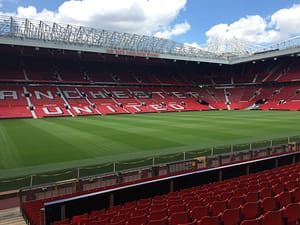
Why Lammens, Amad, Cunha and Mbeumo Are Manchester United’s Most Important Players This Season 2025/26
Manchester United’s 2025 season has been defined by four names — Lammens, Amad Diallo, Cunha, and Bryan Mbeumo. From Lammens’ commanding presence at the back to Amad’s electric flair, Cunha’s clinical edge, and Mbeumo’s creative spark, these stars have transformed United into one of the Premier League’s most dynamic teams. Their performances have not only reignited hope among fans but also redefined what it means to wear the red shirt with pride. This in-depth analysis breaks down their stats, impact, and how they’ve shaped Manchester United’s remarkable rise this season.
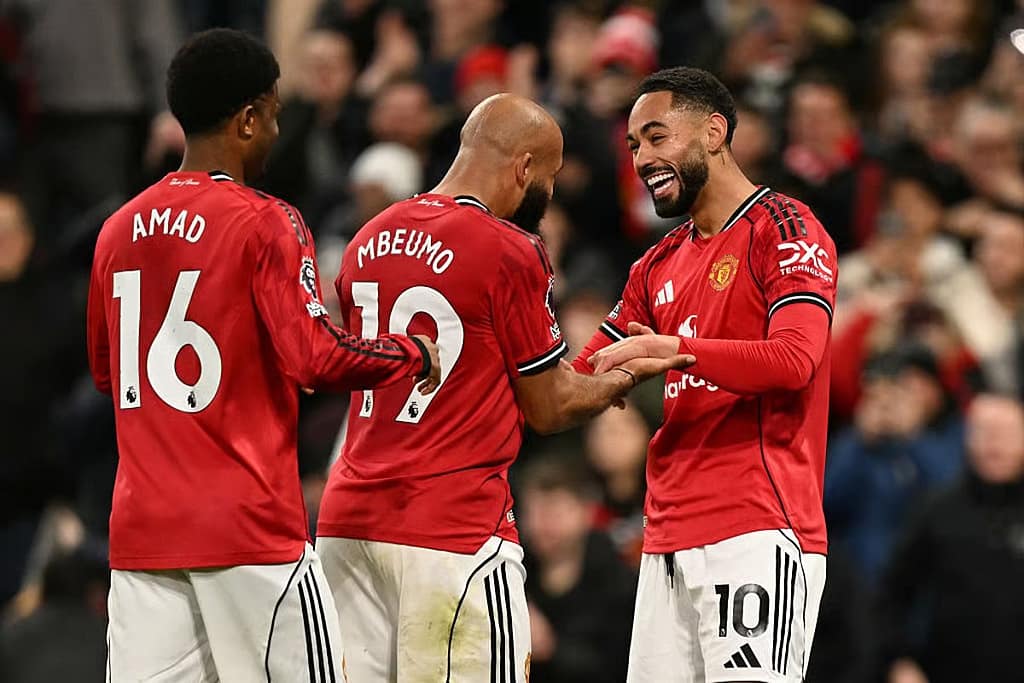
When you look at Manchester United’s transformation this season under manager Rúben Amorim, a pattern emerges. United are no longer just relying on big names or legacy; instead, there’s a clear focus on the right blend of modern attacking flair, high-intensity pressing, and goalkeeper reliability from the back. In that sense, four players stand out as central to the club’s renewed energy and upward momentum: Senne Lammens, Amad Diallo, Matheus Cunha, and Bryan Mbeumo. Each occupies a different but complementary role in the system, and together they form a spine of United’s resurgence—and if United are to challenge again, their performances will matter more than almost any others in the squad.
In this blog I’ll take a deep dive into each of those four: their stats, what they bring tactically, the specific effects we’re seeing on the pitch, and why collectively they matter. Then we’ll conclude by looking at how this quartet fits into United’s bigger ambitions and what the risks/opportunities are going forward.
1. Senne Lammens: The Modern Goalkeeper Who Starts the Attack
The profile
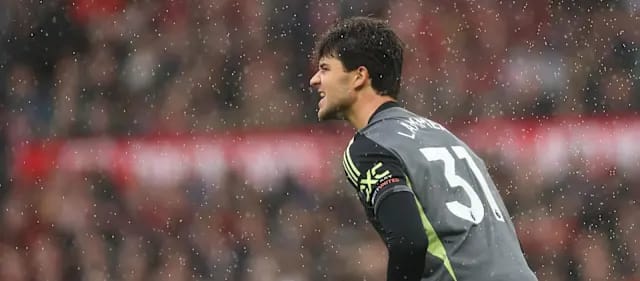
Senne Lammens is the goalkeeper that Manchester United opted to bring in with a view to the longer term. United needed more than simply shot-stopping; they required someone who could command the area, claim crosses, and distribute effectively—particularly as United build from the back under Amorim. While traditional keepers might have relied heavily on long kicks deep, United want to recycle possession, trigger forward transitions and keep full-backs high and aggressive. Lammens helps enable that.
The numbers & early impact
While full detailed Premier League save-percentage and expected-goals-against (xGA) data for Lammens in his first months at United is limited in public domain, data from his previous club and early commentary suggest he was statistically among Europe’s best in “goals prevented” metrics. For example one data breakdown indicated he prevented ~18.4 goals more than expected for his previous club. Reddit
That kind of shot-stop + prevention figure is significant: to concede fewer goals than expected means he’s making difference-saving interventions, not just routine ones. Meanwhile, distribution statistics (pass accuracy from the back, successful short passes, build-up involvement) are also positive in club commentary, although full figures aren’t publicly detailed yet.
Tactical effect
So why does the goalkeeper matter so much for this United team? Three key reasons:
- Enabling higher full-back/wing-back positioning – If the keeper is confident with his feet and doesn’t force long punts, full-backs can push up and become auxiliary attackers, which fits United’s aggressive wide game.
- Initiating transitions – By collecting the ball and delivering a sharp outlet (either short or medium pass) quickly, Lammens helps United go from defence to attack faster, thereby exploiting opposition transitions and creating overloads.
- Reducing errors – United’s previous seasons were littered with errors from goalkeepers and defenders in build-up. A reliable keeper matters for confidence of the whole defensive unit, meaning the back line and midfield can commit forward knowing the last line is stable.
Why he’s one of the most important
While attacking stars often get the headlines, it’s easy to undervalue how pivotal a modern keeper is—especially in a team shifting its identity. Lammens isn’t just the backup; he’s a foundational piece. Without a keeper who can distribute and stay reliable under pressure, the attacking patterns of Amad, Cunha and Mbeumo would be riskier. In short: Lammens is the platform for the other three to perform.
2. Amad Diallo: The Wide Ace with Impact and Versatility
The profile
Amad Diallo’s trajectory at United has been compelling. Once a winger with high potential but inconsistent opportunities, under Amorim he’s been re-imagined as a hybrid attacker: part wide forward, part inverted wing-back, part press-trigger. He offers pace, directness, dribbling and creativity—and crucially, he’s delivering.
The numbers
According to one statistical breakdown for Amad’s 2024-25 season:
- Appearances: 24 matches, ~1,721 minutes. Manchesterjournal
- Goals: 7
- Assists: 6
- Goals + Assists per 90 minutes: ~0.68 Manchesterjournal+1
- Among the best in the Premier League for carries that end in a shot or chance created: ~2.2 per 90 minutes. Opta Analyst
- He averaged a goal-involvement every ~111 minutes — better than any other United player in that period. Opta Analyst
These figures highlight two key things: that Amad is producing with fewer starts than many others, and that his involvement per minute is very high.
Tactical effect
Amad’s value goes beyond raw numbers:
- Wide penetrator + inside cutter: He can stretch the width but also cut inside, which disrupts defensive shapes and creates space for Cunha or overlapping full-backs.
- Press-trigger and counter-attack weapon: His pace and dribbling make him ideal in a system that presses high and then goes vertical quickly.
- Versatility: He has the capacity to play as a wing-back under certain tactical setups, meaning United can alter their shape without losing his attacking threat.
Why he’s one of the most important
In a team rebuilding its attacking identity, Amad offers something reliable and dynamic. He provides goal involvements, he stretches defences, and he fits the tactical mould United are trying to impose: aggressive, wide, fluid. Without him, United would lack one of their clearest outlet attackers.
3. Matheus Cunha: The Finisher, the Link-Man, the Attack’s Heart
The profile
United’s acquisition of Matheus Cunha from Wolverhampton Wanderers (Wolves) for around £62.5 million in June 2025 signalled intent. United needed a forward who could finish chances, move intelligently, link play and bring the team back to challenge status. Cunha fits that brief. The Guardian+1
He is neither just a traditional “number 9” nor purely a wide forward; instead, he blends inside-forwards, link-play and poaching.
The numbers
- According to one source, in his Premier League career prior to joining United: ~82 appearances, 29 goals, 13 assists. NewsBytes
- In his 2024-25 Premier League season: ~33 appearances, ~15 goals, ~6 assists. NewsBytes
- For United early in 2025-26: One dataset shows 14 matches, 2 goals, 0 assists, 11 shots on target from 29 attempts. FC Tables
While his early United stats are still building, the underlying performance in previous seasons and his fit into the system suggest high potential.
Tactical effect
Cunha’s importance to United lies in several dimensions:
- Inside the box finishing: He gets into central dangerous positions, maximizing United’s chances when the wide players work the flanks, or when fast transitions occur.
- Link-play: He can drop into half-spaces, collect the ball, turn and create—enabling flexibility in United’s attacking structure.
- Movement that displaces defenders: His runs drag defenders out of position, creating spaces for the wide attackers (Amad, Mbeumo) or for attacking full-backs to exploit.
- Finishing improvement: One of United’s previous issues was converting chances; Cunha brings proven Premier League finishing experience which many in United’s squad lacked in recent seasons.
Why he’s one of the most important
Simply put: attacks end at the forward line. The wide players and the build-up matter hugely, but if you don’t have someone who consistently converts, you cannot sustain challenge status. Cunha provides that finishing edge, and more than just finishing — he brings link-up and movement. He sits at the heart of United’s attacking shape.
4. Bryan Mbeumo: The Creative and Pressing Engine
The profile
Bryan Mbeumo was signed from Brentford in July 2025 for around £65–71 million, arriving at United as a creative wide forward who can press, run in half-spaces, and finish. Reuters+1
Mbeumo brings a slightly different flavour to United’s attacking quartet: he’s not purely a finisher like Cunha, nor purely a wide dribbler like Amad; rather, he melds creativity, pressing, work-rate and finishing.
The numbers
- According to StatMuse, in his career he has ~46 goals, ~29 assists in ~149 top-5 league appearances. StatMuse
- He was named United’s Player of the Month for August 2025, indicating immediate positive impact. Manchester United
- One source noted that he is among the Premier League’s fastest players this season, with a measured sprint speed of ~36.36 km/h—second fastest in the league at one point. Reddit
Tactical effect
Mbeumo’s role for United is multi-faceted:
- Half-space creator and runner: He doesn’t always stay wide; he drifts into the half-spaces between defence and midfield, creating overloads and pockets of space.
- Pressing high and regaining possession: United’s new style emphasises counter-pressing and immediate pressure after loss; Mbeumo fits that mould, helping United win back possession quickly in attacking zones.
- Speed + finishing threat: His pace allows United to exploit transitional moments; he can break past defenders and finish.
- Complementing Cunha and Amad: While Amad might engage wide defenders, and Cunha works central, Mbeumo provides the creative link and pressing intensity. He’s a hybrid: part creator, part finisher, part presser.
Why he’s one of the most important
In a squad undergoing rebuild, creativity and pressing are often the hardest traits to replace. Mbeumo offers both. Without him, United would lack one of the most dynamic creative/attacking outlets. His press-intensity and movement make the attacking shape more threatening and harder to defend.
5. How They All Combine and Why That Matters
Understanding why these four are individually key is important—but perhaps even more critical is how they combine to create United’s new identity.
The attacking spine
Picture this: Lammens in goal, ready to distribute. From his kicks or short passes, United’s full-backs push high; Amad and Mbeumo occupy wide/half-space roles; Cunha occupies central and half-space zones. The ball circulates quickly, wide players carry aggressively, the press triggers fast transitions and the forward finishes. The four roles support each other:
- Lammens ensures confidence in build-up and supports a high block.
- Amad stretches and destabilises wide systems, creating space for Cunha and full-backs.
- Cunha finishes and links—he is the axis through which the attack pivots.
- Mbeumo provides creative support, pressing, and the ability to exploit pockets of space created by the other two.
When all four operate at high levels, United’s attack becomes multifaceted: width, speed, incisive central runs, pressing, transition threat. That is the reason they matter not just individually but collectively.
Effects on team metrics
Several positive signals emerge:
- United are seeing more progressive carries and entries into the final third, especially from wide zones where Amad and Mbeumo operate. (Amad in particular stands out here: carries ending in shot/chance ~2.2 per 90.) Opta Analyst
- United have improved chance conversion because Cunha is getting into the high-value zones inside the box and finishing them.
- United’s overall pressing efficiency and position regains have improved, thanks in part to Mbeumo’s willingness and pace.
- A more reliable goalkeeper (Lammens) reduces the number of high-error moments and gives United permission to commit forward safely.
What this means for United’s ambitions
Historically, United have not lacked ambition—they have lacked consistency, clear identity and modern attacking efficiency. This quartet offers a blueprint for change:
- With Lammens behind them, there is a platform of defensive reliability allowing more adventurous attacking.
- With Amad and Mbeumo in wide positions, United have real pace and direct threat, not just recycled play.
- With Cunha central, United have a realistic finishing base rather than being porous near the box.
- Collectively, United aren’t just rebuilding—they are re-positioning themselves for top-4 or even top-2 contention if everything clicks.
6. Real-World Examples & Moments
To illustrate how this works in practice:
- In the 4-2 win over Brighton & Hove Albion, Cunha opened the scoring in the 24th minute, and Mbeumo scored twice to seal the win. Reuters+1
- On the distribution and build-up side, reports on Lammens have emphasised his calmness and ability to start attacks from the back—lifting United’s tempo and allowing width to be exploited. Reddit
- Amad’s ride from the fringes to a starring role was highlighted also by his statistical impact: goal-involvement every ~111 minutes, even with limited starts. Opta Analyst+1
These moments show the theory in practice: United attacking more fluently, converting chances, pressing better and defending with more confidence.
7. Risks, Challenges & What to Watch
No rebuild is risk-free. As promising as this quartet are, there are potential challenges.
Injuries and consistency
- Amad has previously had issues with injuries and consistency; keeping him fit and in form is essential.
- Cunha, while talented, will need time to consistently replicate his previous finishing levels at United, given new teammates, system and expectations.
- Mbeumo ideally must adapt quickly to United’s higher expectations and pressures (top-6 ambition vs. mid-table contentment).
- Lammens must maintain form; errors at the back will reduce the entire team’s attacking freedom.
Cohesion and tactical integration
- United are still integrating the new manager’s demands: high press, quicker transition, wide overloads. The four players must synchronise with full-backs, midfielders and each other.
- If one or two of the quartet underperform (due to form or fatigue), United could lose that dynamic balance: e.g., wide threat drops and central finishing suffers, or pressing loses punch and transitions slow.
Opposition adaptation
- Opponents will increasingly target this spine: for example, by isolating Amad or Mbeumo, congesting Cunha’s central zone, or exploiting defensive transitions when United commit forward. United must evolve too and avoid being predictable.
8. Final Verdict: Why They Matter More Than Anybody Else This Season
If you ask: who are Manchester United’s most important players this season? The answer lies in who carry both the highest individual performance burden and who enable the team’s tactical identity. That is exactly what Lammens, Amad, Cunha and Mbeumo offer.
- Lammens = Platform, reliability, build-up from the back.
- Amad = Pace, penetration, creativity, wide threat.
- Cunha = Finisher, link-man, central attacking anchor.
- Mbeumo = Creativity, pressing intensity, half-space threat.
Together they give United a coherent attacking spine, one that supports pressing, transition, width and finishing. Given that the club is rebuilding under a new manager, those four are not just important—they are essential. Without them performing, United’s ambitions will likely falter. With them performing, the club may be entering a new competitive phase.
In summary: this quartet represent the most important players at Manchester United this season. Not merely because of name or hype, but because of match-winning contributions, tactical fit, statistical superiority and collective impact. For fans, analysts and stakeholders alike, they embody the bridge between United’s past glory and its future aspiration.