Breaking: Oil Tankers Hit in Suspected Iranian Attack
Overnight attack on oil tankers in the Persian Gulf using remote-controlled explosive boats has set one vessel ablaze, halted Iraqi oil exports, and driven Brent crude above $105 amid fears of wider disruption.
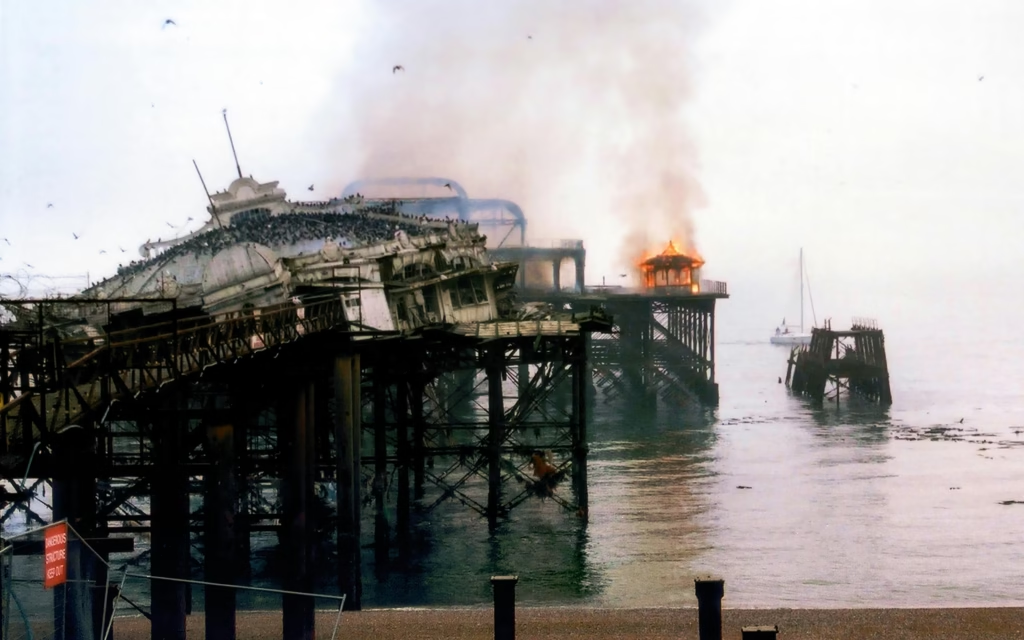
In a dramatic escalation of tensions in the Middle East, multiple oil tankers were targeted overnight in Iraqi waters within the Persian Gulf, with reports indicating the use of remote-controlled explosive boats in what authorities suspect was an Iranian-orchestrated attack. The incident, which occurred shortly after midnight local time on March 12, 2026, involved at least three vessels, two flagged under Norwegian ownership and one under Japanese registry, struck while transiting near the Iraqi port of Basra. Eyewitness accounts from nearby ships and initial assessments from maritime security firms described explosions that ripped through the hulls of the oil tankers, leading to immediate fires and oil spills.
One of the oil tankers, identified as the Norwegian-registered Front Altair, was set ablaze following a direct hit to its engine room, forcing the crew to abandon ship. Rescue operations, coordinated by Iraqi naval forces and supported by U.S. and allied vessels in the region, evacuated all 23 crew members without fatalities, though several sustained minor injuries from smoke inhalation. The other two tankers, the Kokuka Courageous (Japanese) and another Norwegian vessel, suffered hull breaches but remained afloat, with crews managing to contain fires using onboard systems. Environmental teams are now assessing the spill, estimated at over 10,000 barrels of crude, which could impact local fisheries and ecosystems. Iraqi officials have launched an investigation, with preliminary evidence pointing to unmanned surface vessels (USVs) laden with explosives, remotely detonated to maximize damage without risking perpetrators.
The oil tankers attack has sent shockwaves through global energy markets, reviving fears of instability in one of the world’s most vital shipping lanes. As investigations unfold, the international community is calling for restraint, with the United Nations urging all parties to avoid further provocations. This event echoes similar incidents in 2019, when oil tankers were sabotaged in the Gulf of Oman amid U.S.-Iran tensions, highlighting the persistent vulnerability of maritime trade in the region.
How the Attack Happened
Reports from maritime intelligence sources, including the UK-based Dryad Global, suggest the assault was carried out using remote-controlled explosive boats, a tactic that combines low-cost technology with high-impact disruption. These vessels, often modified from commercial speedboats or drones, are equipped with explosives possibly up to several hundred kilograms of TNT equivalent and guided via GPS or radio signals from a safe distance. In this case, the boats approached the oil tankers under the cover of darkness, evading radar detection by hugging the coastline or blending with fishing traffic in Iraqi waters.
The implications of such tactics are profound, as they lower the barrier for asymmetric warfare in contested seas. Unlike traditional mines or torpedoes, remote-controlled boats allow attackers to select targets precisely, timing detonations for maximum effect such as igniting fuel cargoes. Analysts note that this method bears hallmarks of Iran’s Islamic Revolutionary Guard Corps (IRGC), which has demonstrated similar capabilities in military exercises, including the use of “suicide drones” on water. However, no group has claimed responsibility, and Iranian state media has denied involvement, calling the accusations “baseless propaganda.”
This approach exploits the Persian Gulf’s congested waterways, where thousands of vessels navigate daily. Historical comparisons include the 1980s Tanker War during the Iran-Iraq conflict, where both sides targeted shipping with mines and missiles, resulting in over 500 attacks. Today’s technology amplifies the threat, enabling non-state actors or proxies to conduct operations with plausible deniability. For shipping companies, this means heightened insurance premiums and the need for armed escorts, potentially increasing operational costs by 20-30% in the region.
Iraqi Oil Ports Shut Down
In response to the attack, Iraqi authorities have indefinitely halted operations at key oil export terminals, including Basra Oil Terminal and Khor al-Amaya, which handle the bulk of the country’s crude shipments. The shutdown, announced by the Iraqi Ministry of Oil just hours after the incident, aims to ensure the safety of personnel and infrastructure amid fears of follow-up strikes. Port officials cited “elevated security risks” as the primary reason, with patrols intensified and all inbound tankers redirected to safer anchorages.
Iraq, OPEC’s second-largest producer, exports around 3.5 million barrels per day (bpd) through these ports, accounting for over 90% of its government revenue. The halt disrupts loading schedules, stranding dozens of vessels and forcing refineries in Asia and Europe to seek alternative supplies. Authorities stopped activity to conduct thorough sweeps for additional threats, including potential mines or drones, drawing from lessons of past disruptions like the 2021 Suez Canal blockage, which highlighted how quickly chokepoints can cascade into global shortages.
The decision underscores Iraq’s precarious position, sandwiched between rival powers. While Baghdad maintains neutrality, its waters are extensions of the broader Gulf dynamics, making ports vulnerable to spillover from regional conflicts. Resumption could take days or weeks, depending on investigation outcomes, with economic losses potentially reaching hundreds of millions in delayed exports.
Oil Prices Surge Past $100
Global oil markets reacted swiftly to the news, with Brent crude futures surging over 10% in early trading to breach $105 per barrel the highest since 2022. West Texas Intermediate (WTI) followed suit, climbing to $98 amid frantic buying by traders anticipating supply constraints. The spike erased weeks of price stability, driven by the attack’s potential to tighten an already fragile market recovering from pandemic-era volatility and the 2022 Russia-Ukraine disruptions.
Disruptions in the Persian Gulf ripple worldwide because the region supplies about 20% of global oil demand, with any hiccup amplifying price volatility. In this instance, the immediate fear is reduced Iraqi exports, compounding existing pressures from OPEC+ production cuts and rising demand from China’s economic rebound. Analysts at Goldman Sachs noted that a prolonged shutdown could add a $10-15 risk premium to prices, as buyers scramble for spot cargoes from West Africa or the U.S.
For non-experts, think of oil prices like a seesaw: supply shocks tilt it upward. Historical precedents, such as the 1979 Iranian Revolution, saw prices double overnight. Today’s surge reflects not just physical shortages but speculative trading, where algorithms and hedge funds amplify movements. If tensions ease quickly, prices may retreat, but sustained uncertainty could lock in higher costs for consumers at the pump.
Why the Persian Gulf Is the World’s Most Critical Oil Route
The Persian Gulf, a shallow body of water stretching 615 miles from the Strait of Hormuz to the Shatt al-Arab, funnels nearly one-fifth of the world’s oil trade around 21 million bpd in 2025 figures. This includes exports from Saudi Arabia, Iraq, the UAE, Kuwait, and Iran, making it the artery of global energy. The Strait of Hormuz, its narrowest point at 21 miles wide, is particularly vital; any blockage here could halt flows equivalent to the entire output of Russia and the U.S. combined.
Strategically, the Gulf’s importance stems from its proximity to vast reserves over half the world’s proven oil and its role in connecting producers to consumers in Asia, Europe, and beyond. Tankers laden with crude navigate this route daily, vulnerable to geopolitical flashpoints due to the concentration of military assets from the U.S. Fifth Fleet to Iranian speedboats. For context, alternatives like pipelines through Saudi Arabia or shipping around Africa add weeks and costs, making the Gulf irreplaceable.
Non-experts can visualize it as the world’s busiest highway for energy: disruptions cause traffic jams felt everywhere, from higher airline tickets to inflated manufacturing costs. Historical events, like the 1990-91 Gulf War, demonstrated this, when prices spiked 200%. In today’s decarbonizing world, the Gulf’s role persists, underscoring the slow transition from fossil fuels.
Rising Tensions With Iran
The suspicion falling on Iran stems from escalating geopolitical frictions, including stalled nuclear talks, U.S. sanctions, and proxy conflicts in Yemen and Syria. Tehran has repeatedly warned of retaliating against perceived threats to its oil exports, which have been curtailed by sanctions since 2018. In 2025, Iran seized several tankers in tit-for-tat actions, heightening alert levels.
While investigations are ongoing with U.S. intelligence sharing satellite imagery of suspicious boat movements Iran’s denial aligns with its pattern of asymmetric responses. Experts emphasize caution: attributions require forensic evidence, like explosive residues or signal intercepts, to avoid miscalculations. Comparisons to the 2019 attacks, initially blamed on Iran but later confirmed via UN probes, warn against hasty judgments.
Broader tensions involve Israel’s shadow war with Iran and Houthi disruptions in the Red Sea, creating a web of instability. For global readers, this isn’t about villains but power balances: Iran’s actions, if proven, could aim to pressure the West economically without direct confrontation.
Global Economic Impact
If disruptions persist, fuel prices could rise 15-20% worldwide, stoking inflation already pressured by post-pandemic recovery. In the U.S., gasoline might hit $5 per gallon, squeezing households and transport sectors. Europe, reliant on Middle Eastern imports, faces higher heating costs, while Asia’s refineries could see feedstock shortages, slowing manufacturing.
Shipping routes may reroute, inflating freight rates by 30% as insurers demand war-risk premiums. Global markets, from stocks to currencies, could waver: the Dow dipped 2% in pre-market trading, reflecting energy’s ripple effects. Historical analogs, like the 1973 oil embargo, triggered recessions; today, with greener alternatives, impacts might be muted but still significant for developing economies.
Inflation-wise, energy costs feed into everything from food transport to plastics potentially adding 1-2% to global CPI if prolonged. For clarity, it’s a chain reaction: higher oil means costlier goods, reduced consumer spending, and tighter monetary policies.
What Happens Next for Energy Markets
Looking ahead, scenarios range from de-escalation to prolonged volatility. If investigations clear Iran or diplomacy prevails perhaps via Oman-mediated talks prices could stabilize below $100 within weeks, bolstered by U.S. strategic reserves releases. Conversely, retaliatory strikes or further attacks might push Brent to $120, prompting OPEC+ to boost output.
Energy security experts advocate diversification: accelerating renewables, building stockpiles, and exploring Arctic or shale routes. Market implications include opportunities for non-Gulf producers like Brazil, but risks of supply gluts if tensions ease abruptly.
In conclusion, this attack amplifies geopolitical risks in energy markets, urging a reevaluation of dependencies. As the world watches, the path forward hinges on restraint and dialogue, lest short-term shocks evolve into long-term crises. With climate goals in sight, such events highlight the urgent need for a stable transition away from oil’s volatile grip.
About The Author