Rebuilding Together, Brick by Brick: Twyford Kenya Development Impact Driving a New Industrial Era
The Twyford Kenya development impact illustrates how manufacturing, job creation and infrastructure investments are transforming Kenya’s economy and industrial future.
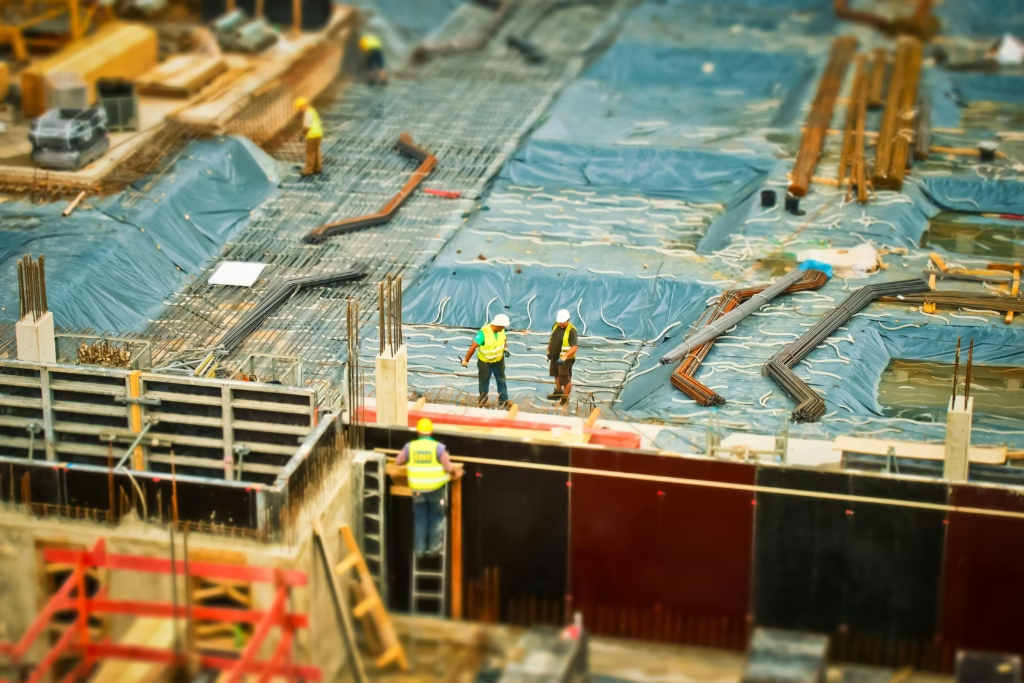
Kenya’s development story is increasingly being written not in policy documents and government blueprints, but in factories, supply chains, and construction sites across the country. The core of this transformation is manufacturing, a powerful but often under-appreciated force. One of the companies leading this story is Twyford Kenya; its emergence is a sign of a broader trend towards domestic production, industrial self-sufficiency, and infrastructure development.
The Twyford Kenya development impact is not a theoretical concept. It is seen in the tiles beneath hospital floors, the sanitary ware in modern housing, and the economic ripple effects felt in employment, exports, and community development. Twyford, which came into Kenya in 2016, has grown to become one of the largest manufacturers of building materials in East Africa and is deeply embedded in the country’s economic and social fabric.
Twyford Kenya Manufacturing Growth: Building an Industrial Backbone
The story of Twyford in Kenya begins with a strategic investment aligned with Africa’s growing construction demand. Backed by KEDA Industrial Group and Sunda International, Twyford entered the Kenyan market with significant capital and a long-term vision.
From a single factory in Kajiado County, the company has expanded to operate three factories across approximately 328 acres, supported by multiple production lines and ongoing expansion projects. These facilities produce ceramic tiles and sanitary ware at scale, supplying both domestic and regional markets.

This growth is not accidental. It reflects a deliberate alignment with Kenya’s industrialization agenda, including initiatives such as Kenya Vision 2030 and the Bottom-Up Economic Transformation Agenda. By investing in large-scale manufacturing, Twyford has contributed to reducing Kenya’s reliance on imported construction materials.
The significance of this shift cannot be overstated. Historically, Kenya imported a large share of its building materials, exposing the economy to currency volatility and high costs. Twyford’s local production capacity helps stabilize supply, reduce import bills, and strengthen the domestic industrial base.
Infrastructure Development in Kenya: Twyford’s Role in Nation Building
Kenya’s infrastructure boom, from highways to hospitals, demands reliable and affordable building materials. Twyford has emerged as a key supplier in this transformation.
Major national projects such as the Talanta Stadium, a flagship venue for the upcoming continental football tournament, and the East African Kidney Institute have utilized materials supplied by Twyford. These projects are more than construction sites; they are symbols of Kenya’s ambition to become a regional hub in sports, healthcare, and innovation.
By providing high-quality ceramic products locally, Twyford reduces project costs and timelines. Developers no longer need to rely heavily on imports, which can be delayed by logistics bottlenecks or global supply chain disruptions.
This contribution extends to the government’s affordable housing agenda. With Kenya aiming to deliver hundreds of thousands of housing units, the availability of affordable tiles and sanitary ware is crucial. Twyford’s presence ensures that such projects remain economically viable.
Job Creation in Kenya Manufacturing: Transforming Livelihoods
One of the most direct and measurable aspects of the Twyford Kenya development impact is employment.
The company employs over 3,500 people directly, with the majority being Kenyan nationals. In addition, its operations support tens of thousands of indirect jobs across the supply chains, logistics, retail, and construction sectors.
This scale of job creation is particularly significant in a country with a young and rapidly growing population. Employment in manufacturing not only provides income but also builds skills, fosters industrial expertise, and contributes to long-term economic resilience.
Twyford’s investment in human capital goes beyond hiring. The company has established structured training programs that enable employees to progress from entry-level positions to supervisory and managerial roles. This approach helps develop a skilled workforce capable of sustaining Kenya’s industrial growth.
In a broader sense, Twyford is helping to redefine the perception of manufacturing in Kenya, from low-skill labor to a pathway for professional and technical advancement.
Local Supply Chain Development Kenya: Strengthening Economic Resilience
A critical yet often overlooked aspect of industrial development is the creation of strong local supply chains. Twyford has played a pivotal role in this area by sourcing raw materials locally and integrating Kenyan businesses into its operations.
This approach has multiple benefits. It reduces dependency on imports, supports local industries, and keeps more value within the Kenyan economy. It also enhances resilience against global disruptions, as seen during recent supply chain crises.
Furthermore, Twyford’s regional export strategy extends the benefits beyond Kenya’s borders. The company exports its products to countries such as Uganda, Rwanda, Tanzania, Zambia, and South Sudan. This positions Kenya as a manufacturing hub within East and Central Africa.
The ripple effects are substantial. Increased exports generate foreign exchange, strengthen Kenya’s trade balance, and elevate the country’s status in regional economic networks.
Sustainable Manufacturing in Kenya: Twyford’s Green Energy Model
Industrial growth often raises concerns about environmental sustainability. However, Twyford has taken steps to integrate green practices into its operations.
At its Kajiado facility, the company operates an 8.57MW solar power plant, generating over 13 million kWh of clean energy annually. This significantly reduces carbon emissions while lowering operational costs.
Such investments demonstrate that industrialization and sustainability are not mutually exclusive. By adopting renewable energy and energy-efficient technologies, Twyford sets a precedent for responsible manufacturing in Kenya.
The environmental benefits extend to surrounding communities as well. Solar-powered street lighting installed by the company improves safety and mobility, highlighting how industrial investments can create shared value.
Community Development by Twyford Kenya: Beyond Business
Twyford’s impact is not confined to factories and construction sites. The company has actively invested in community development initiatives that improve quality of life.
Through its Maisha Bora Bursary Programme, Twyford has supported over 200 students, contributing millions of shillings toward education. Education is a critical pillar of long-term development, and such initiatives help bridge gaps in access and opportunity.
The company has also funded infrastructure projects, including a borehole to address water scarcity and the installation of solar streetlights in surrounding areas. These interventions directly address pressing community needs, from water access to public safety.
This approach reflects a broader philosophy: sustainable business growth must be accompanied by community empowerment. By investing in education, infrastructure, and social development, Twyford strengthens its relationship with local communities while contributing to national development goals.
Technology and Innovation in Kenya’s Ceramics Industry
Another key dimension of the Twyford Kenya development impact is technological advancement.
The company has introduced advanced manufacturing technologies, including Kenya’s first full polished glaze production line. This innovation enhances product quality, increases efficiency, and positions Kenya as a competitive player in the global ceramics industry.
Technology transfer is a crucial aspect of foreign direct investment. By bringing modern production techniques to Kenya, Twyford contributes to the country’s industrial upgrading.
This has long-term implications. As Kenyan workers gain experience with advanced technologies, they develop skills that can be applied across industries, fostering innovation and competitiveness.
Challenges and Controversies: A Balanced Perspective
While Twyford’s contributions are significant, it is important to examine challenges and criticisms to provide a balanced view.
Some industry stakeholders have raised concerns about market dominance and pricing dynamics, particularly in related sectors such as glass manufacturing. Critics argue that certain supply chain arrangements could limit competition and increase costs for local processors.
These concerns highlight the complexity of industrial development. While large-scale investments bring benefits, they also require robust regulatory frameworks to ensure fair competition and inclusive growth.
For Kenya, the key challenge is to strike a balance, leveraging foreign investment to drive industrialization while safeguarding local industries and market fairness.
The Future of Twyford Kenya and Industrial Growth
Twyford’s future trajectory suggests further growth and deeper integration with Kenya’s economy.
The company is investing in additional production lines, expanding its product portfolio, and exploring new markets. These developments align with Kenya’s ambition to become a manufacturing hub for Africa.
As global supply chains evolve, countries that can produce essential goods locally will have a strategic advantage. Twyford’s presence strengthens Kenya’s position in this regard.
Moreover, the company’s focus on sustainability, technology, and community engagement provides a blueprint for responsible industrial development.
Building Kenya’s Future, Brick by Brick
The Twyford Kenya development impact is a compelling example of how manufacturing can drive national progress. From job creation and infrastructure support to technological advancement and community development, the company’s contributions are both wide-ranging and deeply embedded in Kenya’s growth story.
Yet, this impact also underscores a broader lesson: development is not built overnight. It is constructed gradually, through sustained investment, collaboration, and innovation.
As Kenya continues its journey toward industrialization, companies like Twyford will play a critical role, not just as producers of building materials, but as partners in nation-building.
In the end, rebuilding Kenya truly happens brick by brick, and Twyford is helping lay the foundation for a stronger, more resilient future.
About The Author