Electricity Bill Surge: The Harsh Reality Behind Kenya’s April Power Price Shock
Kenya’s electricity bill surge in April 2026 has left consumers grappling with a 20–30% increase. This deep analysis explains EPRA’s new charges, their causes, and the wider economic impact.
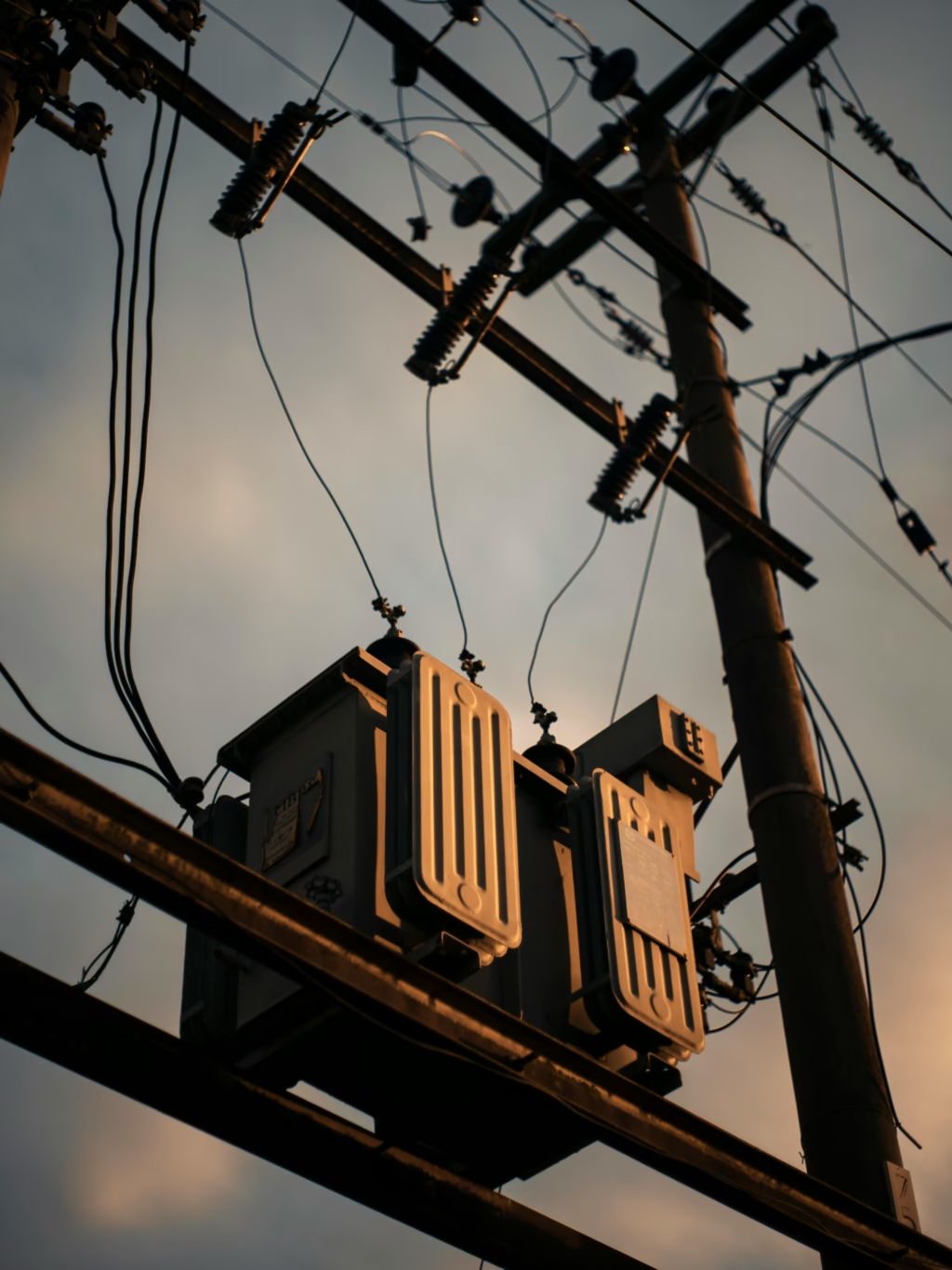
Kenyan households and businesses are facing yet another cost-of-living shock following the latest electricity bill surge in April 2026. What makes this increase particularly painful is not just its size, estimated between 20% and 30% for many consumers, but its timing. It arrives in an already strained economy marked by high inflation, rising food prices, and wage stagnation.
At the center of this development is the Energy and Petroleum Regulatory Authority (EPRA), which has introduced three new cost components into electricity billing: a Fuel Energy Cost Charge of 347 cents per kWh, a Foreign Exchange Adjustment of 123.41 cents per kWh, and a Water Resource Management levy of 1.54 cents per kWh.
These are not arbitrary figures. They represent deeper structural problems within Kenya’s energy sector, and understanding them is key to understanding why this electricity bill surge was almost inevitable.
Fuel Energy Cost Charge: The Hidden Cost of Thermal Dependency
The first major driver of the electricity bill surge is the Fuel Energy Cost Charge, which reflects the cost of generating electricity using fuel-based power plants. While Kenya prides itself on renewable energy, particularly geothermal and hydropower, the reality is more complex.
During periods of low water levels or maintenance of hydroelectric dams, Kenya relies heavily on thermal power plants. These plants run on imported fuel, which is expensive and volatile. As a result, the cost of generating electricity rises sharply, and this increase is directly passed on to consumers.
EPRA describes this as a “pass-through cost,” meaning it is not absorbed by utilities like Kenya Power but instead transferred to users.

The deeper issue here is structural: Kenya’s energy mix, while renewable-heavy on paper, is still vulnerable to climatic and operational shocks. When hydro capacity drops or demand rises, the system defaults to thermal generation, one of the most expensive options available.
This exposes a contradiction in Kenya’s energy policy. While investments in renewable energy have been significant, the country still lacks sufficient storage, grid resilience, and redundancy to avoid costly thermal fallback.
Foreign Exchange Adjustment: The Dollar Problem Driving Costs
Another critical factor behind the electricity bill is the foreign exchange fluctuation adjustment. This charge reflects the cost impact of a weakening Kenyan shilling against the US dollar.
Most of Kenya’s power purchase agreements, especially with Independent Power Producers (IPPs), are denominated in dollars. This means that even if electricity production costs remain constant in dollar terms, they become more expensive in shilling terms whenever the local currency weakens.
In March 2026, the shilling averaged around KSh 134.50 to the dollar, significantly increasing the cost of servicing energy-related obligations.
This resulted in forex losses of over KSh 1.34 billion across the electricity sector, which EPRA has now passed on to consumers.
The implication is profound: Kenya’s electricity prices are no longer just influenced by domestic factors but are tightly linked to global currency dynamics. This creates a situation where ordinary consumers bear the burden of macroeconomic instability.
Water Resource Levy: The Cost of Maintaining Hydropower
The third component of the electricity bill surge is the Water Resource Management Authority (WRMA) levy. While relatively small compared to other charges, its inclusion highlights another structural challenge: the sustainability of Kenya’s hydropower infrastructure.
Hydropower remains one of the cheapest sources of electricity in Kenya. However, maintaining dams and water systems requires continuous investment. Issues such as siltation, environmental degradation, and aging infrastructure have increased maintenance costs.
The WRMA levy is designed to fund these activities, ensuring that hydropower remains viable in the long term.
But this raises an important question: why are consumers being asked to finance infrastructure maintenance that should arguably be covered by long-term planning and public investment?
The answer lies in fiscal constraints. With limited government resources, overspending and rising debt obligations, more costs are being shifted directly to consumers.
Electricity Bill Surge and the Pass-Through Cost Model
To fully understand the electricity bill surge, one must examine Kenya’s electricity pricing model. Unlike a fixed pricing system, Kenya uses a pass-through cost structure, where several components fluctuate monthly.
These include fuel costs, foreign exchange adjustments, and regulatory levies, all of which are added on top of a relatively stable base tariff.
This model is designed to ensure that utilities remain financially viable. However, it also transfers risk from the system to the consumer. Instead of the government or utilities absorbing shocks, households and businesses are forced to adjust to unpredictable price changes.
In theory, this promotes efficiency. In practice, it creates volatility and uncertainty, making it difficult for consumers to plan their expenses.
Electricity Bill Rise and Its Social Impact
Beyond economics, the electricity bill surge has significant social implications. For low-income households, even a small increase in electricity costs can force difficult choices, such as reducing consumption, delaying bill payments, or cutting spending on essentials.
Energy poverty, already a concern in parts of Kenya, could worsen as more households struggle to afford electricity.
Small businesses, particularly in manufacturing and retail, are also vulnerable. Many operate on thin margins and cannot easily absorb additional costs. This will lead to reduced hiring, lower wages, or even business closures.
In the long term, persistent increases in electricity costs will undermine Kenya’s competitiveness as an investment destination.
Why EPRA Introduced the Charges: A Necessary Evil?
From EPRA’s perspective, the introduction of these charges is not optional but necessary. The regulator argues that without these adjustments, the electricity sector would face financial instability.
Utilities like Kenya Power must pay for electricity generation, transmission, and distribution. If costs rise and tariffs remain unchanged, the system becomes unsustainable.
In this sense, the electricity bill surge can be seen as a reflection of underlying economic realities rather than policy failure.
However, this does not absolve policymakers of responsibility. The reliance on pass-through costs, dollar-denominated contracts, and reactive adjustments suggests a lack of long-term strategic planning.
The Bigger Picture: Structural Weaknesses in Kenya’s Energy Sector.
At its core, the electricity bill surge reveals three major structural weaknesses:
First, Kenya’s dependence on imported fuel for backup generation exposes it to global price shocks.
Second, the dollarization of energy contracts ties domestic electricity prices to foreign exchange volatility.
Third, the financing of infrastructure through consumer levies reflects broader fiscal constraints.
These issues are interconnected and require comprehensive policy solutions. Without structural reforms, similar price shocks are likely to recur.
The Real Cost of the Electricity Bill Surge
The April 2026 electricity bill surge is more than just a temporary increase in costs; it is a symptom of deeper systemic challenges within Kenya’s energy and economic systems.
While EPRA’s new charges may be justified from a technical and financial standpoint, their impact on consumers is undeniable. At a time when many Kenyans are already struggling, the additional burden of higher electricity bills risks exacerbating inequality and slowing economic growth.
The key question moving forward is not whether such increases will continue but whether Kenya can reform its energy sector to reduce volatility, improve efficiency, and protect consumers from future shocks.
Until then, the electricity bill surge serves as a stark reminder that in Kenya’s current system, the cost of energy instability is ultimately borne by the ordinary citizen.
About The Author