Kenyan Shilling Depreciation Forecast: Why KSh Could Slide to 135 Per Dollar. A Dangerous Warning!
The Kenyan shilling depreciation forecast is raising concern as experts warn the currency could weaken to KSh. 135 per US dollar. This detailed analysis explores the causes, economic effects, and what lies ahead for Kenya’s economy.
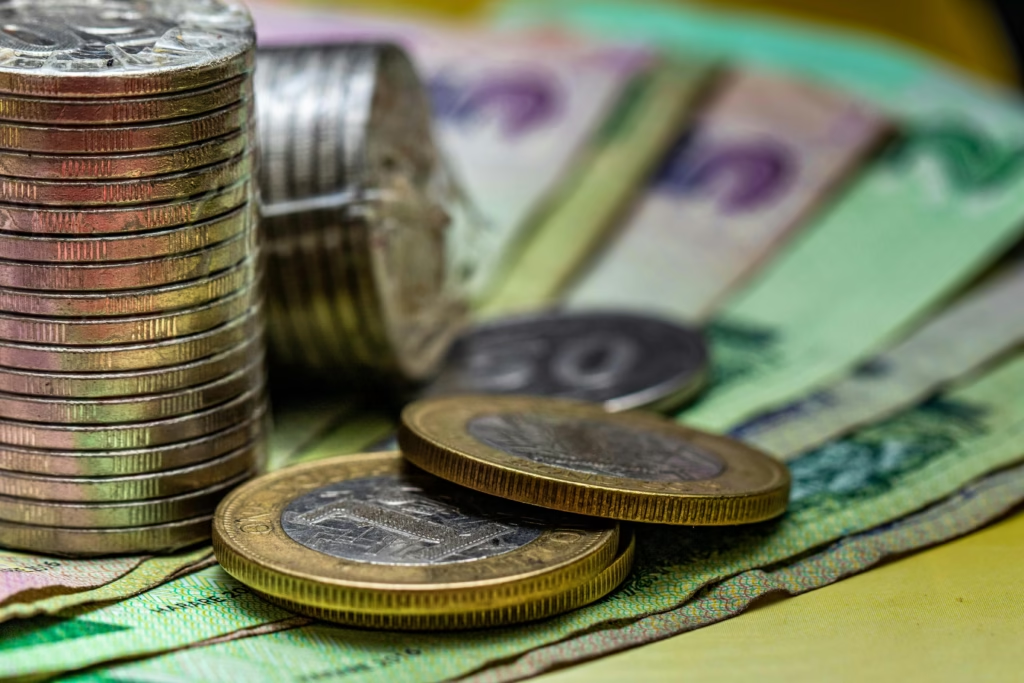
The Kenyan economy finds itself at a critical crossroads as the Kenyan shilling depreciation forecast gains traction among global financial analysts. After a period of relative stability around the KSh129–130 mark, experts now warn that the currency could weaken to as low as KSh135 against the US dollar in the coming months.
At first glance, this projected movement may appear modest. However, in macroeconomic terms, even a small shift in exchange rates carries significant consequences for inflation, trade, debt servicing, and household purchasing power. The deeper question is not just whether the shilling will weaken, but why this is happening and what it means for Kenya’s economic future.
USD to KES Exchange Rate Trends: From Stability to Renewed Pressure
Understanding the USD to KES exchange rate trajectory is essential to grasp the current situation. The Kenyan shilling has undergone dramatic swings in recent years. It hit extreme lows of around KSh157 per dollar in 2023 before recovering strongly to approximately KSh129 by 2024, supported by improved foreign inflows and policy interventions.
This recovery created a sense of stability, even optimism. However, analysts argue that this stability may have been somewhat artificial, driven by temporary inflows such as Eurobond issuances, diaspora remittances, and multilateral loans rather than strong structural fundamentals.
Now, that support appears to be weakening. Forecasts from global institutions suggest a gradual depreciation toward KSh132 and eventually KSh135 by 2026.
This signals a shift from currency stabilization to underlying economic reality.
Causes of Kenyan Shilling Weakening: What Is Driving the Decline
The causes of Kenyan shilling weakening are complex and interconnected, rooted both in domestic economic challenges and global financial dynamics.
One of the primary drivers is Kenya’s persistent fiscal deficit, which is projected to remain high as the government continues to borrow heavily to finance its budget.
When a country borrows externally, it increases demand for foreign currency, especially dollars, placing downward pressure on the local currency.
Closely related is Kenya’s rising public debt burden. A significant portion of this debt is denominated in foreign currencies, meaning repayments must be made in dollars. As debt obligations grow, so does demand for dollars, further weakening the shilling.
Another major factor is the current account deficit. Kenya imports far more than it exports, particularly fuel, machinery, and manufactured goods.
This imbalance creates constant demand for foreign currency, which steadily erodes the value of the shilling.
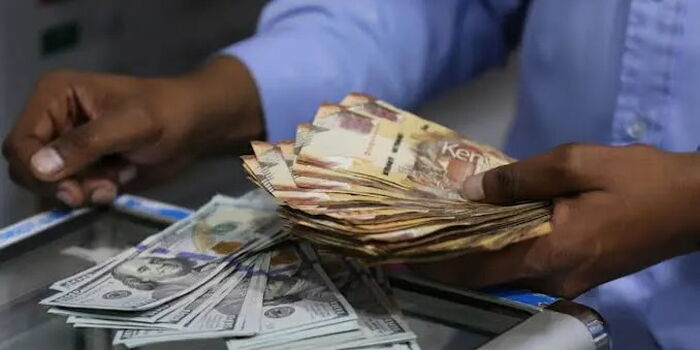
Global factors are equally important. High interest rates in the United States have made dollar-denominated assets more attractive to investors. As a result, capital flows out of emerging markets like Kenya and into safer US assets, reducing dollar supply locally.
In essence, the Kenyan shilling is being squeezed from both sides:
- Domestic structural weaknesses
- Global financial tightening
Impact of Weak Shilling on Kenya Economy: Winners and Losers
The impact of a weak shilling on the Kenyan economy is far-reaching and often unevenly distributed across sectors.
For consumers, the most immediate effect is a higher cost of living. Since Kenya relies heavily on imports, a weaker shilling makes goods like fuel, electronics, and food more expensive. This feeds directly into inflation, reducing household purchasing power.
Businesses that depend on imported inputs also face rising costs. Manufacturers, for instance, may see profit margins shrink unless they pass these costs on to consumers, further fueling inflation.
On the other hand, exporters may benefit. A weaker currency makes Kenyan goods cheaper on the global market, potentially boosting exports in sectors such as tea, coffee, and horticulture. However, this benefit is often limited by structural constraints like production capacity and global demand.
The government is perhaps one of the biggest losers. A weaker shilling increases the cost of servicing foreign debt, putting additional pressure on public finances.
There are also financial market implications. Currency depreciation can discourage foreign investment if investors fear further losses due to exchange rate volatility.
In short, while some sectors gain, the broader economy often experiences net negative pressure, particularly through inflation and debt stress.
Kenyan Shilling Depreciation Forecast and Inflation Risks
The Kenyan shilling depreciation forecast is closely tied to inflation dynamics. Currency weakness tends to import inflation, especially in economies heavily reliant on foreign goods.
Kenya’s inflation has remained relatively moderate in recent periods, supported by improved monetary policy and a stronger shilling phase. However, a move toward KSh135 will reverse this trend.
Fuel prices are particularly sensitive. Since oil is priced in dollars, any depreciation directly increases energy costs. This has a cascading effect across the economy, raising transportation, food, and production costs.
If inflation rises significantly, the Central Bank of Kenya may be forced to tighten monetary policy by raising interest rates. While this can help stabilize the currency, it also slows economic growth by making borrowing more expensive.
This creates a delicate balancing act:
- Support the currency
- Control inflation
- Maintain economic growth
Achieving all three simultaneously is extremely challenging.
Future of Kenyan Shilling: Will It Really Hit KSh135?
The future of the Kenyan shilling remains uncertain, with competing forces shaping its trajectory.
On one hand, there are reasons for cautious optimism. Kenya continues to benefit from strong diaspora remittances, improving foreign reserves, and a relatively diversified economy.
Additionally, if the US Federal Reserve begins cutting interest rates, the dollar could weaken globally, providing some relief to the shilling.
On the other hand, structural challenges remain unresolved. High debt levels, persistent trade deficits, and reliance on external financing continue to pose risks.
The most likely scenario is a gradual, controlled depreciation rather than a sudden collapse. Analysts expect the Central Bank of Kenya to continue intervening to smooth volatility, using a “crawling peg” approach to manage the exchange rate.
This suggests that while KSh135 is possible, it is unlikely to happen abruptly. Instead, it may occur over time as part of a broader adjustment process.
Causes of Kenyan Shilling Weakening and Policy Response
Addressing the causes of Kenyan shilling weakening requires coordinated policy action.
Fiscal discipline is critical. Reducing budget deficits and limiting external borrowing can ease pressure on the currency. This, however, often involves politically difficult decisions such as cutting spending by leaders.
Boosting exports is another key strategy. By increasing foreign currency earnings, Kenya can reduce its reliance on external borrowing and stabilize the shilling.
The Central Bank of Kenya also plays a crucial role through monetary policy and foreign exchange interventions. By managing interest rates and maintaining adequate reserves, the bank can influence currency stability.
However, policy alone is not enough. Structural reforms, such as improving productivity, enhancing industrial capacity, and diversifying the economy, are essential for long-term stability.
Impact of Weak Shilling on Kenya Economy: What It Means
Beyond macroeconomics, the impact of a weak shilling on the Kenyan economy is deeply personal.
For ordinary citizens, it means higher prices and reduced purchasing power. Salaries may not keep up with rising costs, leading to a decline in living standards.
For entrepreneurs and businesses, it creates uncertainty. Planning becomes more difficult when exchange rates are volatile, especially for those dealing with imports or foreign loans.
For investors, it presents both risks and opportunities. While currency depreciation can erode returns, it can also create attractive entry points in certain sectors.
Ultimately, the effects depend on one’s position in the economy, but few remain untouched.
Kenyan Shilling Depreciation Forecast: A Turning Point for Kenya’s Economy
The Kenyan shilling depreciation forecast is more than just a financial headline; it is a reflection of deeper economic realities.
Kenya’s recent currency stability masked underlying vulnerabilities that are now beginning to surface. The projected move toward KSh135 per dollar highlights the need for structural reforms, fiscal discipline, and strategic economic management.
At the same time, it is important to avoid alarmism. Currency depreciation, when managed properly, is not necessarily catastrophic. It can even support economic rebalancing by encouraging exports and reducing import dependence.
The real question is not whether the shilling will weaken, but how Kenya responds to that challenge.
Will policymakers take decisive action to address structural weaknesses?
Will the economy adapt and become more resilient?
Or will external pressures continue to dictate the country’s financial trajectory?
The answers to these questions will define not just the future of the shilling but also the broader direction of Kenya’s economic growth.
Final Insight: Why This Matters Right Now
The forecast of KSh135 per dollar is a warning signal but also an opportunity.
Handled poorly, it could lead to higher inflation, debt stress, and slower growth.
Handled wisely, it could push Kenya toward a more sustainable and competitive economic model.
For investors, businesses, and citizens alike, this is a moment to pay attention, because exchange rates are not just numbers. They are a mirror of economic health and a predictor of what comes next.
About The Author