Crushing EPRA Fuel Price Hike Pushes Petrol to Ksh 214.25 and Diesel to Ksh 242.92
Kenya is facing renewed economic pressure after the latest EPRA fuel price hike pushed petrol to Ksh 214.25 and diesel to Ksh 242.92 per liter. The increase is expected to raise transport fares, food prices, and business operating costs across the country.
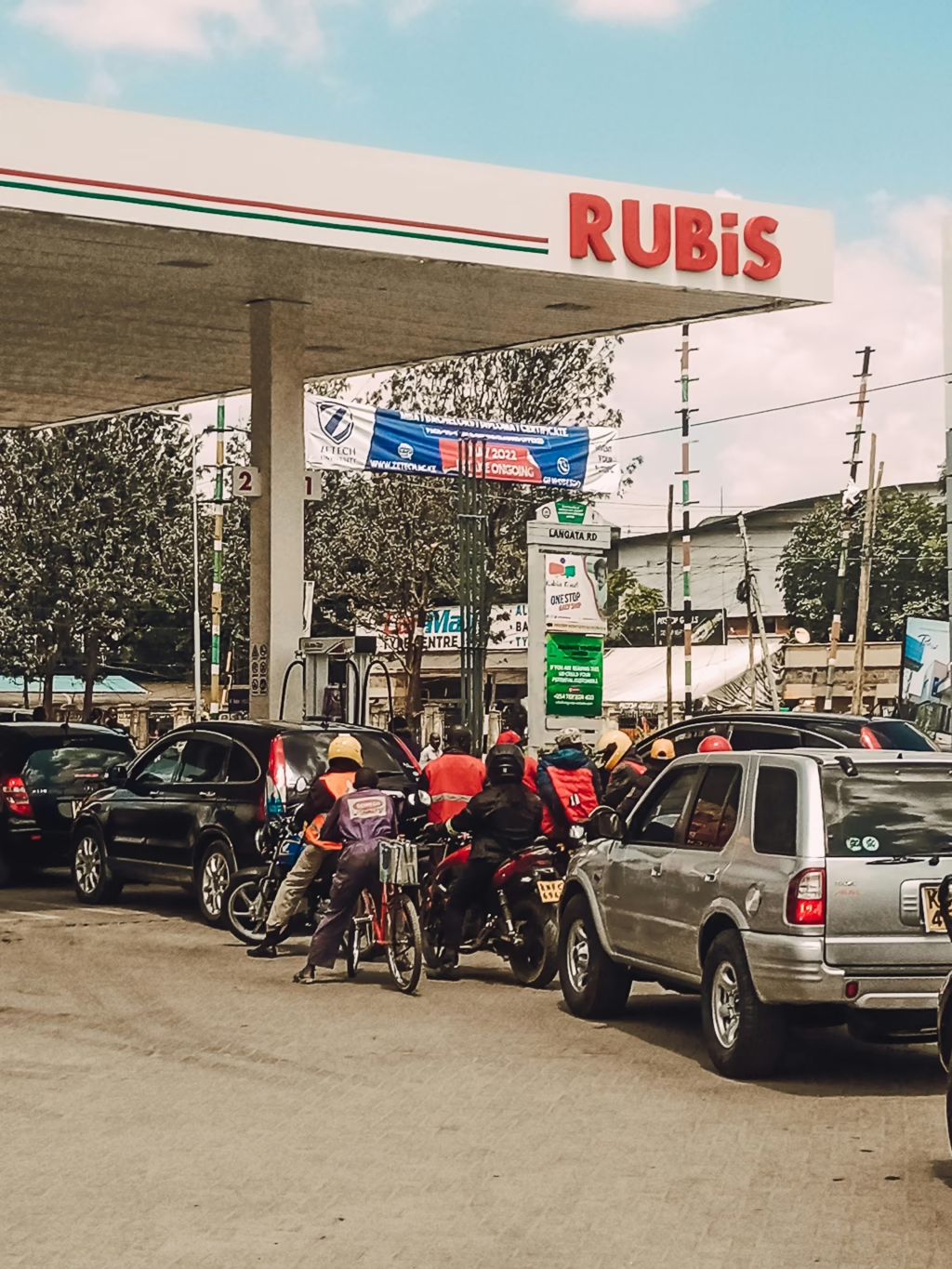
Kenya Hit by Another Painful EPRA Fuel Price Hike
Kenyans are once again staring at a difficult economic period after the Energy and Petroleum Regulatory Authority announced yet another one of the steepest fuel price increases in recent months. In the latest monthly fuel review, EPRA has increased the price of super petrol by Ksh 16.65 per liter, pushing the retail cost to Ksh 214.25 in Nairobi. Diesel has recorded an even more shocking jump of Ksh 46.29 per liter to retail at Ksh 242.92.
The new prices will take effect from May 15 to June 14, 2026, and are expected to trigger widespread economic consequences across the country. The announcement has sparked concern among motorists, transport operators, businesses, and ordinary households who were already struggling with the rising cost of living.
The increase comes only weeks after another major fuel adjustment in April, meaning Kenyans are now facing back-to-back fuel shocks within a very short period. Analysts warn that the latest increase will significantly worsen inflation and weaken consumer spending power across the economy.
Why EPRA Increased Petrol and Diesel Prices
According to EPRA, the increase in fuel prices was caused by a combination of rising international petroleum costs, exchange rate pressures, and taxation adjustments. The regulator noted that global oil market volatility continues to affect the landed cost of imported fuel products.
Kenya relies heavily on imported refined petroleum products, making local pump prices extremely vulnerable to international market disruptions. The recent geopolitical tensions in the Middle East, especially around critical oil transport routes, have pushed global crude oil prices upward. This has increased shipping, insurance, and importation costs for fuel entering Kenya.
EPRA also indicated that the prices include VAT and other statutory taxes under Kenya’s taxation framework. While the government announced that it would use the Petroleum Development Levy Fund to cushion diesel and kerosene consumers through a subsidy estimated at Ksh 5 billion, the intervention has done little to stop the sharp increase witnessed at fuel stations.
The regulator further explained that exchange rate fluctuations have amplified the crisis. Since petroleum imports are paid for in US dollars, any weakening of the Kenyan shilling directly increases fuel import costs. Even slight currency depreciation can significantly raise the final retail price paid by consumers.
Diesel Price Shock Will Trigger Massive Economic Pain
While the petrol increase has attracted major attention, economists believe the diesel price jump will have an even greater impact on Kenya’s economy. Diesel is the primary fuel used in public transport, cargo transportation, farming machinery, construction equipment, and manufacturing industries.
A rise of Ksh 46.29 per liter means transport and production costs are likely to rise sharply within days. This will eventually translate into higher prices for food, building materials, electricity generation, and essential consumer goods.
Matatu operators and long-distance transport companies are expected to pass the additional fuel costs directly to passengers. This means commuters could soon face increased transport fares across major towns and cities. Businesses that depend on logistics and delivery services will also increase prices to protect profit margins.
For farmers, especially those transporting produce from rural areas to urban markets, the diesel increase could become devastating. Higher transport costs often lead to increased food prices in supermarkets and local markets. The impact will be especially severe for low-income households already struggling with expensive basic commodities.
Cost of Living Crisis Likely to Worsen
The latest EPRA fuel price hike is expected to deepen Kenya’s cost of living crisis at a time when many households are already under immense financial pressure. Over the past year, Kenyans have faced rising taxes, expensive electricity bills, increased transport costs, and high food prices.
Fuel prices play a central role in nearly every sector of the economy. When fuel becomes expensive, businesses incur higher operating expenses and often transfer those costs to consumers. This creates a ripple effect that pushes up the prices of goods and services nationwide.
Many families are already spending a large percentage of their income on transport, rent, food, and school expenses. The latest fuel increase will force households to reduce spending on non-essential items, weakening consumer demand and slowing economic activity.
Small businesses will suffer too. Retailers, boda boda operators, delivery companies, and manufacturers face potential declining profits as operating costs rise faster than customer purchasing power.
Economic analysts warn that if global oil prices remain unstable, Kenya could face additional fuel increases in the coming months. This will further strain businesses and households struggling to recover from previous economic shocks.
Public Anger Growing Over Rising Fuel Prices
The announcement has already triggered widespread frustration among Kenyans on social media and within the transport sector. Many citizens argue that repeated fuel price increases are becoming unsustainable and are hurting ordinary wananchi more than large corporations or wealthy individuals.
Public transport operators have warned that maintaining current fare prices will be impossible. Some operators are reportedly considering fare adjustments to cope with the new diesel prices.
The latest increase also revives debate around Kenya’s fuel taxation policies. Critics argue that taxes and levies make up a significant portion of pump prices and continue to burden consumers during periods of global oil instability.
Although the government has attempted to cushion consumers through subsidies funded by the Petroleum Development Levy, many Kenyans believe the interventions have not been sufficient to prevent severe economic pain.
The timing of the increase has also raised concerns because it comes during a period when many households are already managing very tight budgets amid slow income growth and limited job opportunities.
Impact on Inflation and Kenya’s Economy
The new fuel prices are expected to add to inflationary pressure across Kenya’s economy in the coming weeks, according to economists. Fuel costs directly influence transportation, manufacturing, agriculture, and distribution chains, meaning inflation could spread rapidly across multiple sectors.
The transport sector will experience the earliest impact. Increased matatu fares and logistics costs could quickly affect consumer prices in urban centers such as Nairobi, Nakuru, Kisumu, and Mombasa.
Manufacturers also face rising production costs due to expensive diesel-powered operations and transportation expenses. This would likely make locally produced goods more expensive and reduce competitiveness for Kenyan businesses.
There are also fears that the higher fuel prices will slow economic growth. When consumers spend more money on fuel and transport, they often reduce spending in other sectors such as retail, entertainment, hospitality, and tourism.
The agricultural sector also faces additional pressure because farmers rely heavily on diesel for irrigation, machinery, and transport. Increased farming costs will eventually contribute to higher food inflation.
Financial experts are warning that unless global oil prices stabilize or the government introduces additional relief measures, Kenya will continue experiencing prolonged inflationary pressure throughout the year.
Can the Government Prevent Further Fuel Increases?
The government now faces growing pressure to find long-term solutions to Kenya’s recurring fuel crises. Some analysts are calling for a review of fuel taxes and levies to reduce the burden on consumers.
Others argue that Kenya must accelerate investment in alternative energy sources and public transport systems to reduce dependence on imported petroleum products. Expanding electric mobility and renewable energy infrastructure will help protect the economy from global oil market shocks in the future.
However, such solutions require significant investment and may take years to deliver meaningful results. In the short term, consumers are likely to continue facing uncertainty as global oil prices remain volatile.
EPRA has maintained that its pricing formula is based on international market realities and statutory taxation requirements. Still, the growing economic pressure may intensify calls for government intervention if fuel prices continue climbing.
What the Latest Fuel Prices Mean for Ordinary Kenyans
For ordinary Kenyans, the latest EPRA fuel price hike means one thing: life is about to become even more expensive. Whether directly or indirectly, nearly every household will feel the effects of higher petrol and diesel costs.
Commuters will pay more for transport. Businesses will increase product prices. Farmers will spend more on transporting food to the markets. Electricity generation and manufacturing costs are expected also to rise.
The increase highlights how deeply fuel prices influence Kenya’s economy and why every EPRA announcement now attracts national attention.
As the new prices take effect, millions of Kenyans will be hoping that global oil markets stabilize soon. Without relief, the latest fuel increase will become another major blow to households already struggling with one of the toughest economic periods in recent years.
About The Author