Shocking Shift as EPRA Breaks Kenya Power Monopoly, Raising Fears of Higher Bills and Market Chaos
EPRA breaks Kenya Power monopoly after introducing new electricity market regulations that allow producers to sell power directly to large consumers. While the move promises competition, critics warn it could increase electricity prices for ordinary Kenyans and destabilize the country’s power sector.
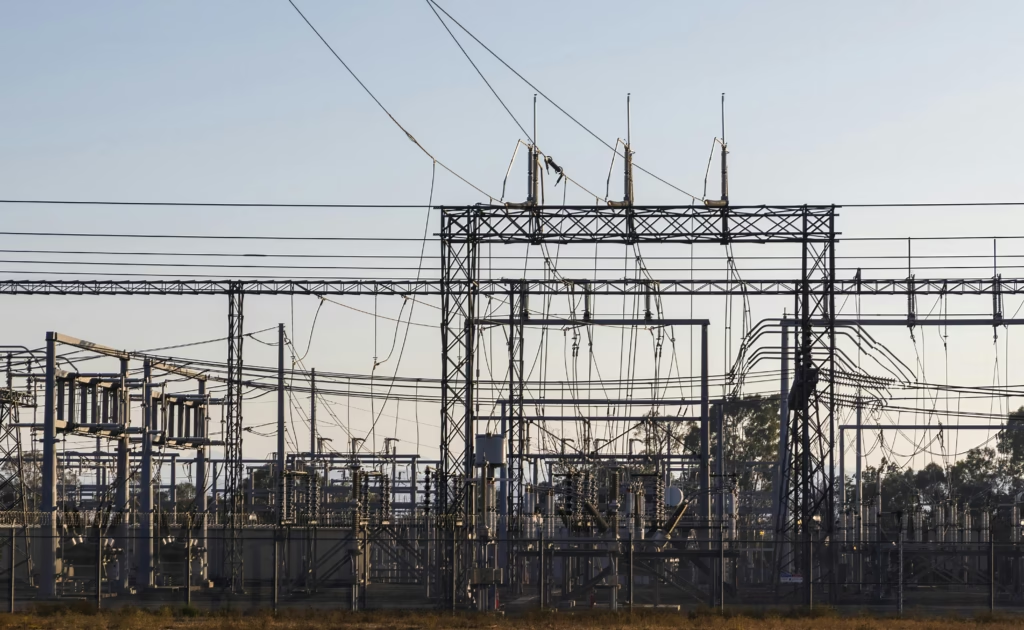
For decades, the Kenyan electricity market revolved around one dominant player: Kenya Power. The company controlled the distribution and retail sale of electricity, making it the single gateway between power producers and millions of consumers across the country. That monopoly is now facing its biggest disruption yet after the Energy and Petroleum Regulatory Authority introduced new regulations opening the market to competition.
The move by EPRA is being presented as a revolutionary reform that could modernize Kenya’s electricity sector, attract private investment, and improve efficiency. However, beneath the optimistic language lies growing concern from economists, consumer groups, and industry experts who fear the changes could trigger unintended consequences for ordinary Kenyans.
At the center of the debate is a simple but critical question: Will breaking the Kenya Power monopoly reduce electricity costs, or will it make power even more expensive for struggling households?
EPRA Electricity Reforms Signal a New Era in the Kenya Electricity Market
The new energy (electricity market, bulk supply, and open access) regulations effectively dismantle the long-standing control Kenya Power had over electricity distribution. Under the framework, electricity producers will now be allowed to sell power directly to large consumers such as factories, industries, commercial complexes, and high-consumption businesses.
Previously, power producers such as KenGen and independent power producers were required to sell electricity to Kenya Power, which then distributed it to consumers. The new system changes that structure entirely by introducing “open access” rules.
Under these rules, producers can use existing transmission and distribution infrastructure owned by Kenya Power and Kenya Electricity Transmission Company to supply electricity directly to customers after paying wheeling charges.
On paper, the reforms appear progressive. Competition is often associated with efficiency, innovation, and better pricing. Yet the Kenyan electricity sector is far more complicated than a normal free market.
Unlike telecommunications or retail industries, electricity distribution depends heavily on costly infrastructure investments, long-term contracts, and cross-subsidization. This is why experts are warning that the transition could destabilize the entire sector if poorly managed.
Why Kenya Power’s Monopoly Was So Important
Many Kenyans criticized Kenya Power for years over blackouts, costly electricity bills, and poor customer service. Yet despite its flaws, the monopoly structure played a hidden role in balancing electricity costs across different consumer groups.
Large industrial consumers pay significantly higher electricity charges compared to many residential customers. Those higher payments helped subsidize electricity access for households and smaller users.
If industries and large commercial customers migrate to private electricity suppliers offering cheaper deals, Kenya Power could lose its most profitable customers. That creates a dangerous financial gap.
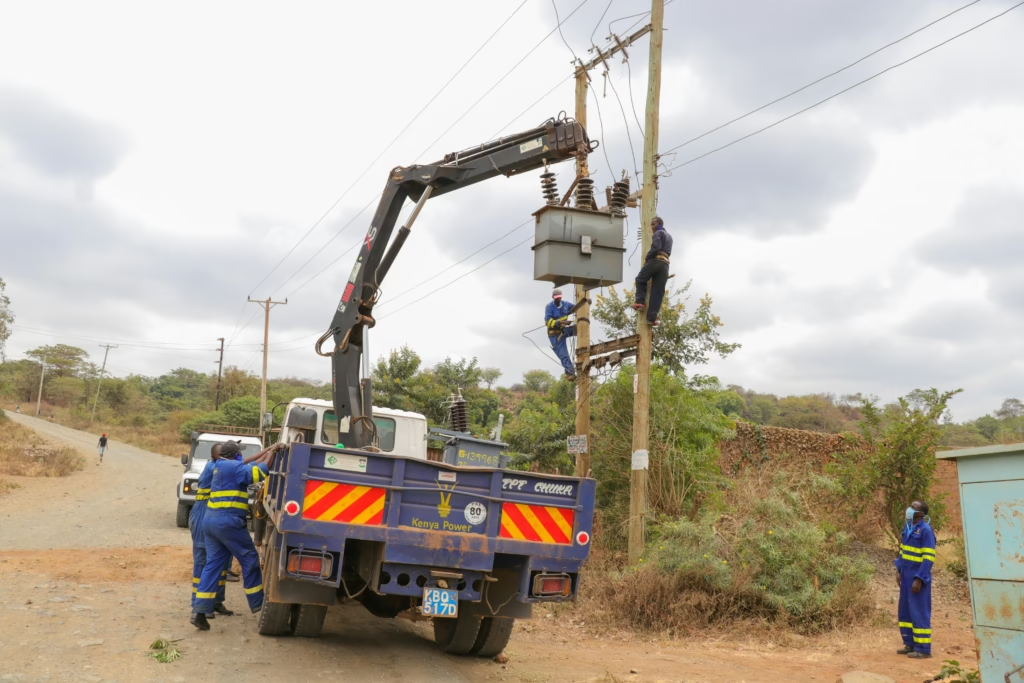
The fear is that Kenya Power would then be left depending mainly on residential consumers who generate lower revenues while the company still carries massive infrastructure maintenance costs and long-term power purchase obligations.
This is precisely the concern raised by the World Bank, which reportedly cautioned against rushing to end the monopoly structure. According to reports, the World Bank warned that the move could eventually push electricity prices even higher for ordinary households.
That warning is especially alarming because Kenyan consumers are already struggling with rising electricity costs.
Electricity Prices in Kenya Continue to Rise
The timing of the reforms could hardly be more controversial.
Kenyans are already facing mounting electricity bills fueled by foreign exchange adjustment charges, fuel cost charges, and water levies imposed through EPRA reviews.
Recent adjustments introduced additional costs per kilowatt-hour, worsening the burden on consumers already battling high living costs and inflation. Many households now spend a significant portion of their income on electricity alone.
Critics argue that opening the market before stabilizing electricity pricing could worsen inequality in access to affordable power.
Large corporations may secure favorable deals directly from generators while ordinary consumers remain trapped under increasingly expensive retail tariffs. In effect, the reforms risk creating a two-tier electricity market where wealthy consumers benefit while households absorb the financial shock.
That possibility has sparked intense debate among energy experts and consumer rights advocates.
Open Access Electricity Regulations Could Reshape Business Competition
Despite the risks, supporters of the reforms argue that the Kenya electricity market desperately needed competition.
Independent power producers have for years complained that Kenya Power’s single-buyer model created inefficiencies, payment delays, and overdependence on one distributor.
For example, KenGen has repeatedly expressed interest in directly supplying electricity to consumers to reduce business risks associated with relying solely on Kenya Power.
The new EPRA electricity reforms could therefore unlock fresh investment opportunities in renewable energy, transmission infrastructure, and private electricity retailing.
Advocates also argue that competition could improve service delivery. Large consumers frustrated by blackouts and unstable supply may finally gain alternatives instead of depending on a single distributor.
But even supporters acknowledge that the success of the reforms depends entirely on regulation and implementation.
Without strong oversight, the market could become fragmented, unstable, and financially unsustainable.
Kenya Power Faces an Uncertain Future
The biggest loser in the transition may ultimately be Kenya Power itself.
The company already faces enormous financial pressure from aging infrastructure, operational inefficiencies, debt burdens, and expensive power purchase agreements signed over many years.
If large customers leave the utility in large numbers, Kenya Power could experience severe revenue declines. Yet the company would still be required to maintain nationwide electricity infrastructure and rural connectivity obligations.
That imbalance could create a dangerous scenario where Kenya Power becomes financially weaker while still carrying national responsibilities that private competitors may avoid.
There is also concern that investors may cherry-pick profitable urban customers while leaving Kenya Power responsible for less profitable rural and low-income areas.
Such an outcome could widen inequality in electricity access and undermine years of electrification efforts.
The reality is that monopoly systems are often broken for a reason, but dismantling them without adequate safeguards can produce even bigger crises.
What the Reforms Mean for Ordinary Kenyans
For the average Kenyan household, the immediate effects may not be visible overnight. Most residential consumers will continue receiving electricity through Kenya Power in the short term.
However, the long-term consequences could be significant.
If Kenya Power loses high-paying industrial customers, domestic tariffs may rise further to compensate for revenue losses. That would increase pressure on already strained households.
There is also uncertainty surrounding wheeling charges, infrastructure maintenance costs, and future tariff structures under the new competitive environment. EPRA will now play an even bigger role in approving electricity prices and regulating market fairness.
The challenge for regulators will be balancing investor interests with consumer protection.
Kenyans have heard promises before about reforms reducing costs, yet electricity prices have continued climbing over the years. That history explains why many citizens are skeptical about whether the latest reforms will truly benefit ordinary consumers.
EPRA Breaks Kenya Power Monopoly at a High-Stakes Moment
The decision by EPRA to open the electricity market represents one of the most significant transformations in Kenya’s energy sector in decades.
The reforms could modernize the industry, encourage innovation, and attract investment into cleaner and more efficient power systems. On the other side, the move risks destabilizing Kenya Power, increasing household electricity costs, and deepening inequality within the energy market.
The stakes could not be higher.
Electricity is not just another commodity. It powers businesses, hospitals, schools, factories, and households. Any disruption in pricing or supply affects the entire economy.
What makes the situation even more delicate is that Kenya is implementing these changes at a time when citizens are already battling economic hardship, inflation, and rising utility costs.
If managed carefully, the reforms could reshape the Kenya electricity market positively over time. But if poorly executed, EPRA’s move to break the Kenya Power monopoly may become another painful example of reforms that looked promising on paper but ended up hurting the very consumers they were supposed to help.
For now, Kenyans are watching closely and anxiously.
About The Author