Heartbreaking Neglect: How Kelvin Kiarie Raised Kenya’s Flag High Despite Brutal Struggles
Kelvin Kiarie’s rise from an unsupported Kenyan skater to an African champion is a story of sacrifice, resilience, and national pride. Despite travelling without sponsors, struggling financially, and receiving little institutional support, Kiarie still carried Kenya’s flag high in international skating competitions. His victories have inspired thousands of Kenyans who are now rallying behind his dream.
For decades, Kenya has been globally associated with athletics. The country’s runners dominate marathons, middle-distance races, and international track competitions. But beyond athletics, many talented Kenyan sportsmen and women continue to struggle in silence, often receiving little recognition, sponsorship, or institutional support.
One of the clearest examples today is Kelvin Kiarie, a young Kenyan skater who has stunned Africa with his performances in international skating competitions while enduring painful financial struggles and near-total neglect from authorities.
Kiarie’s story is not just about medals. It is about sacrifice, resilience, patriotism, and the harsh reality many athletes in non-mainstream sports face in Kenya. Even after winning gold medals abroad and raising Kenya’s flag proudly, he still had to depend on ordinary Kenyans for support.
His journey has now sparked national conversations about how Kenya treats talented athletes outside football and athletics.
Kelvin Kiarie’s Rise in International Skating Competitions
In April 2026, Kelvin Kiarie shocked many Kenyans after winning gold and silver medals at the International Skating Challenge in Cotonou, Benin. The victories instantly pushed his name into national conversations because few Kenyans even knew the country had athletes competing in international skating events.
Kiarie won gold in freestyle battle and silver in classic slalom, proving that Kenyan talent can compete beyond traditional sports. His achievements became even more remarkable after details emerged showing he traveled to the competition with little financial backing and almost no official support.
Instead of enjoying the comfort and preparation many elite athletes receive, Kiarie reportedly used public transport to reach the airport because he lacked sufficient funds. Videos shared online showed the skater boarding a matatu on his way to Jomo Kenyatta International Airport before flying out to represent Kenya.
For many Kenyans, the image became symbolic of a country that celebrates athletes after success but rarely supports them before victory.
Yet despite those challenges, Kiarie still delivered exceptional performances on the international stage.
The Painful Reality of Lack of Government Support
One of the issues surrounding Kelvin Kiarie’s story is lack of government support, and for good reason.
Reports revealed that Kiarie financed much of his journey himself while competing without sponsors or meaningful federation backing.
That revelation angered many Kenyans online. Citizens questioned how an athlete representing the country internationally could struggle to afford flights, equipment, accommodation, and training costs.
According to multiple reports, Kiarie traveled largely alone, without the support structures normally associated with national teams.
His story exposed a wider problem in Kenyan sports. While athletics continues receiving major investment and attention, emerging sports like skating often operate in the shadows. Talented athletes must fight through financial hardship, lack of exposure, limited sponsorship opportunities, and inadequate facilities.
The situation became more painful because Kiarie was not merely participating internationally; he was winning.
When the Kenyan national anthem played after his victory in Benin, many Kenyans online described the moment as both emotional and embarrassing. Emotional because a Kenyan athlete had conquered Africa against the odds. Embarrassing because he appeared to have achieved it without proper national support.
The criticism soon spread across social media platforms, with many citizens accusing sports authorities of ignoring talented athletes until they become successful.
Kenyan Skater Kelvin Kiarie’s Personal Sacrifices
Another important issue surrounding this story is Kenyan skater struggles.
Behind the medals lies a painful story of sacrifice and persistence.
Kiarie himself admitted he had every reason to quit. In emotional social media messages, he revealed how difficult the journey had been due to lack of funding, sponsorship, and proper support systems.
Unlike athletes in established sports who often receive structured training and sponsorship deals, Kiarie had to rely heavily on personal belief and determination.
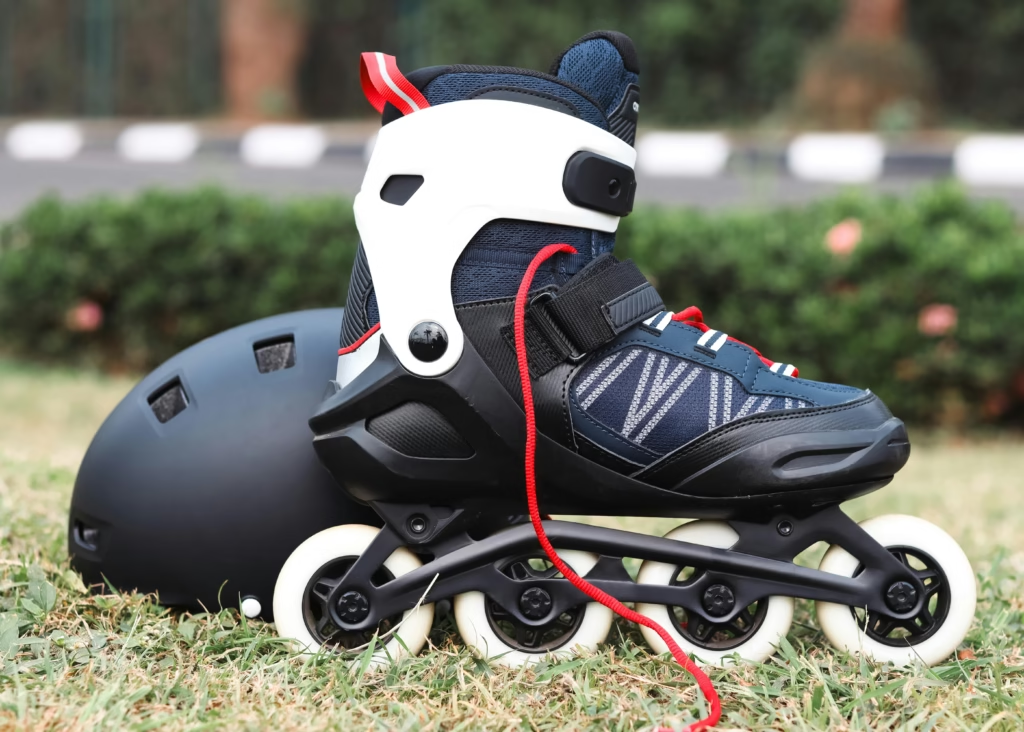
Skating itself is an expensive sport. Equipment, protective gear, skates, training surfaces, travel expenses, and international competition fees require significant financial investment. For an athlete without strong sponsorship backing, surviving in the sport becomes extremely difficult.
Kiarie’s story resonated with many young Kenyans because it reflected a broader national reality. Many talented individuals in music, arts, sports, and innovation struggle because systems meant to nurture talent remain weak.
Despite these obstacles, Kiarie refused to abandon his dream.
Weeks after his success in Benin, he went on to achieve another historic milestone by winning gold at the African Skating Championships in Cairo, Egypt.
The victory cemented his status as one of Africa’s top skaters and proved that his earlier success was not a lucky moment.
Kenyans Rally Behind Kelvin Kiarie
One of the most inspiring parts of this story is how ordinary Kenyans responded.
After learning about his struggles, many Kenyans decided not to simply praise him online. Instead, they contributed money to help support his skating career.
Reports indicated that Kenyans on X raised nearly KSh 174,000 to support Kiarie after his story went viral. The contributions were meant to help him purchase better skating equipment and training gear and cover competition expenses.

For many citizens, the fundraising effort became a statement against neglect and a show of national unity.
Online discussions showed thousands of Kenyans expressing pride in the young skater while simultaneously criticizing systems that fail to support emerging talent.
Some social media users argued that Kenya often ignores athletes until international media begins paying attention. Others said Kiarie’s journey highlighted how passion and determination can still overcome institutional failures.
The emotional support also mattered greatly. Messages congratulating Kiarie flooded social media platforms after each victory.
Many Kenyans described him as an inspiration to young people chasing dreams despite difficult circumstances.
Why Kelvin Kiarie’s Story Matters Beyond Sports
The Kenyan sports talent is central to understanding why Kiarie’s story has captured national attention.
His success represents more than skating medals. It symbolizes the untapped potential existing across Kenya.
For years, Kenya has largely concentrated resources on athletics because it guarantees international success. But Kiarie’s achievements prove the country possesses talent in many other sports disciplines.
If properly supported, Kenya could potentially become competitive in skating, skateboarding, cycling, gymnastics, and other emerging sports.
Kiarie’s rise also highlights how global sports are changing. Younger audiences increasingly follow alternative sports, urban competitions, and extreme sports disciplines. Countries investing early in such sports may gain major international visibility in future competitions.
His journey therefore raises an important national question: how many other talented young Kenyans are struggling silently because they lack support?
Many experts argue that investing in diverse sports disciplines could create employment, attract sponsorships, inspire youth, and reduce overreliance on athletics.
Signs of Hope as Government Finally Responds
Following public outrage and widespread media attention, signs of support have finally started emerging.
Recently, officials from Kenya’s sports ministry acknowledged Kiarie’s achievements and pledged support ahead of future international competitions.
Sports Principal Secretary Elijah Mwangi reportedly congratulated the skater and emphasized the need for emerging sports athletes to receive formal recognition and support.
The government also promised to facilitate Kiarie’s preparations for the upcoming World Skate Games in Paraguay later this year.
While many Kenyans welcomed the development, others argued that support should not only come after athletes achieve international success.
Critics insist that Kenya needs long-term structures capable of identifying, training, and supporting talent before athletes reach crisis points.
Still, for Kiarie, the recognition marks an important turning point after months of struggle and sacrifice.
Kelvin Kiarie Has Become a Symbol of Resilience
Today, Kelvin Kiarie stands as one of Kenya’s most inspiring sports figures.
He succeeded in a sport many people barely understood. He traveled abroad despite financial hardship. He represented Kenya proudly without guaranteed support. And most importantly, he won.
His story continues inspiring young Kenyans who dream of succeeding in unconventional fields despite limited opportunities.
In many ways, Kiarie has become the symbol of a generation fighting to succeed without waiting for perfect systems or institutional approval.
Yet his story is also a warning.
A country cannot continue depending solely on individual sacrifice while ignoring structural investment in talent development. Without proper support systems, many promising athletes may never reach their full potential.
Kelvin Kiarie proved that Kenyan talent can shine anywhere in the world. The painful question now is whether Kenya will finally build systems capable of supporting heroes before they become international champions.
About The Author