Alarming AI Chip Crisis Makes Cheap Smartphones More Expensive for Kenyans
Kenyans who rely on affordable smartphones are facing a painful new reality as the global artificial intelligence boom pushes up the cost of memory chips and mobile components. Manufacturers are already warning that cheap phones could become significantly more expensive in 2026, threatening digital access for millions of low-income users.

For years, affordable smartphones have helped millions of Kenyans access mobile banking, online jobs, digital learning, social media, and e-commerce. Cheap Android devices became the gateway to the internet economy, especially for students, hustlers, small business owners, and first-time smartphone buyers.
But that era is now under serious threat.
A powerful global shift driven by artificial intelligence is rapidly changing the economics of smartphone production, and Kenyan consumers are beginning to feel the consequences. The same AI revolution powering tools like ChatGPT, AI assistants, smart search engines, and advanced data centers is now creating a severe shortage of memory chips used in smartphones. The result is simple but painful: low-cost smartphones are becoming more expensive.
The impact could be devastating in Kenya, where millions of consumers depend on budget smartphones costing below Sh15,000. Industry analysts and local manufacturers are already warning that the rise in AI chip demand is squeezing supply chains and forcing phone makers to reconsider whether cheap smartphones are still profitable to produce.
The worrying part is that this may only be the beginning.
How AI Chips Are Driving Smartphone Prices Higher
The global technology industry is currently experiencing what some analysts are calling “RAMageddon,” a massive shortage of memory chips caused largely by explosive investment in artificial intelligence infrastructure.
AI systems require enormous computing power. Companies such as OpenAI, Google, Meta, and Microsoft are spending billions of dollars building giant AI data centers packed with advanced memory chips. Those data centers consume huge amounts of DRAM and NAND memory, the same components used in smartphones and laptops.
Because AI companies are willing to pay premium prices, major chip manufacturers such as Samsung, SK Hynix, and Micron Technology are shifting production toward high-margin AI memory products instead of cheaper smartphone components.
That shift is creating a supply crunch for smartphone manufacturers worldwide.
According to reports, some memory chip prices have increased nearly fourfold in the past year. One local executive revealed that a memory component previously costing about Sh2,400 now costs over Sh8,000.
That type of increase is catastrophic for companies building low-cost smartphones on thin profit margins.
Why Kenya Will Feel the Pain More Than Wealthier Markets
The smartphone pricing crisis may hit Kenya harder than developed countries because the Kenyan market heavily depends on affordable devices.
Unlike consumers in Europe or North America, many Kenyan buyers prioritize price above premium features. A significant percentage of smartphone sales in Kenya come from entry-level Android devices produced by brands like Tecno, Infinix, Xiaomi, and Samsung. These phones are often sold through installment payment models that make them accessible to lower-income households.
But the economics behind those cheap devices are becoming increasingly unsustainable.
Research indicates that memory costs can account for up to 30 percent of the total manufacturing cost of a budget smartphone. When memory prices suddenly surge, manufacturers lose the ability to maintain low retail prices.
That creates a dangerous situation for Kenya’s growing digital economy.
If entry-level smartphones rise sharply in price, millions of consumers could delay upgrading their phones, shift back to feature phones, or rely on older second-hand devices. This would slow internet penetration and reduce access to mobile-based economic opportunities.
The consequences go beyond simple consumer inconvenience.
Kenya’s economy is increasingly digital. Mobile banking, online business, government services, digital lending, remote work, and content creation all rely heavily on smartphone access. Higher smartphone prices risk widening the digital divide between those who can afford modern devices and those who cannot.
Local Smartphone Assemblers Are Under Pressure
Kenya has spent years encouraging local smartphone assembly to reduce import dependency and make devices cheaper.
Companies such as M-Kopa and East Africa Device Assembly Kenya Limited have invested heavily in local assembly operations, helping expand smartphone access through flexible financing programs.
However, these local assemblers still depend on imported components, especially memory chips sourced mainly from Asia.
That means global chip shortages immediately affect local production costs.
Manufacturers are currently trying to absorb some of the rising costs internally to avoid shocking consumers with sudden price increases. But executives are openly warning that price hikes may become unavoidable if memory shortages continue throughout 2026 and beyond.
This creates another serious problem: Kenya’s affordable smartphone strategy may no longer work under the new AI-driven global supply chain.
The fear within the industry is that manufacturers may eventually abandon ultra-cheap smartphones altogether because the profit margins are becoming too small to justify production. Analysts at research firms have even predicted that the sub-$500 device segment could disappear globally within a few years.
If that happens, the effects in Africa could be severe.
The “AI Tax” Consumers Never Expected
Many consumers associate AI with exciting new features like smart assistants, AI photo editing, real-time translation, and intelligent search tools. But behind the scenes, AI is creating an invisible “AI tax” that ordinary consumers are now being forced to pay.
The irony is striking.
Most Kenyan buyers looking for a Sh10,000 smartphone are not purchasing advanced AI-powered devices. Yet they are still suffering from rising prices because global AI infrastructure is consuming the world’s chip supply.
This is one of the biggest hidden economic side effects of the AI boom.
Consumers are effectively subsidizing the global race for artificial intelligence dominance through more expensive electronics.
Even worse, some manufacturers are responding not only by increasing prices but also by reducing specifications. Industry reports suggest that future budget phones may offer less RAM and lower storage capacity despite costing more than previous generations.
In practical terms, Kenyan consumers may soon pay higher prices for weaker devices.
That is likely to frustrate buyers already struggling with inflation, rising living costs, and economic uncertainty.
Smartphone Brands Face Difficult Decisions
The current chip crisis is forcing smartphone manufacturers into difficult choices.
They can either:
- raise prices,
- reduce device specifications,
- absorb financial losses,
- or shift focus toward premium smartphones with higher profit margins.
Many companies are expected to choose the premium route.
Analysts believe the smartphone industry is entering a phase known as “premiumization,” where manufacturers prioritize expensive devices instead of affordable mass-market models.
That strategy may protect corporate profits, but it could hurt African markets where affordability drives sales volume.
Brands that built their success around cheap Android phones may face declining demand if prices rise too aggressively. Yet failing to raise prices could destroy already thin profit margins.
This explains why the coming years may completely reshape the smartphone market in Kenya.
Cheap smartphones may gradually become less common, while refurbished devices and older flagship phones become more attractive alternatives for price-sensitive buyers.
What Kenyan Consumers Can Expect Next
Unfortunately, there is little evidence that prices will stabilize soon.
Major memory manufacturers are expanding production capacity, but analysts say meaningful supply relief may not arrive until 2027 or later.
That means Kenyan consumers should prepare for a prolonged period of expensive smartphones.
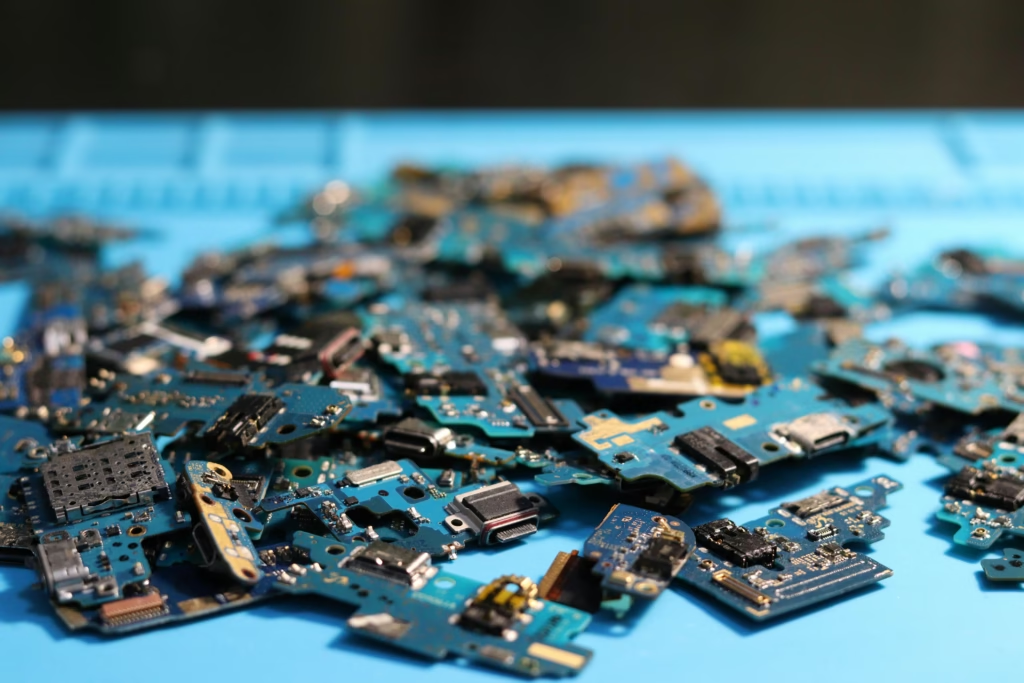
Several trends are likely to emerge:
First, installment payment models will become even more important as consumers struggle to afford higher upfront prices.
Second, refurbished smartphones may experience a surge in demand as buyers look for cheaper alternatives to brand-new devices.
Third, consumers may hold onto their phones longer instead of upgrading frequently.
Fourth, entry-level smartphone innovation could slow down as manufacturers focus on preserving profitability.
For many young Kenyans, this may mark the end of the ultra-cheap smartphone era that helped accelerate digital inclusion across the country over the past decade.
The Bigger Threat Behind Rising Smartphone Prices
The deeper issue is not simply expensive phones.
The real concern is that AI is beginning to reshape global markets in ways that disproportionately hurt lower-income consumers.
While tech giants race to dominate artificial intelligence, ordinary consumers in developing economies are facing the side effects through rising costs, shrinking affordability, and reduced access to technology.
Kenya’s digital future depends heavily on affordable internet-enabled devices. If smartphones become luxury products instead of everyday tools, the country risks slowing the momentum of digital transformation that has driven innovation in banking, education, e-commerce, and entrepreneurship.
The AI revolution promises incredible technological progress. But for millions of Kenyan consumers, it is currently delivering something far less exciting: more expensive smartphones, weaker purchasing power, and growing uncertainty about the future affordability of technology.
And unless the global chip supply crisis eases soon, the cheapest smartphones may become the biggest casualty of the AI boom.
About The Author