Patrick Dorgu Injury Blow: How Manchester United’s Top Four Hopes Are Threatened Without One of Their Best Performers
Manchester United have been dealt a major blow after Patrick Dorgu suffered a hamstring injury against Arsenal, an issue expected to rule one of their most influential players out for weeks. With United’s Premier League momentum building, his absence threatens to expose squad depth and could shape the course of their season.
Manchester United fans received, worrying news on January 27, 2026 that rapidly emerged after their thrilling 3-2 win over Arsenal: Patrick Dorgu is set to be sidelined for a significant spell, potentially around 10 weeks, after scans revealed a hamstring injury following the match.
The timing of this injury couldn’t be more consequential. United have been building momentum under interim manager Michael Carrick, climbing the Premier League table and securing vital wins over top rivals, including Arsenal and Manchester City. But now, the loss of one of their most in-form stars raises real questions about how the club will navigate the next crucial stretch of the league season — especially as they push for top-four and Champions League qualification.
In this in-depth article, we’ll explore the full impact of Patrick Dorgu’s injury on Manchester United’s Premier League campaign, how integral he’s been this season, how the squad might respond in his absence, and realistic expectations for his return.
Dorgu’s Injury Explained: From Cramp Fears to Extended Layoff
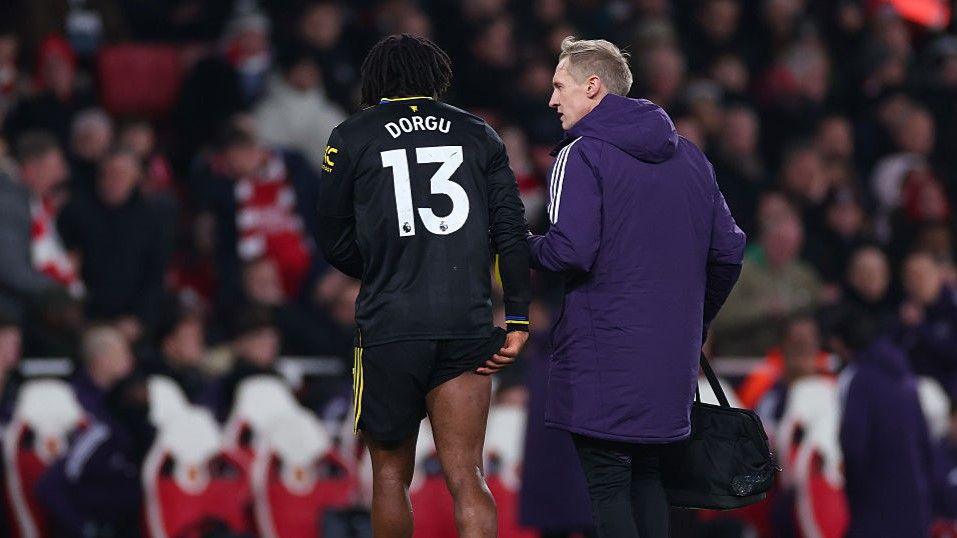
The manner of Patrick Dorgu’s injury captured attention instantly. During the 3-2 win at the Emirates, United’s young attacker scored a beautiful goal to put his team ahead, showcasing the confidence and attacking verve he’s brought this season. But in the latter stages, he pulled up clutching his hamstring while chasing a forward pass — a worry that turned out to be far more serious than initially hoped.
After the match, Carrick offered cautious optimism that the problem might be cramp rather than a major muscle issue, but subsequent medical tests revealed a more significant damage to the hamstring. Scans suggest Dorgu could be out for up to 10 weeks, which would see him miss around eight Premier League fixtures — a huge blow for United’s first-team plans.
Given that hamstring injuries typically demand careful rehabilitation and can easily flare up if rushed, this timeline makes medical sense: players usually need time to heal the muscle fibers, regain strength, rebuild match fitness, and avoid reinjury. While the club is continuing to assess specifics, the 10-week projection remains the most reliable estimate available.
Why This Is a Massive Blow for United’s Premier League Push
Losing a single player in football has been disruptive; losing one of your best and most in-form players at a critical point in the season has always been destabilizing. There are several reasons why Dorgu’s potential absence is such a big deal for Manchester United:
1. Dorgu Has Become One of United’s Most Consistent Threats
This season, Patrick Dorgu has emerged as one of United’s most productive attackers in terms of both goals and overall influence in recent games post Amorim era. Before his injury, he had contributed three goals and three assists in 22 Premier League games, numbers that underline his attacking value in a squad that has often struggled for consistency in final third output.
More importantly than raw numbers, Patrick Dorgu’s dynamic style — combining pace, direct running, and creative decision-making from the left flank — added a dimension to United’s attack that opponents found difficult to contain. Much of United’s recent ability to break lines and create threatening moments came through his involvement, whether dribbling into dangerous areas or linking play with teammates.
2. Carrick’s System Relied Heavily on His Versatility
Under Carrick, Patrick Dorgu has predominantly operated in an advanced wide role. This isn’t a simple wing-back position; it’s a hybrid role requiring defensive awareness, attacking movement, and the ability to drift inside and create overloads in midfield. That tactical flexibility made Dorgu a unique asset in a squad that otherwise often struggles for depth in relationships between wide and central play.
With his ability to operate both as a natural outlet on the flank and as a forward dribbler cutting inside, Patrick Dorgu was central to Carrick’s preferred fluid attacking structure. Removing that piece disrupts the balance of that system and forces the manager to rethink how United generate scoring opportunities.
3. Momentum Was Building at Just the Right Time
United are in a precarious part of their Premier League schedule. With games against teams like Aston Villa, Newcastle, and Tottenham looming in the next few weeks — all historically tough fixtures — maintaining momentum and squad confidence is essential. Missing a player who has been instrumental in recent positive results makes navigating this sequence even more difficult.
When Is Dorgu Likely to Return? Setting Realistic Expectations
According to reports from reputable outlets, the current estimate based on medical scans points toward a 10-week absence. That would see Dorgu potentially return around early April 2026, possibly for a Premier League home match against Leeds United scheduled soon after the March international break.
Ten weeks covers not just recovery from the initial injury but also the essential stages of rehabilitation, conditioning, and reintegration into high-intensity match play. In practice, clubs tend to err on the side of caution with muscle injuries of this nature — especially with a young player whose long-term health and development are priorities.
If United are conservative and slow in his return (which is common with hamstring injuries), Dorgu’s comeback could be even closer to mid-April, rather than early April, to ensure there’s minimal risk of recurrence once he returns. As always, these timelines are estimates and can shift based on how well the rehabilitation progresses.
How United’s Premier League Prospects Could Be Affected Without Him
United’s push for a top-four finish now faces a new strategic challenge. Dorgu’s absence isn’t just a missing name on the team sheet; it creates tactical headaches and forces a rethink of how Carrick approaches his attacking structure — especially because the club currently doesn’t have an abundance of specialists in Dorgu’s hybrid wide/attacking role.
1. Attacking Threat May Become Less Dynamic
With Patrick Dorgu out, United risks losing one of their primary creators on the left channel — someone who combines width, penetration, and unpredictability. Without him, opposition defenders can sit slightly narrower or shift their defensive shapes with more confidence, knowing United’s attacking options aren’t as varied.
It’s not that United lose all attacking threat — they still have players who can score and create goals — but the unique dimension Dorgu provides is hard to replace directly.
2. Carrick Will Have to Adjust Tactics
Carrick may pivot to a more centre-focused attacking game, relying on players already central to United’s plans. This could involve reshaping the attack around players like Matheus Cunha, who scored the winning goal against Arsenal, and others capable of operating in central or wide right roles.
While Cunha’s goal-scoring ability makes him an obvious choice to lead attacks, he is primarily a forward rather than a wide creator in the same mode as Patrick Dorgu. This means Carrick might deploy a narrower formation or encourage more interplay between central midfield and forward lines rather than direct wide play.
3. Opponents May Exploit the Left Side
Opposing teams will be alert to the absence of Dorgu and may specifically target United’s left flank, knowing they lack the natural outlet who previously occupied that space. Deep defensive blocks combined with quick transitions down that side could become a vulnerability United must mitigate.
United’s defensive shape and pressing mechanisms might need adjustment, perhaps asking full-backs or midfielders to cover more ground or change pressing triggers to maintain defensive balance without Dorgu’s presence in wide attacking zones.
Possible Replacements and Tactical Adjustments in the Premier League
When a key player is injured, managers typically choose one of three options: promote a substitute from within, change formation to compensate for the loss, or sign a new player — though the latter is only possible during transfer windows and much harder mid-season.
Matheus Cunha: Lead Attacking Figure
One of the most likely figures to step up in Dorgu’s absence is Matheus Cunha. The £62.5m signing has already proven he can score and make an impact, as demonstrated by his winning goal against Arsenal.
Cunha brings a different style to United’s attack: strong dribbling, physicality, and a knack for finishing. While he isn’t a like-for-like replacement in wide attacking duties, he can shift into a more central or slightly wider position to offer threat and link play — albeit with a slightly altered tactical shape.
Rebalancing Wide Play Through System Changes
United could also adjust their formation to place more emphasis on wide midfield play through other squad members. Instead of relying on a hybrid winger, Carrick might move to a system that uses natural wingers or wide midfielders who can stretch play differently.
This isn’t a simple fix because the Premier League demands cohesion and understanding between players. But tactical flexibility in training may yield new attacking patterns that compensate for Patrick Dorgu’s absence.
Utilizing Midfield Creativity and Overloads
Another option is to increase central midfield involvement in attacking transitions, thereby compensating for the wide outlet that’s missing. Strong link-up play between midfielders and forwards can generate space and create scoring chances even without a specialist wide threat.
While this doesn’t replicate Dorgu’s exact impact, it can help maintain goal threat and fluidity in United’s overall attacking patterns.
Patrick Dorgu’s Role This Season: Why His Absence Is Felt So Deeply
Understanding the scale of this injury’s impact means appreciating how Dorgu has developed this season. Since his arrival from Lecce, Patrick Dorgu has grown from a defensive wing-back into one of United’s most exciting attacking weapons — blending defence and offence in a way that has become central to Carrick’s tactical approach.
His ability to transition quickly from defense to attack, carry the ball forward with pace, and create meaningful chances made him more than just an option on the flank — he became a key architect in United’s attacking blueprint.
With 22 Premier League appearances so far, his integration and development under Carrick speak to his importance: he wasn’t just starting matches — he was influencing them.
Final Thoughts: Short-Term Pain, Long-Term Hope
Patrick Dorgu’s hamstring injury marks a significant disruption to Manchester United’s Premier League season, but it’s important to view this challenge realistically. Injuries are an unavoidable part of football, and how teams respond often defines their success.
United’s immediate focus will be on adapting tactics, rotating smartly, and maintaining their Premier League position while Dorgu recovers. If the 10-week timeline holds, his potential return around early April could coincide with the run-in toward season-end, giving United a boost when every game matters most.
In the meantime, Carrick and his squad will have to find creative solutions to compensate for losing one of their most impactful players — a test of adaptability, squad unity, and tactical intelligence.
About The Author