Iran War Explodes: Israel Strikes Tehran and Beirut as Oil Surges Past $100 — Global Economy Faces Historic Shock
In a big step up in the Iran war, Israeli forces have hit important targets in both Tehran and Beirut. The conflict is quickly turning into a global economic crisis that is affecting homes and markets all over the world as oil prices rise above $100 per barrel.
Once again, a conflict that is quickly spreading across national boundaries is centered in the Middle East. Israeli troops have launched new waves of airstrikes on Hezbollah sites in Beirut and government targets in Tehran in the most recent escalation of the 2026 Iran conflict. These strikes coincide with continuing retaliatory exchanges that have already caused major disruptions to the region’s vital electricity infrastructure. What started out as focused military actions has developed into a larger conflict that directly affects international security.
The issue of whether the conflict would expand is no longer the first concern for investors and policymakers. It is how the world economy will change as a result of this conflict. Households, companies, and stock markets all across the world are already feeling the consequences of rising energy prices and stressed supply chains.
The Conflict Escalation Explained
According to Israeli military officials, a fresh round of attacks targeted Iranian regime infrastructure in Tehran, including locations connected to command centers and missile manufacturing. Israeli planes simultaneously struck structures connected to Hezbollah’s operational and financial networks in southern Lebanon and downtown Beirut. These measures come after weeks of stepped-up operations that started with the larger US-Israeli campaign that was initiated on February 28, 2026.
Tehran, which has important leadership facilities and ballistic missile capabilities, acts as Iran’s political and military hub. Hezbollah’s command structure and rocket arsenals, which Iran has traditionally utilized as a forward deterrent, are located in Beirut and southern Lebanon. Israel intends to directly pressure the Iranian government while weakening Iran’s capacity to project power through proxies by attacking both capitals.
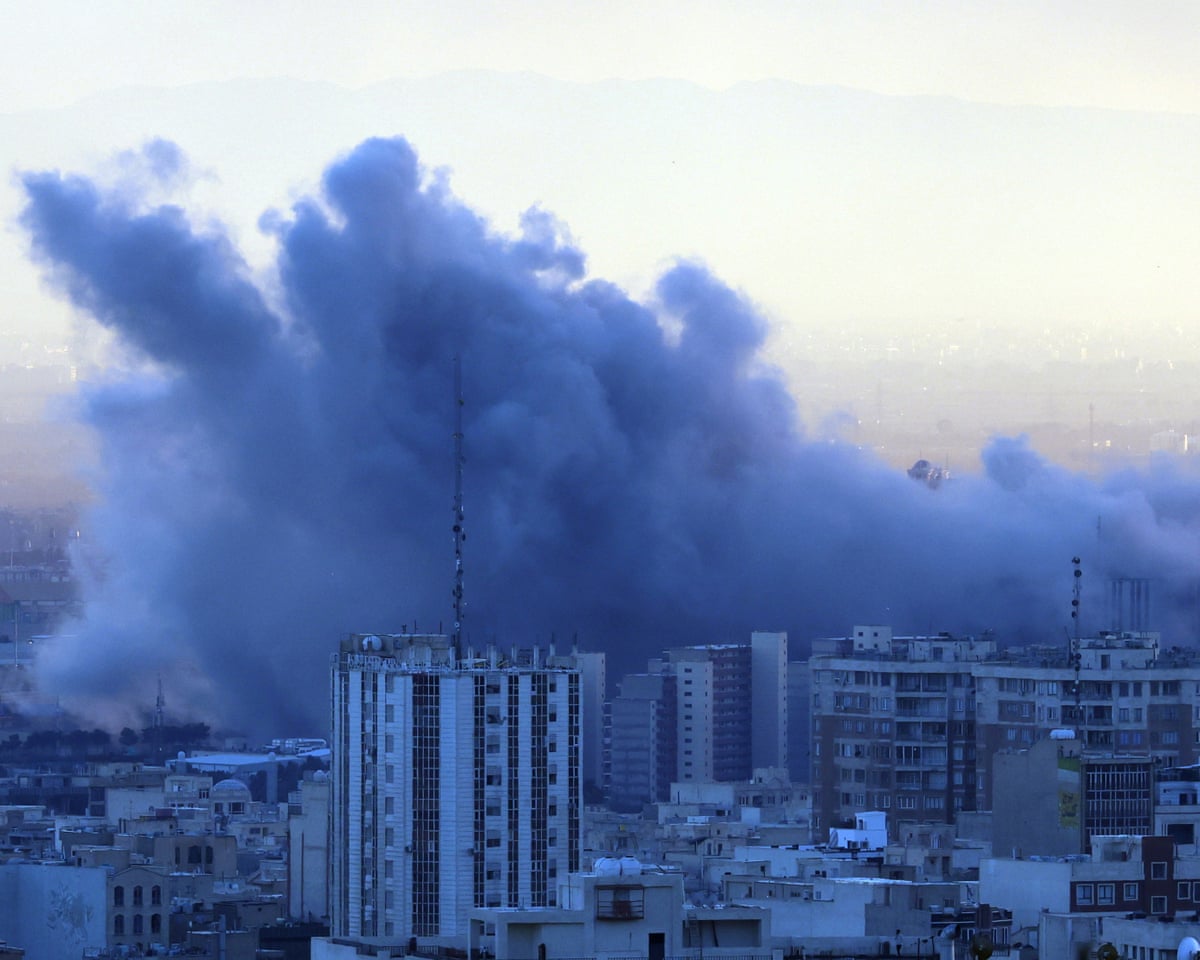
The conflict is spreading throughout the area. Iran has retaliated by attacking Gulf energy installations, including joint gas fields, and launching missile barrages toward Israel. Hezbollah has launched more rockets into northern Israel. Due to these factors, what started out as a targeted effort has evolved into a multi-front conflict including both direct Iranian retribution and escalation through proxies in Lebanon. As both parties continue to attack valuable assets, early indications point to no imminent de-escalation.
Why this is important: The political and military stakes are increased by strategic attacks on major cities. They indicate a change from border skirmishes to direct regime pressure, which raises the possibility of other parties becoming involved and increases uncertainty for international markets that are already vulnerable to instability in the Middle East.
The Immediate Economic Shock
In response to the most recent strikes, energy markets moved quickly. Before the battle started, Brent crude oil prices averaged about $70 per barrel. In recent trading sessions, they have risen beyond $100 and temporarily reached highs close to $119. Supply concerns have been exacerbated by the rise of assaults on gas sources and associated infrastructure.
Due to security concerns and retaliatory moves, the Strait of Hormuz, which transports major amounts of liquefied natural gas and around 20% of the world’s oil, has experienced a severe decline in traffic. The successful interruption of this chokepoint is one of the biggest supply shocks in the history of modern energy. Retaliatory attacks on Gulf infrastructure and damage to Iranian gas sources have further reduced supply, leading several exporters to declare force majeure.
The conflict was reflected in the financial markets. Major market indices saw increased volatility, with advances in the military and energy sectors and pressure to sell wider stocks. As uncertainty increased, investors shifted toward safe-haven assets.
Because oil is essential to manufacturing, transportation, and agriculture, energy shocks swiftly translate into daily expenses. Producers pass on increased transportation and refining costs to customers as a result of rising oil prices. Gasoline, heating fuel, and almost every commodity that travels by truck, ship, or airplane are all under increasing strain as a result. The inflation arithmetic is now more complicated for central banks keeping an eye on these pass-through effects.
Why this is critical: Immediate cost rises reduce profit margins and make planning more difficult for organizations. The increase in energy and gas prices virtually instantly lowers disposable income for the average person, paving the way for more widespread spending constraint.
Inflation, Recession Fears & Global Growth Slowdown
Globally, rising gasoline prices are directly contributing to rising consumer prices. The cost of diesel for farming and distribution is driving up food prices, which are already sensitive to transportation costs. Increased groceries and transportation costs are putting a strain on households in both established and developing countries.
Many central banks are now reevaluating their plans to lower interest rates in order to promote growth. A more hawkish approach might be required if energy-driven inflation persists, delaying borrower relief and weakening economic growth. Rising recession probability have been highlighted by analysts, and some models indicate increased dangers if disruptions continue into the immediate term.
Forecasts for global growth are being reviewed. The most severe challenges are faced by import-dependent areas in Europe and Asia, which mostly depend on Gulf energy. According to preliminary statistics, GDP predictions are likely to be downgraded, especially if oil stays over $100 for a long time.
Connect this to common people: Families that budget for petrol and groceries perceive a decline in their purchasing power. If demand declines, workers in the industrial and transportation industries run the danger of being laid off or having their overtime reduced. The slowdown consequences are then amplified when lower consumer spending spreads to retail, hotels, and services.
This is very crucial: A cost-of-living crisis arises when inflation surpasses wage growth. It increases the likelihood of a wider downturn that affects employment, property markets, and retirement savings when paired with more stringent financial circumstances.
Supply Chains, Trade & Global Disruption
There are new concerns for shipping routes. Some operators have completely diverted, and insurance rates for ships passing in the area have increased dramatically. Global commerce flows, already stressed by previous interruptions, are made more difficult by rising transportation costs.
Supply lines for food and fertilizer are especially susceptible. To maintain agriculture, many fragile nations rely on imported supplies and inexpensive energy. Long-term price increases may make food poverty worse in regions of Asia and Africa where imports of grain and energy coexist.
Uncertainty in business is increasing. Businesses that depend on just-in-time inventories now have to deal with increased expenses and longer lead times. Executives are delaying investment choices as they consider eventualities ranging from short-term interruption to long-term regional instability.
Increased expenses and delays undermine decades-long advances in efficiency for international trade. This results in reduced profitability for companies and possible price increases for customers. For food-insecure nations, the stakes extend beyond economics to humanitarian concerns.
Winners and Losers of This War
There are economies and sectors that stand to benefit from the conflict. Higher prices increase export earnings and local energy investment for countries that export oil outside of the immediate war zone, such as the United States, a major producer. As governments reevaluate military spending, defense contractors’ stock has increased. Price fluctuations may be profitable for commodity traders who are adept at managing volatility.
Import-dependent economies in Asia and Europe suffer from weaker growth and growing import costs. Due to increased necessary expenditures, low-income households bear the largest proportional burden globally. Due to their sensitivity to energy and transportation costs, the global IT and industrial sectors may see margin compression and postponed growth.
Seldom are wealth changes during geopolitical crises equitable. While consumers and trade-dependent sectors bear the expenses, resources are directed toward energy and security suppliers. For years, the national budgetary situation and business balance sheets may be altered by this transfer.
Knowing the winners and losers enables investors to modify their portfolios and politicians to focus support. It also emphasizes how current trends, such diversification away from concentrated energy sources, might be accelerated by crises.
Long-Term Economic Consequences
Inflation may become more entrenched as the dispute continues, leading to more difficult-to-break cycles. Spending on the military may rise, taking money away from social programs or infrastructure. As countries look for other suppliers and ways to lessen risk, trade systems may become even more fragmented.
In policy talks, there is already a drive toward energy independence. To protect themselves against future shocks from such a conflict, nations are increasing domestic production and investments in renewable energy. This might eventually change investment flows and the global energy order.
Globalization may become more cautious as a result of the conflict. Supply chains may become more regionalized, which might increase expenses but also increase resilience. Beyond any ceasefire, these fundamental adjustments would have an impact on growth trajectories.
Pain in the short term might lead to long-term adaptation. Companies that prepare for these changes, such as via energy efficiency or diverse sourcing, may succeed. The difficulty for economies is striking a balance between investments that lower future vulnerability and temporary alleviation.
What Investors and Businesses Should Watch
Trends in oil prices continue to be the major indication. Inflationary pressures would be strengthened by persistent levels over $100, and a significant de-escalation might result in an immediate reversal. Communications from central banks will be crucial, especially those pertaining to interest rate trajectories.
Gold and the US dollar are examples of safe-haven assets that have previously drawn flows and may do so in the face of uncertainty. Opportunities exist for individuals who stand to gain from increased pricing and spending in the defense and some energy sectors.
Astute investors are putting their portfolios through stress tests for inflation and energy situations. While keeping liquidity, many are boosting their allocations to real estate or commodities. Companies are looking at nearshoring possibilities, evaluating supplier contracts, and hedging fuel costs where feasible.
Prolonged interruptions across the Strait or increased proxy participation are risks. If the conflict drives tendencies toward diversification, opportunities might arise in renewable technology and alternative logistics.
The Real Conflict: How Markets, Wallets, and Global Stability Will Decide the Outcome
This is no longer just a local conflict. It has grown into a worldwide economic event with ramifications that extend well beyond the battlefield thanks to energy markets and supply lines. The true fight may eventually be won in trading floors, corporate boardrooms, and household budgets, but the missiles and airstrikes make headlines.
The resiliency of both markets and policymakers will be put to the test in the upcoming weeks. The best chance of handling the upcoming uncertainties is for those who keep a close eye on events and take moderate care. In the end, peace and the stable economic climate that the world has long taken for granted depend on the Middle East’s stability being restored.
About The Author